Guizhou
Guizhou Overview
Chinese Name: 贵州省 English IPA: /'ɡwei'dʒu:/ Location: Southwest China Population (city): 35800000 Language: Southwestern Mandarin Zip code: Tel code: Time zone:
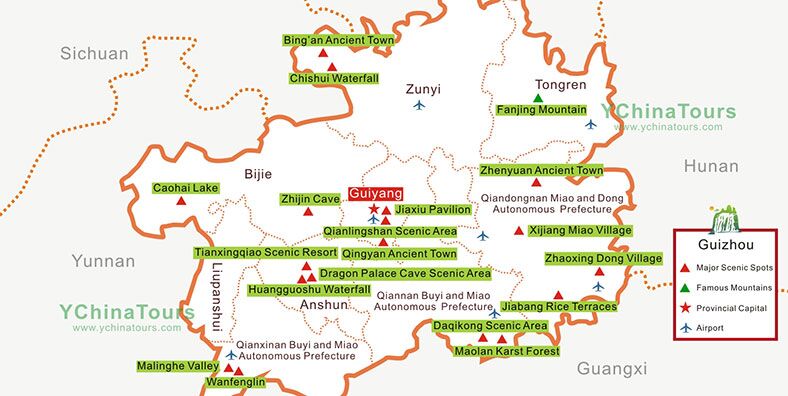
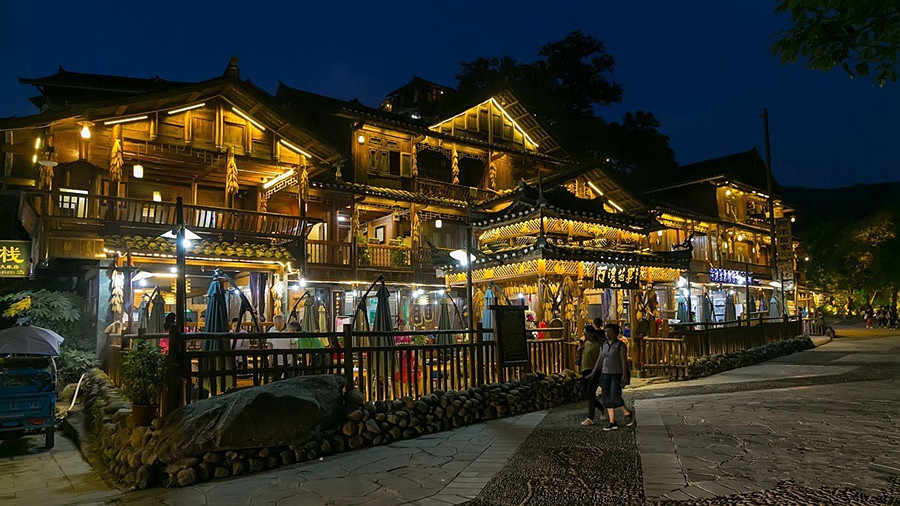
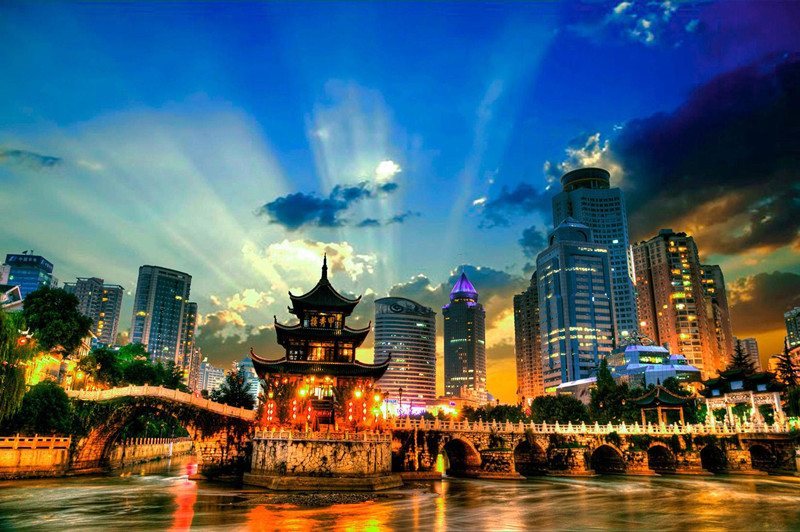
Located in southwest China, Guizhou Province(贵州省) is bounded by Sichuan and Chongqing in the north, Yunnan in the west, Guangxi in the south and Hunan in the east. Guizhou, literally means “precious land” in Chinese. What such a ironic name it is for a province that is regarded as one of the poorest in China! But brimming with dramatic landscapes, rich in minority culture and diversity in ethnic folk festivals, Guizhou is absolutely an amazing destination that should be list on any traveler’s itinerary. Many Chinese minorities have been living on this land for centuries. Visitors who travel there can not only enjoy all kinds of scenic spots, but also discover rich and unique folk customs and cultures of different ethnic groups.
Highlights:
- Breathtaking Scenery: Guizhou is one of the most typical karst landforms in the world, with the most bright and colorful karst landscapes. Famous scenic spots are Huangguoshu Waterfall, Chishui Danxia Landform, Zhijin Cave, Hongfeng Lake(红枫湖), Mountain Fanjing, Site of the Zunyi Conference, Qingyan Ancient Town, etc.
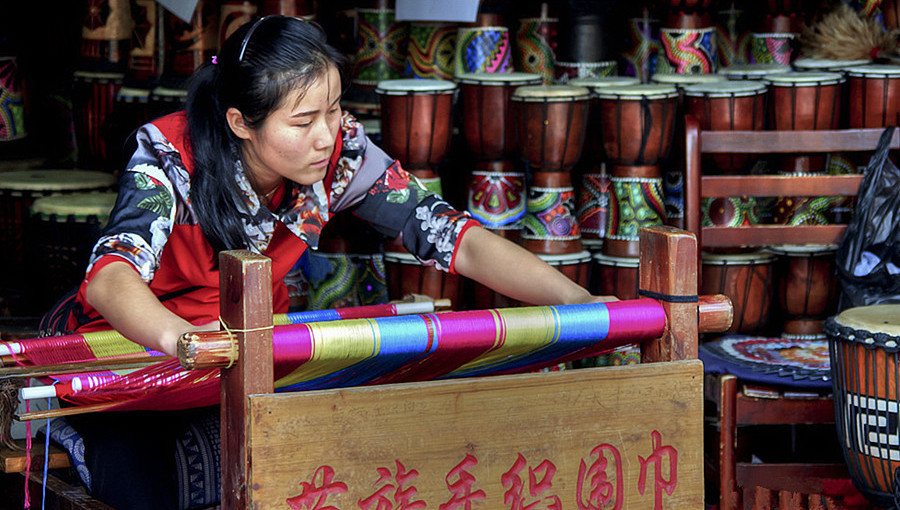
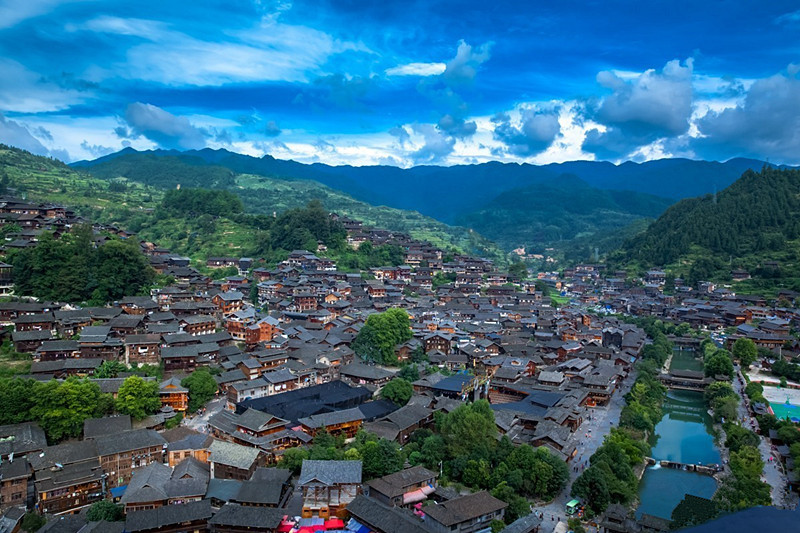
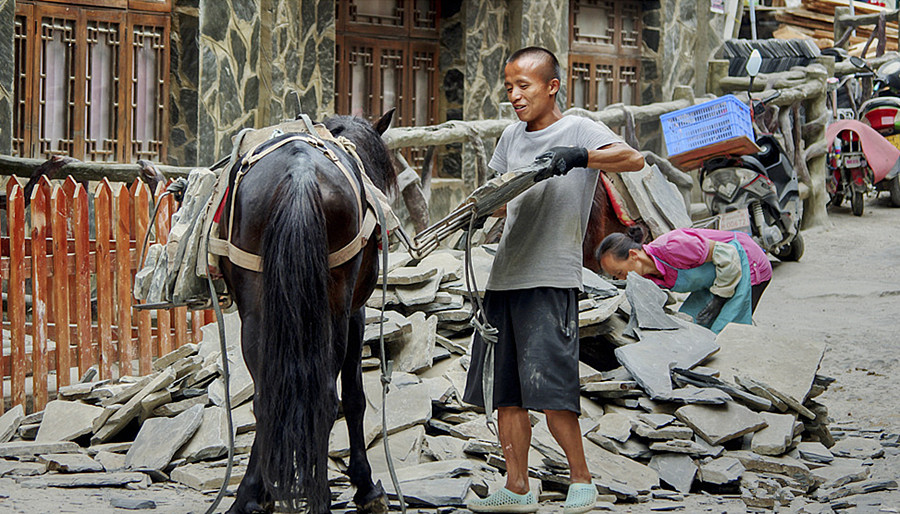
- Ethnic Culture: Guizhou province is home to 48 ethnic groups in China, among which there are 18 long-dwelling peoples including Han, Miao, Buyi, Dong, Tujia, Yi, Gelao, Shui, Hui, Bai, Yao, Zhuang, She, Maonan, Man, Mongol, Mulao and Qiang. Each ethnic group has its own unique customs and culture.
- Miao Paper-cutting Culture: Miao paper-cut is commonly known as “flower paper”, “flower cutting”, “embroidery paper”, which means “animal paper-cut” and “flower paper-cut” in Miao language. Miao paper-cut in Guizhou is different from the paper-cuts of Han and northern minorities, its main use is as Miao clothing embroidery patterns.
- Guizhou Food: Guizhou food is composed of several flavors, such as Guiyang cuisine, Qianbei cuisine and ethnic minority cuisine. In the early Ming dynasty, Guizhou cuisine tended to mature, with many dishes dating back more than 600 years. Sour food is a feature of Guizhou cuisine.
Hot Destinations in Guizhou
Other Destinations in Guizhou
Guizhou Attractions
Guizhou has a long and splendid ethnic history and culture, rich and mysterious ethnic customs as well as pleasant climate, making it an ideal tourist sightseeing and summer resort. Guizhou tourism resource is made up of natural landscapes, climate species, lakes, mountains and rivers, ethnic customs, sacred sites and social development. Guizhou is a province rich in tourism resources types. Here, mountains, water, caves, forests and stones, all blend into one harmonious whole. World-renowned Huangguoshu Waterfall, Dragon Palace Cave Scenic Area, Chishui [...]
Guizhou Tours
Guizhou is a province boasting both natural landscapes and cultural landscapes. Guizhou province is home to 48 ethnic groups in China, among which there are 18 long-dwelling peoples including Han, Miao, Buyi, Dong, Tujia, Yi, Gelao, Shui, Hui, Bai, Yao, Zhuang, She, Maonan, Man, Mongol, Mulao and Qiang. Each ethnic group has its own unique customs and culture. There are some popular destinations in Guizhou chosen by thousands of travelers every year, including Guiyang, Kaili, Anshun, etc. Therefore, our Guizhou tour packages are involved in ethnic culture and natural landscapes. Various tour [...]
- More City Tours Including Guizhou >>
- More China Provinces Tours Including Guizhou >>
- More Multi-City Tours Including Guizhou >>
- All Tours Including Guizhou >>
Climate & When to Go
Guizhou Province enjoys a temperate, humid subtropical monsoon climate, neither too cold in winter nor too hot in summer. Throughout the year, the hottest day occurs in the late July, and the coldest day in early January. The average annual rainfall ranges from 100 cm to 130 cm. Annual relative humidity is more than 70%, and frost-free period lasts about 270 days. The climate in Guizhou is moist and the temperature changes slightly. It is pleasant that the weather is usually warm in winter and cool in [...]
More Guizhou Climate & When to Go >>
Transportation
Located in the mountains, Guizhou province is known for its inconvenient transportation. In the past decade, with the rapid development of Guizhou's transportation system, the situation has changed a lot. Today, airlines, high-speed railways and expressways connect the cities and counties in Guizhou province. How to Get to/away Guizhou Generally speaking, if you want to travel to Guizhou, your first destination will be Guiyang, the capital of Guizhou province. Now, Guiyang can be available by air, train and long-distance bus from other major cities, [...]
More Guizhou Transportation >>
Festivals and Activities
Like Yunnan, there are many minorities in Guizhou Province, including Miao, Dong, Buyi, Shui, Tujia, Zhuang and other ethnic minorities. Every year, different ethnic groups celebrate festivals in their own ways, giving tourists a very good chance to experience the unique ethnic costumes and tradition. Hundreds of festivals are celebrated every year in Guizhou. If you are planning a Guizhou tour, make sure that at least one traditional festival is included in your itinerary. Kaili is one of the [...]
More Guizhou Festivals and Activities >>
Travel Tips
For a better travel experience along the way while you are in Guizhou, there are some useful Guizhou travel tips which may be helpful for your tour. Useful Numbers Here are Guizhou useful telephone numbers and postcodes of Guizhou for you to have a convenient Guiyang tour. China International country code number 0086 Ambulance 120 Fire 119 Police 110 Check Telephone Number 114 Traffic Accidents 122 Weather Report 12121, 96121 Airport inquiry service(Guiyang) 0851-5983000 Railway inquiry service(Guiyang) 0851-8181222 Shuttle bus inquiry(Guiyang) 0851-6505805 Federal Express 800-988-1888 EMS 11183 ZJS 400-678-9000 Supervisory Office of Tourism Quality of Guizhou Province 0851-6892360 Tourism information inquiry 0851-6515376, 6515242 Bank of China 0851-95566 Industrial and Commercial Bank of China (ICBC) 0851-95588 China Bank of Construction 0851-95533 Agricultural [...]
Useful Maps
If we go to somewhere new, maps are good helper for us. To help you have a better understanding of Guizhou Province, we have collected some useful Guizhou maps including Guizhou transportation map, Guizhou regional map, Guizhou location map, Guizhou tourist attractions map, Guizhou cities map, map of scenic spots around Guiyang, Guizhou travel map, etc, through which you can probably know how to get to Guizhou and what to discover there. [...]
Guizhou Accommodation
Due to its rich minority culture, Guizhou as a tourist destination is becoming more and more important. Guiyang is the provincial capital of Guizhou Province, famous for its beautiful scenery as well as cultural and historical relics. The number of tourists to Guizhou is increasing every year. Surely, for tourists to Guizhou, accommodation is the most important part of their journey. Guiyang and other tourist cities like Anshun have a wide range of hotels, which can receive a large number of tourists from [...]