China Travel Agency, China Tours 2026/2027 | Yaso Trip
Theme Tours
View All China Theme Tours by Interest
Travel Guide
  • Travel Guide
  • Travel Tips
  • Tour Planning
  • Ethnic Culture
  • China Climate
  • Golf Courses
  • Yangtze Cruise
  • Travel Articles
  • View local experiences on map
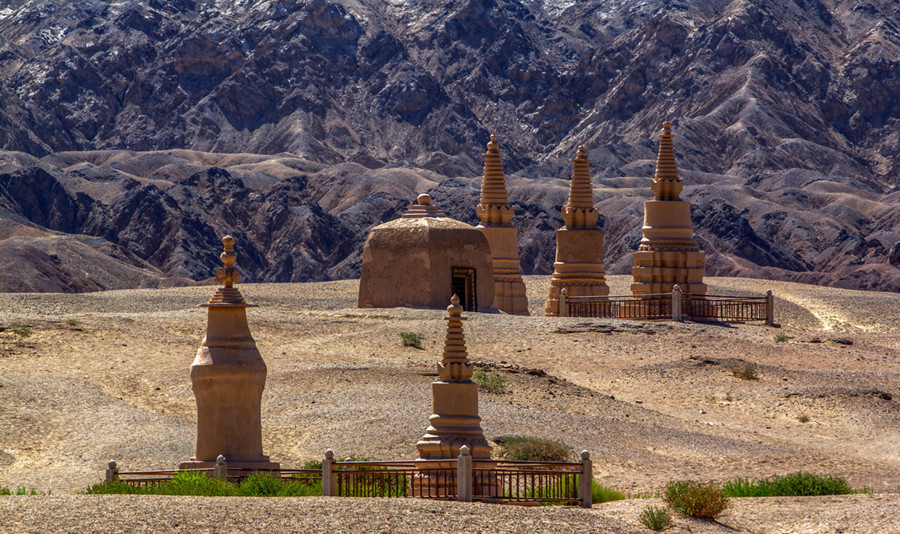
    Yumen Pass ruins
    Highlight Attractions
    Mild spring days
    Climate & Timing
    Convenient tourist buses
    Transportation & Transit
    Moderate ticket prices
    Budget & Value

    Dunhuang is a historic oasis city in northwestern Gansu Province (甘肃省), located at the western end of the Hexi Corridor (河西走廊) and one of the most important destinations on the ancient Silk Road (丝绸之路). Surrounded by the Gobi Desert and towering sand dunes, Dunhuang was once a major center connecting China with Central Asia, South Asia, and the Mediterranean world. Today, it is famous for its world-class Buddhist art, desert landscapes, ancient cultural heritage, and unique oasis scenery.

    Why Visit Dunhuang?

    Mogao Caves – World Treasure of Buddhist Art:

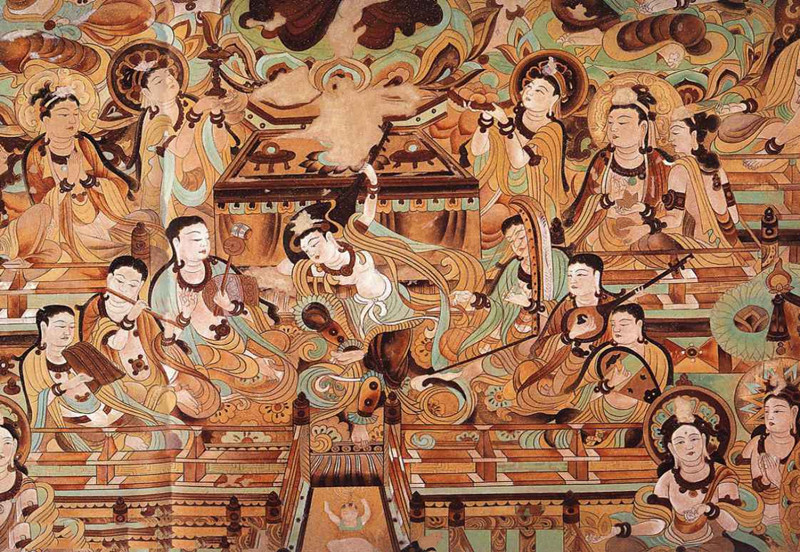
    Mogao Caves (莫高窟), also known as the “Caves of the Thousand Buddhas,” are Dunhuang’s most famous attraction and a UNESCO World Heritage Site. Created from the 4th century onward, the caves contain thousands of Buddhist murals, sculptures, and manuscripts that record the development of Buddhist art and the cultural exchanges along the Silk Road. The exquisite paintings and statues make Mogao Caves one of the greatest achievements of ancient Chinese art.

    Mingsha Mountain and Crescent Lake – Desert and Oasis Wonder:

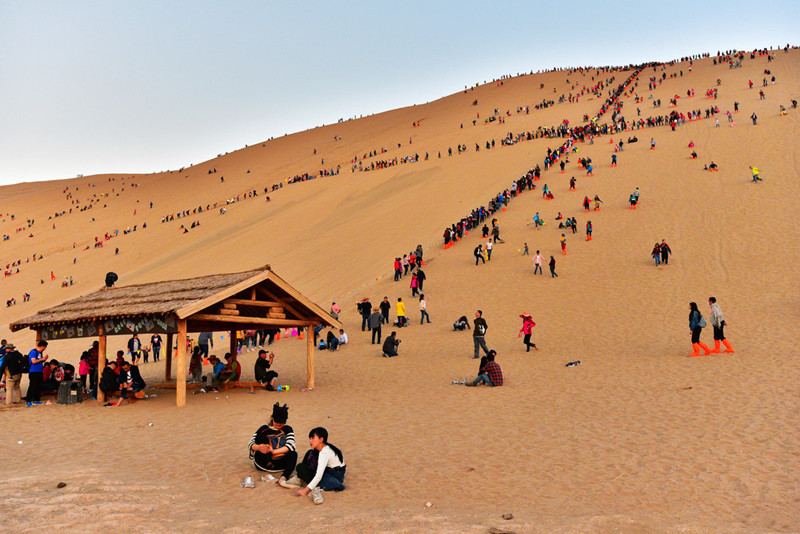
    Mingsha Mountain (鸣沙山) and Crescent Lake (月牙泉) are iconic symbols of Dunhuang. The golden sand dunes are famous for the mysterious “singing sand” phenomenon, where the sand produces unique sounds when moved by wind or footsteps. Hidden among the dunes, Crescent Lake forms a beautiful natural oasis that has survived for thousands of years, creating a stunning contrast between desert and water.

    Yumen Pass – Gateway of the Ancient Silk Road:

    Yumen Pass (玉门关) was one of the most important frontier passes of ancient China and a key gateway of the Silk Road. Built during the Han Dynasty, it protected the western frontier and served as a passage for merchants, diplomats, and travelers heading toward Central Asia. The surrounding desert landscape and ancient ruins provide a powerful sense of history.

    Yangguan Pass – Ancient Frontier Culture:

    Yangguan Pass (阳关) was another major Silk Road checkpoint near Dunhuang. Famous from ancient Chinese poetry, Yangguan represents the spirit of departure, exploration, and cultural exchange. Visitors can explore the ruins, museum exhibits, and desert scenery while learning about the history of China’s western expansion.

    Silk Road Heritage and Cultural Exchange:

    Dunhuang was one of the most important cultural crossroads in world history. Merchants, monks, and travelers from China, India, Persia, and Central Asia passed through the city, bringing goods, religions, languages, and artistic influences. The city’s museums, caves, and historical sites preserve this remarkable multicultural legacy.

    Desert Adventure and Outdoor Experiences:

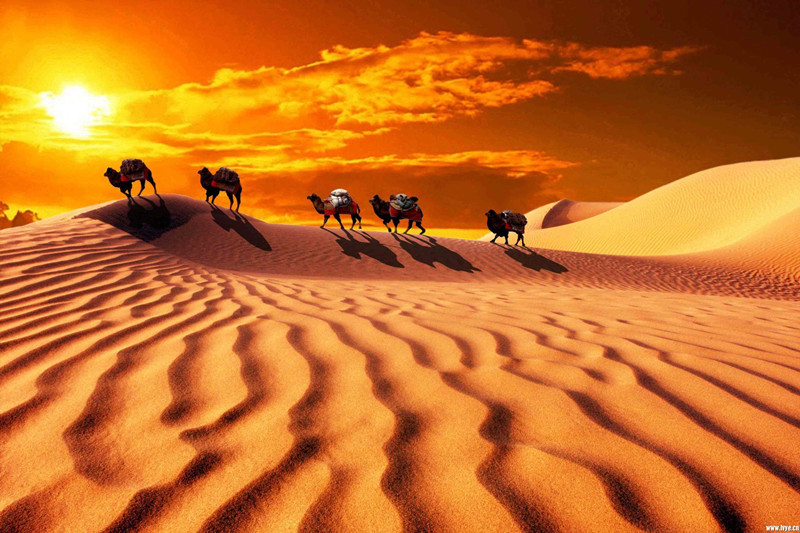
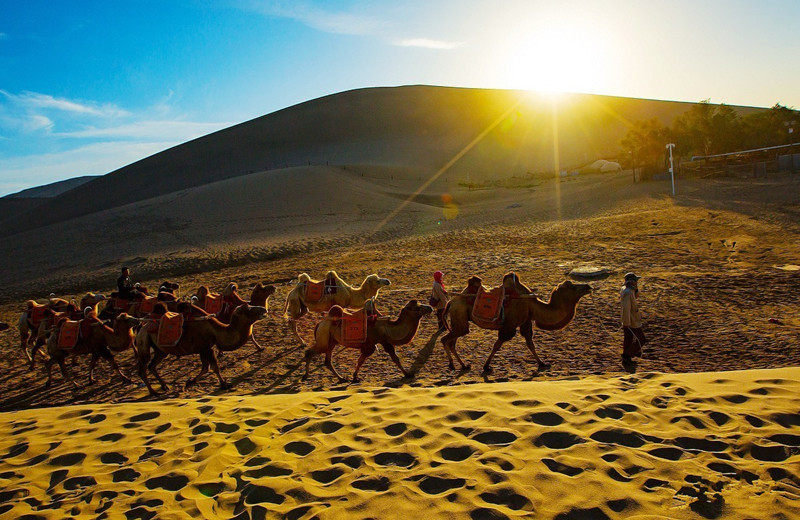
    Beyond its historical attractions, Dunhuang offers unforgettable desert experiences. Travelers can enjoy camel riding, sand dune hiking, desert photography, and sunset views over the Gobi landscape. The vast desert scenery surrounding Dunhuang creates a unique adventure experience unlike anywhere else in China.

    Local Cuisine and Dunhuang Flavors:

    Dunhuang’s cuisine combines northwest Chinese traditions with influences from Silk Road cultures. Local specialties include Dunhuang donkey meat dishes (敦煌驴肉), hand-pulled noodles, lamb dishes, apricot products, and various northwest snacks. The city’s night markets are also popular places to experience local food and traditional atmosphere.
    At a Glance
    Chinese Name 敦煌市
    English Name Dunhuang
    Location Position Northwest China (Gansu)
    Population Number Approx. 190,000
    Language Mandarin / Gansu dialect
    Postal Code 736200
    Country Code +86 937
    Local Time Zone UTC+8
    ENQUIRY
    Have a question before booking? Message us to learn more.
    Click to change
    Michael Huang Vincent Zhao Justin Wang Gary Elliot Emma Liu Andrew Wang
    Questions about this destination? Real travel advisors, usually reply within 12 hour.
    11 Days China Silk Road Muslim Tour from Kashgar to Dunhuang and Xi’an

    11 Days China Silk Road Muslim Tour from Kashgar to Dunhuang and Xi’an

    Kashgar- Urumqi-Turpan- Dunhuang -Xi’an
    11 Days 9 Places
    4 Days Dunhuang City Tour

    4 Days Dunhuang City Tour

    Dunhuang
    4 Days 3 Places
    4 Days Jiayuguan Pass and Dunhuang Silk Road Tour

    4 Days Jiayuguan Pass and Dunhuang Silk Road Tour

    Jiayuguan-Dunhuang
    4 Days 4 Places
    5 Days Lanzhou Dunhuang Jiayuguan Tour

    5 Days Lanzhou Dunhuang Jiayuguan Tour

    Lanzhou-Dunhuang-Jiayuguan-Lanzhou
    5 Days 5 Places
    6 Days Lanzhou Zhangye Jiayuguan Dunhuang Tour

    6 Days Lanzhou Zhangye Jiayuguan Dunhuang Tour

    Lanzhou-Zhangye-Jiayuguan-Dunhuang
    6 Days 6 Places
    8 Days Lanzhou Xiahe Jiayuguan Dunhuang Silk Road Tour

    8 Days Lanzhou Xiahe Jiayuguan Dunhuang Silk Road Tour

    Lanzhou-Xiahe-Jiayuguan-Dunhuang
    8 Days 5 Places
    8 Days Silk Road Highlights Tour from Dunhuang to Urumqi
    Popular

    8 Days Silk Road Highlights Tour from Dunhuang to Urumqi

    Dunhuang-Turpan-Urumqi-Kashgar-Karakul Lake-Kashgar
    8 Days 7 Places
    9 Days Silk Road Tour and Kanas Lake Adventure from Dunhuang to Urumqi

    9 Days Silk Road Tour and Kanas Lake Adventure from Dunhuang to Urumqi

    Dunhuang-Turpan-Urumqi-Burqin-Kanas Lake-Burqin-Urumqi
    9 Days 8 Places
    Tour Booking & Hotel Booking
    Built For The Best

    Tour Booking & Hotel Booking

    Travel with a licensed China travel agency. Book your tours and hotels in one place, with English-speaking local guides, no forced shopping stops, flexible date changes and 24-hour support. Send us your travel dates and our specialists will reply with a tailor-made itinerary and quote, usually within one working day.

    Travel Tips • 旅行提示
    2 Articles
    View More ➔
    Dining • 餐饮
    View More ➔
    Climate • 气候
    View More ➔
    Transportation • 交通
    1 Articles
    View More ➔
    Maps • 地图
    View More ➔
    Culture • 文化
    1 Articles
    View More ➔
    Shopping • 购物
    View More ➔
    Attractions • 景点
    View More ➔
    Photos • 照片
    View More ➔
    Festivals and Activities • 节日与活动
    1 Articles
    View More ➔
    Accommodation • 住宿
    View More ➔
    Education • 教育
    View More ➔
    Administrative Divisions • 行政区划
    View More ➔
    Yumen City

    Yumen City

    Yumen (玉门市) is a historic city in western Gansu Province (甘肃省), located along the ancient Hexi Corridor (河西走廊) and administered by Jiuquan (酒泉). Known as the “Jade Gate,” Yumen has played an important role in the development of western China through the Silk Road and modern energy industry. Although often confused with the famous Yumen Pass (玉门关) near Dunhuang, the two places are separate locations. Today, Yumen is known for its Silk Road heritage, oil industry history, desert landscapes, and northwest frontier culture. Why Visit Yumen? Yumen Pass Heritage and Silk Road History: Although the modern city is different from the ancient Yumen Pass (玉门关), the region remains closely connected with Silk Road history. Yumen was located on one of the important routes linking ancient China with Central Asia, where merchants, travelers, and armies once passed through the Hexi Corridor. The area provides insight into the history of China’s western frontier and cultural exchanges along the Silk Road. Oil Industry Heritage – Birthplace of Modern Petroleum Development: Yumen is one of China’s earliest petroleum industrial bases and is often called...
  • Gansu,Jiuquan
  • View on Map
    Yumen City

    Yumen City

    Yumen (玉门市) is a historic city in western Gansu Province (甘肃省), located along the ancient Hexi Corridor (河西走廊) and administered by Jiuquan (酒泉). Known as the “Jade Gate,” Yumen has played an important role in the development of western China through the Silk Road and modern energy industry. Although often confused with the famous Yumen Pass (玉门关) near Dunhuang, the two places are separate locations. Today, Yumen is known for its Silk Road heritage, oil industry history, desert landscapes, and northwest frontier culture. Why Visit Yumen? Yumen Pass Heritage and Silk Road History: Although the modern city is different from the ancient Yumen Pass (玉门关), the region remains closely connected with Silk Road history. Yumen was located on one of the important routes linking ancient China with Central Asia, where merchants, travelers, and armies once passed through the Hexi Corridor. The area provides insight into the history of China’s western frontier and cultural exchanges along the Silk Road. Oil Industry Heritage – Birthplace of Modern Petroleum Development: Yumen is one of China’s earliest petroleum industrial bases and is often called...
  • Gansu,Jiuquan
  • Jiayuguan
    Popular
    ★★★★★

    Jiayuguan

    Jiayuguan is a historic city in northwestern Gansu Province (甘肃省), located at the western end of the Hexi Corridor (河西走廊). Known as the “First and Greatest Pass Under Heaven,” Jiayuguan is most famous for Jiayuguan Pass (嘉峪关关城), the westernmost and best-preserved fortress of the Ming Dynasty Great Wall (明长城). Combining ancient military history, Silk Road heritage, desert landscapes, and modern industry, Jiayuguan is one of the most important cultural destinations in northwest China. Why Visit Jiayuguan? Jiayuguan Pass – Western End of the Great Wall: Jiayuguan Pass (嘉峪关关城) is the city’s most iconic attraction and one of the most important historical sites along the Great Wall. Built during the Ming Dynasty in the 14th century, it served as a military fortress protecting the western frontier and controlling passage through the Hexi Corridor. The impressive walls, towers, gates, and surrounding desert scenery provide a powerful experience of ancient Chinese frontier defense. Jiayuguan Fortress – Silk Road Gateway: The Jiayuguan Fortress was not only a military stronghold but also an important checkpoint for merchants, diplomats, and travelers moving along the ancient Silk...
  • Gansu
  • Hami
    ★★★★

    Hami

    Located in eastern Xinjiang (新疆), Hami City (哈密市) is an important gateway connecting inland China with Xinjiang and Central Asia. Known as the “Portal of Xinjiang,” Hami has played a vital role along the ancient Silk Road (丝绸之路) for more than 2,000 years. With its strategic location, rich history, unique oasis culture, famous Hami melons, spectacular Tianshan Mountains, and mysterious Yardang landscapes, Hami offers travelers a fascinating combination of history, nature, and desert adventure. Why Visit Hami Silk Road Gateway & Historical Heritage: Hami has been an important Silk Road passage since ancient times. More than 2,000 years ago, Zhang Qian (张骞), the famous ambassador of the Western Han Dynasty (西汉), passed through this region during his mission to open communication routes between China and the Western Regions. Due to its strategic location, Hami became a major transportation and trade center, earning the reputation as the “throat of the Silk Road.” Throughout history, Hami connected China with Central Asia and beyond, allowing the exchange of goods, cultures, religions, and ideas. Today, visitors can still discover traces of Silk Road civilization...
  • Xinjiang
  • Jiuquan

    Jiuquan

    Jiuquan is a historic city in northwestern Gansu Province (甘肃省) and one of the most important destinations along the ancient Silk Road (丝绸之路). Formerly known as Suzhou (肃州), Jiuquan is located at the western end of the Hexi Corridor and serves as a gateway connecting Gansu with Xinjiang (新疆), Qinghai (青海), Inner Mongolia (内蒙古), and Central Asia. With vast desert landscapes, ancient frontier heritage, aerospace achievements, and unique northwest culture, Jiuquan offers a fascinating combination of history, nature, and modern development. Why Visit Jiuquan? Jiuquan Park and Han Dynasty Heritage: Jiuquan Park (酒泉公园) is one of the city’s most famous cultural landmarks and is closely connected with the city’s origin. According to legend, the name “Jiuquan” means “wine spring,” referring to a story from the Han Dynasty when General Huo Qubing (霍去病) poured imperial wine into a local spring to share with his soldiers. The park preserves historical sites, ancient architecture, and peaceful gardens that reflect the city’s long history. Jiayuguan Pass – Western Gateway of the Great Wall: Near Jiuquan is Jiayuguan Pass (嘉峪关), one of the most important...
  • Gansu
  • Delingha

    Delingha

    Located in the northeastern part of Haixi Mongol and Tibetan Autonomous Prefecture (海西蒙古族藏族自治州) in western Qinghai Province (青海省), Delingha (德令哈) is an important city in the Qaidam Basin (柴达木盆地) and one of the most distinctive destinations on the Qinghai-Tibet Plateau (青藏高原). Known as the “Poetic City” because of the famous Chinese poet Hai Zi (海子) and his poem Sister, Tonight I Am in Delingha (姐姐,今夜我在德令哈), the city combines vast desert landscapes, salt lakes, grasslands, wetlands, astronomy resources, and Mongolian cultural traditions. Surrounded by mountains, Gobi deserts, rivers, and high-altitude lakes, Delingha offers travelers a unique experience blending natural wonders, ecological exploration, cultural heritage, and plateau adventure. Why Visit Delingha? Keke Tuo Hai and Crooked Lake Landscapes (可鲁克湖与托素湖) – Twin Lakes of the Qaidam Basin: The Keke Tuo Hai–Tosu Lake Scenic Area (可鲁克湖—托素湖景区) is one of Delingha’s most famous natural attractions. The two lakes lie side by side in the vast Qaidam Basin but have completely different landscapes. Keke Tuo Lake (可鲁克湖) is a freshwater lake surrounded by grasslands and wetlands, attracting migratory birds and offering peaceful scenery, while Tosu Lake...
  • Qinghai,Haixi
  • Haixi
    ★★★★

    Haixi

    Located in western Qinghai Province (青海省), west of Qinghai Lake (青海湖), Haixi Mongol and Tibetan Autonomous Prefecture (海西蒙古族藏族自治州) is one of the largest and most spectacular regions on the Qinghai-Tibet Plateau (青藏高原). Covering most of the vast Qaidam Basin (柴达木盆地), Haixi is famous for its deserts, salt lakes, snow mountains, glaciers, wetlands, and unique plateau ecosystems. With landscapes ranging from endless Gobi deserts and turquoise salt lakes to sacred mountains and remote wilderness, Haixi is one of China’s best destinations for self-driving journeys, landscape photography, ecological exploration, and high-altitude adventure travel. The region also preserves a rich multicultural heritage shaped by Mongolian, Tibetan, Hui, and Han communities. Why Visit Haixi? Qaidam Basin (柴达木盆地) – Vast Desert and Plateau Landscape: The Qaidam Basin is the defining geographic feature of Haixi and one of the largest inland basins in China. Surrounded by the Kunlun Mountains (昆仑山), Qilian Mountains (祁连山), and Tanggula Mountains (唐古拉山), the basin contains deserts, salt flats, wetlands, mountains, and unique geological formations. Its endless horizons, dramatic terrain, and changing colors make it one of the most impressive regions for...
  • Qinghai
  • MangAi City

    MangAi City

    MangAi or Mangya (茫崖市), also known as Mang’ai, is a county-level city in northwestern Qinghai Province (青海省), located within the vast Qaidam Basin (柴达木盆地) and administered by Haixi Mongol and Tibetan Autonomous Prefecture (海西蒙古族藏族自治州). As one of the most remote destinations in Qinghai, MangAi is famous for its dramatic desert landscapes, colorful salt lakes, snow mountains, and unique geological wonders. With the opening of Huatugou Airport (花土沟机场), MangAi has become a gateway for travelers exploring western Qinghai and the remote beauty of the Qinghai-Tibet Plateau. Why Visit MangAi? Aiken Spring – The “Eye of the Earth”: Aiken Spring (艾肯泉) is MangAi’s most famous natural attraction and one of the most unusual landscapes in Qinghai. The geothermal spring contains rich minerals, creating colorful patterns around the water outlet. Due to the high sulfur content, plants cannot grow nearby, forming a mysterious landscape often called the “Eye of the Earth.” The contrast between the red, yellow, and white mineral deposits and the surrounding desert makes it a spectacular destination for aerial photography. Emerald Salt Lakes – Colorful Plateau Waters: MangAi is home...
  • Qinghai,Haixi
  • Golmud
    ★★★★★

    Golmud

    Located in western Qinghai Province (青海省) in the central-southern part of the Qaidam Basin (柴达木盆地), Golmud (格尔木) is an important city administered by Haixi Mongol and Tibetan Autonomous Prefecture (海西蒙古族藏族自治州). As a major gateway connecting Qinghai, Xinjiang, and Tibet, Golmud is one of the most important transportation hubs on the Qinghai-Tibet Plateau (青藏高原). Surrounded by vast salt lakes, deserts, snow mountains, glaciers, and high-altitude wilderness, Golmud offers some of the most spectacular plateau landscapes in China. It is an ideal destination for self-driving tours, ecological exploration, photography, and overland adventures to Tibet. Why Visit Golmud? Kunlun Mountains (昆仑山) – Sacred Snow Mountain Landscape: The Kunlun Mountains rise south of Golmud and form one of the most magnificent mountain landscapes in western China. The region features snow-covered peaks, glaciers, deep valleys, and untouched high-altitude wilderness. In Chinese culture, the Kunlun Mountains are regarded as a sacred and legendary mountain range, giving the area both natural beauty and deep cultural significance. Qarhan Salt Lake (察尔汗盐湖) – China’s Largest Salt Lake: Qarhan Salt Lake is one of Golmud’s most famous natural attractions and...
  • Qinghai,Haixi
  • Shanshan
    Popular
    ★★★★★

    Shanshan

    Located in eastern Turpan (吐鲁番), Xinjiang (新疆), Shanshan County (鄯善县) is a unique destination where golden deserts, red mountain valleys, green vineyards, and ancient Silk Road heritage come together. The county is best known for the spectacular landscape where the Kumtag Desert (库木塔格沙漠) meets the Shanshan oasis, with vast sand dunes extending directly beside the town. Beyond its desert scenery, Shanshan preserves rich Uyghur culture, traditional mud-brick villages, ancient Buddhist sites, and historic settlements connected with the Silk Road. It can be visited as a day trip from Turpan, while a two-day stay allows more time to enjoy desert sunsets, village exploration, and cultural experiences. Why Visit Shanshan County Kumtag Desert (库木塔格沙漠): One of Shanshan’s most iconic attractions, the Kumtag Desert features golden sand dunes rising beside the oasis town. Visitors can enjoy camel riding, sandboarding, desert walks, and spectacular sunset photography while experiencing the beauty of the desert landscape. Tuyugou Valley (吐峪沟): Surrounded by the dramatic red cliffs of the Flaming Mountains (火焰山), Tuyugou Valley combines natural scenery, ancient history, vineyards, and traditional villages. It is one of the...
  • Xinjiang,Turpan
  • Yumen City
    Yumen City
    Jiayuguan
    Jiayuguan
    Hami
    Hami
    Jiuquan
    Jiuquan
    Delingha
    Delingha
    Haixi
    Haixi
    MangAi City
    MangAi City
    Golmud
    Golmud
    Shanshan
    Shanshan

    Make an Enquiry

    Whether you have travel inquiries, customization requests, or feedback, we're here to assist you anytime.

    Contact Information
  • 24/7 Hotline
  • Tel/Wechat/WhatsApp: +86-18064845137
  • Email Support
  • [email protected]
  • Office Address
  • Building 4, Yifuyuan, Hehong Road, Xishan District, Kunming, Yunnan, China
  • Business Hours
  • Daily: 9:00 am - 6:00 pm
    Sunday: Closed
  • Follow Us
    Click to change

    Share Your Trip Experience

    Help future travelers by reviewing your journey with Yaso Trip.