China Travel Agency, China Tours 2026/2027 | Yaso Trip
Theme Tours
View All China Theme Tours by Interest
Travel Guide
  • Travel Guide
  • Travel Tips
  • Tour Planning
  • Ethnic Culture
  • China Climate
  • Golf Courses
  • Yangtze Cruise
  • Travel Articles
  • View local experiences on map
    Stunning snow mountain views
    Highlight Attractions
    Beautiful crisp golden autumn
    Climate & Timing
    Scenic mountain highway routes
    Transportation & Transit
    Moderate scenic package rates
    Budget & Value

    Nyingchi (林芝 / Linzhi) is one of the most beautiful regions in southeastern Tibet, often known as the “Jiangnan of Tibet” and the “Switzerland of Tibet” because of its green valleys, forests, lakes, snow mountains, and mild climate. Located at the junction of the Tibetan Plateau and the Himalayas, Nyingchi features an extraordinary landscape ranging from tropical rainforest valleys at around 900 meters to the 7,782-meter-high Namcha Barwa Peak (南迦巴瓦峰/Namjagbarwa Peak).

    • Namcha Barwa Mountain (南迦巴瓦峰) – The Most Mysterious Snow Peak:
      Rising to 7,782 meters, Namcha Barwa is one of Tibet’s most spectacular mountains and is often called the “Father of Ice Mountains.” Its sharp triangular summit is frequently hidden behind clouds and mist, making a clear view a rare and unforgettable experience. The sunrise and sunset views over Namcha Barwa are among the most iconic scenes in Tibet.
    • Yarlung Tsangpo Grand Canyon (雅鲁藏布大峡谷) – The World’s Deepest Canyon:
      The Yarlung Tsangpo River creates one of the most dramatic canyon landscapes on Earth as it bends around Namcha Barwa Mountain. The canyon features towering cliffs, glaciers, forests, waterfalls, and diverse ecosystems, offering spectacular scenery for hiking, photography, and nature exploration.
    • Nyingchi Peach Blossom Festival (林芝桃花节) – Spring Paradise of Tibet:
      Every spring, wild peach blossoms cover the valleys of Nyingchi, creating one of the most beautiful seasonal landscapes in Tibet. The combination of pink flowers, traditional Tibetan villages, green fields, and snow-covered mountains creates a dreamlike scene and attracts photographers from around the world.
    • Medog County(墨脱县) – Tibet’s Hidden Land:
      Medog is one of Tibet’s most remote destinations and was historically known as the only county in China without a road connection. Located at a lower elevation, it features a rare combination of snow mountains, deep valleys, rainforest, rivers, and diverse wildlife. The famous Medog hiking route is considered one of Tibet’s most challenging and rewarding trekking experiences.
    • Lulang Forest (鲁朗林海) – Alpine Forest Wonderland:
      Lulang is famous for its vast alpine forests, grasslands, rivers, and snow mountain views. Often described as a paradise on the Tibetan Plateau, it offers peaceful landscapes, fresh air, and opportunities to experience Tibetan villages and local pastoral life.
    • Basong Tso Lake (巴松措) – Sacred Highland Lake:
      Basong Tso is one of Nyingchi’s most famous natural attractions and a sacred lake of Tibetan Buddhism. Surrounded by snow mountains, forests, and islands, the lake offers beautiful scenery throughout the year and is an ideal destination for photography and relaxation.
    • Rich Biodiversity & Unique Ecosystems:
      Due to its huge elevation range, Nyingchi contains a remarkable variety of environments, from alpine glaciers to subtropical forests. It is one of the most biologically diverse areas in Tibet, home to rare plants, wildlife, and colorful alpine meadows.
    • Tibetan Culture & Highland Villages:
      Nyingchi preserves unique Tibetan traditions, especially among the Monba (门巴族) and Lhoba (珞巴族) ethnic communities. Visitors can explore traditional villages, experience local customs, taste regional food, and discover the cultural diversity of southeastern Tibet.
    At a Glance
    Chinese Name 西藏林芝市
    English Name Nyingchi
    Location Position Southeast of Yunnan
    Population Number 231000
    Language Tibetan and Han Language
    Postal Code 860000
    Country Code (+86) 0894
    Local Time Zone UTC+8
    ENQUIRY
    Have a question before booking? Message us to learn more.
    Click to change
    Tour Booking & Hotel Booking
    Built For The Best

    Tour Booking & Hotel Booking

    Travel with a licensed China travel agency. Book your tours and hotels in one place, with English-speaking local guides, no forced shopping stops, flexible date changes and 24-hour support. Send us your travel dates and our specialists will reply with a tailor-made itinerary and quote, usually within one working day.

    Travel Tips • 旅行提示
    View More ➔
    Dining • 餐饮
    View More ➔
    Climate • 气候
    View More ➔
    Transportation • 交通
    1 Articles
    View More ➔
    Maps • 地图
    View More ➔
    Culture • 文化
    View More ➔
    Shopping • 购物
    View More ➔
    Attractions • 景点
    View More ➔
    Photos • 照片
    View More ➔
    Festivals and Activities • 节日与活动
    View More ➔
    Accommodation • 住宿
    View More ➔
    Education • 教育
    View More ➔
    Administrative Divisions • 行政区划
    View More ➔
    Chamdo
    Popular
    ★★★★★

    Chamdo

    Chamdo (昌都 / Qamdo) is one of the most culturally and geographically important regions in eastern Tibet. Located at the junction of Tibet, Sichuan, Qinghai, and Yunnan, Chamdo has long been a key gateway connecting the Tibetan Plateau with southwest China. Historically, it was an important stop along the Ancient Tea Horse Road, earning the reputation as the “Pearl of Tibet” because of its role in trade, cultural exchange, and transportation. With magnificent snow mountains, alpine lakes, ancient monasteries, and rich Kham Tibetan culture, Chamdo offers travelers an authentic and less-crowded Tibetan experience. Why Visit Chamdo? Ranwu Lake (然乌湖) – The Pearl of Eastern Tibet: Ranwu Lake is one of the most beautiful alpine lakes in Tibet. Its Tibetan name refers to a lake with water as clear and pure as goat’s milk. Surrounded by snow mountains, forests, glaciers, and grasslands, the lake receives meltwater from the nearby Laigu Glacier (来古冰川), creating a stunning landscape of turquoise waters and snow-covered peaks. It is a paradise for photography and nature lovers. Laigu Glacier (来古冰川) – Spectacular Himalayan Ice World: Located near...
  • Tibet
  • Lhasa
    Popular
    Must Go
    ★★★★★

    Lhasa

    Lhasa (拉萨), meaning the “Palace of the Gods” in Tibetan, is the capital of the Tibet Autonomous Region and the spiritual, cultural, and historical heart of Tibet. Located on the Lhasa River Valley at an altitude of around 3,650 meters, the city is famous for its sacred Buddhist sites, unique Tibetan architecture, bright sunshine, and deep-rooted traditions. For centuries, Lhasa has attracted pilgrims, explorers, and travelers from around the world seeking to experience the spiritual essence of Tibet. Why Visit Lhasa? Potala Palace (布达拉宫) – Symbol of Tibet:The iconic Potala Palace is the most famous landmark in Lhasa and a UNESCO World Heritage Site. Built on Red Hill (红山), the palace was the winter residence of the Dalai Lamas for centuries and served as the political and religious center of Tibet. Its magnificent white and red architecture, ancient murals, Buddhist statues, and sacred treasures represent the peak of Tibetan architectural art. Jokhang Temple (大昭寺) – The Spiritual Center of Tibetan Buddhism:Located in the heart of the old city, Jokhang Temple is considered the holiest temple in Tibetan Buddhism. Built in...
  • Tibet
  • Nagqu
    Popular
    ★★★★★

    Nagqu

    Nagqu (那曲/Naqu) is a vast highland region in northern Tibet, located between the Tanggula Mountains (唐古拉山脉) and Nyenchen Tangula Mountains (念青唐古拉山脉). Named after the Nagqu River, an upstream section of the Nujiang River, the region is famous for its endless grasslands, snow-covered mountains, sacred lakes, glaciers, and traditional Tibetan nomadic culture. Known as one of the most authentic destinations on the Tibetan Plateau, Nagqu offers travelers a rare opportunity to experience the wild beauty and traditional lifestyle of northern Tibet. Why Visit Nagqu? Siling Tso Lake (色林错) – The Largest Lake in Tibet:Siling Tso Lake is the largest lake in Tibet and one of the highest large lakes in the world. Its Tibetan name means the “Lake of the Demon”, reflecting ancient legends and religious beliefs. Surrounded by vast grasslands and snow mountains, the lake offers spectacular scenery with deep blue waters, abundant wildlife, and a peaceful atmosphere. Lake Tangra Yumco(当惹雍错) – Sacred Lake of Ancient Bon Religion:Tangra Yumco is one of the most sacred lakes in Tibet and holds special importance in the Bon religion, the ancient indigenous faith of Tibet....
  • Tibet
  • Ngari
    Popular
    ★★★★★

    Ngari

    Ngari (阿里 / Ali), located in western Tibet, is one of the most remote and spectacular regions on the Tibetan Plateau. Known as the “Roof of the World’s Roof,” Ngari lies at the intersection of the Himalayas, Gangdise Mountains (冈底斯山脉), Kunlun Mountains (昆仑山脉), and Karakoram Mountains. With sacred mountains, holy lakes, ancient kingdoms, glaciers, and vast wilderness, Ngari is a dream destination for pilgrims, explorers, photographers, and adventure travelers seeking the most authentic landscapes of Tibet. Why Visit Ngari? Mount Kailash(冈仁波齐) – The Sacred Mountain of the World:Mount Kailash, rising to 6,638 meters, is one of the most sacred mountains in Asia. Revered by Tibetan Buddhism, Hinduism, Jainism, and Bon religion, it is believed to be the spiritual center of the world. Thousands of pilgrims travel here every year to complete the famous Kailash Kora (冈仁波齐转山), a sacred circumambulation route believed to bring blessings and spiritual purification. Lake Manasarovar (玛旁雍措) – The Holy Lake of Tibet:Located near Mount Kailash at an altitude of around 4,588 meters, Lake Manasarovar is one of the highest freshwater lakes in the world. Considered sacred by...
  • Tibet
  • Shannan
    ★★★★

    Shannan

    Shannan (山南 / Lhoka) is one of the oldest cultural regions in Tibet Autonomous Region, located in southeastern Tibet along the middle and lower reaches of the Yarlung Tsangpo River (雅鲁藏布江). Known as the “Cradle of Tibetan Civilization,” Shannan is where many important Tibetan historical “firsts” took place, including the first palace, first king, first monastery, and first farming settlement. With its combination of ancient Tibetan heritage, sacred lakes, monasteries, and spectacular plateau landscapes, Shannan is one of the best destinations for travelers seeking authentic Tibetan culture. Yungbulakang Palace (雍布拉康) – The First Palace of Tibet:Located on a hilltop overlooking the Yarlung Valley, Yungbulakang Palace is regarded as the first palace in Tibetan history, with more than 2,000 years of history. According to Tibetan tradition, it was built for Nyatri Tsenpo, the first Tibetan king. The palace offers panoramic views of surrounding farmland, mountains, and the birthplace of Tibetan civilization. Yamdrok Lake (羊卓雍措) – One of Tibet’s Three Sacred Lakes:Yamdrok Lake, together with Namtso Lake (纳木措) and Lake Manasarovar (玛旁雍措), is considered one of the three most sacred lakes in...
  • Tibet
  • Shigatse
    Popular
    Must Go
    ★★★★★

    Shigatse

    Shigatse (日喀则) is the second-largest city in Tibet Autonomous Region and one of the most important cultural and religious centers on the Tibetan Plateau. Located in southwestern Tibet, Shigatse is famous for its sacred monasteries, Mount Everest scenery, highland landscapes, and deep Tibetan Buddhist heritage. As the traditional center of the Tsang region, it offers travelers a perfect combination of natural wonders and spiritual experiences. Gateway to Mount Everest (珠穆朗玛峰门户):Shigatse is the main gateway for journeys to Mount Everest (珠穆朗玛峰 / Qomolangma) and the Everest Base Camp on the northern side. Travelers can experience the magnificent Himalayan landscapes, high-altitude valleys, and breathtaking views of the world’s highest peak. The route from Shigatse to Everest passes through some of Tibet’s most spectacular plateau scenery. Tashilhunpo Monastery (扎什伦布寺) – Home of the Panchen Lama:Located in central Shigatse, Tashilhunpo Monastery is one of the largest and most influential monasteries of the Gelug school of Tibetan Buddhism. It is the traditional seat of the Panchen Lama, the second-highest spiritual leader in Tibetan Buddhism. The monastery is famous for its grand halls, Buddhist statues, murals,...
  • Tibet
  • Gyirong

    Gyirong

    Gyirong County (吉隆县) is a hidden Himalayan destination in southwestern Shigatse Prefecture (日喀则地区), Tibet Autonomous Region. Located on the China–Nepal border, Gyirong is known as one of the most beautiful valleys in Tibet, featuring snow-capped Himalayan peaks, deep valleys, forests, glaciers, Tibetan villages, and unique borderland culture. As an important gateway between Tibet and Nepal, Gyirong offers travelers a rare combination of natural scenery, Tibetan traditions, and Himalayan adventure. Gyirong Valley (吉隆沟) – The Himalayan Green Valley:Unlike the dry landscapes commonly associated with the Tibetan Plateau, Gyirong Valley is famous for its lush forests, rivers, waterfalls, and fertile valleys. Surrounded by high mountains, the valley creates a spectacular contrast between snow peaks and green landscapes, making it one of the most scenic areas in Tibet. Gateway Between Tibet and Nepal (中尼边境通道):Gyirong has been an important Himalayan trade and cultural corridor for centuries. Today, Gyirong Port (吉隆口岸) is one of the main border crossings between China and Nepal and an important route for travelers exploring Tibet, Mount Everest, and Kathmandu. Everest Region Scenery (珠峰区域风光):Gyirong is often included in Tibet–Nepal and Everest...
  • Tibet,Shigatse
  • Mount Everest
    Popular
    Must Go
    ★★★★★

    Mount Everest

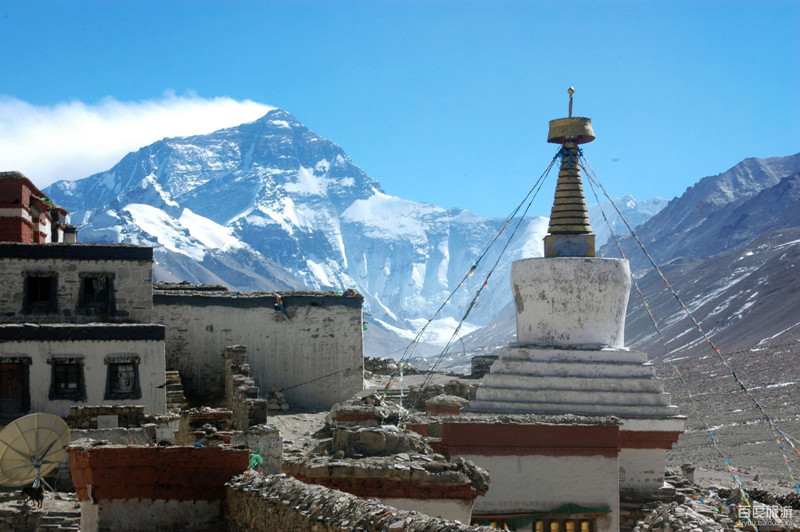
    Mount Everest (珠穆朗玛峰 / Qomolangma) is the highest mountain on Earth, rising 8,848.86 meters above sea level on the border between China’s Tibet Autonomous Region and Nepal. Known as the “Roof of the World,” Everest is not only a legendary destination for mountaineers but also a sacred Himalayan landmark featuring dramatic landscapes, Tibetan culture, and unforgettable high-altitude experiences. The Highest Peak on Earth: Everest’s enormous scale and majestic presence make it one of the world’s greatest natural wonders. Surrounded by numerous Himalayan peaks above 7,000 meters, the mountain creates a spectacular panorama of glaciers, snowfields, and high-altitude valleys. Everest Base Camp (Tibet) – The Best Viewpoint: The Tibet-side Everest Base Camp (珠峰大本营) is one of the most accessible places to admire the world’s highest peak. Located at about 5,200 meters, it offers a close view of Everest’s northern face and is a dream destination for travelers, photographers, and adventure seekers. Mountaineering Mecca: Everest is the ultimate challenge for climbers worldwide. Since the first successful summit in 1953, thousands of mountaineers have attempted to reach the top. Extreme altitude, low oxygen...
  • Tibet,Shigatse
  • Mount Kailash
    Popular
    ★★★★★

    Mount Kailash

    Mount Kailash (冈仁波齐 / Kang Rinpoche) is one of the most sacred mountains in the world and a legendary destination in western Tibet. Located in Ngari Prefecture (阿里地区), Tibet Autonomous Region, this pyramid-shaped snow mountain rises to 6,638 meters and is revered by Buddhism, Hinduism, Jainism, and Bon religion. Beyond its dramatic Himalayan scenery, Mount Kailash represents faith, spiritual purification, and the connection between humans and nature. Why Visit Mount Kailash? Sacred Mountain of Four Religions (四大宗教圣山):Mount Kailash is considered the center of the spiritual universe by several religions. Tibetan Buddhists believe it is the home of Demchok (胜乐金刚), while Hindus regard it as the dwelling place of Lord Shiva. Jain and Bon traditions also consider the mountain a sacred site connected with enlightenment and ancient beliefs. Every year, thousands of pilgrims travel here to complete religious rituals and circumambulate the mountain. Mount Kailash (冈仁波齐转山) – A World-Famous Pilgrimage Route:The Kailash Kora, also known as the Kailash Circuit, is one of the most important pilgrimage journeys in Asia. The approximately 52-kilometer route usually takes around three days to complete and...
  • Tibet,Ngari
  • Shannan
    ★★★★

    Shannan

    Shannan (山南 / Lhoka) is one of the oldest cultural regions in Tibet Autonomous Region, located in southeastern Tibet along the middle and lower reaches of the Yarlung Tsangpo River (雅鲁藏布江). Known as the “Cradle of Tibetan Civilization,” Shannan is where many important Tibetan historical “firsts” took place, including the first palace, first king, first monastery, and first farming settlement. With its combination of ancient Tibetan heritage, sacred lakes, monasteries, and spectacular plateau landscapes, Shannan is one of the best destinations for travelers seeking authentic Tibetan culture. Yungbulakang Palace (雍布拉康) – The First Palace of Tibet:Located on a hilltop overlooking the Yarlung Valley, Yungbulakang Palace is regarded as the first palace in Tibetan history, with more than 2,000 years of history. According to Tibetan tradition, it was built for Nyatri Tsenpo, the first Tibetan king. The palace offers panoramic views of surrounding farmland, mountains, and the birthplace of Tibetan civilization. Yamdrok Lake (羊卓雍措) – One of Tibet’s Three Sacred Lakes:Yamdrok Lake, together with Namtso Lake (纳木措) and Lake Manasarovar (玛旁雍措), is considered one of the three most sacred lakes in...
  • Tibet
  • Nagqu
    Popular
    ★★★★★

    Nagqu

    Nagqu (那曲/Naqu) is a vast highland region in northern Tibet, located between the Tanggula Mountains (唐古拉山脉) and Nyenchen Tangula Mountains (念青唐古拉山脉). Named after the Nagqu River, an upstream section of the Nujiang River, the region is famous for its endless grasslands, snow-covered mountains, sacred lakes, glaciers, and traditional Tibetan nomadic culture. Known as one of the most authentic destinations on the Tibetan Plateau, Nagqu offers travelers a rare opportunity to experience the wild beauty and traditional lifestyle of northern Tibet. Why Visit Nagqu? Siling Tso Lake (色林错) – The Largest Lake in Tibet:Siling Tso Lake is the largest lake in Tibet and one of the highest large lakes in the world. Its Tibetan name means the “Lake of the Demon”, reflecting ancient legends and religious beliefs. Surrounded by vast grasslands and snow mountains, the lake offers spectacular scenery with deep blue waters, abundant wildlife, and a peaceful atmosphere. Lake Tangra Yumco(当惹雍错) – Sacred Lake of Ancient Bon Religion:Tangra Yumco is one of the most sacred lakes in Tibet and holds special importance in the Bon religion, the ancient indigenous faith of Tibet....
  • Tibet
  • Lhasa
    Popular
    Must Go
    ★★★★★

    Lhasa

    Lhasa (拉萨), meaning the “Palace of the Gods” in Tibetan, is the capital of the Tibet Autonomous Region and the spiritual, cultural, and historical heart of Tibet. Located on the Lhasa River Valley at an altitude of around 3,650 meters, the city is famous for its sacred Buddhist sites, unique Tibetan architecture, bright sunshine, and deep-rooted traditions. For centuries, Lhasa has attracted pilgrims, explorers, and travelers from around the world seeking to experience the spiritual essence of Tibet. Why Visit Lhasa? Potala Palace (布达拉宫) – Symbol of Tibet:The iconic Potala Palace is the most famous landmark in Lhasa and a UNESCO World Heritage Site. Built on Red Hill (红山), the palace was the winter residence of the Dalai Lamas for centuries and served as the political and religious center of Tibet. Its magnificent white and red architecture, ancient murals, Buddhist statues, and sacred treasures represent the peak of Tibetan architectural art. Jokhang Temple (大昭寺) – The Spiritual Center of Tibetan Buddhism:Located in the heart of the old city, Jokhang Temple is considered the holiest temple in Tibetan Buddhism. Built in...
  • Tibet
  • Tibet
    Popular
    Must Go
    ★★★★★

    Tibet

    Tibet (西藏 / Xizang), known as the “Roof of the World,” is one of the most extraordinary travel destinations on Earth. Located on the Qinghai-Tibet Plateau, the highest plateau in the world, Tibet is famous for its breathtaking Himalayan landscapes, sacred Buddhist culture, ancient monasteries, and unique Tibetan traditions. With an average elevation of over 4,000 meters, the region offers travelers an unforgettable journey through snow mountains, glaciers, highland lakes, vast grasslands, and spiritual landscapes. Why Visit Tibet? The Roof of the World – Extraordinary Natural Landscapes:Tibet is home to some of the world’s most spectacular scenery, including snow-covered mountains, deep valleys, glaciers, alpine lakes, and endless highland wilderness. The region contains the highest mountains on Earth, including Mount Everest (珠穆朗玛峰), the world’s highest peak at 8,848.86 meters, as well as sacred mountains such as Mount Kailash (冈仁波齐). From the Himalayas to the vast Changtang grasslands, Tibet offers some of the most dramatic landscapes on the planet. Mount Everest (珠穆朗玛峰) – The Ultimate Himalayan Experience:Located in southern Tibet near the Nepal border, Mount Everest is the symbol of human adventure...
    Chamdo
    Popular
    ★★★★★

    Chamdo

    Chamdo (昌都 / Qamdo) is one of the most culturally and geographically important regions in eastern Tibet. Located at the junction of Tibet, Sichuan, Qinghai, and Yunnan, Chamdo has long been a key gateway connecting the Tibetan Plateau with southwest China. Historically, it was an important stop along the Ancient Tea Horse Road, earning the reputation as the “Pearl of Tibet” because of its role in trade, cultural exchange, and transportation. With magnificent snow mountains, alpine lakes, ancient monasteries, and rich Kham Tibetan culture, Chamdo offers travelers an authentic and less-crowded Tibetan experience. Why Visit Chamdo? Ranwu Lake (然乌湖) – The Pearl of Eastern Tibet: Ranwu Lake is one of the most beautiful alpine lakes in Tibet. Its Tibetan name refers to a lake with water as clear and pure as goat’s milk. Surrounded by snow mountains, forests, glaciers, and grasslands, the lake receives meltwater from the nearby Laigu Glacier (来古冰川), creating a stunning landscape of turquoise waters and snow-covered peaks. It is a paradise for photography and nature lovers. Laigu Glacier (来古冰川) – Spectacular Himalayan Ice World: Located near...
  • Tibet
  • Yushu
    ★★★★

    Yushu

    Located in southern Qinghai Province (青海省) on the eastern part of the Qinghai-Tibet Plateau (青藏高原), Yushu Tibetan Autonomous Prefecture (玉树藏族自治州) is one of the most culturally distinctive and ecologically important destinations in western China. As a major cultural center of the Kham Tibetan region (康巴藏区), Yushu is famous for its magnificent plateau landscapes, sacred mountains, Tibetan Buddhist heritage, traditional songs and dances, and unique nomadic culture. With vast grasslands, glaciers, wetlands, snow mountains, and wildlife reserves, Yushu offers travelers one of the most authentic experiences of Tibetan culture and the natural beauty of the Qinghai-Tibet Plateau. Why Visit Yushu? Sanjiangyuan National Park (三江源国家公园) – Source of China’s Great Rivers: Sanjiangyuan National Park is one of China’s most important ecological conservation areas and is known as the “Source of Three Rivers.” The region protects the headwaters of the Yangtze River (长江), Yellow River (黄河), and Lancang River (澜沧江). Its high-altitude grasslands, wetlands, glaciers, and diverse wildlife create a spectacular plateau ecosystem and provide visitors with opportunities for ecological exploration, photography, and nature observation. Hoh Xil National Nature Reserve (可可西里国家级自然保护区) – Untouched...
  • Qinghai
  • Yubeng
    Popular
    ★★★★★

    Yubeng

    Located in Deqin County (德钦县), Diqing Tibetan Autonomous Prefecture (迪庆藏族自治州), Yunnan Province (云南省), Yubeng Village (雨崩村) is one of China’s most famous highland hiking destinations. Hidden deep in the Meili Snow Mountain (梅里雪山) region, this remote Tibetan village is surrounded by snow-covered peaks, alpine forests, glaciers, waterfalls, and traditional Tibetan settlements. Known as a “paradise for hikers,” Yubeng offers a rare combination of spectacular mountain scenery, Tibetan culture, and spiritual pilgrimage routes. Why Visit Yubeng Village Meili Snow Mountain Views (梅里雪山景观): Yubeng is located at the foot of Meili Snow Mountain, one of the most sacred mountains in Tibetan Buddhism. The majestic Kawagarbo Peak (卡瓦格博峰), reaching 6,740 meters, is considered a holy mountain by Tibetan people. Clear mornings often provide breathtaking views of the snow-covered peaks rising above the village. Classic Hiking Destination: Yubeng is one of the best hiking areas in Yunnan and attracts outdoor enthusiasts from around the world. The trails pass through forests, valleys, alpine meadows, rivers, and Tibetan villages, offering unforgettable high-altitude trekking experiences. Upper Yubeng & Lower Yubeng Villages (上雨崩与下雨崩): The village is divided into...
  • Yunnan,Diqing
  • Make an Enquiry

    Whether you have travel inquiries, customization requests, or feedback, we're here to assist you anytime.

    Contact Information
  • 24/7 Hotline
  • Tel/Wechat/WhatsApp: +86-18064845137
  • Email Support
  • [email protected]
  • Office Address
  • Building 4, Yifuyuan, Hehong Road, Xishan District, Kunming, Yunnan, China
  • Business Hours
  • Daily: 9:00 am - 6:00 pm
    Sunday: Closed
  • Follow Us
    Click to change

    Share Your Trip Experience

    Help future travelers by reviewing your journey with Yaso Trip.