China Travel Agency, China Tours 2026/2027 | Yaso Trip
Theme Tours
View All China Theme Tours by Interest
Travel Guide
  • Travel Guide
  • Travel Tips
  • Tour Planning
  • Ethnic Culture
  • China Climate
  • Golf Courses
  • Yangtze Cruise
  • Travel Articles
  • Xinxiang

    View local experiences on map
    Guoliang cliff tunnel
    Highlight Attractions
    Mild spring weather
    Climate & Timing
    Local tourist buses
    Transportation & Transit
    Moderate ticket prices
    Budget & Value

    Located in northern Henan Province (河南省), Xinxiang (新乡) lies between the North China Plain and the southern Taihang Mountains (太行山). The city is especially known for dramatic red-cliff canyons, waterfalls, hanging roads, mountain villages, geological landscapes, and ancient cultural heritage. With Baligou and Baoquan both recognized as national 5A tourist attractions, Xinxiang has become one of Henan’s leading destinations for mountain sightseeing, hiking, outdoor recreation, and countryside travel.

    Why Visit Xinxiang?

    Baligou Scenic Area: Baligou Scenic Area (八里沟景区, 5A) in Huixian (辉县) is one of Xinxiang’s signature attractions, combining towering Taihang cliffs, deep valleys, waterfalls, streams, forests, and mountain trails. The wider scenic area includes Baligou, Jiulianshan, and Tianjieshan, making it especially suitable for hiking, waterfall sightseeing, summer escapes, and outdoor adventures.

    Wanxianshan Scenic Area: Wanxianshan Scenic Area (万仙山) is famous for spectacular red cliffs, mountain valleys, stone villages, and dramatic roads carved through the Taihang Mountains. It is one of the core scenic areas of the Xinxiang South Taihang tourism region and is particularly popular with hikers, photographers, and travelers interested in traditional mountain settlements.

    Guoliang Village & Guoliang Tunnel: Guoliang Village (郭亮村) is one of China’s best-known cliffside villages, surrounded by steep Taihang cliffs and traditional stone houses. Its most famous landmark is the Guoliang Tunnel (郭亮挂壁公路), a road hand-carved through the mountain by local villagers in the 1970s, creating one of Henan’s most remarkable combinations of human determination and dramatic mountain scenery.

    Baoquan Tourist Resort: Baoquan Tourist Resort (宝泉旅游区, 5A) is known for clear turquoise pools, waterfalls, steep cliffs, mountain lakes, and outdoor recreation. Water-based activities and cool canyon scenery make it especially popular in summer, while seasonal events and mountain experiences give it strong year-round appeal.

    Guanshan National Geopark: Guanshan Scenic Area (关山景区) features red-rock canyons, stone forests, waterfalls, mountain peaks, and distinctive geological formations. Its rugged terrain and dramatic natural scenery make it an excellent destination for hiking, geological sightseeing, and landscape photography.

    Baiquan Scenic Area: Baiquan Scenic Area (百泉景区) near Huixian is a historic garden and spring landscape with a history stretching back thousands of years. Natural springs, traditional architecture, ancient trees, pavilions, and cultural relics create a quieter contrast to Xinxiang’s dramatic mountain attractions.

    Bigan Temple: Bigan Temple (比干庙) in Weihui (卫辉) commemorates Bigan (比干), a famous loyal minister of ancient China. The temple, together with the historic resources of Weihui Ancient City, traditional towers, old streets, and nearby cultural sites, forms one of Xinxiang’s main historical and cultural tourism areas.

    Culture & Experiences

    Taihang Mountain Culture: The southern Taihang Mountains define much of Xinxiang’s travel identity. Hanging roads, stone villages, waterfalls, cliff trails, mountain viewpoints, and rural communities around Huixian offer a combination of adventure, scenery, photography, and traditional mountain life.

    Outdoor Experiences: Hiking, canyon exploration, waterfall sightseeing, mountain driving, camping, photography, and water activities are among the most popular experiences in Baligou, Baoquan, Wanxianshan, and Guanshan, making Xinxiang particularly attractive from spring through autumn.

    Historic Heritage: Beyond the mountains, Weihui, Bigan Temple, Baiquan, ancient villages, and traditional architecture reveal Xinxiang’s long cultural history, allowing travelers to combine natural landscapes with heritage and local folk traditions.

    At a Glance
    Chinese Name 新乡市
    Location Position Central China (Henan)
    Population Number Approx. 6.1 million
    Language Mandarin / Henan dialect
    Postal Code 453000
    Country Code +86 373
    Local Time Zone UTC+8
    ENQUIRY
    Have a question before booking? Message us to learn more.
    Click to change
    Michael Huang Vincent Zhao Justin Wang Gary Elliot Emma Liu Andrew Wang
    Questions about this destination? Real Yunnan travel advisors, usually reply within 12 hour.
    Tour Booking & Hotel Booking
    Built For The Best

    Tour Booking & Hotel Booking

    Travel with a licensed China travel agency. Book your tours and hotels in one place, with English-speaking local guides, no forced shopping stops, flexible date changes and 24-hour support. Send us your travel dates and our specialists will reply with a tailor-made itinerary and quote, usually within one working day.

    Travel Tips • 旅行提示
    View More ➔
    Attractions • 景点
    View More ➔
    Anyang
    Popular
    ★★★★

    Anyang

    Anyang (安阳), located in northern Henan Province, is one of China’s most important ancient cultural cities and a major birthplace of Chinese civilization. As one of the eight ancient capitals of China, Anyang was the capital of the Shang Dynasty more than 3,000 years ago and is internationally recognized for its archaeological discoveries, especially the Yin Ruins (殷墟). Combining ancient history, traditional culture, mountain landscapes, and modern city life, Anyang is an essential destination for travelers exploring the origins of Chinese civilization. Why Visit Anyang? Birthplace of Shang Civilization Anyang is best known as the location of Yin Ruins (殷墟), the last capital of the Shang Dynasty (approximately 1600–1046 BC) and a UNESCO World Heritage Site. The site revealed royal palaces, ancient tombs, bronze artifacts, and oracle bone inscriptions (甲骨文), which provide some of the earliest written records of Chinese history. Visitors can explore the ruins and museums to understand the origins of Chinese characters, ritual culture, and early state civilization. Ancient Capital and Historical Heritage Beyond the Shang Dynasty, Anyang has played an important role throughout Chinese history. The...
  • Henan
  • Hebi

    Hebi

    Hebi (鹤壁), located in northern Henan Province, is a small but culturally rich city situated at the eastern edge of the Shanxi Plateau. Surrounded by mountains, rivers, and ancient cultural landscapes, Hebi combines natural scenery, ancient Chinese legends, coal-mining heritage, and traditional Central Plains culture. Although less internationally known than nearby Anyang or Zhengzhou, the city offers a peaceful travel experience with historic villages, mountain landscapes, and deep connections to early Chinese civilization. Why Visit Hebi? Ancient Culture and Legendary Heritage Hebi has a long history as part of the Central Plains civilization area and is closely associated with ancient Chinese legends and historical figures. The region preserves cultural traces from the Shang and Zhou periods, with traditional villages, temples, and archaeological sites reflecting the development of early Chinese society. Natural Landscapes and Mountain Scenery Located near the Taihang Mountain region, Hebi features dramatic valleys, forests, cliffs, and streams. The city’s mountainous areas provide opportunities for hiking, photography, and rural exploration, especially during spring when flowers bloom and autumn when forests turn golden. Famous Attractions Yunmeng Mountain (云梦山) is one...
  • Henan
  • Jiaozuo

    Jiaozuo

    Jiaozuo (焦作) is a prefecture-level city in northern Henan Province (河南省), located on the northern bank of the Yellow River (黄河) and at the southern edge of the Taihang Mountains (太行山). Bordering Zhengzhou (郑州), Xinxiang (新乡), Jiyuan (济源), Luoyang (洛阳), and Shanxi Province (山西省), Jiaozuo is an important regional city in the Central Plains urban area. Known for its spectacular mountain scenery, ancient cultural heritage, martial arts traditions, and ecological landscapes, Jiaozuo is one of the most attractive destinations in northern Henan. Why Visit Jiaozuo? Yuntai Mountain (云台山) – Taihang Mountain Landscape Wonder Yuntai Mountain (云台山) is the most famous attraction in Jiaozuo and a UNESCO Global Geopark known for its dramatic cliffs, deep valleys, waterfalls, and clear streams. The spectacular Red Stone Valley (红石峡), Tanpu Valley (潭瀑峡), and Zhuyu Peak (茱萸峰) showcase the unique geological beauty of the Taihang Mountains (太行山). The area offers excellent hiking, photography, and nature experiences throughout the year, with cool waterfalls in summer, colorful forests in autumn, and snow-covered scenery in winter. Shennong Mountain (神农山) and Natural Ecology Shennong Mountain (神农山) is another major...
  • Henan
  • Kaifeng
    Popular
    Must Go
    ★★★★★

    Kaifeng

    Kaifeng (开封), formerly known as Dongjing (东京), Bianzhou (汴州), Bianjing (汴京), and Bianliang (汴梁), is one of China’s Eight Ancient Capitals and a major historical city in Henan Province. As the capital of the Northern Song Dynasty, Kaifeng was once one of the world’s most prosperous cities and remains famous for its Song Dynasty culture, ancient architecture, traditional arts, folk customs, and historic landmarks. With more than 4,100 years of urban history, it is an important cultural tourism destination in the Central Plains. Why Visit Kaifeng? Ancient Capital of the Northern Song Dynasty Kaifeng is known as the “Ancient Capital of Ten Dynasties” and reached its peak during the Northern Song Dynasty, when it became a major political, economic, and cultural center. The city’s prosperity was famously recorded in the painting “Along the River During the Qingming Festival” (清明上河图), which depicts the lively streets, markets, and river scenery of ancient Kaifeng. Historic Sites and Song Culture Kaifeng preserves many important cultural landmarks, including Millennium City Park (清明上河园), Dragon Pavilion Park (龙亭公园), Song Dynasty Imperial Street (宋都御街), Iron Pagoda Park (铁塔公园),...
  • Henan
  • Luohe

    Luohe

    Located in central Henan Province (河南省), Luohe (漯河) is a prefecture-level city on the Huanghuai Plain, surrounded by Xuchang (许昌), Zhoukou (周口), Zhumadian (驻马店), and Pingdingshan (平顶山). Known as an important food industry city in China, Luohe combines Central Plains culture, river landscapes, agricultural traditions, and local lifestyle, offering travelers an authentic experience away from the major tourist centers. Why Visit Luohe? Food Culture and Local Flavors: Luohe is one of China’s important food industry bases, with a strong culinary identity rooted in traditional Henan cuisine. Visitors can enjoy local noodles, wheat-based dishes, steamed foods, snacks, and regional specialties while experiencing the everyday food culture of the Central Plains. Shali River Scenic Area (沙澧河风景区): The Shali River, where the Sha River (沙河) and Li River (澧河) meet, is the city’s most attractive urban landscape. The riverside area features parks, green spaces, walking paths, bridges, and leisure facilities, making it a popular place for sightseeing, cycling, photography, and evening relaxation. Xu Shen Cultural Park (许慎文化园): Dedicated to Xu Shen (许慎), the Han Dynasty scholar and author of Shuowen Jiezi (说文解字), this...
  • Henan
  • Luoyang
    Popular
    ★★★★★

    Luoyang

    Located in western Henan Province (河南省) along the Luo River (洛河), Luoyang (洛阳) is one of China’s great ancient capitals and a major cradle of Chinese civilization. The city served as a capital for thirteen dynasties and is celebrated for imperial history, Buddhist art, ancient archaeology, traditional neighborhoods, and its famous peonies. From the UNESCO-listed Longmen Grottoes to White Horse Temple and spring peony gardens, Luoyang is one of the most rewarding cultural destinations in Central China. Why Visit Luoyang? Longmen Grottoes: Longmen Grottoes (龙门石窟) is Luoyang’s most important cultural landmark and a UNESCO World Heritage Site. Thousands of Buddhist caves, niches, inscriptions, and sculptures were carved into the limestone cliffs along the Yi River (伊河), with masterpieces dating especially from the Northern Wei and Tang dynasties. The monumental Fengxian Temple (奉先寺) and its giant Vairocana Buddha represent some of the finest achievements of Chinese Buddhist stone carving. White Horse Temple: White Horse Temple (白马寺) is traditionally regarded as China’s earliest officially established Buddhist temple and is one of the country’s most influential Buddhist heritage sites. Historic halls, pagodas, Buddhist...
  • Henan
  • Nanyang

    Nanyang

    Located in southwestern Henan Province (河南省), Nanyang (南阳) is one of the province’s richest destinations for history, mountains, ancient architecture, traditional medicine, and geological exploration. With more than 2,800 years of urban history, Nanyang is closely associated with famous figures such as Zhuge Liang (诸葛亮), Zhang Zhongjing (张仲景), and Zhang Heng (张衡). Beyond the historic city, the Funiu Mountains (伏牛山), dinosaur fossil sites, ancient government offices, merchant towns, and the Danjiangkou Reservoir (丹江口水库) create a diverse travel experience combining culture and nature. Why Visit Nanyang? Wolonggang Wuhou Shrine: Wolonggang Wuhou Shrine (卧龙岗武侯祠) is Nanyang’s most famous historic attraction and is closely associated with Zhuge Liang, the celebrated strategist of the Three Kingdoms period. Traditional halls, memorial buildings, ancient trees, stone inscriptions, and the surrounding Wolonggang cultural landscape bring the stories of Zhuge Liang and the “Three Visits to the Thatched Cottage” to life. Nanyang Han Painting Museum: Nanyang Han Painting Museum (南阳汉画馆) preserves one of China’s most important collections of Han Dynasty pictorial stone carvings. The works depict mythology, astronomy, hunting, music, dance, daily life, and ancient beliefs, providing an...
  • Henan
  • Pingdingshan

    Pingdingshan

    Located in central Henan Province (河南省), Pingdingshan (平顶山), also known as the “Eagle City,” combines the mountain scenery of the Funiu Mountains (伏牛山) with Buddhist heritage, ancient government architecture, celebrated Ru porcelain, lakes, forests, and hot-spring culture. From the dramatic peaks of Yaoshan to the historic kilns of Ruzhou, the city is well suited to travelers interested in nature, traditional craftsmanship, history, and wellness tourism. Why Visit Pingdingshan? Yaoshan Scenic Area: Yaoshan Scenic Area (尧山风景名胜区, 5A) in Lushan County (鲁山县) is Pingdingshan’s signature mountain destination, featuring granite peaks, deep valleys, waterfalls, forests, cloud seas, and dramatic hiking landscapes. It is especially popular for mountain sightseeing, summer escapes, autumn foliage, and outdoor adventures. Zhongyuan Buddha: Zhongyuan Buddha Scenic Area (中原大佛景区) near Yaoshan combines monumental Buddhist art with Foquan Temple (佛泉寺), mountain scenery, pilgrimage spaces, and cultural architecture. The enormous Buddha statue is the centerpiece of the complex and one of the best-known religious landmarks in Henan. Yaoshan Hot Springs: The Yaoshan Hot Spring (尧山温泉) area around Lushan adds a strong wellness element to a mountain trip. Hot-spring resorts can be combined...
  • Henan
  • Puyang

    Puyang

    Located in northeastern Henan Province (河南省) on the northern side of the Yellow River (黄河), Puyang (濮阳) is a historic city where prehistoric civilization, Yellow River culture, ancient state heritage, traditional acrobatics, and modern urban leisure come together. The discovery of a shell-mosaic dragon at Xishuipo Site (西水坡遗址) dating back more than 6,000 years earned Puyang its reputation as the “Dragon Capital of China,” while its long history as an important settlement of the Central Plains gives the city considerable archaeological and cultural depth. Why Visit Puyang? Xishuipo Site: Xishuipo Site (西水坡遗址) is one of Puyang’s most important prehistoric archaeological sites and the place where the famous shell-mosaic dragon known as the “First Dragon of China” (中华第一龙) was discovered in 1987. The find has become the defining symbol of Puyang’s dragon culture and provides an important window into prehistoric beliefs and early civilization in the Central Plains. Qicheng Cultural Relics Scenic Area: Qicheng Cultural Relics Scenic Area (戚城文物景区, 4A) is built around the ancient Qicheng Site (戚城遗址), an important city of the State of Wei during the Spring and Autumn...
  • Henan
  • Sanmenxia

    Sanmenxia

    Located in western Henan Province (河南省) on the southern bank of the Yellow River (黄河), Sanmenxia (三门峡) is one of the province’s most distinctive destinations for Yellow River scenery, winter swan watching, prehistoric archaeology, ancient frontier culture, and traditional loess architecture. Surrounded by the Loess Plateau, mountains, river wetlands, and historic passes, Sanmenxia is especially known as the “City of Swans” and as an important center for exploring Yangshao culture, Guo State heritage, and the ancient Hangu Pass. Why Visit Sanmenxia? Swan Lake: Swan Lake National Urban Wetland Park (天鹅湖国家城市湿地公园) is Sanmenxia’s signature ecological attraction. Every winter, large numbers of whooper swans migrate to the Yellow River wetlands, creating one of northern China’s most impressive seasonal birdwatching spectacles. Sunrise and sunset are particularly attractive for wildlife photography and riverside walks. Sanmenxia Dam: Sanmenxia Dam (三门峡大坝) is an important landmark on the Yellow River, combining large-scale hydraulic engineering with broad river scenery. Together with nearby viewpoints, museums, cruises, and the Yellow River ecological corridor, it provides an excellent introduction to the relationship between the river and the development of modern Sanmenxia....
  • Henan
  • Shangqiu

    Shangqiu

    Located in eastern Henan Province (河南省), Shangqiu (商丘) is one of the important historic cities of the Central Plains (中原) and a major center for exploring the origins of Shang civilization, ancient commerce, traditional academies, Han Dynasty heritage, and old-city architecture. Positioned near the borders of Shandong (山东) and Anhui (安徽), Shangqiu combines thousands of years of history with convenient railway connections, making it an appealing cultural stop in eastern Henan. Why Visit Shangqiu? Shangqiu Ancient City: Shangqiu Ancient City (商丘古城), historically known as Guidefu (归德府), is the cultural heart of the city. Its old walls, gates, moat, traditional streets, temples, former residences, and historic courtyards preserve the atmosphere of a traditional northern Chinese city. Important sites within and around the ancient city include Guidefu City Wall (归德府城墙), Zhang Xun Temple (张巡祠), Confucian Temple (文庙), and the former residence of Hou Fangyu. Yingtian Academy: Yingtian Academy (应天书院) is one of the most celebrated historic academies in China and is traditionally listed alongside Yuelu Academy, Bailudong Academy, and Songyang Academy among the country’s Four Great Academies. Closely associated with the intellectual...
  • Henan
  • Xinyang

    Xinyang

    Located in southern Henan Province (河南省), Xinyang (信阳) lies between the Dabie Mountains (大别山) and the Huai River (淮河), where northern and southern Chinese landscapes and cultures meet. Often described as a place of “northern landscapes with southern charm,” Xinyang is especially known for green mountains, lakes, forests, Xinyang Maojian Tea, revolutionary heritage, and a mild ecological environment. Its combination of tea culture, summer resorts, wetlands, mountain scenery, and red tourism makes it one of southern Henan’s most distinctive destinations. Why Visit Xinyang? Jigong Mountain: Jigong Mountain (鸡公山) is Xinyang’s best-known mountain destination and one of China’s historic summer resorts. Forested peaks, waterfalls, cloud seas, cool summer temperatures, and an unusual collection of historic international-style villas give the mountain both natural and architectural appeal. Baoxiao Peak (报晓峰) is one of its signature viewpoints. Nanwan Lake: Nanwan Lake (南湾湖) combines clear water, forested islands, tea-growing hills, and peaceful lakeside scenery close to downtown Xinyang. Boat trips, island sightseeing, waterside recreation, and surrounding tea landscapes make it especially attractive for relaxed nature trips and summer escapes. Xinyang Maojian Tea: Xinyang Maojian (信阳毛尖)...
  • Henan
  • Xuchang

    Xuchang

    Located in central Henan Province (河南省), Xuchang (许昌) is one of the most culturally distinctive cities of the Central Plains, best known for its deep connections with the Three Kingdoms period, Cao Wei culture, Jun porcelain, ancient towns, flower landscapes, and traditional Chinese heritage. Once an important political center associated with Cao Cao (曹操) and the rise of the Wei Kingdom, today Xuchang combines historical landmarks with modern cultural districts, ceramic craftsmanship, forest scenery, and countryside leisure. Why Visit Xuchang? Cao Wei Ancient City: Cao Wei Ancient City (曹魏古城) is the cultural heart of downtown Xuchang, recreating the atmosphere of the ancient capital associated with the Three Kingdoms era. Traditional-style streets, illuminated architecture, cultural performances, restaurants, and nearby historic sites make it especially lively in the evening. Chunqiu Tower: Chunqiu Tower (春秋楼) is one of Xuchang’s best-known Three Kingdoms landmarks and is closely connected with stories of Guan Yu (关羽). Historic halls, courtyards, sculptures, and traditional architecture make it an important stop for visitors interested in the legends and culture of the Three Kingdoms. Baling Bridge: Baling Bridge Scenic Area...
  • Henan
  • Zhengzhou
    Popular
    Must Go
    ★★★★★

    Zhengzhou

    Located in the heart of Henan Province (河南省), Zhengzhou (郑州) is the provincial capital and one of the most important transportation, commercial, and cultural centers in Central China. As a major birthplace of Chinese civilization and an important city along the Yellow River (黄河), Zhengzhou combines ancient capital heritage, archaeological discoveries, modern urban development, traditional opera, and easy access to Mount Song (嵩山) and Shaolin Temple (少林寺). Why Visit Zhengzhou? Ancient Capital Heritage: Zhengzhou has a history stretching back thousands of years and is recognized as one of China’s important ancient capitals. Archaeological remains from the Shang Dynasty, ancient city walls, tombs, and historic settlements reveal the city’s role in the early development of Chinese civilization and the formation of Central Plains culture. Yellow Emperor Culture: Xinzheng (新郑), under Zhengzhou, is traditionally associated with Xuanyuan, the Yellow Emperor (轩辕黄帝), one of the legendary ancestors of Chinese civilization. The Hometown of the Yellow Emperor (黄帝故里) is an important destination for exploring ancestral traditions, ceremonial culture, and the historical identity of the Central Plains. Yellow River Scenic Area: The Yellow River Scenic...
  • Henan
  • Zhoukou

    Zhoukou

    Located in eastern Henan Province (河南省), Zhoukou (周口) is a historic city shaped by the Shaying River (沙颍河) and the broad plains of central China. Known for its deep connections with Fuxi culture, Laozi and Taoist heritage, ancient archaeology, traditional temples, lake scenery, and folk customs, Zhoukou offers a different side of Henan beyond the province’s famous mountain destinations. Its cultural tourism is particularly centered on Huaiyang (淮阳), Luyi (鹿邑), and the old urban districts of Zhoukou. Why Visit Zhoukou? Taihao Fuxi Mausoleum: Taihao Fuxi Mausoleum Cultural Tourism Area (太昊伏羲陵文化旅游区, 5A) in Huaiyang District (淮阳区) is Zhoukou’s most important cultural landmark. Dedicated to the legendary ancestor Fuxi, the complex features an impressive sequence of traditional gates, halls, ancient cypress trees, ceremonial spaces, and the Fuxi tomb. The annual temple fair and Fuxi cultural celebrations make it one of Henan’s most important destinations for exploring traditional ancestor culture. Laozi Hometown: Luyi County (鹿邑县) is traditionally associated with Laozi (老子), the ancient philosopher connected with Taoism. The Laozi Hometown Tourism Area (老子故里旅游区) includes Taiqing Palace (太清宫) and Mingdao Palace (明道宫), where traditional...
  • Henan
  • Zhumadian

    Zhumadian

    Located in southern Henan Province (河南省), Zhumadian (驻马店) is a destination where unusual granite mountains, lakes, ancient post-station culture, Buddhist heritage, revolutionary history, and countryside landscapes come together. The city’s tourism resources are often summarized through its major mountains and lakes, with Chaya Mountain, Laole Mountain, Tongshan, Suya Lake, and other natural areas forming the backbone of local outdoor travel. Why Visit Zhumadian? Chaya Mountain: Chaya Mountain Scenic Area (嵖岈山景区, 5A) in Suiping County (遂平县) is Zhumadian’s signature attraction and a nationally rated 5A scenic area. Its dramatic granite peaks, huge balanced rocks, narrow passages, mountain lakes, and unusual stone formations create a landscape ideal for hiking, photography, and geological sightseeing. Laole Mountain: Laole Mountain (老乐山) in Queshan County (确山县) combines forested mountains, valleys, traditional culture, and wellness-oriented tourism. Together with Chaya Mountain and other western mountain areas, it forms one of Zhumadian’s important ecological and recreational tourism zones. Nanhai Zen Temple: Nanhai Zen Temple (南海禅寺, 4A) in Runan County (汝南县) is one of the region’s major Buddhist cultural attractions, known for its extensive temple complex, monumental halls, courtyards, Buddhist...
  • Henan
  • Dengfeng
    ★★★★★

    Dengfeng

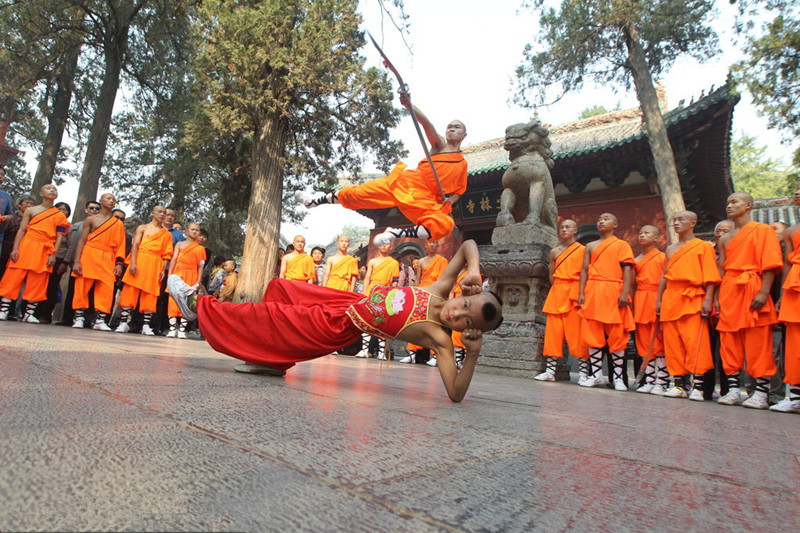
    Located southwest of Zhengzhou (郑州) in Henan Province (河南省), Dengfeng (登封) lies at the foot of Mount Song (嵩山), one of China’s Five Great Mountains. The city is one of China’s most important centers of Buddhism, Taoism, Confucian learning, martial arts, and ancient astronomy. Its Historic Monuments of Dengfeng in “The Centre of Heaven and Earth” were inscribed on the UNESCO World Heritage List in 2010, making Dengfeng especially rewarding for travelers interested in Chinese philosophy, religion, architecture, kung fu, and mountain scenery. Why Visit Dengfeng? Shaolin Temple: Shaolin Temple (少林寺) is Dengfeng’s most internationally famous attraction and one of the symbolic centers of Chinese kung fu and Chan Buddhism. Founded in 495, the temple complex includes historic halls, courtyards, martial-arts traditions, and the nearby Pagoda Forest (塔林), creating a unique combination of Buddhist heritage and martial culture. Mount Song: Mount Song (嵩山) is the sacred mountain landscape surrounding Dengfeng and the cultural setting for many of its most important monuments. The Taishi Mountain (太室山) and Shaoshi Mountain (少室山) areas offer rocky peaks, valleys, ancient paths, temples, and panoramic hiking...
  • Henan,Zhengzhou
  • View on Map
    Jiaozuo

    Jiaozuo

    Jiaozuo (焦作) is a prefecture-level city in northern Henan Province (河南省), located on the northern bank of the Yellow River (黄河) and at the southern edge of the Taihang Mountains (太行山). Bordering Zhengzhou (郑州), Xinxiang (新乡), Jiyuan (济源), Luoyang (洛阳), and Shanxi Province (山西省), Jiaozuo is an important regional city in the Central Plains urban area. Known for its spectacular mountain scenery, ancient cultural heritage, martial arts traditions, and ecological landscapes, Jiaozuo is one of the most attractive destinations in northern Henan. Why Visit Jiaozuo? Yuntai Mountain (云台山) – Taihang Mountain Landscape Wonder Yuntai Mountain (云台山) is the most famous attraction in Jiaozuo and a UNESCO Global Geopark known for its dramatic cliffs, deep valleys, waterfalls, and clear streams. The spectacular Red Stone Valley (红石峡), Tanpu Valley (潭瀑峡), and Zhuyu Peak (茱萸峰) showcase the unique geological beauty of the Taihang Mountains (太行山). The area offers excellent hiking, photography, and nature experiences throughout the year, with cool waterfalls in summer, colorful forests in autumn, and snow-covered scenery in winter. Shennong Mountain (神农山) and Natural Ecology Shennong Mountain (神农山) is another major...
  • Henan
  • Zhengzhou
    Popular
    Must Go
    ★★★★★

    Zhengzhou

    Located in the heart of Henan Province (河南省), Zhengzhou (郑州) is the provincial capital and one of the most important transportation, commercial, and cultural centers in Central China. As a major birthplace of Chinese civilization and an important city along the Yellow River (黄河), Zhengzhou combines ancient capital heritage, archaeological discoveries, modern urban development, traditional opera, and easy access to Mount Song (嵩山) and Shaolin Temple (少林寺). Why Visit Zhengzhou? Ancient Capital Heritage: Zhengzhou has a history stretching back thousands of years and is recognized as one of China’s important ancient capitals. Archaeological remains from the Shang Dynasty, ancient city walls, tombs, and historic settlements reveal the city’s role in the early development of Chinese civilization and the formation of Central Plains culture. Yellow Emperor Culture: Xinzheng (新郑), under Zhengzhou, is traditionally associated with Xuanyuan, the Yellow Emperor (轩辕黄帝), one of the legendary ancestors of Chinese civilization. The Hometown of the Yellow Emperor (黄帝故里) is an important destination for exploring ancestral traditions, ceremonial culture, and the historical identity of the Central Plains. Yellow River Scenic Area: The Yellow River Scenic...
  • Henan
  • Henan
    ★★★★

    Henan

    Henan (河南) is one of China’s most important historical and cultural provinces and is widely regarded as the cradle of Chinese civilization. Located in the heart of the Central Plains, Henan has been a political, economic, and cultural center for thousands of years, with a history spanning more than 3,000 years. The province is home to ancient capitals, UNESCO World Heritage sites, Buddhist temples, martial arts traditions, Yellow River landscapes, and rich local cuisine, making it one of the best destinations for travelers seeking to understand the origins of Chinese culture. Why Visit Henan? Ancient Capitals and Chinese Civilization Henan preserves some of China’s most important historical cities, including Luoyang (洛阳), Kaifeng (开封), Zhengzhou (郑州), and Anyang (安阳). These ancient capitals witnessed the rise and development of major dynasties and left behind remarkable archaeological sites, imperial monuments, and cultural traditions. The province is a living museum of Chinese history, from early Bronze Age civilization to the golden age of the Tang and Song dynasties. Luoyang (洛阳) – Imperial Capital and Buddhist Heritage Luoyang (洛阳) is one of China’s oldest capitals...
    Kaifeng
    Popular
    Must Go
    ★★★★★

    Kaifeng

    Kaifeng (开封), formerly known as Dongjing (东京), Bianzhou (汴州), Bianjing (汴京), and Bianliang (汴梁), is one of China’s Eight Ancient Capitals and a major historical city in Henan Province. As the capital of the Northern Song Dynasty, Kaifeng was once one of the world’s most prosperous cities and remains famous for its Song Dynasty culture, ancient architecture, traditional arts, folk customs, and historic landmarks. With more than 4,100 years of urban history, it is an important cultural tourism destination in the Central Plains. Why Visit Kaifeng? Ancient Capital of the Northern Song Dynasty Kaifeng is known as the “Ancient Capital of Ten Dynasties” and reached its peak during the Northern Song Dynasty, when it became a major political, economic, and cultural center. The city’s prosperity was famously recorded in the painting “Along the River During the Qingming Festival” (清明上河图), which depicts the lively streets, markets, and river scenery of ancient Kaifeng. Historic Sites and Song Culture Kaifeng preserves many important cultural landmarks, including Millennium City Park (清明上河园), Dragon Pavilion Park (龙亭公园), Song Dynasty Imperial Street (宋都御街), Iron Pagoda Park (铁塔公园),...
  • Henan
  • Hebi

    Hebi

    Hebi (鹤壁), located in northern Henan Province, is a small but culturally rich city situated at the eastern edge of the Shanxi Plateau. Surrounded by mountains, rivers, and ancient cultural landscapes, Hebi combines natural scenery, ancient Chinese legends, coal-mining heritage, and traditional Central Plains culture. Although less internationally known than nearby Anyang or Zhengzhou, the city offers a peaceful travel experience with historic villages, mountain landscapes, and deep connections to early Chinese civilization. Why Visit Hebi? Ancient Culture and Legendary Heritage Hebi has a long history as part of the Central Plains civilization area and is closely associated with ancient Chinese legends and historical figures. The region preserves cultural traces from the Shang and Zhou periods, with traditional villages, temples, and archaeological sites reflecting the development of early Chinese society. Natural Landscapes and Mountain Scenery Located near the Taihang Mountain region, Hebi features dramatic valleys, forests, cliffs, and streams. The city’s mountainous areas provide opportunities for hiking, photography, and rural exploration, especially during spring when flowers bloom and autumn when forests turn golden. Famous Attractions Yunmeng Mountain (云梦山) is one...
  • Henan
  • Anyang
    Popular
    ★★★★

    Anyang

    Anyang (安阳), located in northern Henan Province, is one of China’s most important ancient cultural cities and a major birthplace of Chinese civilization. As one of the eight ancient capitals of China, Anyang was the capital of the Shang Dynasty more than 3,000 years ago and is internationally recognized for its archaeological discoveries, especially the Yin Ruins (殷墟). Combining ancient history, traditional culture, mountain landscapes, and modern city life, Anyang is an essential destination for travelers exploring the origins of Chinese civilization. Why Visit Anyang? Birthplace of Shang Civilization Anyang is best known as the location of Yin Ruins (殷墟), the last capital of the Shang Dynasty (approximately 1600–1046 BC) and a UNESCO World Heritage Site. The site revealed royal palaces, ancient tombs, bronze artifacts, and oracle bone inscriptions (甲骨文), which provide some of the earliest written records of Chinese history. Visitors can explore the ruins and museums to understand the origins of Chinese characters, ritual culture, and early state civilization. Ancient Capital and Historical Heritage Beyond the Shang Dynasty, Anyang has played an important role throughout Chinese history. The...
  • Henan
  • Jincheng

    Jincheng

    Located in southeastern Shanxi Province, Jincheng (晋城) is a historic city bordering Henan Province to the south and southeast. Known as the “Hometown of Chinese Ancient Architecture,” Jincheng preserves an impressive collection of ancient castles, temples, traditional villages, and courtyard houses. Surrounded by the Taihang Mountains (太行山), the city combines natural landscapes with the rich cultural heritage of the ancient Shangdang and Zezhou regions, making it an excellent destination for travelers interested in history, architecture, and rural China. Why Visit Jincheng? Ancient Architecture and Traditional Villages: Jincheng is one of the best places in China to explore well-preserved ancient residential architecture. The region contains numerous Ming and Qing Dynasty buildings, including traditional courtyards, temples, ancestral halls, and ancient villages. These historic communities reflect the prosperity of Shanxi merchants and the unique architectural style of northern China. Huangcheng Village and Chen Clan Mansion : The most famous attraction in Jincheng is Huangcheng Village (皇城村), home to the impressive Chen Clan Mansion (皇城相府). This large-scale Ming and Qing Dynasty residential complex features grand courtyards, defensive walls, elegant gates, and traditional halls. It...
  • Shanxi
  • Puyang

    Puyang

    Located in northeastern Henan Province (河南省) on the northern side of the Yellow River (黄河), Puyang (濮阳) is a historic city where prehistoric civilization, Yellow River culture, ancient state heritage, traditional acrobatics, and modern urban leisure come together. The discovery of a shell-mosaic dragon at Xishuipo Site (西水坡遗址) dating back more than 6,000 years earned Puyang its reputation as the “Dragon Capital of China,” while its long history as an important settlement of the Central Plains gives the city considerable archaeological and cultural depth. Why Visit Puyang? Xishuipo Site: Xishuipo Site (西水坡遗址) is one of Puyang’s most important prehistoric archaeological sites and the place where the famous shell-mosaic dragon known as the “First Dragon of China” (中华第一龙) was discovered in 1987. The find has become the defining symbol of Puyang’s dragon culture and provides an important window into prehistoric beliefs and early civilization in the Central Plains. Qicheng Cultural Relics Scenic Area: Qicheng Cultural Relics Scenic Area (戚城文物景区, 4A) is built around the ancient Qicheng Site (戚城遗址), an important city of the State of Wei during the Spring and Autumn...
  • Henan
  • Dengfeng
    ★★★★★

    Dengfeng

    Located southwest of Zhengzhou (郑州) in Henan Province (河南省), Dengfeng (登封) lies at the foot of Mount Song (嵩山), one of China’s Five Great Mountains. The city is one of China’s most important centers of Buddhism, Taoism, Confucian learning, martial arts, and ancient astronomy. Its Historic Monuments of Dengfeng in “The Centre of Heaven and Earth” were inscribed on the UNESCO World Heritage List in 2010, making Dengfeng especially rewarding for travelers interested in Chinese philosophy, religion, architecture, kung fu, and mountain scenery. Why Visit Dengfeng? Shaolin Temple: Shaolin Temple (少林寺) is Dengfeng’s most internationally famous attraction and one of the symbolic centers of Chinese kung fu and Chan Buddhism. Founded in 495, the temple complex includes historic halls, courtyards, martial-arts traditions, and the nearby Pagoda Forest (塔林), creating a unique combination of Buddhist heritage and martial culture. Mount Song: Mount Song (嵩山) is the sacred mountain landscape surrounding Dengfeng and the cultural setting for many of its most important monuments. The Taishi Mountain (太室山) and Shaoshi Mountain (少室山) areas offer rocky peaks, valleys, ancient paths, temples, and panoramic hiking...
  • Henan,Zhengzhou
  • Heze

    Heze

    Heze (菏泽), formerly known as Caozhou (曹州), is a prefecture-level city in southwestern Shandong Province (山东省), located at the junction of Shandong, Henan Province (河南省), and Anhui Province (安徽省). Known as the “Hometown of Peony,” Heze has a long history, rich folk traditions, and distinctive cultural heritage. With its fertile plains, traditional arts, beautiful gardens, and unique local customs, the city offers visitors an authentic experience of southwestern Shandong culture. Why Visit Heze? Peony Culture and Flower Tourism: Heze is one of the most famous peony-producing areas in China and is often called the “Peony Capital of China.” The city is famous for its large-scale peony gardens, especially during the spring blooming season when millions of flowers create colorful landscapes. The Heze International Peony Culture Tourism Festival (菏泽国际牡丹文化旅游节) attracts visitors from around the world to enjoy flower exhibitions, cultural performances, and traditional activities. Rich Folk Culture and Traditional Arts: Heze preserves many forms of traditional Chinese folk culture, including Luqin Opera (鲁琴戏), folk music, paper cutting, martial arts, and traditional handicrafts. These cultural traditions reflect the history and lifestyle of...
  • Shandong
  • Xuchang

    Xuchang

    Located in central Henan Province (河南省), Xuchang (许昌) is one of the most culturally distinctive cities of the Central Plains, best known for its deep connections with the Three Kingdoms period, Cao Wei culture, Jun porcelain, ancient towns, flower landscapes, and traditional Chinese heritage. Once an important political center associated with Cao Cao (曹操) and the rise of the Wei Kingdom, today Xuchang combines historical landmarks with modern cultural districts, ceramic craftsmanship, forest scenery, and countryside leisure. Why Visit Xuchang? Cao Wei Ancient City: Cao Wei Ancient City (曹魏古城) is the cultural heart of downtown Xuchang, recreating the atmosphere of the ancient capital associated with the Three Kingdoms era. Traditional-style streets, illuminated architecture, cultural performances, restaurants, and nearby historic sites make it especially lively in the evening. Chunqiu Tower: Chunqiu Tower (春秋楼) is one of Xuchang’s best-known Three Kingdoms landmarks and is closely connected with stories of Guan Yu (关羽). Historic halls, courtyards, sculptures, and traditional architecture make it an important stop for visitors interested in the legends and culture of the Three Kingdoms. Baling Bridge: Baling Bridge Scenic Area...
  • Henan
  • Jiaozuo
    Jiaozuo
    Zhengzhou
    Zhengzhou
    Henan
    Henan
    Kaifeng
    Kaifeng
    Hebi
    Hebi
    Anyang
    Anyang
    Jincheng
    Jincheng
    Puyang
    Puyang
    Dengfeng
    Dengfeng
    Heze
    Heze
    Xuchang
    Xuchang
    Luoyang
    Luoyang
    Handan
    Handan
    Pingdingshan
    Pingdingshan
    Shangqiu
    Shangqiu
    Changzhi
    Changzhi
    Luohe
    Luohe
    Zhoukou
    Zhoukou
    Xingtai
    Xingtai
    Liaocheng
    Liaocheng
    Linfen
    Linfen
    Bozhou
    Bozhou
    Zhumadian
    Zhumadian
    Pingyao
    Pingyao
    Sanmenxia
    Sanmenxia
    Yuncheng
    Yuncheng
    Jinzhong
    Jinzhong
    Qufu
    Qufu
    Yangquan
    Yangquan
    Nanyang
    Nanyang
    Shanxi
    Shanxi
    Tai'an
    Tai'an
    Taiyuan
    Taiyuan
    Huaibei
    Huaibei
    Shijiazhuang
    Shijiazhuang
    Hebei
    Hebei
    Mount Tai
    Mount Tai
    Hengshui
    Hengshui
    Jinan
    Jinan
    Dezhou
    Dezhou
    Fuyang
    Fuyang
    Xuzhou
    Xuzhou
    Shandong
    Shandong
    Zaozhuang
    Zaozhuang
    Lüliang
    Lüliang
    Huayin City
    Huayin City
    Xinyang
    Xinyang
    Xinzhou
    Xinzhou
    Mount Huashan
    Mount Huashan
    Danjiangkou
    Danjiangkou
    Shangluo
    Shangluo
    Xiangyang
    Xiangyang
    Linyi
    Linyi
    Suizhou
    Suizhou
    Mount Wutai
    Mount Wutai
    Weinan
    Weinan
    Mount Wudang
    Mount Wudang
    Zibo
    Zibo
    Shiyan
    Shiyan
    Baoding
    Baoding

    Make an Enquiry

    Whether you have travel inquiries, customization requests, or feedback, we're here to assist you anytime.

    Contact Information
  • 24/7 Hotline
  • Tel/Wechat/WhatsApp: +86-18064845137
  • Email Support
  • [email protected]
  • Office Address
  • Building 4, Yifuyuan, Hehong Road, Xishan District, Kunming, Yunnan, China
  • Business Hours
  • Daily: 9:00 am - 6:00 pm
    Sunday: Closed
  • Follow Us
    Click to change

    Share Your Trip Experience

    Help future travelers by reviewing your journey with Yaso Trip.