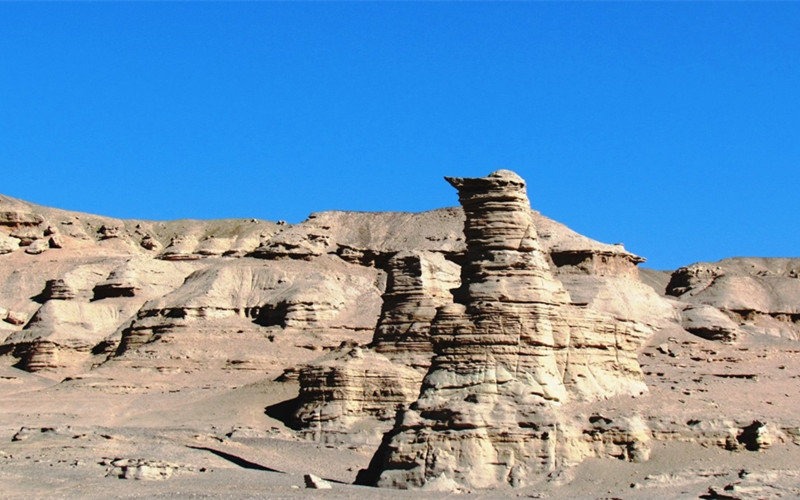
Wubao Tomb Complex in Kumul (Hami)

The Wubao Tomb Complex (五堡墓群) is located approximately 2 kilometers northwest of Wubao Township (五堡乡) in Hami City (哈密市), Xinjiang Uygur Autonomous Region (新疆维吾尔自治区), China. The site covers an area of around 5,000 square meters and dates back to the late clan commune period of the primitive society, belonging to the Bronze Age culture.

Location and Layout

The tombs are arranged on a mound, with a semi-circular layout. The graves are densely packed, and no covering soil is visible on the surface. Three rounds of excavation have uncovered 113 tombs. Due to the local geographic and climatic conditions, organic artifacts such as textiles have been well-preserved, with textiles forming a large portion of the unearthed relics. The tombs are arranged in an orderly fashion, consisting of rectangular vertical pit graves. The structure is simple, with shallow burial chambers covered by poplar wood, providing partial sealing. This allowed air circulation, which caused rapid moisture evaporation from the bodies, preventing bacterial growth and preserving the remains in a naturally mummified state.

Archaeological Significance

The Wubao Tomb Complex (五堡墓群) holds immense value not only in the study of Bronze Age culture but also in understanding the origins and development of ethnic groups in Xinjiang (新疆).

Historical Recognition

In May 2006, the Wubao Tomb Complex (五堡墓群) was officially listed as a National Key Cultural Relic Protection Unit (全国重点文物保护单位) by the State Council (国务院) of the People’s Republic of China.

History and Discoveries

The Wubao Tomb Complex (五堡墓群) was discovered in 1978. Excavations were carried out in 1978, 1986, and 1991 by archaeological teams from Xinjiang (新疆). In April 2017, conservation efforts began, focusing on protective measures such as guard houses, flood control dams, protective fences, and fire safety facilities.

Artifacts

Numerous daily life items have been discovered, including pottery jars, wooden buckets, spoons, combs, stone mortars, bronze knives, and ornaments. Production tools like stone mills, wooden hoes, triangular digging tools, bone needles, and spinning wheels were also found. Additionally, hunting and animal domestication items such as stone balls, bridles, stirrups, whips, and wooden wheels have been unearthed. The personal items of the tomb owners, including leather hats, boots, coats, and various wool textiles, have been preserved remarkably well. These textiles display fine craftsmanship, beautiful colors, and intricate patterns, providing insights into the textile techniques of the time.

Textile Relics

The textiles found at Wubao Tomb Complex (五堡墓群) are primarily woolen fabrics. They exhibit even yarn, dense organization, and good color retention, making them highly representative. Various weaving patterns such as plain weave, twill, and herringbone have been identified. The fibers used are predominantly red, yellow, blue (green), and brown, providing crucial historical, artistic, and scientific research value.

Some specific textile examples include:

  • Brown-Blue Checkered Felt (棕蓝色方格纹毡): Unearthed from Tomb 36, dating to around 1000 BCE. It measures 137 cm by 95 cm and is made from wool with brown and blue patterns. It is currently housed in the Xinjiang Institute of Archaeology (新疆文物考古研究所).

  • Colorful Small Checkered Woolen Fabric (彩色小方格毛织物): Dating to around 1000 BCE, this textile measures 18 cm by 13 cm. It has a plain yellow background with checkered patterns in brown and blue yarns.

  • Red Base with Yellow and Blue Triangle Pattern Embroidery (红地黄蓝色三角纹刺绣褐): Found at Wubao Tomb Complex (五堡墓群), this piece features a red background with intricate triangular patterns embroidered in yellow, blue, and green yarn.

Ancient Mummies

In 1978, a female mummy was discovered at Wubao Tomb Complex (五堡墓群). Scientific analysis determined that the remains date back approximately 3,200 years. The mummy was naturally preserved, with the skin turning a bronze color while the hair remained intact. The long brown-yellow hair was braided into two thick plaits. The facial features were well-preserved with deep-set eyes, a prominent nose, and closed lips. The mummy was buried in a curled position with her legs bent toward her abdomen. She wore a pointed woolen hat and a woolen or fur coat, with various wool textiles as undergarments. Her skin had rich subcutaneous tissue, and all internal organs were intact, though they had shrunk due to the mummification process. Blood type testing revealed her to be type O, and she was approximately 35 years old at the time of death. Based on her skeletal features, such as prominent cheekbones and a high nose bridge, experts identified her as having a European, Caucasian appearance.

In 1986, additional mummies, including a male mummy, were found with well-preserved skin and hair. The male mummy wore a leather coat, woolen fabric, and leather boots. Items such as a whetstone, bronze knife, and other tools were discovered alongside him.

Importance and Cultural Value

The Wubao Tomb Complex (五堡墓群) holds significant importance not only for the study of Bronze Age culture but also for understanding the origins and development of the ancient residents of Xinjiang (新疆).

Preservation Efforts

The tomb complex was designated as a National Key Cultural Relic Protection Unit (全国重点文物保护单位) by the State Council (国务院) in 2006, ensuring continued preservation and research efforts.

Visitor Information

Location: The Wubao Tomb Complex (五堡墓群) is located approximately 2 kilometers northwest of Wubao Township (五堡乡) in Hami City (哈密市), Xinjiang Uygur Autonomous Region (新疆维吾尔自治区), China.

Transportation

  • By Car: From the People’s Government of Hami City (哈密市人民政府), it takes approximately 66 minutes to reach the Wubao Tomb Complex (五堡墓群), covering a distance of about 62.9 kilometers.

This archaeological site offers an invaluable glimpse into the ancient civilizations of Xinjiang (新疆) and their culture, providing a fascinating opportunity for visitors and researchers alike.