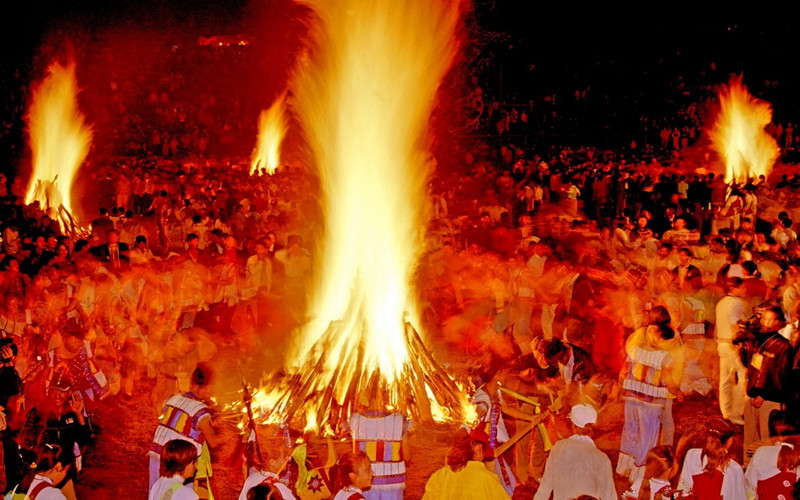
The Torch Festival (火把节) is the most celebrated and visually striking festival of the Yi ethnic minority (彝族), especially in Yunnan (云南) and Sichuan (四川). As one of the Yi people’s grandest cultural events, it is held alongside the Yi New Year (彝族年) and symbolizes unity, gratitude, and the hope for a bountiful harvest.
When and Where to Experience the Festival
The Torch Festival is celebrated in various Yi regions with slight timing differences:
- Sichuan and Yunnan: Around the 24th day of the 6th lunar month
- Guizhou (贵州): Around the 6th day of the 6th lunar month
The festival lasts 3 to 7 days, depending on local customs, making it a perfect time to explore Yi villages, ancient towns, and scenic areas. Key locations for visitors include:
- Xichang (西昌), Liangshan Yi Autonomous Prefecture (凉山彝族自治州), Sichuan – Known as the cultural heart of the festival.
- Chuxiong (楚雄), Yunnan – Famous for its traditional Yi villages and festive events.
- Stone Forest (石林), Yunnan – Offers a combination of natural beauty and Yi cultural performances.
- Mile (弥勒), Yunnan – Experience torch-lit processions in authentic Yi townships.
Traditional Rituals and Beliefs
The festival is deeply rooted in Yi spirituality. Communities offer sacrifices to:
- The Ruler of Heaven,
- The Mother of Earth, and
- Ancestral spirits.
These rituals express prayers for protection, prosperity, and agricultural abundance. As night falls, villagers light torches that illuminate homes and streets, believed to drive away evil spirits and invite good fortune for the year ahead.
Festival Activities and Cultural Performances
The Torch Festival is both a religious and social celebration. Visitors can witness:
- Torch-lit processions: Villagers parade through fields and streets carrying flaming torches, creating a magical visual spectacle.
- Singing and dancing: Young men and women perform traditional Yi dances, such as the Left Foot Dance (左脚舞), in vivid traditional costumes.
- Antiphonal singing (对唱): Interactive folk songs where groups sing in call-and-response style.
- Bullfights, horse races, and wrestling competitions: Exciting events that showcase traditional Yi sports.
- Evening bonfires: Locals gather around massive fires, celebrating with music, dance, and communal meals.
The combination of torchlight, music, and dance gives the festival a lively, immersive atmosphere unmatched by other events in China.
Legends and Folk Stories
The Torch Festival is inspired by Yi legends that reflect bravery, sacrifice, and devotion:
- Anan: A Yi woman who sacrificed herself by jumping into a fire after her husband was killed.
- King Dengdan’s Wife: Another tragic tale of a devoted woman perishing in flames.
These stories underscore the spiritual significance of the festival and the Yi people’s respect for ancestors.
Modern Cultural Experience
Today, the Torch Festival blends traditional rituals with tourist-friendly activities:
- Cultural performances in ancient Yi towns
- Opportunities to wear traditional Yi costumes for photos
- Food stalls serving Yi specialties, such as roasted meats and traditional corn wine
- Interactive experiences such as craft demonstrations and dance workshops
Visitors can immerse themselves in authentic Yi culture, observe local customs, and participate in festive celebrations alongside the community.
Visitor Tips for the Torch Festival
- Best time to visit: Late June (around the 24th day of the 6th lunar month).
- Recommended attire: Comfortable shoes for walking, lightweight clothing for the day, and a thin jacket for cooler nights.
- Photography: Torch-lit scenes are spectacular, but avoid photographing sacred rituals without permission.
- Local cuisine to try: Traditional Yi grilled meat, corn wine, and stir-fried mountain vegetables.
- Accommodation: Stay in Yi guesthouses or ancient towns for an immersive experience.
- Cultural etiquette: Do not step over torches, do not touch sacred objects, and show respect to elders during ceremonies.
Why Visit the Torch Festival
The Torch Festival offers a unique cultural adventure, combining heritage, music, dance, and community spirit. It is an unforgettable experience for travelers seeking authentic ethnic festivals in China, providing insight into the Yi people’s traditions, folklore, and way of life.