China Travel Agency, China Tours 2026/2027 | Yaso Trip
Theme Tours
View All China Theme Tours by Interest
Travel Guide
  • Travel Guide
  • Travel Tips
  • Tour Planning
  • Ethnic Culture
  • China Climate
  • Golf Courses
  • Yangtze Cruise
  • Travel Articles
  • Gansu Silk Road: Complete Hexi Corridor Travel Guide 2026/2027

    2026-04-24•Yaso trip•28631 words•About 96 minutes

    Quick Answer: How Many Days Do You Need for the Gansu Silk Road?

    Most travelers spend 6 to 8 days on the Gansu Silk Road, running the classic Hexi Corridor (河西走廊) from Lanzhou (兰州) through Zhangye (张掖), Jiayuguan (嘉峪关), and Dunhuang (敦煌). Add 2-3 days if you want to visit Xiahe's Labrang Monastery (拉卜楞寺) or extend into Qinghai Lake (青海湖). A 12-day Gansu tour built around Zhangye Danxia and Mogao Grottoes gives every major site room to breathe, and 19-day panoramas continue west into Xinjiang. The Hexi Corridor is the most accessible major Silk Road segment for international travelers — no permits, mature rail and road links, and English-guided tours available end to end.

    Key Takeaways

    ✔ The Hexi Corridor (河西走廊) is a 1,200 km (746 mi) desert-oasis passage from Lanzhou to Dunhuang, and the historical heart of the ancient Silk Road trade route.

    ✔ A standard Gansu Silk Road itinerary covers Lanzhou → Zhangye → Jiayuguan → Dunhuang in 6-8 days; deeper 10-12 day tours add Wuwei, Xiahe/Labrang, or Yulin Grottoes.

    ✔ Foreign travelers cannot book Mogao Grottoes tickets through the official WeChat system — you must buy in person at the Digital Exhibition Center with your passport, or arrange through a licensed China travel agency.

    ✔ Zhangye Danxia's rainbow colors only reveal themselves in low-angle light — arriving at Platform 4 (虹霞台) between 16:30 and 17:00 makes the difference between a photo and a memory.

    ✔ Best months to travel are May-June and September-October; summer heat exceeds 40°C (104°F) in the Gobi and winter closes some peripheral sites.

    ✔ Unlike Xinjiang or Tibet, Gansu requires no travel permits for foreign visitors, and the corridor is well-served by high-speed rail, expressways, and English-speaking guides.

    ✔ Yaso Trip designs Gansu Silk Road itineraries around real-world ticketing, weather, and light windows — not brochure schedules — so travelers actually see what they came for.

    Why Travel the Gansu Silk Road?

    Mogao Caves in Dunhuang, GansuMogao Caves in Dunhuang, Gansu
    Crescent Lake and Mingsha ShanCrescent Lake and Mingsha Shan
    • The best-preserved Silk Road heritage in China. Mogao Grottoes (莫高窟), the Great Wall's western terminus at Jiayuguan Pass (嘉峪关), Han-dynasty beacon towers, and the Yumen Pass (玉门关) all sit within a single 1,200 km corridor.
    • The most accessible major Silk Road segment for foreign travelers. No Xinjiang-style permits, mature rail and expressway network, and English-guided tour infrastructure end to end.
    • Landscapes that don't look like anywhere else in China. Zhangye Danxia's rainbow mountains, the Yadan Geopark yardangs (雅丹), the dune-and-oasis meeting at Crescent Moon Spring (月牙泉), and 5,000 m Qilian snow peaks all within a week's drive.
    • A rare density of world-class Buddhist cave art. Mogao at Dunhuang gets the fame; Yulin (榆林窟), Binglingsi (炳灵寺), and Mati Temple (马蹄寺) reward travelers who go one step deeper.
    • Real oasis food culture. Lanzhou beef noodles at their source, Dunhuang donkey-meat huangmian, Zhangye fried chicken, and Hui halal specialties from Linxia.
    • Combinable with either Xi'an or Xinjiang. Gansu is the natural middle stretch of any long Silk Road journey, and dedicated bullet trains connect it cleanly to both ends.

    A Natural Silk Road Built by Mountains, Deserts, and Rivers

    The Hexi Corridor (河西走廊) is not just a geographic passage—it is one of the most historically influential corridors in the world. For more than 2,000 years, it has functioned as the main gateway of the Silk Road (丝绸之路), connecting China’s heartland with Central Asia, West Asia, and even Europe.

    During the Han Dynasty (汉朝), the corridor became a strategic frontier after Emperor Wu expanded control westward. Military garrisons, agricultural settlements, and trade posts were established along the route. Cities like Zhangye (张掖), Jiuquan (酒泉), and Dunhuang (敦煌) became key hubs of diplomacy, trade, and cultural exchange.

    Later, during the Tang Dynasty (唐朝), the Hexi Corridor reached its cultural peak. Buddhism, art, music, and science flowed through this region, making it one of the most cosmopolitan areas in ancient China. Merchants, monks, soldiers, and scholars from different civilizations passed through the same desert roads, leaving behind a layered historical legacy that can still be seen today.

    The uniqueness of the Hexi Corridor (河西走廊) lies in its natural formation. It is a narrow strip of habitable land squeezed between two extreme environments: the towering Qilian Mountains (祁连山) in the south and vast deserts such as the Gobi and Badain Jaran Deserts (戈壁与巴丹吉林沙漠) in the north.

    This geography created a rare survival corridor in an otherwise harsh environment. Meltwater from snow-covered mountains flows downward to form rivers such as the Heihe (黑河), Shiyang River (石羊河), and Shule River (疏勒河). These rivers create oasis belts that support human settlement, agriculture, and ancient Silk Road cities.

    Without these mountain-fed rivers, the corridor would be entirely desert. This fragile balance between water and desert is what makes the Hexi Corridor so unique in global geography.

    Silk Road Cities That Shaped History

    Traveling through the Hexi Corridor today feels like walking through a chain of ancient civilizations.

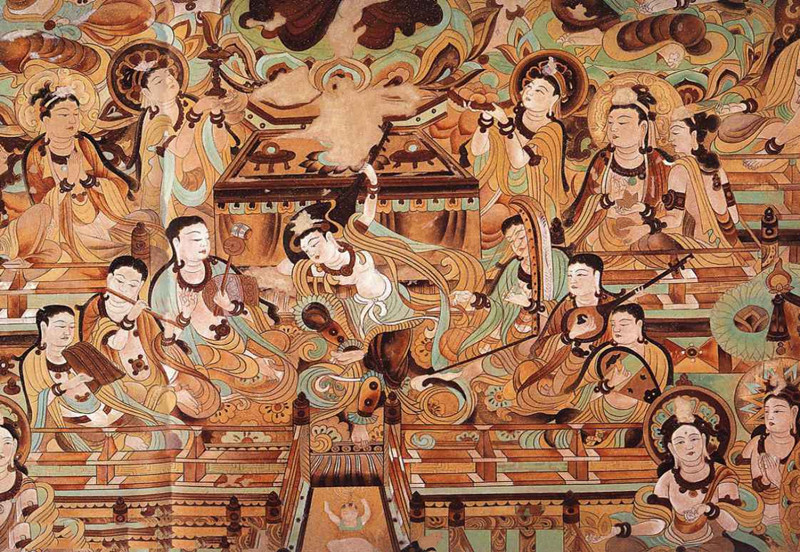
    Dunhuang (敦煌) was once the westernmost cultural capital of China, serving as a gateway between China and Central Asia. It is home to the world-famous Mogao Caves (莫高窟), a UNESCO World Heritage Site filled with Buddhist murals, sculptures, and manuscripts that document over a thousand years of religious and artistic evolution.

    Further east, Jiayuguan (嘉峪关) stands as the final fortress of the Great Wall, symbolizing the edge of ancient Chinese civilization. It controlled trade, migration, and military movement along the Silk Road.

    Zhangye (张掖), known as “Golden Zhangye (金张掖)”, was historically a fertile oasis city supported by the Heihe River (黑河). It became a key agricultural and military supply center during the Tang Dynasty.

    Wuwei (武威), the central hub of the corridor, was once called “Liangzhou (凉州)” and served as an important administrative and cultural center during multiple dynasties.

    Each of these cities is not just a stop along the route—they are living museums of Silk Road civilization.

    A Cultural Corridor of Ethnic Fusion and Exchange

    Id Kah Mosque Islam architectureId Kah Mosque Islam architecture
    Binglingsi Grottoes Buddhist caveBinglingsi Grottoes Buddhist cave

    One of the most defining characteristics of the Hexi Corridor (河西走廊) is its role as a multi-ethnic cultural melting zone. Over centuries, many ethnic groups have lived, traded, and migrated through this region, including Han (汉族), Tibetan (藏族), Mongolian (蒙古族), Uyghur ancestors, Yugur (裕固族), and others.

    This diversity created a unique cultural system where religions, languages, and customs blended together. Buddhism entered China through this corridor, Islamic culture later spread westward and eastward, and traditional Chinese Confucian culture mixed with steppe nomadic traditions.

    Even today, this cultural fusion can be seen in local festivals, architecture, music, and cuisine. The region preserves a rare combination of Confucian temples, Buddhist grottoes, and Islamic mosques, often within the same city.

    Landscape Diversity From Snow Mountains to Desert Oases

    The Hexi Corridor is one of the most visually dramatic regions in China.

    To the south, the Qilian Mountains (祁连山) rise high with snow-covered peaks and alpine meadows. These mountains act as the water source of the entire corridor.

    In the center, fertile oasis plains stretch across basins such as Zhangye Basin (张掖盆地) and Jiuquan Basin (酒泉盆地). These areas support agriculture, cities, and transportation routes.

    To the north, the land quickly transforms into vast deserts and wind-shaped landforms such as the Yadan Devil City (雅丹魔鬼城) near Dunhuang. These surreal landscapes feature rock formations carved by wind over millions of years.

    This dramatic transition—from snow mountains to green oases to desert wastelands—makes the Hexi Corridor one of the most photogenic travel routes in China.

    The Corridor, City by City

    The Hexi Corridor decomposes into six cities and one optional Tibetan-Buddhist detour. The route below runs west-to-east or east-to-west with equal ease — most 6-day itineraries begin in Lanzhou and end in Dunhuang, most 10-day itineraries add Xiahe.

    1. Lanzhou (兰州) — The Corridor's Eastern Gateway

    Standing on the Yellow River (黄河) waterfront at dusk, you watch the sheepskin-raft boatmen still working the current the way their grandfathers did, and you smell hand-pulled beef noodle steam rising from the alleys behind you. Lanzhou is where the Han empire pushed west, where Silk Road cargo cleared customs, and where every long Gansu journey begins with a bowl of Lanzhou lamian.

    Binglingsi Grottoes Buddhist cave art in Yongjing countyBinglingsi Grottoes Buddhist cave art in Yongjing county
    Lanzhou Yellow River waterfront and Zhongshan BridgeLanzhou Yellow River waterfront and Zhongshan Bridge

    Fact Panel

    • Location: Provincial capital of Gansu, along the Yellow River
    • Position on route: Corridor entry from Xi'an (2 hr high-speed rail east) or Chengdu (7-9 hr HSR south)
    • Signature sites: Binglingsi Grottoes (炳灵寺), Gansu Provincial Museum (甘肃省博物馆), White Pagoda Hill Park (白塔山公园), Zhongshan Bridge
    • Days needed: 1-2 days (arrival day + one full day)
    • Best time: Year-round; museum is indoors, grottoes best May-October
    • Highlights: The 500 mostly-Tang and Northern Wei Buddhist caves at Binglingsi (accessed via boat across Liujiaxia Reservoir); the Han-dynasty bronze "Galloping Horse of Wuwei" in the Gansu Provincial Museum; a first bowl of Lanzhou beef noodles at Mazilu or a neighborhood chain.

    Binglingsi Grottoes deserve special attention. The site is only reachable by a two-hour speedboat across the reservoir, which most one-day travelers won't attempt, but the murals inside Cave 169 date to 420 CE and predate almost anything at Mogao. A Gansu Silk Road itinerary that skips Binglingsi trades depth for a couple of hours of drive time — a bad trade.

    A Lanzhou-launched Gansu deep-dive covering Binglingsi plus the full corridor.

    8 Days Lanzhou Xiahe Jiayuguan Dunhuang Silk Road Tour

    8 Days Lanzhou Xiahe Jiayuguan Dunhuang Silk Road Tour

    Tour Route:Lanzhou-Jiayuguan-Dunhuang
    Tour Type:Silk Road Tours
  • 8 Days
  • 5 Places
  • View Detail

    2. Xiahe & Labrang Monastery (夏河 / 拉卜楞寺) — Optional Tibetan Detour

    The air changes about ninety minutes south of Linxia. Yak-butter smoke starts to drift from the roadside teahouses, prayer flags snap on the ridge lines, and by the time you reach Xiahe (夏河) at 2,900 m (9,514 ft), maroon-robed monks are walking the 3 km kora circuit around Labrang Monastery, spinning prayer wheels older than most countries.

    Labrang Monastery in Xiahe, GansuLabrang Monastery in Xiahe, Gansu
    Sangke Grassland in Xiahe, GansuSangke Grassland in Xiahe, Gansu

    Fact Panel

    • Location: Gannan Tibetan Autonomous Prefecture, south of Lanzhou
    • Position on route: Optional 2-day detour from Lanzhou; adds ~4 hours of driving each way
    • Signature sites: Labrang Monastery (拉卜楞寺), Sangke Grassland (桑科草原)
    • Days needed: 2 (one to reach, one to visit)
    • Best time: May-October (winter access viable but roads can freeze)
    • Highlights: Labrang is one of the six great monasteries of the Gelug (Yellow Hat) school of Tibetan Buddhism, home to more than 60 halls and living quarters for 1,500+ monks. Sangke Grassland offers horseback riding on a high alpine meadow within an hour's drive.

    Because Xiahe sits in a Tibetan cultural region but outside the Tibet Autonomous Region, no travel permits are required — this makes Labrang the most accessible major Gelug monastery in China for foreign visitors. The 8-day Lanzhou-Xiahe-Jiayuguan-Dunhuang route builds this detour in without inflating the trip length dramatically.

    An 8-day Silk Road route that includes Xiahe and Labrang.

    8 Days Lanzhou Xiahe Jiayuguan Dunhuang Silk Road Tour

    8 Days Lanzhou Xiahe Jiayuguan Dunhuang Silk Road Tour

    Tour Route:Lanzhou-Jiayuguan-Dunhuang
    Tour Type:Silk Road Tours
  • 8 Days
  • 5 Places
  • View Detail

    3. Wuwei (武威) — Han Empire's Frontier Capital

    Two thousand years ago Wuwei was the Han army's western headquarters, and the bronze Galloping Horse pulled from a Han tomb here in 1969 became the emblem of Chinese tourism. Today the city is a quiet three-hour drive west of Lanzhou, worth an overnight for two very old sites most Silk Road blogs skip entirely.

    Tiantishan Grottoes Exhibition Hall in WuweiTiantishan Grottoes Exhibition Hall in Wuwei
    Leitai Tomb the Galloping Horse in Wuwei, GansuLeitai Tomb the Galloping Horse in Wuwei, Gansu

    Fact Panel

    • Location: ~275 km (171 mi) northwest of Lanzhou on G30 expressway
    • Position on route: First major stop west of Lanzhou; often paired with an overnight en route to Zhangye
    • Signature sites: Leitai Tomb (雷台汉墓 — where the Galloping Horse was found), Tiantishan Grottoes (天梯山石窟), Haizang Temple (海藏寺), Wuwei Confucian Temple (武威文庙)
    • Days needed: 1 (or one afternoon en route)
    • Best time: April-October
    • Highlights: Tiantishan Grottoes are the "grandmother" of Chinese Buddhist cave art — carved starting in the late 4th century, they set stylistic patterns Mogao would inherit centuries later.

    For travelers with time, Wuwei is a rewarding stop; for tight itineraries, it can be compressed into a lunch-and-cave visit before pushing on to Zhangye the same day.

    4. Zhangye (张掖) — The Rainbow Mountains

    Zhangye Danxia Platform 4 sunset Silk Road GansuZhangye Danxia Platform 4 sunset Silk Road Gansu
    Giant Buddha Temple Zhangye reclining Buddha statueGiant Buddha Temple Zhangye reclining Buddha statue

    You climb the wooden boardwalk at Platform 4 (虹霞台) around five in the afternoon. The wind cools ten degrees, tour buses start clearing, and the sedimentary layers below you shift from the flat rust-brown of midday into stripes of ochre, coral, jade, and violet as the sun drops toward the Qilian ridge. This is what the marketing photographs promised — but only for the last forty minutes of daylight, and only if you're standing on the right platform.

    Fact Panel

    • Location: Central Hexi Corridor, ~525 km (326 mi) northwest of Lanzhou
    • Position on route: Halfway across the corridor; the essential Gansu stop for landscape
    • Signature sites: Zhangye Danxia National Geological Park (张掖丹霞国家地质公园), Giant Buddha Temple (大佛寺 — reclining Buddha, largest of its kind in China), Mati Temple (马蹄寺 — cliff-carved Tibetan grottoes), Binggou Danxia (冰沟丹霞)
    • Days needed: 2 (one for Danxia + one for Giant Buddha Temple / Mati Temple)
    • Best time: May-October; peak color contrast after summer rain, best light window is 90 minutes before sunset
    • Highlights: Danxia's four viewing platforms, the 34.5 m (113 ft) reclining Buddha at the Giant Buddha Temple, Mati Temple's grotto rooms carved into vertical cliffs

    How to actually see Zhangye Danxia. The park has four numbered viewing platforms served by a one-way sightseeing shuttle. Yaso Trip guides move groups through them in a specific order: Platform 1 (仙缘台, quick photo) → Platform 2 (云海台, the S-curve panorama) → Platform 3 (锦绣台, layered "five-flower meat" pattern) → Platform 4 (虹霞台, sunset). Save your energy for Platform 4 — the sun disappears behind the western ridge 20-30 minutes before the printed sunset time, so you need to be settled at Platform 4 no later than 17:00 in summer. North Gate is the smoothest entrance; East Gate is quieter but has fewer shuttles.

    Ticket as of 2026: approximately ¥90-110 (about $12-15 USD) including the shuttle, valid 48 hours with face-scan re-entry, letting you shoot both sunrise and sunset on one ticket.

    ⚠️Avoid the Tourist Trap
    Skip the midday Zhangye Danxia bus tours. The rainbow effect that made this site famous requires low-angle light — arrive between 11:00 and 14:00 and you'll see flat rust and gray, not stripes of color. If you can only visit midday, at least route through Platform 2 (Yunhai) for the terrain drama, and skip Platform 4 entirely; the colors won't be there.

    For a full site-by-site treatment of Danxia and Zhangye's temples, see our dedicated Zhangye Danxia Rainbow Mountains guide .

    A 6-day corridor built around Zhangye Danxia.

    6 Days Lanzhou Zhangye Jiayuguan Dunhuang Tour

    6 Days Lanzhou Zhangye Jiayuguan Dunhuang Tour

    Tour Route:Lanzhou-Zhangye-Jiayuguan-Dunhuang
    Tour Type:Silk Road Tours
  • 6 Days
  • 6 Places
  • View Detail

    5. Jiayuguan (嘉峪关) — The Great Wall's Western Terminus

    Jiayuguan FortJiayuguan Fort
    Jiayuguan Great WallJiayuguan Great Wall

    The wind at Jiayuguan Pass carries fine desert grit that finds its way through your zippers. You stand on the west-facing rampart, look out across the gravel plain toward Xinjiang, and understand why the Ming garrison called this "The First and Greatest Pass Under Heaven" (天下第一雄关) — beyond it, the empire ended and the caravans took their chances alone.

    Fact Panel

    • Location: Western Hexi Corridor, 220 km (137 mi) northwest of Zhangye
    • Position on route: Great Wall terminus; standard stop between Zhangye and Dunhuang
    • Signature sites: Jiayuguan Fort (嘉峪关关城), Overhanging Great Wall (悬壁长城), First Beacon Tower of the Great Wall (长城第一墩), Great Wall Museum (长城博物馆)
    • Days needed: 1 full day
    • Best time: April-October
    • Highlights: The 1372 Ming Fort with its three parallel gates, the northern spur wall climbing 45 degrees up the Black Mountain slope, and the recently upgraded digital exhibits inside the wall museum

    The fort was substantially restored in the 20th century, so what you see today is largely reconstruction rather than 14th-century original. That said, Yaso Trip's guides use the digital exhibits and the museum's original artifacts to explain how the pass actually functioned — as a garrison, a customs post, and a psychological boundary between Han China and the western frontier.

    ⚠️Skip the Walking Maze
    The scenic area has been extended with a large outer park you must cross, plus a shuttle ride, before reaching the actual fort — a design that turns a 90-minute historical visit into a three-hour outing with retail stops. If time is tight, ask your driver about the direct entrance option, and skip the outer park entirely.

    For travelers combining Jiayuguan with Dunhuang only.

    4 Days Jiayuguan Pass and Dunhuang Silk Road Tour

    4 Days Jiayuguan Pass and Dunhuang Silk Road Tour

    Tour Route:Jiayuguan-Dunhuang
    Tour Type:Silk Road Tours
  • 4 Days
  • 4 Places
  • View Detail

    6. Dunhuang (敦煌) — The Silk Road's Cultural Peak

    Mogao Grottoes Tang-Dynasty Buddhist cave artMogao Grottoes Tang-Dynasty Buddhist cave art
    The Crescent Moon Spring in DunhuangCrescent Moon Spring oasis Mingsha Mountain sunset

    At six in the morning the desert outside Dunhuang is dark blue and cold; by the time you reach the base of Mingsha Mountain (鸣沙山) the sky is turning apricot and a line of camels is already walking single-file across the dune crest. Behind them, the Crescent Moon Spring (月牙泉) — a fifty-meter oasis of turquoise water that has somehow survived among moving sand for two thousand years — catches the first light and holds it.

    Fact Panel

    • Location: Western tip of Gansu, 380 km (236 mi) west of Jiayuguan
    • Position on route: Silk Road cultural climax; the endpoint of most Gansu circuits
    • Signature sites: Mogao Grottoes (莫高窟), Crescent Moon Spring (月牙泉), Mingsha Mountain (鸣沙山), Yadan National Geopark (雅丹国家地质公园 — "Devil City"), Yumen Pass (玉门关), Yang Pass (阳关), Western Thousand-Buddha Cave (西千佛洞)
    • Days needed: 3-4 for the full site set; 2 for the essentials only
    • Best time: May-June and September-October (summer daytime heat regularly exceeds 40°C / 104°F)
    • Highlights: 735 painted caves at Mogao spanning the 4th to 14th centuries; camel-back sunrise or sunset at Mingsha; yardang formations at Yadan that turn blood-red at dusk

    Mogao Grottoes ticketing reality for foreign visitors. This is the single most-mishandled detail in competitor Silk Road guides. The Mogao official reservation system is a WeChat mini-program that requires a Chinese phone number — foreign passport holders effectively cannot use it. In peak season (April-November), regular A-tickets (¥238, about $33 USD) sell out up to 30 days in advance, and the daily quota is 6,000 visitors. The workable paths for foreign travelers are two: (1) go in person to the Mogao Grottoes Digital Exhibition Center ticket window on arrival day with your passport and hope tickets remain, or (2) book through a licensed China travel agency that can hold a reservation for you. Winter and early spring (December-March) actually open 10-12 caves versus 8 in peak season, with almost no queues — an underrated window for slow travelers.

    If you can't secure A-tickets, do NOT accept the "emergency ticket" workaround some agencies offer. Emergency tickets get you 4 caves, no guide, no digital film, and a 30-minute queue for the privilege. A better alternative is the on-site Dunhuang Grotto Cultural Relics Protection and Research Exhibition Center, which contains 1:1 replica caves — the only location inside the scenic area where photography is legally permitted.

    ⚠️Avoid the Mogao Emergency-Ticket Trap
    Some tour operators substitute "emergency tickets" (应急票) when A-tickets sell out. You'll pay for a Mogao visit and get 4 caves, no live guide, no digital film introduction, and a 30-minute queue. If a tour claims to guarantee Mogao access without 30-day advance reservation, ask exactly which ticket type they hold. The replica cave center is a better fallback than an emergency ticket.

    Mingsha and Crescent Moon Spring timing. The site is open until midnight in summer. Never go midday — the sand surface exceeds 60°C (140°F). Yaso Trip's routine is to arrive at 16:30-17:00 through the Middle Gate, take the left-side wooden staircase up the dune (there are ladders in the boards that make the climb far easier), and settle on the ridge for sunset. As the sky darkens, the Crescent Moon Spring pavilion lights come on. On Mondays, Wednesdays, Fridays, and Saturdays a large open-air concert plays on the sand — a genuinely surreal Silk Road evening.

    Yadan National Geopark. Situated 180 km (112 mi) northwest of Dunhuang, the geopark's wind-eroded yardangs turn deep red for a 20-minute window at sunset. The standard shuttle ride hits four viewing points; the fourth is where most photographers stay. Off-road 4x4 access into the deeper desert is available through licensed operators and delivers a different-planet experience.

    Yumen Pass and Yang Pass. Both were Han-dynasty customs posts, and both today are largely earthen ruins. Without a guide who can explain what you're looking at — the layout of a Han beacon system, the imperial paperwork Chinese generals sent back through these gates, the arrival of Buddhism from the west — the visit reads as "photographing dirt." With a guide, they become the most emotionally weighted stops on the whole corridor.

    For the full Mogao cave selection strategy, Yang Pass, and Western Thousand-Buddha Cave, see our dedicated Dunhuang travel guide .

    A 10-day Dunhuang-launched Gansu deep-dive.

    10 Days Gansu Silk Road In-depth Tour

    10 Days Gansu Silk Road In-depth Tour

    Tour Route:Dunhuang-Jiayuguan-Zhangye-Wuwei-Linxia-Lanzhou
    Tour Type:Small Group Tours
  • 10 Days
  • 8 Places
  • View Detail

    7. Hidden Gems: Beyond the Standard Circuit

    Yulin Caves Tang-dynasty muralsYulin Caves Tang-dynasty murals
    Suoyang City Ruins in Guazhou, DunhuangSuoyang City Ruins in Guazhou, Dunhuang

    For travelers who already know the classic Silk Road stops, or who want to escape the summer crowds at Mogao and Danxia, four detours consistently outperform expectations.

    • Yulin Grottoes (榆林窟) — 170 km (106 mi) east of Dunhuang. Mogao's less-famous sister site, with 42 caves carved into a sandstone canyon. Fewer visitors mean guides can spend 40 minutes on a single special cave. Cave 25 in particular is one of the finest surviving Tang-dynasty compositions in China, with colors so vivid they look freshly painted. Many of our guests report preferring Yulin to Mogao.
    • Suoyang City Ruins (锁阳城) — UNESCO World Heritage-listed Han/Tang oasis city 90 km (56 mi) east of Dunhuang. The 18 m (59 ft) corner watchtower gives a triple view of desert, lake, and grassland; ancient irrigation canals still trace across the plain.
    • Guazhou Gobi Sculpture Corridor (瓜州戈壁雕塑长廊) — a free-to-visit outdoor art installation on the Gobi outside Guazhou. Works include "Son of the Earth" (a giant terracotta baby half-buried in sand) and "Boundless Mirage." The juxtaposition of contemporary art against Gobi emptiness is a photographer's gift.
    • Xuanquanzhi Ancient Postal Relay Site (悬泉置遗址) — a Han-dynasty imperial post station excavated to reveal thousands of bamboo administrative slips. Half-price entry in winter/spring, almost never crowded, and one of the few places you can physically stand where a 2,000-year-old Silk Road message ran.

    For travelers combining hidden-gem stops with photography.

    Hexi Corridor at a Glance

    Hexi Corridor Cities and Highlights

    CityPositionSignature AttractionsDaysRecommended For
    Lanzhou (兰州)Corridor entryBinglingsi Grottoes, Gansu Provincial Museum1-2Every itinerary
    Xiahe / Labrang (夏河)Optional detourLabrang Monastery, Sangke Grassland2Tibetan Buddhism interest
    Wuwei (武威)Han frontierLeitai Tomb, Tiantishan Grottoes1Historians, deep-dive travelers
    Zhangye (张掖)Corridor middleZhangye Danxia, Giant Buddha Temple, Mati Temple2Landscape photographers, first-time visitors
    Jiayuguan (嘉峪关)Great Wall terminusJiayuguan Fort, Overhanging Wall1Great Wall completists
    Dunhuang (敦煌)Cultural climaxMogao Grottoes, Crescent Moon Spring, Yadan3-4Every itinerary — the reason people come

    Which Itinerary Length Suits You?

    Gansu Silk Road Itinerary Options

    DurationRoute CoveredBest ForTrade-off
    4-5 daysJiayuguan + Dunhuang OR Lanzhou + Dunhuang + JiayuguanTravelers with a Beijing/Shanghai add-on and tight timeSkips Zhangye Danxia entirely
    6 daysLanzhou → Zhangye → Jiayuguan → DunhuangFirst-time visitors covering the corridor essentialsFast pace, no rest days
    8 daysCorridor + Xiahe/Labrang detourTravelers wanting Tibetan Buddhist culture without the Tibet permitTwo long driving days
    10 daysIn-depth corridor + Yulin Grottoes + WuweiSlow travelers, photographers, repeat visitorsLonger commitment
    12 daysFull Gansu + Beijing bookendsGrand-tour travelers pairing Silk Road with Ming capitalMore flight time
    19 daysGansu + Xinjiang + Xi'an panoramaBucket-list travelers doing the complete Silk RoadSignificant commitment, higher cost

    Our flagship 12-day Gansu Silk Road tour with Zhangye Danxia.

    12 Days Gansu Silk Road Tour with Zhangye Danxia Landform

    12 Days Gansu Silk Road Tour with Zhangye Danxia Landform

    Tour Route:Beijing-Lanzhou-Wuwei-Zhangye-Jiayuguan-Dunhuang-Beijing
  • 12 Days
  • View Detail

    Sample 8-Day Hexi Corridor Itinerary

    8-Day Gansu Silk Road Itinerary: Lanzhou to Dunhuang

    ✈️
    Day 1
    Arrive Lanzhou
    Fly or high-speed rail into Lanzhou. Evening walk on the Yellow River waterfront and first bowl of Lanzhou beef noodles.
    🏛️
    Day 2
    Lanzhou → Binglingsi → Wuwei
    Speedboat across Liujiaxia Reservoir to Binglingsi Grottoes, then drive west to Wuwei for the night.
    🏔️
    Day 3
    Wuwei → Zhangye
    Morning at Leitai Tomb and Tiantishan Grottoes, afternoon drive to Zhangye, evening at Zhangye Danxia Platform 4 for sunset.
    🚗
    Day 4
    Zhangye → Jiayuguan
    Morning at the Giant Buddha Temple and Mati Temple grotto cliffs, afternoon drive to Jiayuguan.
    🏯
    Day 5
    Jiayuguan Fort
    Full day at the Great Wall's western terminus — Jiayuguan Fort, Overhanging Wall, and Great Wall Museum.
    🎨
    Day 6
    Jiayuguan → Dunhuang via Yulin
    Morning drive to Dunhuang with a Yulin Grottoes stop en route — Mogao's quieter sister.
    🐪
    Day 7
    Dunhuang: Mogao & Mingsha
    Morning at Mogao Grottoes (advance-reserved A-tickets), late afternoon and sunset at Mingsha Mountain and Crescent Moon Spring.
    🏜️
    Day 8
    Yadan Geopark & Departure
    Half-day at Yadan Geopark and Yumen Pass, evening flight or rail departure from Dunhuang.

    Practical Logistics

    Best Time to Visit the Hexi Corridor

    The two prime windows are May-June and September-October. Daytime temperatures sit in a comfortable 18-28°C (64-82°F), Zhangye Danxia colors are at their most saturated, and Mogao's peak-season cave selection is open. July-August brings ferocious desert heat (Turpan-style, sometimes exceeding 45°C / 113°F in the western corridor) plus domestic school-holiday crowds; November-March cools sharply, and while Mogao actually opens more caves in winter, peripheral sites like Yadan can close in high wind and some scenic areas at Mati Temple restrict access after snowfall.

    Getting Around

    • By high-speed rail — The Xi'an → Lanzhou HSR (2-3 hr) is the standard corridor entry. Onward from Lanzhou: Lanzhou West → Zhangye West (~3 hr), Zhangye West → Jiayuguan South (~1 hr), and continuing to Dunhuang. As of 2026, only a small number of true high-speed trains reach Dunhuang directly (about two daily); most travelers transfer at Zhangye West or Jiayuguan South, with total Lanzhou-Dunhuang journey time around 7-9 hours. For a fuller breakdown of trains, flights, and cross-corridor distances, see our Silk Road transportation guide .
    • By flight — Dunhuang has direct flights to Beijing, Shanghai, Xi'an, and Urumqi seasonally. Jiayuguan and Zhangye also have domestic airports with lower flight frequency.
    • By private vehicle — Standard Yaso Trip corridor tours run private car + driver + English guide, with rail used only for long single-leg transfers. This handles the 220 km Zhangye→Jiayuguan and 380 km Jiayuguan→Dunhuang drives efficiently.
    • Self-drive — Foreign drivers cannot use overseas licenses directly in China; a temporary Chinese license or a supported guide-driver package is required. Note: As of May 2026, the G227 highway between Qilian Zhuoerh Mountain and Zhangye is closed for construction — check current status before planning any self-drive route through this section.

    Permits & Documentation

    Gansu requires no travel permits for foreign visitors — this is the fundamental advantage of the Hexi Corridor over Xinjiang or Tibet. Passport and valid China visa (or applicable visa-free transit if within the current 240-hour policy for your entry city) is sufficient. The 240-hour transit visa-free policy does not currently include Gansu ports, so most travelers arrive on standard L or M visas.

    What to Pack

    • Sun protection — brimmed hat, sunglasses, SPF 30+; the Gobi sun is aggressive from May through September
    • Layering — desert diurnal swings are large; a light shell for evenings even in summer
    • Sturdy walking shoes — Mogao, Yadan, and Jiayuguan involve significant walking on uneven ground
    • Face and neck cover — the Yadan and Mingsha wind carries fine sand
    • Refillable water bottle — hotels provide safe drinking water; on-site bottled water at Mingsha runs ¥10 (about $1.40 USD) and up
    • Passport in a secure pouch — required for hotel check-in every night and for Mogao ticket collection

    Tips & Cautions

    ⚠️Foreigners Cannot Book Mogao Online — Plan Accordingly
    The Mogao Grottoes reservation system is WeChat-only and requires a Chinese phone number. Foreign passport holders must either purchase in person at the Digital Exhibition Center ticket window or arrange through a licensed China travel agency. In peak season, walk-in availability is not guaranteed — advance planning is essential.
    ⚠️Drone Bans at Mogao and Zhangye Danxia
    Both Mogao Grottoes and Zhangye Danxia enforce total drone bans with on-the-spot fines. Do not attempt aerial photography inside these scenic areas. Photographers wanting aerial shots can fly at nearby non-restricted sites like Pingshan Lake Grand Canyon.
    • Book Mogao A-tickets 30 days in advance during peak season, or plan for winter when quota is easier
    • Wear a passport pouch under your clothes — required for hotel check-in nightly and for site entry
    • Bring cash in small denominations — some site vendors and small-town restaurants don't accept foreign cards, and mobile payment (Alipay/WeChat Pay) setup for foreign visitors has improved but remains inconsistent
    • Confirm hotel foreigner reception qualification before booking independently
    • Respect the sunset window at Zhangye Danxia — arrive at Platform 4 by 17:00
    • Avoid Mogao between 11:00-14:00 in summer — this is peak crowd and heat overlap
    • Combine your ticket usage — as of 2026, showing a ticket from Mogao/Mingsha, Jiayuguan Fort, or Zhangye Danxia earns a 20% discount at the other two 5A sites
    • Confirm your Yadan tour includes sunset time — the deep-desert color window is short and easy to miss on a rushed schedule
    • Pack for wind — Yadan and Jiayuguan wind carries grit that gets into camera bodies and unzipped bags

    Why Travel the Gansu Silk Road With Yaso Trip

    silk road self driving tour in Yangguan (1)
    silk road self driving tour in Zhangye (4)
    • We hold Mogao Grottoes A-ticket reservations 30 days out — our local desk in Dunhuang manages the peak-season quota problem that blocks most independent foreign travelers.
    • We time the light windows, not the guidebook — our Zhangye Danxia timing, Yadan Geopark sunset routing, and Mingsha late-afternoon entry are calibrated by guides who work these sites every week.
    • We vet accommodation for foreigner-reception qualification — no dropped bookings, no police-station registration surprises at check-in.
    • We build in the hidden gems most tours skip — Yulin Grottoes, Suoyang City, and Xuanquanzhi are underrated stops we can add to any custom itinerary.
    • We handle the cross-corridor logistics — Beijing or Xi'an gateway flights, HSR ticketing with transfer optimization, private drivers who know the G30 expressway and the current G227 closure detours, and English-speaking guides who understand what a foreign traveler actually wants to know.

    Ready to Plan Your Gansu Silk Road Journey?

    The Hexi Corridor rewards travelers who show up prepared and lets down travelers who don't. Whether you want the 6-day essentials, a 10-day deep dive including Yulin Grottoes, or a 19-day panorama that continues into Xinjiang, our team will build the itinerary around your dates, group size, and interests. Reach out and we'll respond with a custom quote and route options within one business day.

    Expand All
    1. How many days do you need for the Gansu Silk Road?

    The classic Hexi Corridor circuit — Lanzhou to Dunhuang via Zhangye and Jiayuguan — takes 6-8 days. Add 2 days for Xiahe and Labrang Monastery, and 2-3 more for Yulin Grottoes and Suoyang City ruins. Travelers combining Gansu with Xinjiang typically budget 14-19 days for the full Silk Road.

    2. What is the best time to visit the Hexi Corridor?

    May-June and September-October are the two prime windows, with daytime temperatures between 18-28°C (64-82°F) and Zhangye Danxia at its most saturated. Summer brings desert heat exceeding 40°C (104°F) in the western corridor and school-holiday crowds; winter is quiet with more caves open at Mogao but colder conditions at outdoor sites.

    3. Can I visit Mogao Grottoes without booking in advance?

    In peak season (April-November), A-tickets sell out up to 30 days in advance and foreign travelers cannot use the WeChat-only official reservation system directly. Walk-in availability at the Digital Exhibition Center is possible but not guaranteed. In winter and early spring (December-March), same-day tickets are usually available and 10-12 caves are open versus 8 in peak season.

    4. How do I travel from Lanzhou to Dunhuang?

    The full journey takes about 7-9 hours by rail. A small number of direct high-speed trains run daily; most travelers transfer at Zhangye West or Jiayuguan South. Domestic flights from Lanzhou to Dunhuang take around 2 hours. For a full Silk Road experience, driving with a guide lets you stop at Wuwei, Zhangye, and Jiayuguan en route rather than compressing the corridor into a single day.

    5. Is Zhangye Danxia worth visiting?

    Yes, but timing matters. The rainbow-colored sedimentary layers only reveal their full palette in low-angle light — arrive between 11:00 and 14:00 and you'll see a flat rust-and-gray landscape. Position at Platform 4 between 16:30-17:00 for sunset, or visit at sunrise. The site earns its fame under the right conditions and disappoints under the wrong ones.

    6. Do foreigners need permits for the Gansu Silk Road?

    No. Unlike the Tibet Autonomous Region and some Xinjiang border areas, Gansu Province requires no special travel permits for foreign visitors — a valid passport and China tourist visa is sufficient. This makes the Hexi Corridor the most accessible major Silk Road segment for international travelers.

    More About

    •Kanas Lake & Northern Xinjiang Travel Guide 2026/2027 •Urumqi Travel Guide: Tianshan Heavenly Lake & the City •Silk Road History: Routes, Trade & Why It Mattered •Taklamakan Desert Highway & Southern Xinjiang Route Guide 2026/2027 •Silk Road Desert Adventures: Lop Nur, Loulan & Badain Jaran •How to Travel the Silk Road: Group, Self-Drive, Train & Bike •Dunhuang Travel Guide: Mogao Caves, Crescent Lake & Mingsha 2026/2027 •Zhangye Danxia: The Rainbow Mountains Guide 2026/2027 •Turpan Travel Guide: Flaming Mountains, Karez & Jiaohe 2026/2027 •Kashgar Travel Guide: Old Town, Sunday Bazaar & Id Kah 2026/2027 •Silk Road Self-Drive: Routes, Rentals & Logistics 2026/2027 •Silk Road Photography Tour Guide: Where & When to Shoot •Silk Road Map & Routes: Classic, Northern & Southern •Silk Road Food Guide: What to Eat from Xi'an to Kashgar •Silk Road Transportation Guide: Trains, Flights & Distances 2026/2027 •Best Time to Visit the Silk Road: Month-by-Month 2026/2027 •Best Silk Road Itineraries 2026: 5 Days to 3 Weeks •Xinjiang Travel Guide: Kashgar, Kanas & the Silk Road 2026/2027 •China Silk Road Travel Guide •Silk Road Attractions: The 18 Must-See Sights from Xi'an to Kashgar •Food along Silk Road •How to Plan a China Silk Road Tour: 6-Step Guide (2026/2027) •Memorabilia along the Silk Road •Silk Road in Yuan Dynasty •Silk Road in Tang Dynasty •Silk Road in Han Dynasty •Silk Routes Chronology •What goods were traded on the Silk Road? •Silk Road FAQs •Grassland Silk Road
    ENQUIRY
    Have a question before booking? Message us to learn more.
    Click to change
  • Relate Tours
  • Relate Posts
  • 14 Days China Silk Road Self-Driving Tour from Xi'an to Urumqi (Xian-Gansu-Xinjiang)
    Popular
    ★★★★★

    14 Days China Silk Road Self-Driving Tour from Xi'an to Urumqi (Xian-Gansu-Xinjiang)

    Xi’an-Baoji-Tianshui-Lanzhou-Wuwei-Zhangye-Jiayuguan-Guazhou-Dunhuang-Hami-Dahaidao-Mulei-Shanshan-Turpan-Toksun-Keerjian-Chaiwopu-Urumqi-Fukang-Urumqi
    14 Days 15 Places
    7 Days China Silk Road Group Tour: Gansu & Qinghai (Ancient Silk Road Hub & Qinghai Lake)

    7 Days China Silk Road Group Tour: Gansu & Qinghai (Ancient Silk Road Hub & Qinghai Lake)

    Dunhuang–Jiayuguan–Zhangye–Qinghai Lake–Chaka–Xining
    7 Days 8 Places
    10 Days Best China Silk Road Group Tour (Xinjiang, Gansu & Qinghai)
    Popular
    ★★★★★

    10 Days Best China Silk Road Group Tour (Xinjiang, Gansu & Qinghai)

    Urumqi–Tianshan Tianchi–Turpan–Dunhuang–Jiayuguan–Zhangye–Xining–Qinghai Lake–Chaka Salt Lake–Xining
    10 Days 13 Places
    18 Days Grand China Silk Road Self-Driving Tour from Xian to Kashgar

    18 Days Grand China Silk Road Self-Driving Tour from Xian to Kashgar

    Xi’an → Baoji → Tianshui → Lanzhou → Wuwei → Zhangye → Jiuquan → Jiayuguan → Dunhuang → Hami → Turpan → Korla → Kuqa → Aksu → Kashgar → Irkeshtam Border
    18 Days 22 Places
    16 Days China Silk Road Muslim Tour

    16 Days China Silk Road Muslim Tour

    Beijing → Urumqi → Kashgar → Turpan → Jiayuguan → Dunhuang → Zhangye → Xian → Shanghai
    16 Days 11 Places
    14 Days China Silk Road Muslim Tour with Kashgar (Beijing-Urumqi-Kashgar-Turpan-Dunhuang-Xian-Shanghai)

    14 Days China Silk Road Muslim Tour with Kashgar (Beijing-Urumqi-Kashgar-Turpan-Dunhuang-Xian-Shanghai)

    Beijing-Urumqi-Kashgar-Turpan-Dunhuang-Xian-Shanghai
    14 Days 12 Places
    16 Days China Silk Road and Qinghai-Tibet Plateau Motorbike Tour from Xining (Qinghai-Gansu-Xinjiang)

    16 Days China Silk Road and Qinghai-Tibet Plateau Motorbike Tour from Xining (Qinghai-Gansu-Xinjiang)

    Xining-Zhangye-Jiayuguan-Dunhuang-Hami-Turpan-Korla-Ruoqiang-Huatugou-Golmud-Dulan-Xining
    16 Days 14 Places
    28 Days China Silk Road Cycling Tour from Xian to Urumqi
    ★★★★

    28 Days China Silk Road Cycling Tour from Xian to Urumqi

    Xi'an-Xianyang-Qian County-Yongshou-Binzhou-Changwu-Pingliang-Longde-Jingning-Huining-Dingxi-Lanzhou-Yongdeng-Wuwei-Zhangye-Jiuquan-Jiayuguan-Yumen-Guazhou-Dunhuang-Fangshan Pass-Hami-Barkol-Mulei-Qitai-Jimsar-Fukang-Urumqi
    28 Days 15 Places
    12 Days Silk Road Gansu Cycling Tour from Lanzhou to Dunhuang

    12 Days Silk Road Gansu Cycling Tour from Lanzhou to Dunhuang

    Lanzhou-Yongdeng-Tianzhu-Wuwei-Zhangye-Jiuquan-Jiayuguan-Yumenguan-Dunhuang
    12 Days 8 Places
    9 Days Gansu-Qinghai Tibetan Plateau Cycling Tour with Qilian Mountain and Qinghai Lake

    9 Days Gansu-Qinghai Tibetan Plateau Cycling Tour with Qilian Mountain and Qinghai Lake

    Xian-Zhangye-Sunan-Qilian-Qinghai Lake-Xining-Xian
    9 Days 7 Places

    Share Your Trip Experience

    Help future travelers by reviewing your journey with Yaso Trip.