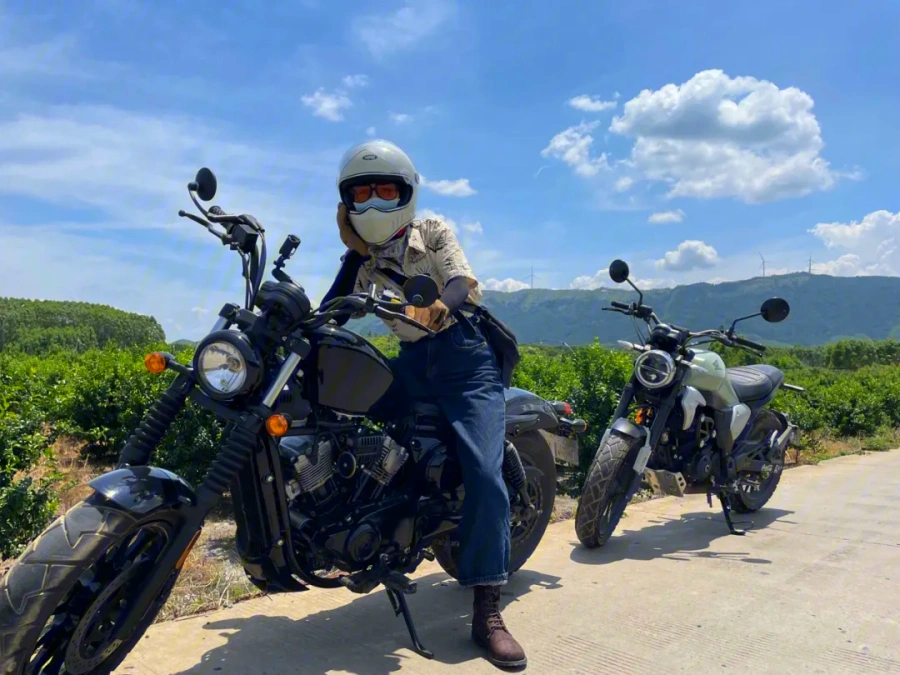
Quick Answer: How Long Does It Take to Ride a Motorcycle on G318 from Chengdu to Lhasa?
A guided G318 motorcycle tour from Chengdu to Lhasa typically runs 14–18 days end-to-end, of which 10–13 are riding days across roughly 2,142 km (1,331 mi) of the Sichuan-Tibet Highway. The full G318 national highway is 5,476 km end-to-end from Shanghai to Nyalam, but the Chengdu-to-Lhasa Sichuan-Tibet segment is the section riders mean when they say "G318." The route crosses roughly fourteen named passes above 4,000 m (13,120 ft) — of which the modern through-driving route bypasses several via tunnels — and tops out at Dongda La (东达山) 5,130 m (16,831 ft), the highest pass on the corridor, before dropping to Lhasa at 3,650 m (11,975 ft). Foreign riders cannot legally ride this route independently; a licensed guide-escort, a Tibet Travel Permit, and a Chinese temporary driving licence and plate are mandatory, and the paperwork stack takes about sixty working days to assemble.
Key Takeaways
- ✔ The G318 Chengdu-to-Lhasa segment covers about 2,142 km (1,331 mi) across roughly fourteen named passes over 4,000 m (13,120 ft), with Dongda La (东达山) at 5,130 m (16,831 ft) as the highest point on the main line.
- ✔ Foreign motorcyclists cannot legally ride G318 solo — a Tibet Travel Permit (入藏函), a licensed guide-escort with support vehicle, and a Chinese temporary driving licence and plate are all mandatory, and the full paperwork lead time is about 60 working days.
- ✔ There is currently no dedicated Yaso Trip Chengdu-to-Lhasa G318 motorcycle SKU; the closest existing tours ride the eastern G318 corridor from Lhasa through Nyingchi, Bomi and Ranwu as part of longer trans-Asia routes.
- ✔ Sichuan-side overland entry into the Tibet Autonomous Region on a foreign-plated motorcycle is not permitted; foreign riders must rent a China-plated bike in Chengdu through a licensed agency and have the full route explicitly printed on the Tibet Travel Permit.
- ✔ The safest riding windows are late May through early July and mid-September, avoiding the July–August monsoon window that triggers landslide closures on the Bomi–Ranwu–Baxoi corridor.
- ✔ The Erlang Mountain (二郎山) road tunnel on G318 has been open since 1 January 2001 — the old high-mountain pass is closed to through-traffic, and modern tunnel bypasses on Gaoersi (高尔寺山) and Mila (米拉山) have shortened riding time and altitude exposure compared to older accounts.
- ✔ We build the G318 experience for foreign riders around the compliant Lhasa-based eastern corridor today and coordinate custom Chengdu-departure attempts on request, so the ride happens legally rather than being turned back at the first Sichuan-Tibet checkpoint.
About This Guide
The G318 Sichuan-Tibet Highway is the most-searched China motorbike route in every foreign-rider forum and the highest-value gap in our current motorbike inventory. Yaso Trip is a China-based motorbike tour operator that runs the compliant eastern G318 corridor (Lhasa → Nyingchi → Bomi → Ranwu → Baxoi → Zuogong → Mangkang) as part of our longer trans-Asia routes, and we coordinate custom Chengdu-departure G318 tours on request. This guide covers the corridor stage by stage in the Chengdu-to-Lhasa direction, the permit reality that separates the Chinese-domestic G318 experience from the foreign-rider one, the operational rhythm our support cars actually run on the eastern half, and honest guidance on the two hybrid alternatives that get foreign riders as much of G318 as is legally possible today. It sits alongside our broader Complete Guide to Motorcycle Tours in China and complements our Tibet motorcycle tours sub-hub .
Why Ride G318 by Motorbike?
G318 is not another mountain pass; it is a 2,142 km (1,331 mi) altitude machine that concentrates most of the Tibetan Plateau's signature landscapes into a single corridor of asphalt.
- The world's densest high-pass sequence on a single highway. Riders cross roughly fourteen named passes above 4,000 m (13,120 ft), of which the modern through-route uses tunnels on Gaoersi (高尔寺山), Jianziwan (剪子弯山) and Mila (米拉山口) to bypass several summits — but riders can still detour to the old sight-seeing summits where the passes are photograph-perfect.
- A cultural traverse, not a border crossing. The road moves from Sichuan basin (成都平原) through the Kham (康巴) plateau to the Tibetan (卫藏) heartland — three distinct languages, three architectural traditions, and a religious geography that changes with each 1,000 m of climb.
- A route where the road itself is the destination. The 72 Bends (72拐) switchbacks descending into the Nujiang canyon (怒江大峡谷), the pastoral light at Xinduqiao (新都桥), the glacial reflection of Ranwu Lake (然乌湖) — each has become its own search query, its own photograph, its own bucket-list line item.
- The signature test of foreign-rider paperwork logistics in China. More than any Nepal-side approach, G318 exposes the gap between what Chinese domestic riders experience (rent a bike in Chengdu on Monday, post from Lhasa the next Sunday) and what foreign riders face (60 working days of paperwork, licensed agency, guide-escort, and support vehicle). Understanding that gap is the first mile of the ride.
The G318 in Four Stages: Chengdu to Lhasa
G318 Chengdu → Lhasa: Stage-by-Stage Overview
Stage 1 — Chengdu Basin to Kangding Gateway (Days 1–3)
Chengdu (成都) is warm, humid and low. Riders spend the first day on paperwork, bike fitting and a shakedown loop through Kuan-Zhai Alley (宽窄巷子) and the Panda Base while the guide walks them through the plate, driving licence and Tibet Travel Permit stack. On the morning of Day 2 the ride begins in earnest: G318 heads west out of the Sichuan basin (成都平原) through Ya'an (雅安), climbs through Tianquan (天全), and disappears into the Erlang Mountain (二郎山) road tunnel — a 4 km bore that has carried through-traffic since 1 January 2001 and rendered the old high-mountain pass irrelevant for anyone actually riding to Lhasa.
Route Fact Panel:
- Route / Location: Chengdu (成都) → Ya'an (雅安) → Erlang Mountain Tunnel (二郎山隧道) → Luding (泸定) → Kangding (康定)
- Length: ~360 km (224 mi) across days 2–3
- Elevation: 500 m (1,640 ft) in Chengdu → 2,560 m (8,399 ft) at Kangding
- Duration: 3 days including Chengdu prep day
- Best Time: May–October
- Difficulty: Low–Medium — smooth asphalt, tunnels, some tourist traffic near Luding
- Highlights: Chengdu paperwork day and shakedown ride, Erlang Mountain Tunnel, Luding Bridge (泸定桥), Kangding as the traditional gateway to the Kham plateau
- Accommodation & Supplies: Chengdu 4-star hotel; Luding or Kangding mid-range hotel with secure covered parking for the bikes
The transition happens the moment the tunnel exit spits riders out on the Kham side: the air cools, the first prayer flags appear on ridgelines, and the road starts to climb. Kangding (康定, altitude 2,560 m / 8,399 ft) is the traditional acclimatisation stop before the first 4,000 m pass — a fast start-day ride with a rest-day placement here pays back tenfold when the group reaches Zheduo Pass on Day 4.
Ride the G318 corridor as part of our longest trans-Asia motorbike expedition
Tour Route:Kashgar-Lhasa-Shangri-La-Lijiang-Dali-Yuanyang-Kunming
31 Days
12 Places View Detail
Stage 2 — The Kham Plateau: Xinduqiao, Litang & Batang (Days 4–6)
Day 4 opens with the first serious climb of the trip: Zheduo Pass (折多山, 4,298 m / 14,101 ft), a switchback ascent out of Kangding into what Chinese riders call the "photographer's paradise" — the pastoral valley around Xinduqiao (新都桥). The light here is the reason the town is on every G318 tour list: low-angled morning sun on stone-and-wood Tibetan houses, snow peaks to the west, and grasslands stitched with irrigation ditches. Day 5 crosses Kazila Pass (卡子拉山, 4,718 m / 15,479 ft) and Haizi Pass (海子山, 4,700 m / 15,420 ft) to reach Litang (理塘, 4,014 m / 13,169 ft), one of the highest county towns on any Chinese national highway. Day 6 drops sharply to Batang (巴塘, 2,700 m / 8,858 ft) on the Sichuan side of the Jinsha River — the last low-altitude night before the Tibet-side climb begins.
Route Fact Panel:
- Route / Location: Kangding (康定) → Zheduo Pass (折多山) → Xinduqiao (新都桥) → Litang (理塘) → Batang (巴塘)
- Length: ~470 km (292 mi)
- Elevation: 2,560 m → 4,718 m → 2,700 m (8,399–15,479 ft)
- Duration: 3 riding days
- Best Time: Late May through early July or mid-September (Litang grasslands are greenest in June)
- Difficulty: Medium–High — first sustained 4,000 m riding, cold pass exposure, altitude adjustment
- Highlights: Zheduo Pass first ridgeline view of Gongga Shan (贡嘎山), Xinduqiao pastoral photography, Litang monastery, optional 2-day Daocheng-Yading (稻城亚丁) detour south from Litang
- Accommodation & Supplies: Xinduqiao guesthouses with oxygen supply, Litang oxygen-equipped hotel, Batang mid-range hotel with covered parking
Litang deserves its own note. At 4,014 m it is meaningfully higher than Lhasa, and riders often experience their first altitude headaches here — walking the monastery slowly and drinking constantly is more useful than lying flat in a hotel room. Riders with an extra two days often detour south from Litang to Daocheng-Yading (稻城亚丁), the "last Shangri-La" — this is a signature Chinese-side detour and one of the most commonly added extensions on a custom G318 tour.
Stage 3 — Sichuan-Tibet Border, Dongda La & the 72 Bends (Days 7–10)
Stage 3 is the operational crux of the ride. From Batang the road crosses the Jinsha River (金沙江) at the Sichuan-Tibet provincial border and climbs into the Tibet Autonomous Region proper at Mangkang (芒康, 3,875 m / 12,713 ft) — the first town on the Tibetan side and the intersection with G214 (the Yunnan-Tibet Highway). Day 8 crosses two of the toughest passes on the entire corridor: Dongda La (东达山, 5,130 m / 16,831 ft, stone marker) — the highest pass on the Chengdu-Lhasa mainline — and drops into Zuogong (左贡, 3,780 m / 12,402 ft). Older printed sources cite Dongda La at 5,008 m; the on-site stone marker reads 5,130 m, and that is the current survey figure. Day 9 is the day riders remember: from Zuogong the road climbs Yela Pass (业拉山, 4,658 m / 15,282 ft) and drops into the 72 Bends (72拐, sometimes written 99 Bends) — a switchback descent into the Nujiang canyon (怒江大峡谷) that requires cautious braking and no overtaking on hairpins.
Route Fact Panel:
- Route / Location: Batang (巴塘) → Mangkang (芒康) → Dongda La (东达山) → Zuogong (左贡) → Yela Pass (业拉山) → 72 Bends → Baxoi (八宿)
- Length: ~530 km (329 mi)
- Elevation: 2,700 m → 5,130 m → 3,260 m (8,858–16,831 ft)
- Duration: 4 riding days
- Best Time: Late May through early July or mid-September
- Difficulty: High — the highest pass on the route, longest continuous days, technical descent on 72 Bends
- Highlights: Sichuan-Tibet provincial-border marker at the Jinsha River, Dongda La stone marker at 5,130 m, 72 Bends switchbacks, Nujiang canyon bottom
- Accommodation & Supplies: Zuogong oxygen-equipped hotel (mandatory rest night after Dongda La), Baxoi mid-range hotel with covered parking
Two operational realities dominate this stage. First, 72 Bends is where brakes fail on unfamiliar rental bikes. Long continuous downhill with heavy truck traffic causes brake fade if riders drag the front brake; the correct technique is engine braking in second gear, short firm brake applications, and no overtaking on hairpin corners. Second, Dongda La is where altitude catches up with the group. Riders should not stop for photographs at the summit for more than five to ten minutes — wind, cold and thin oxygen combine to trigger acute mountain sickness faster than any other pass on the route. A support car with medical oxygen at the pass is not a marketing line; it is the reason the group rides through rather than being airlifted out.
The 72 Bends descent into the Nujiang canyon eats brake pads and overheats rotors. Ride in second gear, use engine braking as the primary speed control, apply the brakes in short firm pulses (never dragged continuously), and do not overtake trucks on hairpin corners. Every year multiple riders on Chinese-domestic G318 attempts suffer brake-fade crashes here — the physics are unforgiving of casual technique.
A 22-day Nepal-to-Laos motorbike expedition that includes the Baxoi–Ranwu–Bomi eastern G318 corridor
Tour Route:Lhasa-Shangri-La-Lijiang-Dali-Kunming-Jianshui-Yuanyang-Puer City
22 Days
13 Places View Detail
Stage 4 — Nyingchi Corridor to Lhasa via Mila Pass (Days 11–14)
Stage 4 is the recovery stage. From Baxoi the road passes Ranwu Lake (然乌湖) — a glacial lake fed by the Laigu (来古) glacier system — and drops through the temperate forest belt around Bomi (波密, 2,700 m / 8,858 ft), a town riders remember for its oxygen-rich air, hot showers and rare Sichuan-standard food after a week of Tibetan hotel meals. Day 12 climbs Serkhyem La (色季拉山, 4,720 m / 15,486 ft) with a panoramic view of Namcha Barwa (南迦巴瓦峰) on a clear day, then descends past Lulang (鲁朗) into Nyingchi (林芝, 2,900 m / 9,514 ft) — one of the most oxygen-rich points on the whole Tibetan Plateau and the classic overnight before the final push. Day 13 crosses Mila Pass (米拉山口, 5,013 m / 16,446 ft) — the final 5,000 m pass before Lhasa, though the modern G318 through-route uses the Mila tunnel opened in 2019. Day 14 arrives Lhasa (拉萨, 3,650 m / 11,975 ft) via the Nyang River (尼洋河) valley and finishes at the Potala Palace (布达拉宫).
Route Fact Panel:
- Route / Location: Baxoi (八宿) → Ranwu Lake (然乌湖) → Bomi (波密) → Lulang (鲁朗) → Nyingchi (林芝) → Mila Pass (米拉山口) → Lhasa (拉萨)
- Length: ~780 km (485 mi)
- Elevation: 3,260 m → 5,013 m → 3,650 m (10,696–16,446 ft)
- Duration: 4 riding days including Lhasa sightseeing
- Best Time: Late May through early July or mid-September; the Bomi–Ranwu section closes intermittently in the July–August monsoon window
- Difficulty: Medium — the hardest passes are behind you; last-day fatigue is the biggest risk
- Highlights: Ranwu Lake glacial reflection, Bomi forest corridor and hot showers, Namcha Barwa view from Serkhyem La, Mila Pass, Lhasa arrival at the Potala Palace
- Accommodation & Supplies: Bomi mid-range hotel with covered parking, Nyingchi 4-star hotel (recovery night), Lhasa 4-star or boutique hotel for the finish
Bomi is the pacing linchpin. At 2,700 m it is meaningfully lower than any Tibetan town east of Lhasa, and a second night here — rather than pushing to Nyingchi the same day — pays back on sleep quality, altitude recovery and rider morale. Our team's rhythm on the eastern corridor typically places the rest night in Bomi rather than in the higher towns; the difference is measurable in resting heart rate on the following morning.
A 10-day fly-and-ride Tibet motorbike loop for riders short on time — the closest bookable Tibet motorbike experience today
Tour Route:Lhasa-Namtso Lake in Lhasa-Yamdrok Lake in Nagarzê County, Shannan-Shigatse-Mount Everest-Shigatse-Lhasa
10 Days
5 Places View Detail
G318 vs Nepal-Side Approaches to Lhasa
For riders whose real goal is to reach Lhasa on a motorcycle, G318 is one of three approaches. Each involves different paperwork, different altitude profiles, and different current bookability.
G318 vs Nepal-Side and Fly-and-Ride Approaches to Lhasa
The comparison matters because "G318 is the most iconic" and "G318 is bookable today for foreigners" are two different sentences. G318 remains the aspirational full westbound ride, but the Nepal-side and fly-and-ride options are what most riders actually do today while the custom Chengdu-departure setup is arranged. Riders who arrive Lhasa via G318 (or any other route) and want to extend into western Tibet should also see our Everest Base Camp motorbike guide for the natural Tibet extension.
Still want to ride into Lhasa on a bike this year? Our Kathmandu-to-Lhasa Everest-route tour is the currently-bookable Nepal-side alternative — see our Kathmandu to Lhasa motorbike guide for the full corridor.
Tour Route:Shigatse-Mount Everest-Shigatse-Yamdrok Lake in Nagarzê County, Shannan-Lhasa
12 Days
4 Places View Detail
A 14-Day G318 Chengdu → Lhasa Sample Itinerary
The itinerary below is our reference 14-day pacing for a custom Chengdu-to-Lhasa G318 tour. Actual days may shift by one either way depending on weather closures, Daocheng-Yading detour choice, and Bomi rest-day placement.
14-Day G318 Sichuan-Tibet Motorbike Itinerary: Chengdu to Lhasa
Day 1
Chengdu Arrival & Paperwork
Bike fitting, temp licence briefing, Tibet Travel Permit review, welcome dinner and shakedown ride at Kuan-Zhai Alley.
Day 2
Chengdu → Kangding (~360 km / 224 mi)
West through Ya'an, Erlang Mountain Tunnel, Luding Bridge, arrive Kangding gateway to the Kham plateau.
Day 3
Kangding Acclimatisation
Rest day at 2,560 m before the first 4,000 m pass; light town walk and monastery visit.
Day 4
Kangding → Xinduqiao → Litang (~285 km / 177 mi)
Cross Zheduo Pass 4,298 m, morning light at Xinduqiao, cross Kazila and Haizi passes, overnight Litang 4,014 m.
Day 5
Litang → Batang (~185 km / 115 mi)
Descent to the Jinsha River, first night below 3,000 m in three days.
Day 6
Batang → Mangkang (~110 km / 68 mi)
Cross Jinsha River bridge into Tibet Autonomous Region, arrive Mangkang and G214 intersection.
Day 7
Mangkang → Zuogong (~160 km / 99 mi)
Climb Dongda La 5,130 m (highest pass on the route), medical-oxygen support at summit, descend to Zuogong.
Day 8
Zuogong → Baxoi (~200 km / 124 mi)
Yela Pass 4,658 m, 72 Bends switchback descent into Nujiang canyon, climb to Baxoi.
Day 9
Baxoi → Ranwu → Bomi (~220 km / 137 mi)
Ranwu Lake morning light, cross Anjula Pass, drop into Bomi forest corridor at 2,700 m.
Day 10
Bomi Rest Day
Low-altitude recovery night; optional side trip to Qingduo Monastery (倾多寺) or Bomi peach-blossom valley.
Day 11
Bomi → Nyingchi (~230 km / 143 mi)
Cross Serkhyem La 4,720 m, Namcha Barwa panorama on clear days, overnight Nyingchi 2,900 m.
Day 12
Nyingchi → Lhasa (~400 km / 249 mi)
Cross Mila Pass 5,013 m via tunnel, descend the Nyang River valley, arrive Lhasa via the Potala Palace approach.
Day 13
Lhasa Sightseeing
Potala Palace (布达拉宫), Jokhang Temple (大昭寺), Barkhor Street (八廓街); paperwork handover and bike return.
Day 14
Lhasa Departure
Transfer to Lhasa Gonggar Airport (拉萨贡嘎机场) — allow 2 hours minimum at the airport for permit verification.
Practical Logistics — G318 for Foreign Riders
The logistics for G318 are the logistics of a paperwork stack, not a distance calculation. Every foreign rider on this route deals with the same six-part framework: the Tibet Travel Permit, the Chinese temporary driving licence, the temporary Chinese plate, the licensed agency's guide-escort obligation, the pre-approved fixed route, and the support-vehicle requirement inside the Tibet Autonomous Region.
Best Time to Ride G318
The safe G318 riding window is May through October, but the sweet spots are narrower than that headline suggests.
G318 Riding Window: Month-by-Month
Tibet Travel Permit & Sichuan-Side Entry Reality
The Tibet Travel Permit (入藏函, TTB) is not optional; foreign riders cannot enter the Tibet Autonomous Region without one, and individual riders cannot apply for it — it must be arranged through a licensed Tibet-qualified travel agency 15–30 days in advance (60+ days in the July–August peak). The G318 Chengdu-to-Lhasa route must be explicitly printed on the permit; a permit issued for a Lhasa-flight arrival does not cover Sichuan-side overland entry, and checkpoints will turn riders back at the provincial border.
The Sichuan-side overland reality has two layers on top of the base permit. First, foreign-plated motorcycles cannot enter the Tibet Autonomous Region through the Sichuan overland corridor — the Jinsha River bridge is not an international customs entry point, so a foreign-registered bike will not be admitted. Second, the practical workaround is to rent a China-plated motorcycle in Chengdu through a licensed agency and have the agency handle the temporary Chinese driving licence and plate simultaneously. Most foreign riders end up on this workaround; the alternative — shipping a foreign-plated bike into China through an international entry point like Yunnan Mohan (磨憨) or Xinjiang Khunjerab (红其拉甫) and then riding to Chengdu to start G318 — is possible but adds weeks and customs deposits to the trip.
Foreign riders cannot enter the Tibet Autonomous Region overland from Sichuan on a foreign-plated motorcycle. The Jinsha River bridge into Mangkang is not an international customs entry point. The compliant path is: rent a China-plated bike in Chengdu through a licensed agency, arrange a Tibet Travel Permit that explicitly lists the Chengdu-Lhasa G318 corridor, and ride the route with a full-time guide-escort in a support vehicle. Permit rules are subject to seasonal adjustment; final workflow must be confirmed with your agency before every trip.
See our Tibet motorcycle permits guide for the full documentation stack, and our why-you-cant-ride-China-solo explainer for the guide-escort regulation background.
How to Reach Chengdu (G318 Start Point)
Chengdu (成都) is the natural start point for any G318 attempt. The city is served by Chengdu Tianfu (天府, TFU) and Chengdu Shuangliu (双流, CTU) international airports and by the national high-speed rail network. Plan to arrive at least one full day before the ride starts to buffer for paperwork handover and jet-lag recovery.
How to Reach Chengdu (G318 Start Point)
Fuel, Payments & Connectivity West of Kangding
Chinese fuel stations west of Kangding operate under real-name-registration rules that require a Chinese ID card to purchase petrol from a pump — foreign passports are commonly refused. Licensed agencies handle this two ways: the support vehicle carries jerry cans and refuels the bikes off-station, or the Chinese-plated guide bike registers the purchase on behalf of the group. Riders should never plan to refuel independently at Tibetan fuel stations on a foreign passport — see our fuel and refuelling guide for China motorbike tours for the jerry-can rule and station protocol in detail.
Alipay and WeChat Pay work in most Sichuan towns and in Lhasa but coverage is patchy west of Kangding. Cash yuan (¥) is essential for small purchases in Batang, Mangkang, Zuogong and Baxoi. Bomi and Nyingchi have full digital-payment coverage. For a wider view of the payment friction foreign riders face across China, see our first-timer's China motorbike touring guide .
Riding it the Other Way: Lhasa to Chengdu on G318
The Lhasa-to-Chengdu (拉萨到成都) direction — the reverse of the classic tourist framing — is currently the more common way foreign riders experience G318. The reason is operational: our team's compliant Lhasa-based eastern corridor (Lhasa → Nyingchi → Bomi → Ranwu → Baxoi → Zuogong → Mangkang) is what sits inside our existing 22- and 31-day trans-Asia tours, so riders on those products are effectively riding G318 east from Lhasa toward the Sichuan border as part of a longer Tibet-to-Yunnan or Tibet-to-Kyrgyzstan expedition. The scenery is identical, the passes are the same, and the direction is easier on acclimatisation because riders arrive in Lhasa already altitude-adjusted (typically by flight) rather than climbing into thin air from Chengdu.
For a rider whose real goal is "the G318 corridor between Bomi and Mangkang, photographed and ridden," the Lhasa → Mangkang direction inside a trans-Asia tour is the closest thing to a G318 SKU that exists today. The Chengdu → Lhasa westbound direction remains custom-tour territory pending both the permit workflow and a dedicated product SKU.
A 22-day Laos-to-Nepal motorbike tour that rides the eastern G318 corridor in the Lhasa → Mangkang direction
Tour Route:Jinghong-Yuanyang-Jianshui-Kunming-Dali-Shangri-La-Chamdo-Nyingchi-Lhasa-Shigatse-Mount Everest-Gyirong
22 Days
11 Places View Detail
Tips & Cautions for Riding G318
Ride within your acclimatisation, not your ambition. More riders quit G318 to altitude than to bike problems or weather. Rest days at Kangding, Litang and Bomi are non-negotiable; skipping them saves one day and costs three to the emergency descent.
Ride the 72 Bends in second gear. Continuous downhill braking on hairpins causes brake fade. Engine braking, short firm applications, and no overtaking on switchbacks are the technique. This is the single most-crashed section of the entire route on Chinese-domestic G318 attempts.
Do not linger at the Dongda La summit. Wind, cold and thin oxygen at 5,130 m cause acute mountain sickness faster than any other pass on the route. Photograph, breathe, and descend within ten minutes.
Pack layered gear. High-altitude weather changes within an hour. A waterproof-breathable outer layer, an insulated mid-layer, and a base layer are the standard set. Windproof gloves matter more than heated grips at 5,000 m — cold hands lose grip on cable levers before they lose warmth.
Assume monsoon closures on the Bomi–Ranwu–Baxoi corridor in July–August. Landslides and short debris-flow blockages are routine. Check with your agency the morning of every riding day in that window.
Carry Diamox and start prophylaxis before Kangding. Consult a doctor before the trip; standard prophylactic dosing starts 24 hours before the first ascent above 3,000 m. See our altitude and health guide for Himalayan motorbike tours for the full acclimatisation protocol.
Photograph the passes on the old summit roads, not from the tunnel exits. Modern G318 tunnels bypass Gaoersi (高尔寺山), Jianziwan (剪子弯山) and Mila (米拉山口) summits — but the old sight-seeing roads are still open, and the photographs are worth the extra thirty minutes.
Never pack the Tibet Travel Permit in checked luggage on the return flight from Lhasa. The permit is inspected at the check-in counter for foreign passport holders; a lost or checked-in permit means denied boarding.
Allow 2 hours minimum at Lhasa Gonggar Airport for domestic connections, 2.5–3 hours for international departures. Permit verification adds processing time; downtown Lhasa to Gonggar is 65–75 minutes of driving (approximately 100 km / 62 mi).
Skip the Chengdu domestic motorbike-rental agencies pitching "G318 self-drive" packages to foreigners. Riders on Chinese-plated rentals without an agency-arranged temporary Chinese driving licence, temp plate, guide-escort, and a Tibet Travel Permit that explicitly lists the Chengdu-Lhasa route will be turned back at the first Sichuan-Tibet checkpoint — usually at Mangkang or the Jinsha River bridge. The rental itself is fine; the missing four legal pieces are what stops the ride. Confirm all four are included in writing before any deposit.
Why Ride G318 With Yaso Trip
- We are honest about the product gap. No dedicated Chengdu-to-Lhasa G318 SKU currently exists in our motorbike inventory, and we say so on the page rather than selling a route that gets turned back at a checkpoint. Custom Chengdu-departure attempts are coordinated on request; the compliant eastern G318 corridor is available today inside our longer trans-Asia routes.
- We run the Chinese-side paperwork stack directly. Tibet Travel Permit, temporary Chinese driving licence, temporary plate, and pre-approved route documentation are our operations team's daily work. Riders arrive in Chengdu to a paperwork package that has already been through the Tibet Tourism Bureau's review — not a pile of forms to figure out on Day 1.
- Our support vehicle carries the guide, medical oxygen, and jerry cans. The regulation requires a full-time guide-escort in the Tibet Autonomous Region. Our operational choice is to place the guide in the support car rather than on a motorcycle — riders keep the freedom of riding solo on their own bike, the guide handles checkpoints and refuelling, and medical oxygen is minutes away at every pass.
- We know the eastern corridor detour list. Xiudeng Monastery (休登寺) for the overhead view of Ranwu Lake, Renlongba (仁龙巴) and Danongbing (打弄冰川) glaciers as the currently-accessible replacements for Laigu (which closed to on-ice access in 2026), Qingduo Monastery (倾多寺) in Bomi's peach-blossom valley, and the 20-year-old Sichuan food institution in Bomi that our riders keep asking about — these are the details that separate a compliant Tibet motorbike experience from a bus tour with two wheels.
Ready to Ride the Chengdu–Lhasa G318?
The G318 Chengdu-to-Lhasa full westbound experience does not have a shelf SKU today, and any operator pretending otherwise is describing a permit reality that does not exist for foreign riders. What is bookable today is the compliant eastern G318 corridor inside our longer trans-Asia expeditions, the 10-day fly-and-ride Tibet loop for riders short on time, and the Nepal-side Kathmandu-to-Lhasa Everest route as an alternate approach to the same finish city. For a custom Chengdu-departure G318 tour built around your dates, riding experience and permit lead time, contact our team for a tailored quote — we will match the closest compliant option to your goals and coordinate the paperwork end-to-end.