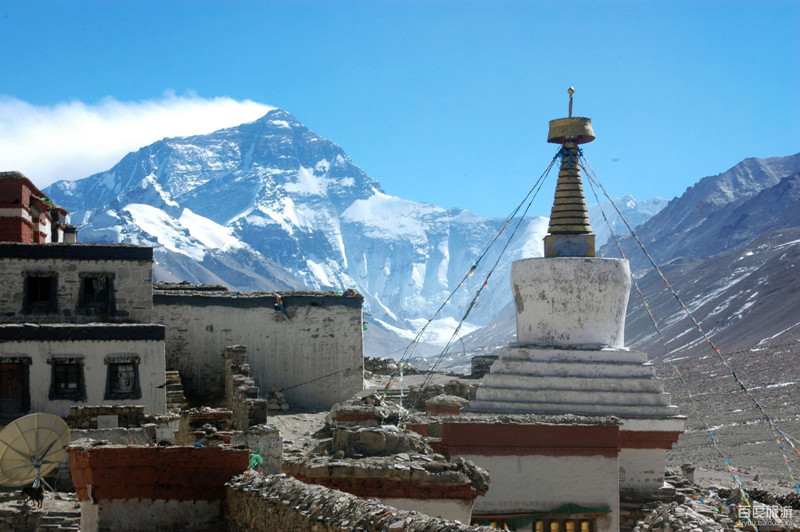
Subsequent development has greatly improved the transportation of Shigatse. Shigatse is considered the second traffic center of Tibet after Lhasa. The China-Nepal Highway connects Lhasa with it and then stretches into Nepal. With the No.318 National Highway, Lhasa-Purang Highway and Shigatse-Yadong Highway running through, Shigatse has extensive and efficient network of highways.
How to Get to Shigatse, Reach Its Counties and Travel to Major Attractions
Shigatse (日喀则市) covers a vast area of southwestern Tibet, from Sangzhuzi District and the Nyangchu Valley to Mount Everest, Gyirong, Yadong, Saga and Zhongba. Rail and air services make Shigatse city increasingly accessible, but most county-level attractions still depend on road transport. The city’s main road framework is formed by G318, G219, G216 and G562, supplemented by provincial, rural and border roads.
For first-time visitors, the most practical approach is to reach Shigatse by train or road from Lhasa, stay overnight for altitude adaptation, and then continue by licensed tour vehicle, private transfer or self-drive car. Public buses are useful between county seats but rarely provide convenient direct access to monasteries, mountain valleys and border attractions.
How to Get to Shigatse
It's easy for travelers to transfer to Shigatse no matter you prefer a flight journey, a driving adventure or a train ride, and even a long-distance bus tour within Tibet. Most travelers have chosen to go to Shigatse from Lhasa because Lhasa is usually the starting destination of a Tibet tour. From Lhasa, travelers can take a train to Shigatse which costs only about 3 hours. Currently driving is the most popular with travelers because there are many wonderful places to visit on the full-day driving, such as Yamdrok Lake, Karola Glacier, Palcho Monastery, etc.
Read More
Lhasa Transportation
By Train from Lhasa
The trains between Lhasa and Shigatse take about 3 hours, which is shorter than by bus(4-5 hours on the road). At present, there are 2 daily trains both from Lhasa to Shigatse and from Shigatse to Lhasa. Ticket fare is CNY 169.5 for a soft sleeper, CNY 111.5 for a hard sleeper, and CNY 40.5 for a hard seat. Lhasa-Shigatse Railway is the extend line of Qinghai-Tibet Railway. It was built since Sept 26th 2010. And the official operation day was on Aug 15th 2014. The beginning station is Lhasa Railway Station. And then, the railway goes through Quxu County, Nyemo County and Rinbung County. After goes along the Yarlung Zangbo Valley 90 kilometers, the railway reaches Shigatse. The total length is 253 kilometers.
Lhasa to Shigatse
| Train Numbers |
Departs |
Arrives |
Duration |
Stopover |
Price |
| Z8801 |
11:07 |
14:00 |
2h53m |
2 minutes in Quxu County/2 minutes in Nyemo County/2 minutes in Rinbung County |
Hard Seat: 40.5 CNY/Hard Sleeper: 111.5 CNY/Soft Sleeper: 169.5 CNY |
| Z6811 |
18:10 |
20:58 |
2h48m |
2 minutes in Quxu County/2 minutes in Nyemo County/2 minutes in Rinbung County |
Hard Seat: 40.5 CNY/Hard Sleeper: 111.5 CNY/Soft Sleeper: 169.5 CNY |
Read More
Shigatse Railway Station
The Lhasa–Shigatse Railway connects Lhasa Railway Station with Shigatse Railway Station. Direct passenger trains normally take approximately 2.5–3 hours, although train numbers and departure times change seasonally and should be checked through Railway 12306. The railway has operated since 2014 and forms part of Tibet’s main Y-shaped rail network.
Shigatse Railway Station is outside the old city but is connected by buses, taxis and hotel transfers. A dedicated tourist bus runs between the railway station and Tashilhunpo Monastery, passing through the main urban area in about 35 minutes.
By Road from Lhasa
The fastest road route uses the Lhasa–Shigatse high-grade highway, completed in 2024. The 245-kilometre corridor has shortened normal driving time between the two cities to approximately three hours.
The more scenic southern route travels through Yamdrok Lake, Karola Glacier and Gyantse before reaching Shigatse. It normally requires a full day but is preferable for travellers who want to combine natural scenery with Pelkor Chode Monastery and Gyantse Dzong.
Most travelers have chosen to go to Shigatse from Lhasa because Lhasa is usually the starting destination of a Tibet tour. There are buses departing from Lhasa West Bus Station to Shigatse Bus Station. For details, you can ask at bus station.
If you want to arrange a Tibet tour, please contact our attentive consultant by Email: [email protected]; Phone: +86-18064845137.
By Air
Shigatse Peace Airport is located in Jiangdang Township, Shigatse Region, about 43 kilometers to downtown area. There are direct flights between Chengdu and Shigatse, so tourists from other place could choose to transfer to Chengdu to take flight to Shigatse or take flight to Lhasa Gonggar Airport first and then take bus from Lhasa to Shigatse or take regular bus from the Lhasa Gonggar airport directly to Shigatse. The distance from Gonggar Airport o Shigatse is about 400 kilometers, taking about 4 hours.
More Flights, Please refer to:
Shigatse Peace Airport
Xi'an-Shigatse Flights
Chengdu-Shigatse Flights
Shigatse is served by two civil airports:
- Shigatse Peace Airport (日喀则和平机场) is the main airport for Shigatse city and the eastern part of the prefecture.
- Shigatse Tingri Airport (日喀则定日机场) is closer to Tingri County and the Mount Everest corridor.
Both airports operate scheduled services, although routes and frequencies change between aviation seasons. Tibet’s 2026 summer–autumn schedule lists Peace Airport as operating steadily and Tingri Airport according to its planned seasonal programme.
Tingri Airport currently has a Chengdu Tianfu connection, but flights remain limited. From July 9, 2026, the airport–Tingri county-seat tourist bus operates one return journey on Mondays and Wednesdays, so passengers should not assume that a bus meets every flight.
Flying directly to Tingri places visitors at high altitude without gradual acclimatisation. Travellers unfamiliar with Tibet are normally better served by staying in Lhasa and Shigatse before proceeding west.
Entering from Nepal
Overland travellers can enter Tibet through Gyirong Port or Zhangmu Port, subject to immigration, customs and Tibet travel regulations. Cross-border tourism recovered strongly in 2026, with growing numbers of international travellers using the Gyirong and Zhangmu corridors.
Foreign visitors must arrange the Tibet section through an authorised travel agency. A foreign tour group requires an Entry Confirmation Letter for Tibet, an approved itinerary, guide, vehicle and any additional border permissions.
Transport Within Shigatse City
1. Bus
In the downtown of Shigatse, there are bus routes at the price of 1 or 1.5 yuan. There are No.7 bus, No.4 bus, No.8 bus and other buses reaching Shigatse Railway Station. The service time is usually 8:40-19:40.
2. Taxi
It's quite convenient for tourists to take a taxi in Shigatse. Usually it will cost about 20-30 yuan to get to some places at a distance and 10 yuan to travel in town. The starting fare is 10 yuan within three kilometers and the price will add 2 yuan per kilometers beyond 3 kilometers.
3. Pedicab
Pedicabs are unique vehicles in Tibet. A pedicab can carry two to three people and generally costs 30 yuan, which can be seen around the streets. It is a more time-consuming than traveling by minibus but is an interesting and popular way to see downtown area.
The central area around Tashilhunpo Monastery, Shigatse Dzong, the old town, the museum and the intangible-cultural-heritage centre is compact enough for taxis and short walks. Public buses serve the railway station, residential districts and major roads, while taxis and ride-hailing are preferable when carrying luggage.
A private car is unnecessary for a single day inside Sangzhuzi District. It becomes useful for Shalu Monastery, Narthang Monastery and other sites outside the urban centre.
Transport Corridors Across Shigatse
| Area |
Main Access |
Travel Advice |
| Sangzhuzi District (桑珠孜区) |
Railway, Peace Airport, highway and urban buses |
Best transport hub and first overnight stop |
| Namling and Xaitongmoin (南木林、谢通门) |
County buses, customised passenger transport or private car |
Suitable for rural, hot-spring and non-heritage routes; departures may be limited |
| Rinbung (仁布县) |
Lhasa–Shigatse road and local transfers |
Convenient stop between Lhasa and Shigatse |
| Gyantse and Bainang (江孜、白朗) |
Road from Lhasa or Shigatse |
Easy to combine with Yamdrok Lake, Karola Glacier and agricultural villages |
| Kangmar and Yadong (康马、亚东) |
Southern border highway by tour vehicle or self-drive car |
Border permit required; allow several days |
| Sakya and Lhatse (萨迦、拉孜) |
G318, county coaches and private vehicles |
Main cultural stops on the Everest route |
| Tingri (定日县) |
G318, Tingri Airport and licensed road transport |
Gateway to Everest; scenic shuttle required inside the park |
| Nyalam and Gyirong (聂拉木、吉隆) |
Border highways and organised vehicles |
Mountain weather and border procedures require flexible planning |
| Dinggye and Gamba (定结、岗巴) |
Remote southern roads |
Private vehicle strongly recommended |
| Ngamring, Saga and Zhongba (昂仁、萨嘎、仲巴) |
G219 and connecting highways |
Long distances, sparse services and limited fuel between major towns |
Customised passenger services have been introduced on some county routes, including Shigatse–Namling and Shigatse–Xaitongmoin, with bookable pickup arrangements. Nevertheless, remote attractions are still easier to reach by reserved vehicle.
Major Scenic-Area Transportation
| Attraction |
Recommended Transport |
Important Information |
| Tashilhunpo Monastery (扎什伦布寺) |
Railway-station tourist bus, taxi or walking from nearby hotels |
Easiest major attraction to reach |
| Shalu Monastery (夏鲁寺) |
Taxi, private transfer or tour vehicle |
Outside central Shigatse; combine with nearby cultural sites |
| Pelkor Chode and Gyantse Dzong (白居寺、宗山古堡) |
Shigatse–Gyantse road transfer |
Suitable as a day trip or part of the Lhasa–Gyantse–Shigatse route |
| Pala Manor (帕拉庄园) |
Private vehicle from Gyantse |
Rural location with limited direct public transport |
| Sakya Monastery (萨迦寺) |
G318 transfer followed by the branch road to Sakya |
Best visited en route to Lhatse or Tingri |
| Mount Everest Scenic Area (珠峰景区) |
Tour vehicle or self-drive car to Tashi Dzom, then environmental shuttle |
Ordinary vehicles cannot continue into the visitor core |
| Yadong Valley (亚东沟) |
Private or organised vehicle |
Border permit required; long road journey |
| Gyirong Valley (吉隆沟) |
Private or organised vehicle |
Border permit required; summer landslide delays possible |
| Saga and Zhongba (萨嘎、仲巴) |
G219 self-drive or tour vehicle |
Carry additional food, water and emergency supplies |
At Everest, visitors must transfer to electric sightseeing vehicles at the designated transfer centre near Tashi Dzom. Seasonal shuttle departure times are adjusted by the scenic-area operator. Snowfall can also cause temporary closures, as occurred several times in 2026.
Border Permits and Travel Documents
Chinese citizens visiting Everest, Gyirong, Nyalam, Yadong, Gamba, Dinggye, Saga or other controlled border areas need a valid Border Area Travel Permit naming the relevant destination.
Electronic border permits were introduced on April 15, 2026 through the National Immigration Administration’s 12367 platform. Travellers should save a screenshot or carry a printed copy because mobile signals are unreliable in remote areas.
Foreign visitors require agency-arranged Tibet documentation and should not attempt to enter restricted counties independently.
Self-Driving in Shigatse
Self-driving is the most flexible option for Chinese travellers visiting several counties. Major national roads are generally paved, but road conditions can change rapidly because of snow, ice, rain, rockfalls and strong wind.
A standard car is adequate for major highways in stable summer weather, while an SUV offers better luggage space and stability on remote mountain roads. Refuel in Shigatse, Lhatse, Tingri, Saga or other major county towns rather than relying on small village stations.
Avoid night driving. Livestock, unlit vehicles, sharp bends and sudden weather make plateau roads more hazardous after dark. Check official scenic-area notices before leaving, particularly for Everest and border valleys.
Cycling and Motorcycle Travel
Long-distance cycling on G318 or G219 is possible but suitable only for experienced high-altitude riders. Routes involve passes above 5,000 metres, strong headwinds, large temperature changes and long gaps between supplies. Cyclists should acclimatise fully and avoid entering remote roads alone.
Motorcycle riders need the correct Chinese motorcycle licence, vehicle registration and insurance. Border routes also require the appropriate permit. Protective clothing must provide both impact protection and insulation against severe wind chill.
Foreign cycling or motorcycle groups must be organised through authorised agencies. Specially approved international self-drive groups can enter through border ports—as demonstrated by a foreign self-drive group entering through Zhangmu in 2026—but this does not permit ordinary independent foreign driving in Tibet.
Practical Transportation Advice
Plan at least one night in Shigatse before continuing toward Everest, Gyirong or Yadong. Keep passports, permits, warm clothing, drinking water and essential medication inside the passenger compartment rather than in inaccessible luggage.
Use legally licensed tourism vehicles. Tibet authorities continued enforcement against unlicensed and improperly authorised tourist transport in 2026, including vehicles carrying foreign visitors outside their permitted operating area.
For a first journey, the most efficient route is:
Lhasa – Gyantse – Shigatse – Sakya – Lhatse – Tingri – Mount Everest
Travellers with additional time can continue toward Gyirong and Nepal, follow G219 toward Saga and Zhongba, or explore the southern border corridor through Kangmar and Yadong.