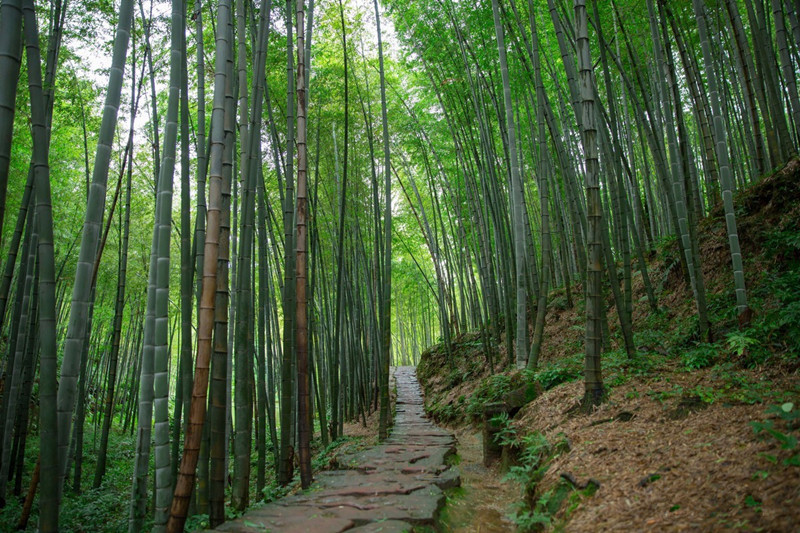
Yibin is rich in tourism resources, with natural and cultural landscape all over the city. With 120 square kilometers, Shunan Bamboo Forest is the oldest and largest bamboo forest in China. Xingwen Stone Forest is a National Scenic Area and World Geographic Park with a karst landform. Lizhuang Ancient Town witnessed the old history and reflects the traditional culture of the Han nationality. Liquor Wuliangye enjoys a high reputation among consumers at home and abroad, and its distillery has also become a tourist attraction. Other attractions includes Longyin Temple, Hanging Coffins of Bo People, Stone City Mountain, etc.
Yibin (宜宾) is best known as the First City on the Yangtze River, China’s Liquor Capital and China’s Bamboo Capital. Its tourism resources combine river landscapes, bamboo forests, karst landforms, historic towns, traditional residences, industrial heritage, revolutionary history and the cultures of the Bo and Miao communities.
The municipality’s strongest tourism areas are the Southern Sichuan Bamboo Sea, Xingwen UNESCO Global Geopark, Lizhuang Ancient Town, central Yibin’s riverfront and liquor-cultural sites, and the historic and ecological destinations distributed across its seven counties. Municipal tourism programmes also highlight wine culture, bamboo culture, Yangtze River culture, Bo and Miao heritage, red history and ancient trade routes as the principal themes of Yibin tourism.
Yibin Attraction Ranking
The following ranking is an editorial recommendation based on landscape value, cultural importance, distinctiveness, visitor experience and relevance to first-time travelers. It is not an official government ranking.
| Rank |
Attraction |
Area |
Why Visit |
| 1 |
Southern Sichuan Bamboo Sea (蜀南竹海) |
Changning/Jiang’an |
Yibin’s signature natural destination, combining vast bamboo forests, waterfalls, lakes, cliffs and bamboo culture |
| 2 |
Xingwen Stone Sea (兴文石海) |
Xingwen |
A spectacular karst landscape of stone forests, sinkholes, caves and underground rivers within a UNESCO Global Geopark |
| 3 |
Lizhuang Ancient Town (李庄古镇) |
Cuiping |
A riverside town known for traditional architecture and its important role as an academic and cultural centre during the War of Resistance |
| 4 |
Wuliangye Scenic Area (五粮液旅游景区) |
Cuiping |
The best place to understand Yibin’s long-established baijiu-making traditions and modern liquor industry |
| 5 |
Hejiangmen and the Three-River Confluence (合江门及三江汇流) |
Central Yibin |
The symbolic meeting point of the Jinsha and Min rivers, where the Yangtze River formally begins |
| 6 |
Cuiping Mountain Scenic Area (翠屏山景区) |
Cuiping |
An accessible urban mountain combining forest scenery, city views, temples and revolutionary heritage |
| 7 |
Xijiashan Folk Residence (夕佳山民居) |
Jiang’an |
One of southern Sichuan’s best-preserved traditional residential and manor complexes |
| 8 |
Bowang Mountain (僰王山) |
Xingwen |
Forests, waterfalls, cliffs and cultural traditions associated with the ancient Bo people |
| 9 |
Qidonggou Scenic Area (七洞沟景区) |
Changning |
A canyon landscape known for bamboo forests, waterfalls, streams and outdoor recreation |
| 10 |
Nanxi Ancient Street (南溪古街) |
Nanxi |
A convenient destination for traditional architecture, local food and riverside urban culture |
| 11 |
Hengjiang Ancient Town (横江古镇) |
Xuzhou |
A former trade town on routes connecting Sichuan and Yunnan |
| 12 |
Bo People’s Hanging Coffins (僰人悬棺) |
Gong County |
A mysterious cultural landscape preserving cliff burials associated with the ancient Bo people |
The Southern Sichuan Bamboo Sea contains extensive connected bamboo landscapes, while Xingwen’s geopark preserves internationally significant karst caves, sinkholes, stone formations and geological-study resources.
Main Tourism Areas
Central Yibin
Central Yibin combines the river confluence, old streets, urban mountains, museums and liquor culture. It is the most convenient area for short city stays and provides the best introduction to the city’s identity as the birthplace of the geographical Yangtze River and a major baijiu-producing centre.
Bamboo and Forest Region
Changning and eastern Jiang’an form the core bamboo-tourism area. The Southern Sichuan Bamboo Sea is the principal destination, supported by smaller canyon, flower, forest, winery and rural attractions.
Karst and Ethnic-Culture Region
Xingwen, Gong and Junlian contain dramatic limestone landscapes, caves, stone forests and cultural heritage connected with the Bo and Miao communities. Xingwen UNESCO Global Geopark is the region’s leading geological attraction.
Ancient Town and Historic Residence Region
Lizhuang, Hengjiang, Nanxi, Longhua and several smaller settlements preserve traditional streets, residences, former schools, temples and regional trade-route history.
Tea, Agriculture and Rural Tourism Region
Gao, Gong, Junlian, Xuzhou and parts of Cuiping contain tea gardens, fruit-growing villages, camphor forests, flower fields and rural tourism areas. These destinations are generally more suitable for self-driving and repeat visitors.
Major Tourist Attractions by District and County
The following bilingual list covers Yibin’s principal nationally or locally recognised attractions, major historic sites and representative county-level tourism destinations. It focuses on places with clear sightseeing, cultural, ecological or educational value rather than attempting to include every small park or seasonal agricultural site. The compilation is based on published scenic-area records and municipal tourism materials.
Cuiping District and Central Yibin
| English Name |
中文名称 |
Main Character |
| Lizhuang Ancient Town |
李庄古镇 |
Historic riverside town, traditional architecture and wartime academic heritage |
| Moon Field Cultural Area |
月亮田景区 |
Cultural and leisure extension of Lizhuang Ancient Town |
| Wuliangye Scenic Area |
五粮液旅游景区 |
Baijiu production, liquor museum and industrial tourism |
| Cuiping Mountain Scenic Area |
翠屏山景区 |
Urban forest, temples, viewpoints and revolutionary heritage |
| Liubeichi Park |
流杯池公园 |
Classical garden, calligraphy and Huang Tingjian cultural heritage |
| Hejiangmen River Confluence |
合江门 |
Meeting point of the Jinsha and Min rivers |
| Yangtze River Landmark Square |
中国宜宾长江地标广场 |
Urban landmark marking the beginning of the geographical Yangtze |
| Daguanlou Tower |
大观楼 |
Historic central-city tower and architectural landmark |
| Guanying Ancient Street |
冠英古街 |
Restored traditional street near the riverfront |
| Zhao Yiman Memorial Hall |
赵一曼纪念馆 |
Memorial dedicated to the anti-Japanese resistance heroine |
| White Pagoda Mountain |
白塔山 |
Riverside hill, historic pagoda and city views |
| Yibin Museum |
宜宾市博物院 |
Regional history, archaeology and Yangtze River culture |
Central tourism programmes officially combine Wuliangye, Cuiping Mountain, Liubeichi Park, Hejiangmen, Guanying Ancient Street, museums and the Three Rivers night landscape.
Xuzhou District
| English Name |
中文名称 |
Main Character |
| Hengjiang Ancient Town |
横江古镇 |
Historic Sichuan–Yunnan trade-route town |
| World Camphor Sea–Changtan Camphor Forest |
世界樟海—长滩樟林 |
Ancient camphor trees and rural forest scenery |
| Xingfu Commune |
幸福公社 |
Rural leisure and family tourism |
| Chunfengli Scenic Area |
春风里景区 |
Countryside scenery and seasonal agricultural experiences |
Nanxi District
| English Name |
中文名称 |
Main Character |
| Nanxi Ancient Street |
南溪古街 |
Traditional commercial street and local-food area |
| Moon Bay Scenic Area |
月亮湾景区 |
Riverside leisure and ecological scenery |
| First Bend of the Yangtze River |
长江第一湾景区 |
River landscape and viewing area |
| Leigong Mountain Scenic Area |
雷公山景区 |
Forested hills and countryside recreation |
| Former Residence of Zhu De |
朱德旧居 |
Revolutionary-history site |
Jiang’an County
| English Name |
中文名称 |
Main Character |
| Xijiashan Folk Residence |
夕佳山民居 |
Large traditional manor and southern Sichuan residential architecture |
| National Drama School Historical Exhibition |
国立剧专史料江安陈列馆 |
History of Chinese theatre education during the wartime period |
| Changjiang Bamboo Island |
长江竹岛景区 |
River-island ecology and bamboo landscapes |
| Red Rock Persimmon Tribe |
红岩柿子部落 |
Rural tourism and seasonal fruit culture |
| Damiao Lotus Scenic Area |
大妙荷花景区 |
Seasonal lotus fields and countryside scenery |
Changning County
| English Name |
中文名称 |
Main Character |
| Southern Sichuan Bamboo Sea |
蜀南竹海 |
Vast bamboo forests, lakes, waterfalls and cliffs |
| Qidonggou Scenic Area |
七洞沟景区 |
Canyon, streams, waterfalls and bamboo scenery |
| Shunan Flower Sea |
蜀南花海 |
Seasonal flowers and family leisure |
| Western Bamboo and Stone Forest |
西部竹石林景区 |
Combination of bamboo vegetation and rock formations |
| Folai Mountain |
佛来山景区 |
Forest, pear trees and rural landscapes |
| Longpan Creek |
龙蟠溪景区 |
Stream valley and ecological recreation |
| Bamboo Sea Winery |
竹海酒庄 |
Wine culture and rural tourism |
| Former Residence of Yu Zehong |
余泽鸿故居 |
Revolutionary-history memorial |
| Hongmo Hometown |
洪谟故里景区 |
Local history and traditional village culture |
Gao County
| English Name |
中文名称 |
Main Character |
| Dayanling Scenic Area |
大雁岭旅游景区 |
Tea hills, forest scenery and rural recreation |
| Shengtian Red Rock Mountain |
胜天红岩山景区 |
Red-rock landforms and mountain scenery |
| Shushan Tea Sea |
蜀山茶海景区 |
Tea plantations and agricultural tourism |
| Li Shuoxun Memorial Hall |
李硕勋纪念馆 |
Revolutionary-history education |
| Wenwu Lotus Fields |
文武荷田景区 |
Lotus landscapes and seasonal countryside tourism |
Gong County
| English Name |
中文名称 |
Main Character |
| Bo People’s Hanging Coffins |
僰人悬棺 |
Ancient cliff-burial culture |
| Longcha Flower Sea |
龙茶花海景区 |
Flowers, rural landscapes and family recreation |
| Luming Tea Sea |
鹿鸣茶海景区 |
Tea-growing landscape and tea culture |
| Gong County Intangible Cultural Heritage Museum |
珙县非遗馆 |
Local crafts, ethnic traditions and folk culture |
| Shibanxi Giant Salamander Ecological Park |
石板溪娃娃鱼生态园 |
Aquatic ecology and environmental education |
Junlian County
| English Name |
中文名称 |
Main Character |
| Qingxigou Scenic Area |
清溪沟景区 |
Forest, streams, tea culture and outdoor activities |
| South Silk Road Museum |
南丝绸之路博物馆 |
History of regional trade and cultural exchange |
| South Silk Road Nightless City |
南丝绸之路不夜城 |
Night tourism, food and cultural performances |
| Junlian Miao Cultural Villages |
筠连苗族文化村寨 |
Miao festivals, embroidery, music and rural culture |
Xingwen County
| English Name |
中文名称 |
Main Character |
| Xingwen Stone Sea |
兴文石海 |
UNESCO karst landscape, sinkholes, caves and stone forests |
| Bowang Mountain |
僰王山 |
Forests, waterfalls and Bo cultural associations |
| Bo People’s Megalithic Array |
僰人巨石阵 |
Large rock formations and Bo-themed cultural landscape |
| Shiju Ancient Land |
石菊古地景区 |
Geological scenery and rural recreation |
| Taian Stone Forest |
太安石林 |
Smaller karst stone-forest landscape |
| Jiuzishan Scenic Area |
九子山景区 |
Mountain and countryside tourism |
| Xingwen Geological Museum |
兴文地质博物馆 |
Geology, fossils, karst science and ethnic culture |
| Shuiluba Scenic Area |
水泸坝景区 |
Rural landscape and community tourism |
| Liangshuiwan Scenic Area |
凉水湾景区 |
Countryside leisure and water scenery |
Xingwen’s caves display stone flowers, columns, curtains, underground waterfalls and other mature karst formations, while the geopark’s interpretation also includes Miao and Bo cultural elements.
Pingshan County
| English Name |
中文名称 |
Main Character |
| Laojun Mountain National Nature Reserve |
老君山国家级自然保护区 |
Biodiversity, primary forest and rare bird habitats |
| Longhua Ancient Town |
龙华古镇 |
Historic mountain town and traditional folk culture |
| Baxianshan Giant Buddha |
八仙山立佛 |
Monumental cliff-carved standing Buddha |
| Mahufu Ancient City |
马湖府古城 |
Relocated and reconstructed historic architectural complex |
| Jinping Mountain Scenic Area |
锦屏山景区 |
Mountain views and ecological scenery |
| Pingshan Museum |
屏山县博物馆 |
County history, archaeology and cultural heritage |
| Long Family Manor |
龙氏山庄 |
Traditional fortified residential architecture |
| Shulou Ancient Town |
书楼古镇 |
Historic settlement with regional migration culture |
Laojun Mountain is an important protected biodiversity area, while Longhua Ancient Town, Baxianshan Giant Buddha, Mahufu Ancient City and traditional residences form the core of Pingshan’s cultural-tourism resources. Access to protected ecological zones may be restricted.
How to Select Yibin Attractions
For a first visit, prioritise the Southern Sichuan Bamboo Sea, Xingwen Stone Sea, Lizhuang Ancient Town and central Yibin’s riverfront.
For history and culture, choose Lizhuang, Xijiashan Folk Residence, Hengjiang Ancient Town, Liubeichi Park and the revolutionary memorial sites.
For natural landscapes, focus on the Bamboo Sea, Xingwen Stone Sea, Bowang Mountain, Qidonggou and Laojun Mountain.
For ethnic and archaeological culture, Xingwen, Gong and Junlian offer the strongest combination of Bo heritage, Miao traditions, karst geology and South Silk Road history.
For short urban sightseeing, central Yibin provides the most efficient group of attractions, including Hejiangmen, Daguanlou, Guanying Ancient Street, Cuiping Mountain and the Wuliangye cultural area.
Opening conditions, reservations, internal transport and scenic-area classifications may change. Travelers should check the latest official notice before visiting mountain reserves, industrial tourism sites or remote cultural heritage areas.