China Travel Agency, China Tours 2026/2027 | Yaso Trip
Theme Tours
View All China Theme Tours by Interest
Travel Guide
  • Travel Guide
  • Travel Tips
  • Tour Planning
  • Ethnic Culture
  • China Climate
  • Golf Courses
  • Yangtze Cruise
  • Travel Articles
  • Changzhi Overview

    Changzhi City (长治市) is located in the southeastern part of Shanxi Province (山西省). Known as Shangdang (上党) in ancient times, the name Changzhi means “lasting peace and stability,” reflecting its historical importance and cultural symbolism. Today, Changzhi is one of Shanxi’s major regional central cities and an important cultural, economic, and transportation hub in southeastern Shanxi.

    Changzhi lies between 35°49′–37°07′ north latitude and 111°59′–113°44′ east longitude, with an average elevation of around 1,000 meters. Located on the highlands of the Taihang Mountains (太行山), the city has long been described as a place “close to the heavens.” Changzhi covers a total area of approximately 13,955 square kilometers and features a unique landscape of mountain ranges, valleys, and highland basins.

    Geographically, Changzhi is positioned at the intersection of Shanxi, Hebei, and Henan provinces. It is bordered by the Taihang Mountains to the east, connecting with Hebei Province and Henan Province; protected by the Taiyue Mountains (太岳山) to the west, neighboring Linfen City (临汾市); adjacent to Jincheng City (晋城市) in the south; and connected with Jinzhong City (晋中市) in the north. Its location makes it an important gateway linking North China and the Central Plains.

    Climate and Natural Environment

    Changzhi has a warm temperate semi-humid continental monsoon climate with four distinct seasons. Due to its relatively high elevation and mountainous basin terrain, the city experiences clear continental climate characteristics, including dry winters, mild summers, and large temperature differences between day and night.

    The annual average temperature is approximately 9°C–9.9°C. July is usually the hottest month, with an average temperature of around 22.9°C, making Changzhi noticeably cooler than many lowland cities during summer. The city receives approximately 600–630 mm of annual precipitation, with most rainfall concentrated in summer due to the influence of the southeast monsoon, while winters are mainly controlled by dry northwest air currents.

    Thanks to its pleasant summer climate and mountain environment, Changzhi is widely regarded as a refreshing summer destination in the Taihang region and is known for its “cool summer” tourism resources.

    Surrounding Cities and Regional Connections

    Changzhi occupies a strategic position in southeastern Shanxi and serves as a connection point between the mountains of Shanxi and the Central Plains.

    • To the east, Changzhi borders Hebei Province and Henan Province, connecting with the eastern North China region.
    • To the west, it borders Linfen City (临汾市) across the Taiyue Mountain area.
    • To the south, it is adjacent to Jincheng City (晋城市).
    • To the north, it connects with Jinzhong City (晋中市).

    Because of this location, Changzhi has historically served as an important transportation and cultural corridor between Shanxi, Hebei, and Henan.

    Transportation Overview

    Changzhi is an important transportation hub in southeastern Shanxi, with gradually improving regional and international connectivity.

    Railway transportation is centered around the Taijiao Railway (太焦铁路), which runs through the region and serves as an important north-south transportation route. In terms of highways, major routes such as the Changhan Highway (长邯公路) and Changling Highway (长陵公路) form a regional road network connecting Changzhi with surrounding provinces and cities.

    In recent years, Changzhi has developed the 1,374-kilometer Taihang No.1 Tourism Highway (太行一号旅游公路), which connects many mountain landscapes, villages, cultural sites, and tourism resources across the Taihang region. This road system has significantly improved self-driving tourism experiences and created a new model for mountain tourism development.

    Changzhi has also launched China-Europe freight train services, further enhancing its logistics capacity and opening opportunities for wider economic and cultural exchanges.

    Population and Ethnic Groups

    According to statistics, Changzhi had a permanent resident population of approximately 3.0976 million people at the end of 2024.

    The population is predominantly Han Chinese. Historically, Han people have accounted for more than 96% of the total population. Among ethnic minority groups, the Hui ethnic group (回族) has a relatively larger population compared with other minority communities.

    The city’s population structure reflects the long history of migration, cultural exchange, and integration in the Taihang Mountain region.

    History and Cultural Heritage

    Changzhi is considered one of the important birthplaces of Chinese civilization. Many ancient myths and legends, including “Jingwei Fills the Sea” (精卫填海) and “Nuwa Repairs the Sky” (女娲补天), are closely associated with this region.

    The famous Song Dynasty writer Su Shi (苏轼) once praised Shangdang with the phrase “Shangdang has always been the backbone of the world” (上党从来天下脊), highlighting its strategic geographical importance as a mountainous stronghold.

    Changzhi has developed a unique cultural identity combining mythological heritage, ancient architecture, revolutionary history, and Taihang Mountain landscapes. It is often described as:

    • “The Land of Myths” (神话之乡)
    • “A Place of Ancient Charm” (古韵之地)
    • “A Red Culture Region” (红色之区)
    • “A City of Happiness” (幸福之城)

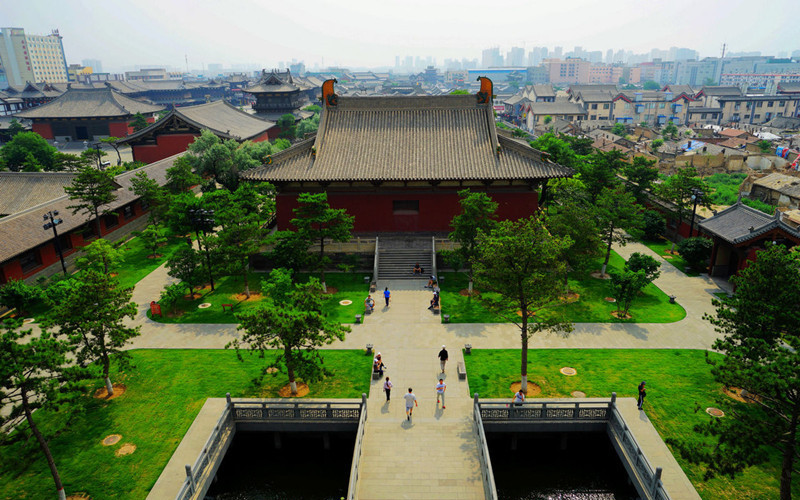
    The city preserves more than 3,500 ancient architectural sites, including temples, traditional residences, towers, and historical buildings, making it one of the valuable areas for studying Chinese ancient architectural development.

    Economic Development and Industrial Transformation

    Changzhi is one of China’s early industrial cities and a national demonstration area for the transformation and upgrading of resource-based cities.

    Traditionally, the city’s economy was supported by energy industries, especially coal and related industries. In recent years, Changzhi has actively promoted industrial restructuring and developed new growth sectors, including:

    • Modern coal chemical industries
    • Carbon-based new materials
    • High-end equipment manufacturing
    • Optoelectronic LED industries
    • Modern pharmaceuticals

    In 2025, Changzhi achieved a regional GDP of approximately 255.83 billion RMB, showing steady economic growth and industrial upgrading. At the same time, the city’s urbanization rate has exceeded 60%, reflecting continued improvements in urban development and living conditions.

    Changzhi Cultural and Tourism Bureau’s International Tourism Development Strategy

    The Changzhi Culture and Tourism Bureau (长治市文化和旅游局), also known as the Changzhi Tourism Bureau, has positioned cultural tourism as an important strategic industry for the city’s future development. The bureau aims to transform Changzhi into a nationally recognized cultural tourism center and a well-known cultural tourism destination in China.

    The overall tourism development positioning focuses on building tourism into a strategic pillar industry and an industry that improves residents’ quality of life, while strengthening Changzhi’s international tourism influence.

    Building the “Magnificent Taihang · Peaceful Changzhi” Tourism Brand

    The city continues to promote its core tourism brand:

    “Magnificent Taihang · Peaceful Changzhi” (壮美太行·久安长治)

    Through this brand strategy, Changzhi highlights the combination of Taihang Mountain scenery, ancient Chinese architecture, historical culture, and revolutionary heritage, creating a comprehensive destination image for domestic and international visitors.

    Improving International Tourism Services

    To attract more overseas visitors, Changzhi is focusing on improving international tourism infrastructure and service quality, including:

    • Promoting standardized foreign-language signs at major tourism sites.
    • Improving multilingual reservation systems, tourist guidance services, and interpretation services.
    • Enhancing convenience for international travelers through better tourism information access.

    Future Development Direction

    Changzhi’s international tourism development strategy emphasizes deeper integration of culture and tourism by utilizing three major advantages:

    • Taihang Mountain natural landscapes, including mountain scenery, forests, valleys, and ecological resources.
    • Ancient architectural heritage, with thousands of historical buildings representing traditional Chinese culture.
    • Red tourism resources, reflecting China’s modern revolutionary history.

    The city plans and develops major cultural tourism projects, including mythology-themed tourism projects and integrated cultural-commercial-tourism complexes, to strengthen tourism infrastructure and enrich visitor experiences.

    Changzhi also aims to expand international influence through regional cooperation, overseas tourism promotion campaigns, professional destination marketing activities, and cultural tourism festivals. Through these efforts, Changzhi is working toward becoming an important destination on the Taihang Mountain tourism route and a more internationally accessible cultural tourism city.

    ENQUIRY
    Have a question before booking? Message us to learn more.
    Click to change
    Changzhi

    Changzhi

    Located in southeastern Shanxi Province, Changzhi (长治) is a historic city with more than 2,000 years of cultural development. Situated in the upper region of the ancient Shangdang area, it has long been an important military, transportation, and cultural center connecting Shanxi with Hebei and Henan. Surrounded by the Taihang Mountains (太行山), Changzhi offers a combination of spectacular natural scenery, ancient temples, traditional villages, and rich folk culture, making it an excellent destination for travelers seeking a deeper experience of Shanxi. Why Visit Changzhi? Taihang Grand Canyon (太行山大峡谷): The Taihang Grand Canyon in Huguan County is the most famous natural attraction in Changzhi. Known for its steep cliffs, deep valleys, waterfalls, forests, and clear streams, the area offers some of the most impressive mountain landscapes in northern China. Visitors can enjoy hiking, sightseeing, photography, and exploring scenic routes surrounded by dramatic Taihang scenery. Bajiquan and Traditional Martial Arts Culture (八极拳文化): Changzhi is associated with traditional Chinese martial arts culture and folk traditions. The region preserves various forms of local martial arts, performances, and cultural practices that reflect the strong heritage...
  • China Travel Agency, China Tours 2026/2027 | Yaso TripShanxi
  • Datong
    Popular
    ★★★★

    Datong

    Located in northern Shanxi Province, Datong (大同) is one of the most historically important cities in northern China. Situated at the junction of Shanxi, Inner Mongolia, and Hebei, it has long been a strategic gateway between the Central Plains and the northern grasslands. As the capital of the Northern Wei Dynasty (386–534), Datong became a major center of Buddhism, art, and cultural exchange. Today, the city attracts visitors with its UNESCO heritage sites, ancient temples, mountain scenery, and unique northern Shanxi culture. Why Visit Datong? Yungang Grottoes (云冈石窟): The Yungang Grottoes are Datong’s most famous attraction and a UNESCO World Heritage Site. Created mainly during the Northern Wei Dynasty, the caves contain thousands of Buddhist statues and carvings that combine Chinese, Indian, and Central Asian artistic influences. They represent one of the greatest achievements of ancient Chinese Buddhist art. Hengshan Hanging Temple (悬空寺): Built on a cliff of Mount Heng (恒山), the Hanging Temple is one of China’s most remarkable ancient buildings. The temple combines Buddhism, Taoism, and Confucianism, while its unique cliffside structure demonstrates the advanced engineering skills of...
  • China Travel Agency, China Tours 2026/2027 | Yaso TripShanxi
  • Jincheng

    Jincheng

    Located in southeastern Shanxi Province, Jincheng (晋城) is a historic city bordering Henan Province to the south and southeast. Known as the “Hometown of Chinese Ancient Architecture,” Jincheng preserves an impressive collection of ancient castles, temples, traditional villages, and courtyard houses. Surrounded by the Taihang Mountains (太行山), the city combines natural landscapes with the rich cultural heritage of the ancient Shangdang and Zezhou regions, making it an excellent destination for travelers interested in history, architecture, and rural China. Why Visit Jincheng? Ancient Architecture and Traditional Villages: Jincheng is one of the best places in China to explore well-preserved ancient residential architecture. The region contains numerous Ming and Qing Dynasty buildings, including traditional courtyards, temples, ancestral halls, and ancient villages. These historic communities reflect the prosperity of Shanxi merchants and the unique architectural style of northern China. Huangcheng Village and Chen Clan Mansion : The most famous attraction in Jincheng is Huangcheng Village (皇城村), home to the impressive Chen Clan Mansion (皇城相府). This large-scale Ming and Qing Dynasty residential complex features grand courtyards, defensive walls, elegant gates, and traditional halls. It...
  • China Travel Agency, China Tours 2026/2027 | Yaso TripShanxi
  • Linfen

    Linfen

    Located in southwestern Shanxi Province along the Fen River, Linfen is a historic city with more than 2,000 years of cultural development. Known as Pingyang (平阳) in ancient times, it was once an important center of politics, agriculture, and culture in northern China. With rich historical sites, traditional villages, and natural landscapes, Linfen provides travelers with an authentic journey into Shanxi’s ancient civilization. Why Visit Linfen? Ancient History and Cultural Heritage: Linfen is one of the important birthplaces of Chinese civilization and has a deep connection with ancient Chinese history. The region preserves numerous historical sites, traditional architecture, and cultural relics reflecting the development of Shanxi’s civilization over thousands of years. Hukou Waterfall (壶口瀑布): Located on the border between Shanxi and Shaanxi along the Yellow River, this is the largest waterfall on the river and one of China’s most spectacular natural landscapes. The powerful water flow, roaring sound, and golden river scenery create an unforgettable experience, especially during the flood season when the waterfall becomes even more magnificent. Yao Temple (尧庙): Dedicated to Emperor Yao, one of the legendary ancient...
  • China Travel Agency, China Tours 2026/2027 | Yaso TripShanxi
  • Lüliang

    Lüliang

    Located in western Shanxi Province, Lüliang (吕梁) is a historic prefecture-level city bordered by the Yellow River (黄河) to the west and connected with Taiyuan, Jinzhong, Linfen, and Xinzhou. Known for its magnificent mountains, revolutionary heritage, ancient villages, and traditional culture, Lüliang offers a less crowded travel experience with authentic landscapes and local traditions. The region combines the natural beauty of the Lüliang Mountains (吕梁山) with the cultural heritage of northern China, making it an ideal destination for travelers seeking history, nature, and rural experiences. Why Visit Lüliang? Lüliang Mountains and Natural Landscapes: The city is named after the Lüliang Mountains, a major mountain range in western Shanxi. The area features forests, valleys, waterfalls, plateaus, and traditional mountain villages. The mountains provide excellent opportunities for hiking, photography, and exploring the natural scenery of the Loess Plateau region. Qikou Ancient Town (碛口古镇): Qikou Ancient Town is one of Lüliang’s most famous cultural attractions and a historic trading port along the Yellow River. During the Ming and Qing dynasties, it became an important commercial center connecting Shanxi, Shaanxi, and Inner Mongolia. The...
  • China Travel Agency, China Tours 2026/2027 | Yaso TripShanxi
  • Jinzhong

    Jinzhong

    Located in east-central Shanxi Province, Jinzhong (晋中) is a historic city known for its ancient architecture, merchant culture, traditional villages, and well-preserved courtyard residences. Formerly known as Yuci, the region developed into one of the most prosperous commercial centers in northern China during the Ming and Qing dynasties. With its rich cultural heritage, historic towns, mountain landscapes, and authentic Shanxi traditions, Jinzhong is an ideal destination for travelers seeking a deeper understanding of traditional Chinese civilization. Why Visit Jinzhong? Jin Merchant Culture and Ancient Courtyards: Jinzhong is the heartland of the famous Shanxi merchants, who became one of the most influential business groups in Chinese history. Their wealth and cultural influence can still be seen in magnificent family compounds, ancient villages, temples, and traditional residences throughout the region. These architectural treasures reveal the lifestyle, values, and craftsmanship of Shanxi’s merchant families. Pingyao Ancient City (平遥古城): Pingyao Ancient City is the most famous attraction in Jinzhong and a UNESCO World Heritage Site. This remarkably preserved ancient walled city keeps its original streets, city walls, temples, courtyards, and traditional buildings from the...
  • China Travel Agency, China Tours 2026/2027 | Yaso TripShanxi
  • Shuozhou

    Shuozhou

    Located in northern Shanxi Province, Shuozhou (朔州) is a historic city bordering Inner Mongolia to the northwest and situated along the upper reaches of the Fen River. As an important region connecting the Central Plains with the northern grasslands, Shuozhou has long been a strategic area where farming culture and nomadic traditions met. Although it is less visited by international travelers, the city preserves remarkable ancient architecture, archaeological sites, frontier culture, and traditional landscapes. Why Visit Shuozhou? Yingxian Wooden Pagoda (应县木塔): The most famous attraction in Shuozhou is the Yingxian Wooden Pagoda, built in 1056 during the Liao Dynasty. It is the oldest and tallest fully wooden pagoda in China and was constructed entirely without modern metal nails. The pagoda represents an extraordinary achievement in ancient Chinese wooden architecture and contains valuable Buddhist artworks, calligraphy, and historical relics. Ancient Buddhist Culture and Historic Temples: Shuozhou has a long history of Buddhist influence due to its location along ancient routes connecting northern China. The region preserves historic temples, pagodas, and religious sites that reflect the cultural exchanges between different ethnic groups...
  • China Travel Agency, China Tours 2026/2027 | Yaso TripShanxi
  • Taiyuan
    ★★★★

    Taiyuan

    Taiyuan (太原) Travel Overview: Located in central Shanxi Province, Taiyuan (太原) is the capital city of Shanxi and one of northern China’s important historical centers, with more than 2,500 years of civilization. Known as the “Dragon City,” Taiyuan combines ancient temples, royal gardens, museums, traditional architecture, and modern urban development. As a major transportation hub, it is also an ideal starting point for exploring famous Shanxi destinations such as Pingyao Ancient City (平遥古城), Wutai Mountain (五台山), and Yungang Grottoes (云冈石窟). Why Visit Taiyuan? Taiyuan (太原) is a fascinating destination for travelers who want to discover Shanxi’s ancient civilization, traditional culture, and unique landscapes. The city preserves some of the province’s most important historical treasures, including Jinci Temple (晋祠), a masterpiece of ancient Chinese architecture and garden design, and Shanxi Museum (山西博物院), which showcases thousands of years of regional history through valuable cultural relics. Visitors can also explore Twin Pagoda Temple (双塔寺), Chongshan Temple (崇善寺), and historic neighborhoods to experience Buddhist heritage, traditional architecture, and local customs. Ancient Culture and Historical Attractions: Taiyuan’s greatest attraction is its rich collection of historical...
  • China Travel Agency, China Tours 2026/2027 | Yaso TripShanxi
  • Xinzhou

    Xinzhou

    Xinzhou (忻州) is a prefecture-level city located in the north-central part of Shanxi Province (山西省), bordering Hebei Province (河北省) to the east, Shaanxi Province (陕西省) to the west, and Inner Mongolia (内蒙古) to the northwest. It is situated between Datong (大同) in the north and Taiyuan (太原) in the south, with the Yellow River (黄河) forming part of its western boundary and the Taihang Mountains (太行山) separating it from Hebei in the east. With a long history, rich Buddhist heritage, magnificent mountain landscapes, and distinctive northern Shanxi culture, Xinzhou is an important destination for travelers seeking nature, spirituality, and traditional Chinese culture. Why Visit Xinzhou? Mount Wutai & Buddhist Heritage: The greatest attraction of Xinzhou is Mount Wutai (五台山), one of the most famous Buddhist sacred mountains in China and a UNESCO World Heritage Site. Located in Wutai County (五台县), the mountain is renowned for its grand Buddhist temple complex, spectacular natural scenery, and deep religious traditions. It is one of the Four Sacred Buddhist Mountains of China and is dedicated to Manjusri Bodhisattva (文殊菩萨), the symbol of wisdom in...
  • China Travel Agency, China Tours 2026/2027 | Yaso TripShanxi
  • Yangquan

    Yangquan

    Yangquan (阳泉) is a prefecture-level city located in the eastern part of Shanxi Province (山西省), bordering Hebei Province (河北省) to the east. Situated between the eastern edge of the Loess Plateau (黄土高原) and the western side of the Taihang Mountains (太行山), Yangquan covers an area of approximately 4,452 square kilometers. As an important industrial city in eastern Shanxi, Yangquan combines mountain landscapes, historical heritage, traditional villages, revolutionary culture, and local folk customs, offering visitors an authentic experience of northern China. Why Visit Yangquan? Taihang Mountain Scenery & Natural Landscapes: Yangquan is located in the Taihang Mountain region, featuring beautiful mountains, valleys, forests, and rural landscapes. The surrounding natural environment provides excellent opportunities for hiking, photography, outdoor exploration, and experiencing the peaceful scenery of northern China. The combination of steep mountain terrain and traditional villages creates a unique destination for nature lovers. Niangziguan Ancient Town & Historical Culture: Niangziguan (娘子关) is one of the most famous historical sites in Yangquan and an important pass along the Great Wall system. Known as the “Ninth Pass of the Great Wall,” it played a...
  • China Travel Agency, China Tours 2026/2027 | Yaso TripShanxi