China Travel Agency, China Tours 2026/2027 | Yaso Trip
Theme Tours
View All China Theme Tours by Interest
Travel Guide
  • Travel Guide
  • Travel Tips
  • Tour Planning
  • Ethnic Culture
  • China Climate
  • Golf Courses
  • Yangtze Cruise
  • Travel Articles
  • Yanbian Culture

    People living in Yanbian are hard-working, hospitable and versatile. All the ethnic groups in this place have created distinct and splendid culture together, showing their wisdom and talent to other people who come into their places.

    Ethnic Groups

    Up to 2010, there have been more than 20 ethnic groups in Yanbian Korean Autonomous Prefecture, including Korean, Han, Manchu, Hui, and other ethnic groups. The Korean ethnic group has the population of 820 thousand, accounting for 37.7%, Han 59.29% and other ethnic groups including Manchu and Hui 3.01%.

    Ethnic villages

    There are 13 ethnic villages in Yanbian Korean Autonomous Prefecture.

     Administrative Divisions  Ethnic Villages
     Yilan Town (依兰镇)  Chunxing Village (春兴村)
     Xiaoying Town (小营镇)  Helong Village (河龙村)
     Shixian Town (石岘镇)  Shuinan Village (水南村)
     Banshi Town (板石镇)  Mengling Village (孟岭村)
    Mijiang Township (密江乡)  Mijiang Village (密江村)
     Dongshengyong Town (东盛涌镇)  Renhua Village (仁化村)
     Dongcheng Town (东城镇)  Guangdong Village (光东村)
     Xicheng Town (西城镇)  Jindalai Village (金达莱村)
    Wanbao Town (万宝镇)  Hongqi Village (红旗村)
    Shimen Town (石门镇)  Chatiao Village (茶条村)
     Erdaobaihe Town (二道白河镇)  Naitoushan Village (奶头山村)
    Yueqing Town (月晴镇)  Bailong Village (白龙村)
    Jingxin Town (敬信镇)  Fangchuan Village (防川村)

    Inheritors of Intangible Cultural Heritage in Yanbian

    Order Number Name Gender Date of Birth Project Name Declaration Place Classification
    02-0382 Jin Mingchun (金明春)  Male 1958.12.23 Korean Farmer's Dance  Yanbian Korean Autonomous Prefecture Traditional Dance
     03-1385 Jin Jifeng (金季凤)  Male 1937.02.14 Craft of Korean Folk Musical Instrument Yanbian Korean Autonomous Prefecture Traditional Skill
     04-1539 Jin Xingsan (金星三)  Male  1955.10.06 the Art of Gayageum (伽倻琴艺术) Yanbian Korean Autonomous Prefecture Traditional Music
     04-1731 Jiang Xinzi (姜信子)  Female  1941.02.01 Pansori (盘索里) Yanbian Korean Autonomous Prefecture Folk Art
     05-2543 Li Yong (李勇)  Male  / Korean Wrestling Yanji City of Yanbian Traditional Sports, Entertainment, and Acrobatics
     05-2817 Zhao Jide(赵基德)  Male  / Craft of Korean Folk Musical Instrument Yanbian Korean Autonomous Prefecture Traditional Skill
     05-3045 Yu yulan (俞玉兰)  Female  / Hanbok (Korean Costume) Yanbian Korean Autonomous Prefecture Folklore

    Local Customs

    • Dances: Most of the Koreans are good at dance, and they created many dances to describe their life or to celebrate important activities.  Korean Farmer's Dance(农乐舞), one of the oldest dance forms in Korea, is traditionally performed during planting, harvesting, and other agricultural events to give encouragement to the farmers and to provide them with a beat to work by. Sorcery Dance(巫舞) used to play an important role in the whole development of Korean dance. Changgo dance(长鼓舞) is another traditional Korean dance that is usually accompanied by hourglass-shaped drums. Fan Dance(扇舞) and Sword Dance are also performed in this area.
    • Songs: People in Yanbian have created many ballads which enjoy great popularity, including Ballon Flower(桔梗谣), Arirang(阿里郎), By the Nodol River(诺多尔江边), and Red sun shines on the frontier(红太阳照边疆), etc. People use these songs to express their feelings to others.
    • Costume: Hanbok, characterized by simple design, bright colors and no pockets, is a traditional Korean dress for semi-formal or formal attire during traditional occasions such as festivals, celebrations, and ceremonies. The hanbok was once used to determine different social status through the many types and components,and their characteristics from people with the highest social status,to those of the lowest social status. Although the modern Hanbok does not express a person's status or social position anymore.
    • Etiquette: The Korean people pay great attention to the etiquette and admire the traditional virtues of respecting the old and loving the young. For example, when younger generation talk to the elders, they must use honorific words to show their respect to the elders.
    • National Intangible Cultural Heritages:National Intangible Cultural Heritages in Yanbian include the Manchu Story-telling(满族说部), Korean Springboard, Pansori(盘索里), Gayageum(伽倻琴), and Korean Traditional Wedding, etc.
    ENQUIRY
    Have a question before booking? Message us to learn more.
    Click to change
    Tonghua

    Tonghua

    Tonghua City (通化市) is located in southeastern Jilin Province (吉林省) and is known for its combination of mountains, rivers, forests, border culture, and traditional Chinese medicine industries. As an important city in Northeast China, Tonghua is famous for Koguryo historical heritage, ice wine production, ginseng culture, and winter tourism, offering diverse experiences from cultural exploration to outdoor adventures. Why Visit Tonghua City? Koguryo World Heritage Sites: Ji’an Koguryo Relics Scenic Area (集安高句丽遗址景区) preserves important remains of the ancient Koguryo Kingdom (高句丽王国), including royal tombs, stone inscriptions, and ancient city ruins. These sites reveal the history and civilization of early Northeast Asia and are part of the UNESCO World Heritage-listed Capital Cities and Tombs of the Ancient Koguryo Kingdom (高句丽王城、王陵及贵族墓葬). Ice Wine and Grape Culture: Tonghua (通化) is known as China’s “Ice Wine Capital” and has a long tradition of mountain wild grape wine production. The region’s cold climate vineyards and underground cellars create ideal conditions for ice wine making. Visitors can join winery tours, taste local wines, and learn about traditional wine production processes. Yalu River Border Scenery: The Yalu...
  • China Travel Agency, China Tours 2026/2027 | Yaso TripJilin
  • Changbai Mountains
    Popular
    ★★★★

    Changbai Mountains

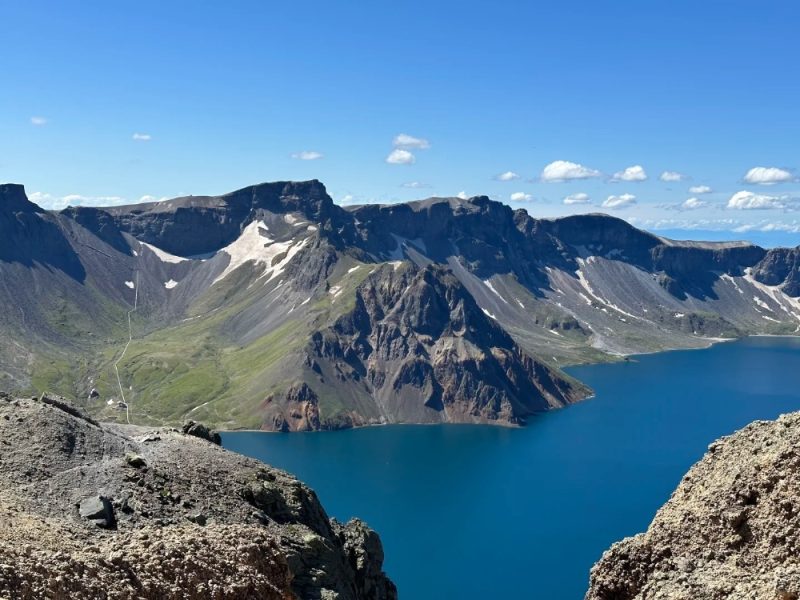
    Changbai Mountains (长白山) are one of the most spectacular natural destinations in Northeast Asia, located on the border between Jilin Province (吉林省), China and North Korea. Famous for volcanic landscapes, alpine ecosystems, ancient forests, waterfalls, hot springs, snow resorts, and diverse ethnic cultures, Changbai Mountains offer unique travel experiences throughout the year. The region is often described as “one mountain, four seasons, ten climate zones”, reflecting the dramatic changes in scenery caused by its elevation and ecological diversity. Why Visit Changbai Mountains? Heaven Lake (Tianchi 天池) – The Iconic Volcanic Crater Lake: Heaven Lake (天池) is the heart of Changbai Mountains and one of China’s most famous natural landmarks. Formed inside a massive volcanic crater, the lake sits at an altitude of 2,189 meters and reaches a maximum depth of 373 meters, surrounded by 16 magnificent peaks. Its water changes color with weather and sunlight, creating different shades from deep blue to silver reflections. Clear mornings, especially around 8:00–10:00, often provide the best viewing conditions. Because each mountain slope offers a different perspective, Heaven Lake can be experienced from multiple...
  • China Travel Agency, China Tours 2026/2027 | Yaso TripJilin
  • Yanji City

    Yanji City

    Yanji City (延吉市), located in Yanbian Korean Autonomous Prefecture (延边朝鲜族自治州) of Jilin Province (吉林省), is one of the most distinctive cultural tourism destinations in Northeast China. Known for its strong Korean ethnic culture, colorful neon streets, famous local cuisine, and access to Changbai Mountain (长白山), Yanji offers a unique combination of Chinese urban life and authentic Korean-style traditions. Why Visit Yanji City? Korean Ethnic Culture Experience: Yanji (延吉) is the cultural center of the Korean ethnic group in China, where bilingual signs, traditional lifestyles, Korean-style architecture, folk performances, and cultural activities are widely seen. Yanbian Korean Folk Village (延边朝鲜族民俗园) is the best place to experience traditional houses, hanbok photography, folk performances, and Korean ethnic customs. Mountain Scenery and Nature: Surrounded by mountains and river valleys, Yanji (延吉) provides easy access to Northeast China’s natural landscapes. Mao’er Mountain National Forest Park (帽儿山国家森林公园) is the city’s main natural attraction, offering panoramic views, hiking trails, and beautiful seasonal scenery. It is also an important gateway for trips to Changbai Mountain (长白山). Neon Streets and Night Views: Yanji (延吉) is famous for its colorful...
  • China Travel Agency, China Tours 2026/2027 | Yaso TripJilin,Yanbian
  • Changchun
    ★★★★

    Changchun

    Lying in the center of the Songliao Plain, Changchun, the spring city in North, called “Xidu (喜都)”, ”Cha’achong (茶啊冲)”, “Huanglongfu (黄龙府)” in the ancient time, is the capital and largest city of Jilin Province, the central city of Northeastern Asian Economic Circle, and one of the famous historical and cultural cities of China. “Changchun” means “long spring” in Chinese, and it is a modern city with a profound inside story, and the earliest automotive and film industrial bases of China, known as the “Detroit of China” and “Hollywood in China”. Apart from this industrial and film aspects, Changchun is also one of four "Landscape Garden Cities" in China. Changchun (Jilin) Travel Guide introduces useful travel information of Changchun including travel tips, attractions, top things to do, tours, transportation, weather, climate, food, restaurants, accommodation, festivals, nightlife, activities, education, shopping, photos and maps. Highlights Tourist Attractions: Changchun, one of the outstanding tourist cities in China and one of the top ten cities for ice and snow tourism, owns a great number of tourist attractions, including Songhua Lake, Shengli Park, Nanhu Park, Changchun...
  • China Travel Agency, China Tours 2026/2027 | Yaso TripJilin
  • Baishan City

    Baishan City

    Baishan (白山市) is one of the most scenic destinations in Jilin Province (吉林省), located in the southeastern part of Northeast China along the western and southern foothills of Changbai Mountain (长白山). Known for its pristine forests, alpine landscapes, snow resorts, border scenery, ethnic culture, and revolutionary heritage, Baishan combines natural wonders, cultural traditions, and outdoor adventures. The city is often described through the concept of “One Mountain, Two Rivers, Three Tourism Themes”, representing green ecology, white snow tourism, and red cultural heritage. Why Visit Baishan? Changbai Mountain Natural Wonders: Baishan is one of the best gateways to explore Changbai Mountain (长白山), a UNESCO World Natural Heritage site and one of China’s most famous mountain destinations. The Changbai Mountain West Scenic Area (长白山西景区) offers spectacular views of Heaven Lake (天池), alpine meadows, volcanic valleys, and Jinjiang Grand Canyon. The region is suitable for hiking, photography, forest exploration, and enjoying seasonal scenery from summer greenery to winter snow landscapes. Wangtian’e Scenic Area and Volcanic Landscapes: Wangtian’e Scenic Area (望天鹅景区) in Changbai County is known as the “Little Jiuzhaigou of Northeast China” for...
  • China Travel Agency, China Tours 2026/2027 | Yaso TripJilin
  • Jilin City
    ★★★★

    Jilin City

    Jilin City (吉林市), formerly the capital of Jilin Province (吉林省), is one of the most beautiful destinations in Northeast China. Located along the Songhua River (松花江) and surrounded by mountains, the city combines spectacular natural scenery, winter landscapes, Buddhist culture, and historical heritage. Known as the “River City”, Jilin is especially famous for its magical rime ice scenery, which attracts photographers and winter travelers from around the world. Why Visit Jilin City? Songhua River and Mountain Landscapes Create a Unique River City Jilin City enjoys a unique geographical setting, with the Songhua River (松花江) flowing through the urban area and four surrounding mountains creating a harmonious landscape. Beishan Mountain (北山) to the west, Longtan Mountain (龙潭山) to the east, Zhuque Mountain (朱雀山) to the north, and Turtle Mountain (龟山) to the south form one of the city’s most distinctive natural patterns. Among them, Beishan Mountain (北山) is the most famous scenic area, combining forest scenery, ancient temples, and local religious culture. Visitors can explore Buddhist temples, enjoy panoramic views of the city, and experience the peaceful atmosphere of this historic...
  • China Travel Agency, China Tours 2026/2027 | Yaso TripJilin
  • Yanbian
    ★★★★

    Yanbian

    Yanbian Korean Autonomous Prefecture, situated in east of Jilin Province in the Northeast China, is the birthplace of the Manchus and their ancestors Sushen(肃慎). It was praised as “the Ground of Dragon Rising” in Qing Dynasty. Located on the border between China and North Korea, Yanbian is the only Korean autonomous prefecture and the largest habitation of the Korean ethnic minority.There you can enjoy the unique Korean customs and the delicious Korean foods. It is a famous tourism area in China, including Changbaishan National Nature Reserve, Tumen Border Port, and beautiful Yanbian Eight Sights, etc. Yanbian has the jurisdiction over six cities including Yanji, Tumen, Dunhua,  Hunchun, Longjing, and Helong, and two counties of Wangqing and Antu. Highlights Korean Culture: As the main resident community of the Korean ethnic minority, Yanbian is full of splendid Korean folk customs. There you can see Korean-style villages, enjoy unique Korean dances and music. And you can enjoy their special festivals such as Liutou Fesival(流头节). Changbai Mountain: Yanbian is situated in the mountainous area of Changbai Mountain, which is one of the ten most famous mountains...
  • China Travel Agency, China Tours 2026/2027 | Yaso TripJilin