China Travel Agency, China Tours 2026/2027 | Yaso Trip
Theme Tours
View All China Theme Tours by Interest
Travel Guide
  • Travel Guide
  • Travel Tips
  • Tour Planning
  • Ethnic Culture
  • China Climate
  • Golf Courses
  • Yangtze Cruise
  • Travel Articles
  • Baishan City Transportation

    Baishan City (白山市) is located on the western foothills of Changbai Mountain (长白山) and the northern banks of the Yalu River (鸭绿江). The city has developed a multi-modal transportation network integrating air, high-speed rail, conventional trains, highways, intercity buses, and self-driving options. The administrative region includes Hunjiang (浑江区), Jiangyuan (江源区), and the counties of Fusong (抚松), Jingyu (靖宇), Linjiang (临江), and Changbai Korean Autonomous County (长白朝鲜族自治县).

    Tourist attractions are spread along the mountain foothills and river valleys. Mountain roads are winding, while the border line is connected by G331 National Highway, providing convenient access for travelers. The general travel pattern is: fast arrival via plane or high-speed rail, scenic exploration by self-drive or charter, and short trips via bus or taxi.

    This guide covers all inbound and outbound transportation, train and bus stations, city buses, taxis, cycling options, and detailed transport tips to major scenic areas.


    Inbound & Outbound Transportation Options

    1. Air Travel|Changbai Mountain Airport

    Changbai Mountain Airport (长白山机场, 松江河镇, 抚松县) is located in the western section of Fusong, approximately 130 km from Baishan city center, 15 km from Changbai West Slope, and 18 km from Wanda Resort (万达度假区). It offers direct flights from major domestic cities including Beijing, Shanghai, Tianjin, Xi’an, Changchun, Shenyang, Harbin, and Dalian, with seasonal routes from Hangzhou and Yantai.

    • To City Center: Airport shuttle bus to Songjianghe Bus Station (松江河客运站); journey to Baishan city ~2.5h.
    • Private Transfer / Ride-Hailing: 1.8h to city center.
    • Nearby Sightseeing: Travelers can visit West Slope and Wanda Resort directly without returning to the city.

    Alternative airports: Changchun Longjia Airport or Yanji Chaoyangchuan Airport, then connect via high-speed rail or intercity bus.


    2. High-Speed Rail|Shen–Ba High-Speed Line

    The Shenyang–Baishan (沈白) High-Speed Railway is the main rapid access route. Baishan has three HSR stations:

    • Baishan East Station (白山东站, Hunjiang District): City core hub, 4h from Beijing, 1.5h from Shenyang. Bus lines 1, 19, and HSR shuttle G1/G2 connect to city center and main bus terminals. Taxi and rental cars available; convenient for day trips to Longshan Lake (龙山湖) or Linjiang.
    • Changbai West Station (长白山西站, Songjianghe): Closest to Changbai West Slope and Wanda Resort, 15 min by shuttle to Wanda Town, ideal for direct access to West Slope and Lushuihe (露水河).
    • Jiangyuan East Station (江源东站): Access to Jiangyuan city, Jingyu attractions, and Ganfanpen (干饭盆).

    3. Conventional Trains|Baishan Old Stations

    • Baishan Old Railway Station (浑江站): Connections to Tonghua, Shenyang, Changchun; ideal for regional travel and short transfers. Bus and local connections available.
    • Songjianghe Station (松江河): Overnight and morning trains to Dalian and Shenyang; direct to West Slope for travelers seeking slower-paced trips.

    4. Intercity Buses

    Baishan Central Bus Terminal (浑江区) serves provincial destinations such as Changchun, Tonghua, and Yanji. County-level fixed routes connect Linjiang, Changbai, Fusong, and Jingyu.

    • Baishan → Songjianghe: 2.5h
    • Baishan → Changbai County: 3.5h
    • Baishan → Linjiang: 1.2h

    Shuttle buses are preferred for Wangtian’e (望天鹅) and Changbai border areas.


    5. Self-Drive & Highway Network

    Main expressways: Heda (鹤大高速), Fuchang (抚长高速), Huibai (辉白高速) allow fast access from Changchun, Shenyang, Tonghua, and Yanji. G331 National Highway runs along the border, ideal for autumn foliage tours and scenic drives.


    City Transportation|Buses, Taxis, Rentals, Cycling

    1. City Bus

    • Routes 1 & 19 connect Baishan East Station to downtown, fares 1–2 RMB.
    • HSR shuttles G1/G2 link high-speed rail stations with the old city.
    • Intercity buses: Baishan ↔ Jiangyuan, first 6:05, last 17:40, continuous departures.
    • County and remote mountain routes only open seasonally for tourism.

    2. Taxis & Ride-Hailing

    • Base fare 5–6 RMB, convenient for short trips.
    • Pick-up points at HSR stations and bus terminals.
    • Cross-county trips: 50–80 RMB per person shared; 200–300 RMB for single-day charter. Main choice for independent travelers exploring multiple counties.

    3. Car Rental & Cycling

    • Rental cars available at Baishan East Station, city, and Songjianghe; SUVs recommended for mountain roads, especially in autumn/winter.
    • Cycling: G331 (Linjiang to Changbai) and city greenways suitable for short leisure rides; mountain circuits not recommended for long-distance cycling.

    Scenic Area Transportation Guide

    1. Changbai Mountain Area|West Slope, South Slope, Wanda Resort

    West Slope (松江河): HSR arrival at Changbai West Station, direct shuttle to mountain gate. From Baishan city, take bus to Songjianghe then scenic shuttle. Parking available for self-drivers; environmental shuttle required up the mountain; Tianchi summit via 1,442 steps.

    Wanda Resort (万达国际度假区): 20 min from airport shuttle, 15 min taxi from West Station, self-drive possible; internal free shuttle links ski, hot springs, and hotel areas.

    South Slope (长白县): Bus from Baishan East Station to Changbai County, then 1h charter or shared car to mountain gate. Self-drive via G331 preferred for quiet scenic experience.


    2. Wangtian’e Scenic Area (Fifteen Ravines, 长白县)

    • Public transport: Baishan Bus Terminal → Changbai County, then 1h local bus/charter to scenic spot.
    • Self-drive: G331 direct access, autumn foliage along the route.

    3. Linjiang & G331 Border Scenic Areas|Longshan Lake, Songling Snow Village, Jiangxin Island

    • Longshan Lake (三道沟): City bus or 1h self-drive, suitable for boating and border views.
    • Songling Snow Village (松岭雪村): No direct bus; 1.5h charter or self-drive via G331. Popular winter destination.
    • Jiangxin Island / Chen Yun Park, Yalu River Broken Bridge: Linjiang city bus or 1.2h intercity bus from Baishan.

    4. Jingyu & Jiangyuan Cultural Sites|Yang Jingyu Martyr Site (杨靖宇殉国地), Ganfanpen

    • Arrival via Jiangyuan East Station, then short bus/taxi to Jingyu County.
    • Direct bus lines from Baishan Central Terminal available; self-drive via Huibai Expressway ~40 min.

    5. Lushuihe Hunting & Resort Area (抚松)

    • 30 min by charter from Changbai West Station, short shuttle from Songjianghe.
    • Convenient to visit on the way to West Slope; seasonal forest rafting available.

    Travel Recommendations by Visitor Type

    • Short city trips & sightseeing: HSR to Baishan East → city buses/taxis. Explore museums, Longshan Lake.
    • Changbai West Slope / Wanda Resort: Fly to airport or HSR to West Station, immediate access to attractions.
    • Border self-drive & Wangtian’e / South Slope loop: Rent car on arrival, complete G331 route for scenic border tour.
    • Budget backpackers: Intercity buses link counties; scenic carpooling offers best value.

    Travel Tips: Autumn/winter mountain roads prone to ice; equip G331 self-drive vehicles with snow chains. Peak season (June–October) opens direct buses from city to Changbai Mountain and Wangtian’e; tickets available at Baishan East Station and Central Station.

    ENQUIRY
    Have a question before booking? Message us to learn more.
    Click to change
    Changbai Mountains
    Popular
    ★★★★

    Changbai Mountains

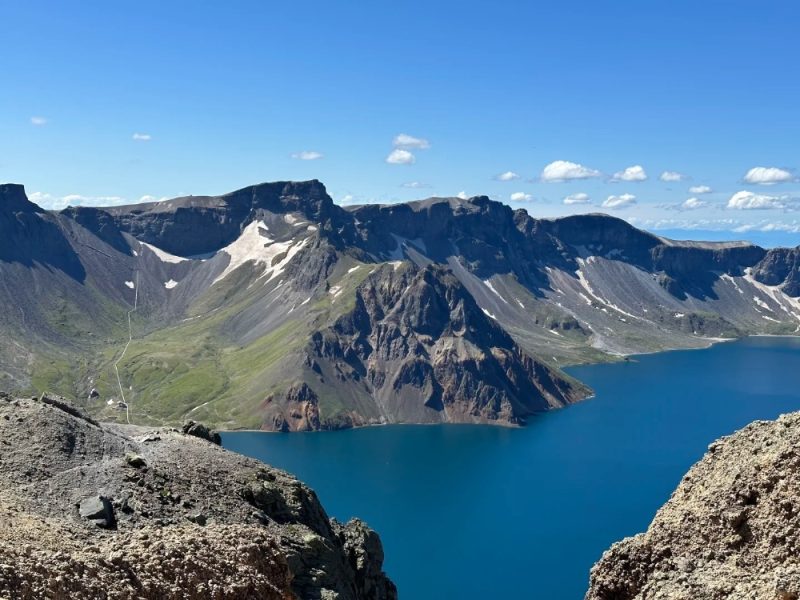
    Changbai Mountains (长白山) are one of the most spectacular natural destinations in Northeast Asia, located on the border between Jilin Province (吉林省), China and North Korea. Famous for volcanic landscapes, alpine ecosystems, ancient forests, waterfalls, hot springs, snow resorts, and diverse ethnic cultures, Changbai Mountains offer unique travel experiences throughout the year. The region is often described as “one mountain, four seasons, ten climate zones”, reflecting the dramatic changes in scenery caused by its elevation and ecological diversity. Why Visit Changbai Mountains? Heaven Lake (Tianchi 天池) – The Iconic Volcanic Crater Lake: Heaven Lake (天池) is the heart of Changbai Mountains and one of China’s most famous natural landmarks. Formed inside a massive volcanic crater, the lake sits at an altitude of 2,189 meters and reaches a maximum depth of 373 meters, surrounded by 16 magnificent peaks. Its water changes color with weather and sunlight, creating different shades from deep blue to silver reflections. Clear mornings, especially around 8:00–10:00, often provide the best viewing conditions. Because each mountain slope offers a different perspective, Heaven Lake can be experienced from multiple...
  • Jilin
  • Changchun
    ★★★★

    Changchun

    Lying in the center of the Songliao Plain, Changchun, the spring city in North, called “Xidu (喜都)”, ”Cha’achong (茶啊冲)”, “Huanglongfu (黄龙府)” in the ancient time, is the capital and largest city of Jilin Province, the central city of Northeastern Asian Economic Circle, and one of the famous historical and cultural cities of China. “Changchun” means “long spring” in Chinese, and it is a modern city with a profound inside story, and the earliest automotive and film industrial bases of China, known as the “Detroit of China” and “Hollywood in China”. Apart from this industrial and film aspects, Changchun is also one of four "Landscape Garden Cities" in China. Changchun (Jilin) Travel Guide introduces useful travel information of Changchun including travel tips, attractions, top things to do, tours, transportation, weather, climate, food, restaurants, accommodation, festivals, nightlife, activities, education, shopping, photos and maps. Highlights Tourist Attractions: Changchun, one of the outstanding tourist cities in China and one of the top ten cities for ice and snow tourism, owns a great number of tourist attractions, including Songhua Lake, Shengli Park, Nanhu Park, Changchun...
  • Jilin
  • Baishan City

    Baishan City

    Baishan (白山市) is one of the most scenic destinations in Jilin Province (吉林省), located in the southeastern part of Northeast China along the western and southern foothills of Changbai Mountain (长白山). Known for its pristine forests, alpine landscapes, snow resorts, border scenery, ethnic culture, and revolutionary heritage, Baishan combines natural wonders, cultural traditions, and outdoor adventures. The city is often described through the concept of “One Mountain, Two Rivers, Three Tourism Themes”, representing green ecology, white snow tourism, and red cultural heritage. Why Visit Baishan? Changbai Mountain Natural Wonders: Baishan is one of the best gateways to explore Changbai Mountain (长白山), a UNESCO World Natural Heritage site and one of China’s most famous mountain destinations. The Changbai Mountain West Scenic Area (长白山西景区) offers spectacular views of Heaven Lake (天池), alpine meadows, volcanic valleys, and Jinjiang Grand Canyon. The region is suitable for hiking, photography, forest exploration, and enjoying seasonal scenery from summer greenery to winter snow landscapes. Wangtian’e Scenic Area and Volcanic Landscapes: Wangtian’e Scenic Area (望天鹅景区) in Changbai County is known as the “Little Jiuzhaigou of Northeast China” for...
  • Jilin
  • Jilin City
    ★★★★

    Jilin City

    Jilin City (吉林市), formerly the capital of Jilin Province (吉林省), is one of the most beautiful destinations in Northeast China. Located along the Songhua River (松花江) and surrounded by mountains, the city combines spectacular natural scenery, winter landscapes, Buddhist culture, and historical heritage. Known as the “River City”, Jilin is especially famous for its magical rime ice scenery, which attracts photographers and winter travelers from around the world. Why Visit Jilin City? Songhua River and Mountain Landscapes Create a Unique River City Jilin City enjoys a unique geographical setting, with the Songhua River (松花江) flowing through the urban area and four surrounding mountains creating a harmonious landscape. Beishan Mountain (北山) to the west, Longtan Mountain (龙潭山) to the east, Zhuque Mountain (朱雀山) to the north, and Turtle Mountain (龟山) to the south form one of the city’s most distinctive natural patterns. Among them, Beishan Mountain (北山) is the most famous scenic area, combining forest scenery, ancient temples, and local religious culture. Visitors can explore Buddhist temples, enjoy panoramic views of the city, and experience the peaceful atmosphere of this historic...
  • Jilin
  • Yanbian
    ★★★★

    Yanbian

    Yanbian Korean Autonomous Prefecture, situated in east of Jilin Province in the Northeast China, is the birthplace of the Manchus and their ancestors Sushen(肃慎). It was praised as “the Ground of Dragon Rising” in Qing Dynasty. Located on the border between China and North Korea, Yanbian is the only Korean autonomous prefecture and the largest habitation of the Korean ethnic minority.There you can enjoy the unique Korean customs and the delicious Korean foods. It is a famous tourism area in China, including Changbaishan National Nature Reserve, Tumen Border Port, and beautiful Yanbian Eight Sights, etc. Yanbian has the jurisdiction over six cities including Yanji, Tumen, Dunhua,  Hunchun, Longjing, and Helong, and two counties of Wangqing and Antu. Highlights Korean Culture: As the main resident community of the Korean ethnic minority, Yanbian is full of splendid Korean folk customs. There you can see Korean-style villages, enjoy unique Korean dances and music. And you can enjoy their special festivals such as Liutou Fesival(流头节). Changbai Mountain: Yanbian is situated in the mountainous area of Changbai Mountain, which is one of the ten most famous mountains...
  • Jilin