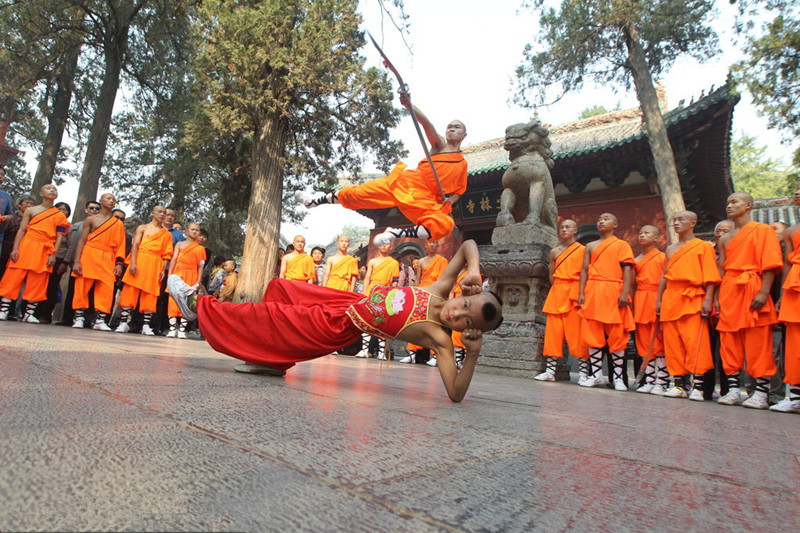
Dengfeng (登封市) lies between Zhengzhou and Luoyang in central Henan and is the main gateway to Mount Song, Shaolin Temple, Sanhuangzhai, Songyang Academy, Zhongyue Temple and the “Centre of Heaven and Earth” World Heritage monuments. For travelers, the most important thing to understand is that Dengfeng is primarily a road-based destination: as of 2026, it does not have a passenger high-speed railway station or a conventional commercial airport. The existing Dengfeng railway mainly serves freight, while new intercity and urban rail connections remain part of future transport planning rather than current visitor transport.
This does not make Dengfeng difficult to reach. Zhengzhou and Luoyang both provide excellent high-speed rail connections with the rest of China, and Dengfeng is connected to them through expressways, intercity coaches, tourist buses, taxis and private transfers. Within Dengfeng, recent tourism development has also strengthened “scenic-area-to-scenic-area” tourist bus services, while taxis and ride-hailing remain the most flexible way to reach smaller World Heritage sites. Dengfeng reported that its “Jing-Jing-Tong” scenic-area bus service and three Zhengzhou tourism routes had entered operation by 2024.
How to Get to Dengfeng
For most international travelers, the practical sequence is:
High-Speed Rail / Flight → Zhengzhou or Luoyang → Road Transfer to Dengfeng
Zhengzhou is generally the better gateway for travelers arriving by air or coming from Beijing, Wuhan and eastern China, while Luoyang is especially convenient when combining Dengfeng with Longmen Grottoes, White Horse Temple and Luoyang's ancient-capital heritage.
| Gateway |
Best Transport to Dengfeng |
Typical Use |
| Zhengzhou East Railway Station |
Coach, tourist bus, taxi or private transfer |
Best overall gateway for high-speed rail travelers |
| Central Zhengzhou |
Intercity coach / direct scenic-area coach / private car |
Convenient for travelers already staying in Zhengzhou |
| Zhengzhou Xinzheng International Airport |
Private transfer or airport/coach connection |
Best for air arrivals |
| Luoyang |
Intercity coach or private car |
Ideal for a Luoyang–Shaolin combination |
| Other Chinese cities |
High-speed rail to Zhengzhou/Luoyang first |
Most practical long-distance option |
From Zhengzhou to Dengfeng
Regular road passenger services have long connected Zhengzhou with Dengfeng, and Dengfeng's official transport information has listed services from several Zhengzhou coach stations. More recently, tourism-focused direct services have also been introduced between Zhengzhou and the Shaolin/Dengfeng area.
For an independent international traveler arriving at Zhengzhou East Railway Station, the easiest choices are a pre-arranged private transfer, taxi/ride-hailing car, or a current intercity/tourist coach. Road travel normally takes around 1–2 hours depending on the starting point, traffic and final destination in Dengfeng.
If your only purpose is visiting Shaolin Temple and you do not need a hotel in downtown Dengfeng, check whether a direct Zhengzhou–Shaolin scenic-area coach is operating on your travel date. Zhengzhou has periodically operated direct tourist services to Shaolin specifically to reduce transfers for visitors.
From Luoyang to Dengfeng
Luoyang is geographically very convenient for Shaolin Temple, particularly for travelers combining two of Henan's signature cultural destinations.
Road transport is the normal choice. Coaches and private vehicles connect Luoyang with Dengfeng and the Shaolin area, and Shaolin Temple lies substantially closer to Luoyang than central Zhengzhou. A private transfer is especially practical if your itinerary is:
Luoyang → Longmen Grottoes → Shaolin Temple → Dengfeng
or
Dengfeng → Shaolin Temple → Luoyang
This avoids unnecessary travel back through central Dengfeng and is one of the most efficient ways to combine the two destinations.
From Zhengzhou Xinzheng International Airport
Dengfeng has historically had direct passenger-coach connections with Zhengzhou Xinzheng International Airport, but airport coach schedules can change more frequently than normal city buses. Dengfeng's official passenger-service notice has previously listed the airport among destinations served from Dengfeng Bus Terminal.
For an international arrival, a private airport transfer is the most reliable option, particularly with luggage or for arrivals in the evening. If using public transport, confirm whether the direct airport–Dengfeng coach is operating that day; otherwise travel through a Zhengzhou transport hub and continue by road.
Does Dengfeng Have a Train Station?
Dengfeng has railway infrastructure, but it does not currently have the kind of passenger high-speed railway service tourists normally use. Its existing railway system has historically been associated primarily with freight transport.
Dengfeng's 2025 comprehensive transport plan proposes a future multi-level rail system including K2 rail, lower-capacity urban rail and railway-related infrastructure, but these should be treated as future planning rather than current tourist transport.
Therefore, when booking China train tickets, search for Zhengzhou, Zhengzhou East, Luoyang or Luoyang Longmen, not “Dengfeng High-Speed Railway Station.”
Getting around Dengfeng
Dengfeng's urban center is relatively compact, but its attractions are spread around the foot of Mount Song and across several towns. Public transport works well for the major visitor areas, while taxis, ride-hailing or private vehicles become increasingly useful for the smaller heritage monuments.
The city has been developing a public-transport system combining regular routes with special tourist buses and scenic-area connecting services. The government's 2025 transport plan also calls for a system of trunk routes, regular buses and specialized services, together with better connections between future rail, buses and tourist destinations.
For visitors, the most practical rule is simple: use tourist buses for the large attractions and taxis/private cars for scattered World Heritage sites.
Transport to Major Attractions
| Attraction / Area |
Best Transport |
Travel Notes |
| Shaolin Temple |
Tourist bus, taxi, private car |
Major destination with good road access and visitor transport |
| Pagoda Forest |
Walk / scenic shuttle |
Inside the wider Shaolin sightseeing area |
| Sanhuangzhai |
Taxi/private car + scenic transport |
Separate mountain access; transport planning is essential for a through-hike |
| Songyang Academy |
City bus, taxi, cycling |
Close to the urban area and easy to reach |
| Taishi Mountain / Junji Peak |
Taxi, bus + hiking |
Access depends on chosen hiking entrance |
| Songyue Temple Pagoda |
Taxi/private car |
More convenient than relying on infrequent buses |
| Zhongyue Temple |
Public bus, taxi, cycling |
Located along one of Dengfeng's main east-west tourism corridors |
| Dengfeng Observatory |
Tourist/local bus, taxi, private car |
Located at Gaocheng, away from central Dengfeng |
| Huishan Temple |
Taxi/private car |
Small heritage site with less frequent public transport |
| Han Que Gates |
Taxi/private car |
Best combined as a heritage circuit |
| Shaolin Zen Music Ritual |
Taxi/private transfer |
Night return transport should be arranged in advance |
Dengfeng's cultural tourism geography naturally forms a corridor from the Shaolin area through Songyang and Zhongyue toward the Observatory, and local planning has long treated the Mount Song–Zhongyue Temple–Observatory axis as one of the city's principal tourism belts.
Shaolin Temple Transportation
Shaolin Temple (少林寺) lies west of downtown Dengfeng and is the city's busiest visitor destination. Public tourist transport connects the urban area with the Shaolin tourism zone, and Dengfeng has continued investing in dedicated visitor centers and tourist-bus connections serving the Shaolin, Songyang and Zhongyue areas.
Once inside the larger scenic area, walking remains essential. Scenic shuttles can reduce some road walking, while cableways serve the mountain areas beyond Pagoda Forest.
If your plan is simply:
Shaolin Temple → Kung Fu Show → Pagoda Forest
public transport plus walking is sufficient.
If you also intend to explore Sanhuangzhai, transport planning becomes more important.
Sanhuangzhai Transportation and Through-Hiking
Sanhuangzhai (三皇寨) is not simply another stop beside Shaolin Temple. The mountain route extends through difficult terrain, and the Sanhuangzhai access side and Shaolin Temple side are not interchangeable transport points.
For casual visitors, the easiest arrangement is:
Shaolin Temple → Pagoda Forest → Cableway → walk part of the Shaoshi Mountain/Sanhuangzhai trail → return by cableway
For experienced hikers undertaking the complete traverse, arrange the journey as a one-way mountain route and have a vehicle available at the opposite end. Do not assume that a taxi will immediately be available at a remote trailhead late in the afternoon.
During holidays, roads around Shaolin Temple, Sanhuangzhai, Zhongyue Temple and Songyang Academy can become heavily congested, and Dengfeng police explicitly recommend public or tourist transport during peak periods.
Songyang Academy and Taishi Mountain Transportation
Songyang Academy (嵩阳书院) lies close enough to central Dengfeng that it is one of the easiest heritage attractions to reach by taxi, local bus or bicycle.
Travelers hiking Taishi Mountain and Junji Peak should navigate to the correct trail entrance rather than simply entering “Mount Song” into a map. Mount Song consists of different mountain sectors, and Shaoshi Mountain near Shaolin Temple and Taishi Mountain near Songyang Academy have separate hiking systems.
For a cultural sightseeing day, a practical sequence is:
Downtown Dengfeng → Songyang Academy → Songyue Temple Pagoda → Zhongyue Temple
A taxi or private vehicle significantly reduces transfer time between these sites.
Zhongyue Temple Transportation
Zhongyue Temple (中岳庙) lies on the eastern side of the central tourism area and has comparatively straightforward urban-road access.
It can be reached by local public transport, taxi, self-drive car or bicycle. For visitors combining several UNESCO components in one day, it is usually more efficient to use a taxi or chartered car and continue eastward toward Gaocheng and Dengfeng Observatory rather than repeatedly returning downtown.
Getting to Dengfeng Observatory
Dengfeng Observatory (观星台) is in Gaocheng Town (告成镇), outside the central urban area. It is accessible by road and can be reached using local/visitor transport connections, but the frequency is naturally lower than routes to Shaolin Temple.
For independent travelers, the easiest option is often a taxi or private car. A useful heritage-day sequence is:
Zhongyue Temple → Taishi Que / Qimu Que → Dengfeng Observatory → Zhougong Sundial Platform
This makes better geographical sense than returning to downtown between every attraction.
Getting to the Han Que Gates and Smaller Heritage Sites
Taishi Que, Shaoshi Que and Qimu Que are extraordinarily important historically but are not large commercial scenic areas with major transport hubs.
For this reason, public transport is less useful. A half-day chartered car or taxi circuit is the most efficient arrangement, especially when also visiting Huishan Temple, Songyue Temple Pagoda or the Observatory.
International visitors should have the Chinese names saved on their phones because smaller heritage sites may not always be easy for drivers to recognize from an English name alone.
Self-Driving in Dengfeng
Dengfeng is very suitable for self-drive travel. Expressways and national/provincial roads connect it with Zhengzhou, Luoyang and neighboring Henan destinations, while the city's road system provides access to the major scenic areas. The 2025 transport plan describes a future citywide road structure based on six radial expressway corridors and seven major national/provincial highways.
From Zhengzhou, the Zhengzhou–Shaolin Expressway is the classic road approach. As of 2026, eligible Yu-A and Yu-V licensed small passenger vehicles equipped with ETC can benefit from Zhengzhou's toll-support policy on designated sections, including the Zhengzhou–Shaolin corridor, provided the vehicle and entry/exit conditions meet the policy requirements. This is mainly relevant to local Zhengzhou drivers rather than ordinary overseas visitors renting or chartering a vehicle.
Parking
Major scenic areas have designated visitor parking, but Shaolin Temple is highly congested on weekends and public holidays. Dengfeng traffic police repeatedly identify the Shaolin, Songyang and Zhongyue areas, expressway exits and major tourist roads as holiday congestion points.
For a holiday visit, arrive early and use the official scenic-area parking system rather than searching for roadside spaces close to the entrance.
Cycling around Dengfeng and Mount Song
Dengfeng is one of the more interesting cycling destinations in central Henan because mountain roads link historic monuments, villages and Mount Song landscapes.
The city has specifically promoted development around the Mount Song Ring Tourism Road (环嵩山旅游公路) and associated greenways, and its current transport planning calls for a safe, comfortable and culturally distinctive slow-traffic network making use of Dengfeng's mountain scenery and cultural heritage.
A recreational cycling circuit can incorporate sections around:
Downtown Dengfeng → Songyang Academy area → Mount Song foothills → Shaolin / Shaoshi area → surrounding villages → return toward Dengfeng
However, this is mountain cycling, not flat urban riding. Long climbs, fast descents, sharp bends and tourist traffic make a well-maintained road bike, gravel bike or mountain bike preferable to a basic shared bicycle.
Carry a helmet, spare inner tube or repair kit, water, lights and power bank. Start early in summer and avoid mountain roads during thunderstorms, heavy rain, ice or poor visibility.
Motorcycle Touring in Dengfeng
Motorcycles can be an enjoyable way to explore the wider Dengfeng countryside and the Mount Song foothills, but riders must obey local traffic restrictions, road signs and scenic-area vehicle controls.
Dengfeng police specifically remind motorcycle and electric-bike riders to obey traffic regulations, reduce speed on mountain roads and wear approved helmets. Tourist mountain roads can have blind corners, steep grades and unfamiliar drivers, so overtaking aggressively is particularly risky.
Motorcycles should be parked only in designated areas. Do not assume they can enter pedestrian scenic zones, temple compounds or mountain trails.
Walking and Hiking Transportation
Walking is essential inside the heritage areas but inefficient as a way of traveling between distant attractions.
The best walking zones are Shaolin Temple–Pagoda Forest, Songyang Academy and nearby foothills, and individual sections of the Mount Song trail network. For long-distance hiking, always distinguish between Taishi Mountain and Shaoshi Mountain/Sanhuangzhai before choosing a starting point.
Never use unofficial shortcuts between mountain roads and trails. Dengfeng authorities regularly warn that scenic mountain roads and trails can become dangerous during adverse weather and peak travel periods.
Best Transport for Different Travelers
| Traveler Type |
Recommended Transport |
| First-time visitor, 1 day |
Zhengzhou/Luoyang private transfer + Shaolin sightseeing |
| 2–3 day independent traveler |
Intercity coach + local taxi/ride-hailing + tourist buses |
| UNESCO / architecture tour |
Private car or chartered vehicle |
| Family with children |
Private transfer / taxi |
| Senior travelers |
Private vehicle + scenic shuttles |
| Serious hikers |
Taxi/private transfer to trailhead + pre-arranged pickup |
| Cyclists |
Own/rented performance bicycle |
| Motorcycle travelers |
Motorcycle for rural roads; park outside pedestrian attractions |
| Large tour groups |
Chartered coach |