China Travel Agency, China Tours 2026/2027 | Yaso Trip
Theme Tours
View All China Theme Tours by Interest
Travel Guide
  • Travel Guide
  • Travel Tips
  • Tour Planning
  • Ethnic Culture
  • China Climate
  • Golf Courses
  • Yangtze Cruise
  • Travel Articles
  • Dengfeng Festivals And Activities

    Dengfeng (登封市) has one of the most culturally distinctive festival calendars in Henan. Its celebrations are closely connected with Mount Song, the “Centre of Heaven and Earth,” Shaolin Kung Fu, Zhongyue Mountain worship, ancient astronomy, the Twenty-Four Solar Terms and Central Plains folk traditions. Rather than relying on one major annual event, Dengfeng has a year-round cycle of temple fairs, solar-term ceremonies, martial-arts gatherings, intangible-cultural-heritage performances, village celebrations and seasonal mountain events.

    The most characteristic festivals fall into four groups: solar-term celebrations at Gaocheng Observatory, Zhongyue Temple fairs, Shaolin martial-arts events, and community folk performances. In recent years, Dengfeng has also expanded its festival tourism with night performances, food events, music activities, mountain sports and traditional-village programs. The municipal government identifies the Zhongyue Temple Fair, Songshan Red Leaf Season, martial-arts events and the Twenty-Four Solar Terms cultural activities among the important components of its culture-and-tourism calendar.

    Spring Festivals: Folk Performances, Astronomy and Temple Fairs

    Spring Festival and Lantern Festival

    The period from Chinese New Year through the Lantern Festival is one of the liveliest times for traditional folk culture in Dengfeng. Cultural centers, town squares, villages and heritage areas commonly organize lion dances, dragon dances, drums, stilts, dry-land boats, folk dance and local intangible-heritage markets.

    The 2026 Lantern Festival was particularly active. On March 3, Dengfeng organized a citywide mass cultural-performance program featuring dragon dancing, lion dancing, Naoge, stilts, Pangu drumming and Yangge, turning traditional community arts into large-scale public performances.

    These activities are especially valuable for foreign travelers because many represent genuine Central Plains community traditions rather than performances created solely for tourism. Yangling Naoge (杨岭闹阁) is one of the most distinctive examples. Originating in folk Shehuo traditions and dating back more than 300 years, it was listed as a Henan provincial intangible cultural heritage project and combines costume, theatrical characters, music and acrobatic balancing.

    Spring Equinox Culture Week

    Around March 20, Gaocheng Town becomes one of the most interesting places in China to experience the cultural meaning of the Spring Equinox.

    The 2026 Dengfeng Spring Equinox Culture Week opened on March 20 simultaneously at the Dengfeng Observatory (登封观星台) in Gaocheng and the Yingshui agricultural-cultural area of Shucun Village in Shidao Township. Activities connected ancient solar-shadow observation with agricultural traditions, folk performances and intangible heritage.

    Dengfeng's importance comes from its historic relationship with the Twenty-Four Solar Terms. Local traditions preserve solar-shadow observation at the equinoxes and solstices, while the Zhougong Sundial Platform and Yuan-dynasty Observatory provide a physical link between astronomy, calendars and agricultural life. Dengfeng government heritage information records traditional observation around the Spring Equinox, Summer Solstice, Autumn Equinox and Winter Solstice.

    For a cultural traveler, this is one of Dengfeng's most distinctive festivals because it combines a UNESCO-associated cultural tradition with an actual historical astronomical landscape.

    Zhongyue Temple Spring Fair

    The Zhongyue Temple Fair (中岳庙会) is one of the oldest and most important traditional festivals around Mount Song. Historically held in the third and tenth lunar months, the fair combines Daoist mountain worship with folk markets, handicrafts, food, entertainment and community pilgrimage. It was included in Henan's provincial intangible-cultural-heritage protection system in 2007.

    The fair takes place around Zhongyue Temple, its square and the traditional streets extending from the temple. Historically, visitors came not only to worship but also to trade farm products, purchase household goods, meet relatives and enjoy folk entertainment. That mixture of sacred ceremony and everyday market culture remains the essential character of the event.

    Recent editions have become major tourism events. Dengfeng reported that one recent Zhongyue Temple Fair period attracted approximately 360,000 visits, demonstrating that the tradition remains very much alive.

    Exact operating days, free-entry arrangements and performances can change each year, so travelers should use the traditional lunar period as a planning reference rather than assuming identical dates annually.

    Summer Festivals: Solar Terms, Ancient Villages and Folk Beliefs

    Dragon Boat Festival in Traditional Villages

    Dengfeng does not have the large-scale dragon-boat racing culture associated with southern China, but the Dragon Boat Festival has increasingly become a platform for heritage experiences in villages and cultural areas.

    During the 2026 Dragon Boat Festival holiday, Yuanqiao Ancient Village (袁桥古村) developed the themed program “Travel through a Thousand Years for the Dragon Boat Festival.” Historical scenes, theatrical performances and participation in short-drama production were combined with the village's traditional architecture and local heritage, helping Yuanqiao receive more than 20 organized tour groups during the holiday.

    This illustrates a broader trend in Dengfeng: traditional holidays are increasingly being interpreted through historic villages, immersive theatre, crafts and living heritage, rather than simply through staged performances in major scenic areas.

    Summer Solstice Astronomy Activities

    The Summer Solstice, normally around June 21, is another important time to visit Gaocheng.

    The official 11th Summer Solstice Astronomy Science Carnival was held at Dengfeng Observatory on June 21, 2025. Its program included a folk-art performance, ceremony honoring the Duke of Zhou, solar-shadow measurement at the Zhougong Sundial Platform and a large communal Summer Solstice noodle meal.

    Solar-shadow observation has a much longer history at the site. Dengfeng has repeatedly organized Summer Solstice measurements so visitors can observe how ancient astronomical instruments were used to determine seasonal change and calendrical data.

    The astronomy and solar-term tradition is recurring, but the full festival program, dates and activities should be checked annually. As of August 9, 2026, I would not publish a fixed 2026 Summer Solstice program unless it is supported by that year's official event notice.

    Jiulongtan Momohui Folk Gathering

    One of Dengfeng's more unusual traditional folk gatherings is the Jiulongtan Momohui (九龙潭摸摸会), also historically called the Night Touching Fair.

    Dengfeng's official cultural record describes it as a traditional folk custom associated with the Jiulong Holy Mother Temple at Jiulongtan. The principal gathering traditionally begins on the evening of the 14th day of the fifth lunar month and continues overnight into the 15th. Its historical beliefs were connected with fertility, family wishes and worship of the Holy Mother, although over time it also evolved into a community gathering, social occasion and market.

    For international cultural-tourism content, it is better to interpret Momohui as a living folk-belief tradition rather than sensationalizing its old fertility customs. Visitors should also remember that religious rituals are primarily community practices, not tourist performances.

    Autumn Festivals: Red Leaves, Mountain Culture and Temple Traditions

    Songshan Red Leaf Season

    Autumn is arguably Dengfeng's best festival-travel season. Around mid-October to mid-November, deciduous forests across Mount Song turn yellow, orange and red, creating a seasonal landscape around temples, mountain paths and historical architecture.

    The 2025 Songshan Red Leaf Season and Mountaineering Conference officially opened on October 19. The event combined Dengfeng's UNESCO cultural landscape and Songshan geological scenery with autumn foliage and outdoor sports.

    Rather than treating the Red Leaf Festival as having one permanent annual date, travelers should plan around mid-October through early or mid-November and check the annual opening announcement. As of August 9, the official 2026 Red Leaf Season dates have not yet been announced in the sources checked, which is normal because foliage timing depends partly on autumn temperatures.

    This period works particularly well for combining seasonal festivals with Shaolin culture, Songyang Academy, Zhongyue Temple and mountain hiking.

    Zhongyue Temple Autumn Fair

    Zhongyue Temple traditionally holds another important fair period during the tenth lunar month. Together with the spring fair, it forms part of the long annual rhythm of Mount Song folk worship and regional community gathering. Official Dengfeng cultural history describes both the third- and tenth-lunar-month fairs as long-standing traditions.

    Autumn is particularly appealing because cooler weather, temple architecture and Mount Song foliage can be experienced together.

    Shaolin Martial Arts Festivals and Kung Fu Events

    Zhengzhou International Shaolin Wushu Festival

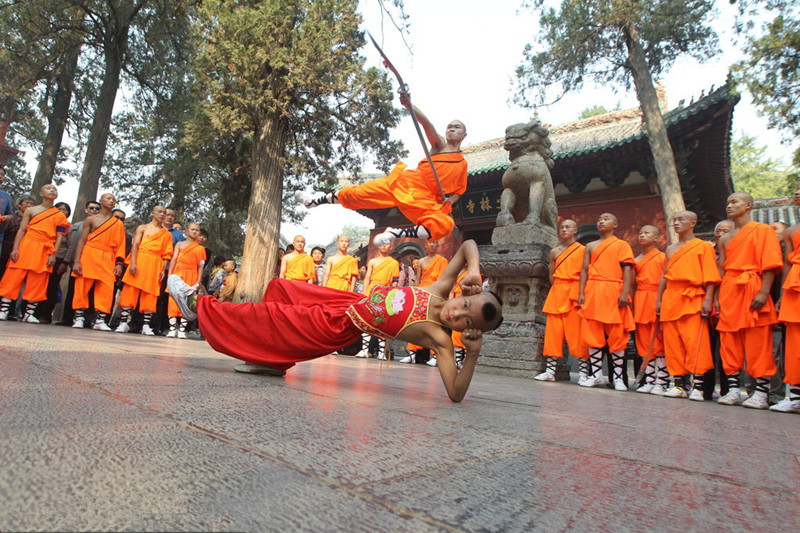
    The Zhengzhou International Shaolin Wushu Festival (郑州国际少林武术节) is Dengfeng's highest-profile international cultural and sporting event.

    The latest confirmed edition was the 13th festival, held October 17–22, 2024, with its major opening and welcoming ceremonies staged in Dengfeng. Martial artists and delegations from around the world participated, combining competitive Wushu with Shaolin cultural exchange and large-scale public performances.

    One correction is important for future travel content: do not describe the festival as guaranteed to take place every two years. Although several past editions followed relatively regular cycles, there was a six-year interval between the 12th edition in 2018 and the 13th in 2024.

    As of August 9, 2026, I found no official announcement confirming a 14th Zhengzhou International Shaolin Wushu Festival for 2026. It should therefore be listed as a periodic international event with dates announced separately, rather than as a confirmed 2026 festival.

    Even outside festival years, Dengfeng regularly organizes Shaolin Kung Fu performances, martial-arts competitions and Songshan Wushu events, making martial culture accessible throughout the year. Municipal development reports describe martial arts as a major part of the city's ongoing culture-and-tourism event strategy.

    Winter Festivals: Winter Solstice and Traditional New Year Culture

    Winter Solstice at Gaocheng Observatory

    The Winter Solstice brings the solar-term cycle back to Gaocheng.

    Traditional Dengfeng culture records solar-shadow observation on all four major seasonal turning points, and Winter Solstice has developed into one of Gaocheng's strongest winter cultural experiences.

    A particularly large Winter Solstice Cultural Carnival was staged from December 21–25, 2023. Activities included a solar-shadow measurement ceremony, worship honoring the Duke of Zhou, traditional performances, an intangible-heritage market, local food and a communal dumpling banquet.

    The measurement tradition itself is recurring, but a five-day carnival and thousand-person dumpling banquet should not be presented as guaranteed every December. Travelers should check that year's notice.

    Intangible Heritage Performances Throughout the Year

    Many of Dengfeng's most interesting “festivals” do not follow a single fixed date. Yangling Naoge, lion dancing, dragon dancing, Pangu drumming, folk martial arts, woodblock New Year pictures, clay sculpture, woodcarving, paper cutting and traditional food crafts appear during Spring Festival, Lantern Festival, temple fairs, solar-term events and other community celebrations.

    The 2026 Lantern Festival demonstrates how these traditions continue to function as living community arts rather than museum exhibits. Yangling Naoge is especially significant as a provincial intangible heritage tradition with more than three centuries of documented folk-performance history.

    For travelers interested in intangible heritage, it is therefore more useful to coordinate a visit with one major festival plus a confirmed craft or folk-performance program than to expect every heritage item to be demonstrated every day.

    Ethnic Minority Festivals in Dengfeng

    Dengfeng has residents from several ethnic groups, with Hui communities among the more established minorities, but the city's major tourism festival calendar is overwhelmingly shaped by Central Plains folk culture, Buddhism, Daoism, Shaolin martial traditions, astronomical heritage and traditional Chinese seasonal festivals.

    Religious festivals such as Eid al-Fitr and Eid al-Adha may be observed privately or communally by Muslim residents, but they should not be promoted automatically as public tourism festivals unless a specific cultural event has been officially announced. Dengfeng currently does not have a nationally recognized ethnic-minority festival brand comparable with the large ethnic festivals found in Yunnan, Guizhou or Inner Mongolia.

    For visitors, the respectful approach is to regard minority religious observances as community life rather than entertainment and attend only events that are explicitly open to the public.

    Festival Tours with Yaso Trip

    For travelers who want the strongest cultural experience, Dengfeng festival travel can be planned around three themes.

    Festival Tour Theme Best Period Main Experiences
    Solar-Term Culture Tour Around Mar 20, Jun 21 or Dec 21–22 Gaocheng Observatory, Zhougong Sundial Platform, shadow measurement, ancient astronomy, agricultural traditions
    Temple Fair & Folk Culture Tour Lunar March or lunar October Zhongyue Temple Fair, Daoist traditions, folk markets, crafts, local food and performances
    Autumn Culture & Kung Fu Tour Mid-Oct to mid-Nov Songshan foliage, Shaolin culture, mountain events, temple heritage and possible martial-arts activities
    Chinese New Year Heritage Tour Spring Festival–Lantern Festival Dragon and lion dances, Naoge, Pangu drums, non-heritage markets and community celebrations
    Traditional Village Festival Tour Dragon Boat Festival and selected holidays Yuanqiao and other traditional villages, immersive theatre, craft experiences and rural heritage

    For a festival-focused visit, 2–3 days is generally suitable. The main principle is to build the trip around one fixed-date cultural event and use the surrounding days for Mount Song heritage, traditional villages and intangible-cultural-heritage experiences rather than trying to chase several distant events on the same day.

    Practical Festival Travel Tips

    Festival dates based on the Chinese lunar calendar change every year, while red-leaf events, outdoor performances and mountain activities may be adjusted for weather. International martial-arts festivals and large contemporary events are announced separately and should never be assumed from previous editions.

    The Zhongyue Temple Fair, Lantern Festival and major autumn weekends can attract large crowds. Arriving early and staying overnight in Dengfeng is usually more comfortable than making a rushed same-day trip from Zhengzhou.

    At temples and folk-religious gatherings, respect worshippers and avoid blocking ritual activities for photography. At Gaocheng solar-term ceremonies, arrive before the principal midday measurement if solar-shadow observation is the main reason for visiting.

    For performances in villages such as Yangling or Yuanqiao, verify the event before traveling specifically for it. Living folk traditions are not necessarily staged according to a daily tourism timetable.

    Major Dengfeng Festivals and Events Calendar

    The following table covers the major recurring, culturally important and officially documented festivals and events across Dengfeng. Smaller village fairs and temporary commercial events are not all fixed annual programs, so they are better checked through the current year's official calendar.

    Season Festival / Event Approximate Time Main Area / Venue Main Highlights Status / Planning Note
    Winter / Spring Chinese New Year Cultural Activities (春节文化活动) Lunar New Year Dengfeng city, cultural centers, scenic areas and villages Heritage markets, folk performances, traditional crafts Annual programs vary
    Spring Lantern Festival Folk Performances (元宵节民俗展演) Lunar Jan 15 Dengfeng city and townships Dragon/lion dance, Naoge, stilts, drums, Yangge Confirmed in 2026
    Spring Spring Equinox Culture Week (春分文化周) Around Mar 20 Gaocheng Observatory; Shucun, Shidao Solar-shadow measurement, farming culture, intangible heritage Held Mar 20, 2026
    Spring Zhongyue Temple Spring Fair (中岳庙春季庙会) Traditionally lunar March Zhongyue Temple Worship, folk market, crafts, food, entertainment Recurring; exact days announced annually
    Spring / Festival Periods Yangling Naoge Performances (杨岭闹阁) Lantern Festival and selected celebrations Yangling Village, Yingyang area and public festival venues Provincial intangible heritage, folk Shehuo performance No single fixed annual date
    Summer Dragon Boat Festival Programs (端午文化活动) Lunar May 5 Yuanqiao Village and cultural areas Immersive village theatre, traditional culture, family activities Yuanqiao program confirmed in 2026
    Summer Jiulongtan Momohui (九龙潭摸摸会) Lunar May 14 night–15 Jiulongtan Traditional folk belief, pilgrimage, community gathering and market Historic recurring folk custom
    Summer Summer Solstice Astronomy Carnival (夏至天文科普嘉年华) Around Jun 21 Gaocheng Observatory Solar-shadow measurement, Duke of Zhou ceremony, astronomy education, summer-solstice food Recurring tradition; latest specific official program verified for 2025
    Summer–Autumn Shaolin Kung Fu & Wushu Events (少林功夫、嵩山武术活动) Variable Shaolin area and Dengfeng Martial demonstrations, competitions and cultural exchange Multiple events, dates vary
    Autumn Autumn Equinox Solar-Term Activities (秋分节气活动) Around Sep 22–23 Gaocheng Observatory Shadow observation and seasonal-culture interpretation Traditional solar-term observance; annual program varies
    Autumn Songshan Red Leaf Season (嵩山红叶季) Usually mid-Oct–mid-Nov Mount Song Autumn foliage, hiking, photography, outdoor events 2025 opened Oct 19; 2026 dates not yet announced as of Aug 9
    Autumn Zhongyue Temple Autumn Fair (中岳庙秋季庙会) Traditionally lunar October Zhongyue Temple Worship, traditional market, regional folk culture Historic recurring fair
    Variable / Periodic Zhengzhou International Shaolin Wushu Festival (郑州国际少林武术节) Usually announced separately Zhengzhou and Dengfeng; major Dengfeng ceremonies International Wushu competition, Shaolin performances and cultural exchange Latest confirmed edition: 13th, Oct 17–22, 2024; no 2026 edition confirmed yet
    Winter Winter Solstice Cultural Activities (冬至文化活动) Around Dec 21–22 Gaocheng Observatory Solar-shadow observation, solar-term culture and traditional food Recurring cultural tradition; full carnival format varies

    Dengfeng is therefore most rewarding for festival travelers who want to see living culture rather than simply attend modern entertainment events. The ancient astronomical ceremonies of Gaocheng, the crowds and incense of Zhongyue Temple, Shaolin martial arts, village Shehuo and the autumn colors of Mount Song create a festival calendar closely tied to the same cultural landscape that made Dengfeng the historic “Centre of Heaven and Earth.”

    ENQUIRY
    Have a question before booking? Message us to learn more.
    Click to change
    Dengfeng
    ★★★★★

    Dengfeng

    Located southwest of Zhengzhou (郑州) in Henan Province (河南省), Dengfeng (登封) lies at the foot of Mount Song (嵩山), one of China’s Five Great Mountains. The city is one of China’s most important centers of Buddhism, Taoism, Confucian learning, martial arts, and ancient astronomy. Its Historic Monuments of Dengfeng in “The Centre of Heaven and Earth” were inscribed on the UNESCO World Heritage List in 2010, making Dengfeng especially rewarding for travelers interested in Chinese philosophy, religion, architecture, kung fu, and mountain scenery. Why Visit Dengfeng? Shaolin Temple: Shaolin Temple (少林寺) is Dengfeng’s most internationally famous attraction and one of the symbolic centers of Chinese kung fu and Chan Buddhism. Founded in 495, the temple complex includes historic halls, courtyards, martial-arts traditions, and the nearby Pagoda Forest (塔林), creating a unique combination of Buddhist heritage and martial culture. Mount Song: Mount Song (嵩山) is the sacred mountain landscape surrounding Dengfeng and the cultural setting for many of its most important monuments. The Taishi Mountain (太室山) and Shaoshi Mountain (少室山) areas offer rocky peaks, valleys, ancient paths, temples, and panoramic hiking...
  • China Travel Agency, China Tours 2026/2027 | Yaso TripHenan,Zhengzhou
  • Kaifeng
    Popular
    Must Go
    ★★★★★

    Kaifeng

    Kaifeng (开封), formerly known as Dongjing (东京), Bianzhou (汴州), Bianjing (汴京), and Bianliang (汴梁), is one of China’s Eight Ancient Capitals and a major historical city in Henan Province. As the capital of the Northern Song Dynasty, Kaifeng was once one of the world’s most prosperous cities and remains famous for its Song Dynasty culture, ancient architecture, traditional arts, folk customs, and historic landmarks. With more than 4,100 years of urban history, it is an important cultural tourism destination in the Central Plains. Why Visit Kaifeng? Ancient Capital of the Northern Song Dynasty Kaifeng is known as the “Ancient Capital of Ten Dynasties” and reached its peak during the Northern Song Dynasty, when it became a major political, economic, and cultural center. The city’s prosperity was famously recorded in the painting “Along the River During the Qingming Festival” (清明上河图), which depicts the lively streets, markets, and river scenery of ancient Kaifeng. Historic Sites and Song Culture Kaifeng preserves many important cultural landmarks, including Millennium City Park (清明上河园), Dragon Pavilion Park (龙亭公园), Song Dynasty Imperial Street (宋都御街), Iron Pagoda Park (铁塔公园),...
  • China Travel Agency, China Tours 2026/2027 | Yaso TripHenan
  • Luoyang
    Popular
    ★★★★★

    Luoyang

    Located in western Henan Province (河南省) along the Luo River (洛河), Luoyang (洛阳) is one of China’s great ancient capitals and a major cradle of Chinese civilization. The city served as a capital for thirteen dynasties and is celebrated for imperial history, Buddhist art, ancient archaeology, traditional neighborhoods, and its famous peonies. From the UNESCO-listed Longmen Grottoes to White Horse Temple and spring peony gardens, Luoyang is one of the most rewarding cultural destinations in Central China. Why Visit Luoyang? Longmen Grottoes: Longmen Grottoes (龙门石窟) is Luoyang’s most important cultural landmark and a UNESCO World Heritage Site. Thousands of Buddhist caves, niches, inscriptions, and sculptures were carved into the limestone cliffs along the Yi River (伊河), with masterpieces dating especially from the Northern Wei and Tang dynasties. The monumental Fengxian Temple (奉先寺) and its giant Vairocana Buddha represent some of the finest achievements of Chinese Buddhist stone carving. White Horse Temple: White Horse Temple (白马寺) is traditionally regarded as China’s earliest officially established Buddhist temple and is one of the country’s most influential Buddhist heritage sites. Historic halls, pagodas, Buddhist...
  • China Travel Agency, China Tours 2026/2027 | Yaso TripHenan
  • Zhengzhou
    Popular
    Must Go
    ★★★★★

    Zhengzhou

    Located in the heart of Henan Province (河南省), Zhengzhou (郑州) is the provincial capital and one of the most important transportation, commercial, and cultural centers in Central China. As a major birthplace of Chinese civilization and an important city along the Yellow River (黄河), Zhengzhou combines ancient capital heritage, archaeological discoveries, modern urban development, traditional opera, and easy access to Mount Song (嵩山) and Shaolin Temple (少林寺). Why Visit Zhengzhou? Ancient Capital Heritage: Zhengzhou has a history stretching back thousands of years and is recognized as one of China’s important ancient capitals. Archaeological remains from the Shang Dynasty, ancient city walls, tombs, and historic settlements reveal the city’s role in the early development of Chinese civilization and the formation of Central Plains culture. Yellow Emperor Culture: Xinzheng (新郑), under Zhengzhou, is traditionally associated with Xuanyuan, the Yellow Emperor (轩辕黄帝), one of the legendary ancestors of Chinese civilization. The Hometown of the Yellow Emperor (黄帝故里) is an important destination for exploring ancestral traditions, ceremonial culture, and the historical identity of the Central Plains. Yellow River Scenic Area: The Yellow River Scenic...
  • China Travel Agency, China Tours 2026/2027 | Yaso TripHenan