China Travel Agency, China Tours 2026/2027 | Yaso Trip
Theme Tours
View All China Theme Tours by Interest
Travel Guide
  • Travel Guide
  • Travel Tips
  • Tour Planning
  • Ethnic Culture
  • China Climate
  • Golf Courses
  • Yangtze Cruise
  • Travel Articles
  • Zhengzhou Culture

    History of Zhengzhou

    5000 years ago, the first ancestor of Chinese culture Xuanyuan Yellow Emperor was born and then he founded the capital on the land of Zhengzhou. In ancient times, Zhengzhou belonged to Yuzhou. In the early Xia dynasty, emperor Shun established the capital in Yangcheng (now Dengfeng Wangchenggang Site), and then the Xia dynasty moved the capital to Yangzhai (now Xuchang Yuzhou). 3,600 years ago, the second slavery dynasty of China, the Shang dynasty, established its capital here, which is the founding capital- Capital Bo(亳都). Today, the 7 km long Shang dynasty wall still remains in central Zhengzhou. After the experience of the dynasties, Zhengzhou was the capital for five times. On October 30, 1954, the government of Henan province moved from Kaifeng to Zhengzhou, and Zhengzhou became the capital of Henan province since then.

    Read More: History of Zhengzhou

    Yellow River Civilization

    The Yellow River civilization roughly formed between 4000 BC and 2000 BC, and lasted for two thousand years. The development period of Yellow River civilization is its sublimation stage. In terms of the times, it was mainly Xia, Shang and Zhou dynasties. At this time, the Yellow River civilization was mainly concentrated in the central plain of the middle and lower reaches of the Yellow River, with today's Henan province as the core. The culture of the central plain is the center of the Yellow River civilization.

    Central Plains Culture

    Central plains culture is the general term of material culture and spiritual culture in the middle and lower reaches of the Yellow River, and is the matrix and backbone of Chinese culture. The central plains culture, with Henan as the core and the vast middle and lower reaches of the Yellow River as the hinterland, radiates outward layer by layer and extends its influence overseas. The central plains is the cradle of Chinese civilization, and the central plains culture is an important source and core part of Chinese culture. In ancient times, the central plains was not only the political and economic center of China, but also the birthplace of mainstream culture and dominant culture. In Chinese history, more than 20 dynasties made their capitals in the central plains, and half of China's eight ancient capitals are on the central plain area, including Luoyang, Kaifeng, Anyang and Zhengzhou. Due to its special geographical environment, historical status and humanistic spirit, the central plains culture has been in the orthodox mainstream for a long time in the long history of China, and the central plains culture represents the traditional Chinese culture to a certain extent.

    Religion Culture in Zhengzhou

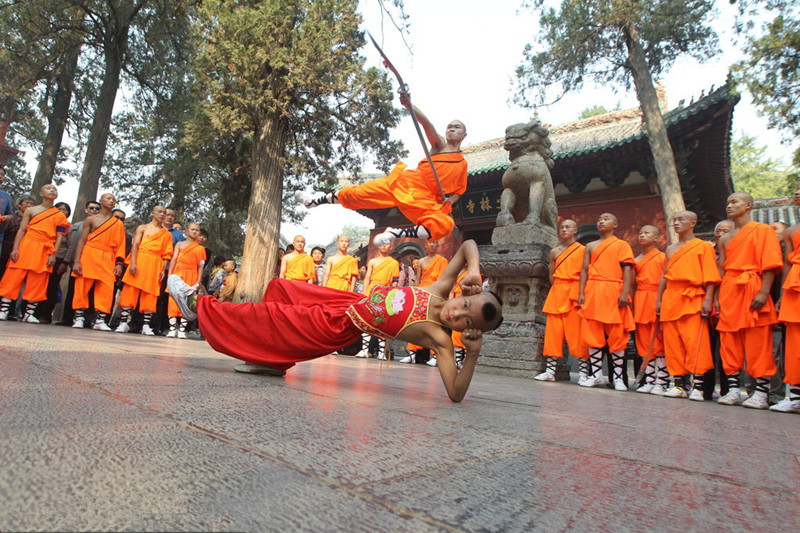
    According to the official website of the ethnic affairs committee of Zhengzhou, there are five major religions in the city, namely Buddhism, Taoism, Islam, Catholicism and Christianity, about 530000 religious believers, among which there are more christians, Muslims and buddhists. Zhengzhou, the capital of Henan province, is located in the south of the north China plain. Zhengzhou culture plays an important role in Henan culture, especially its religious culture. In Henan, most people believe in Chinese Buddhism, and Zhengzhou has the most temples in Henan. Shaolin temple is a famous buddhist temple in China and the source of Chinese Kung Fu. It is located at the western foot of Songshan mountain, 13 kilometers northwest of Dengfeng City in Zhengzhou.

    Part Religious Venues in Zhengzhou

    Keep Reading

    Opera Culture in Zhengzhou

    Yu Opera, Qu opera and Yue Tune(越调) have a great influence on the types of opera in Zhengzhou, among which Yu Opera, together with Peking Opera, Ping Opera and Yue Opera(Shaoxing Opera), is known as one of the four major types of opera in China. The opera atmosphere in Zhengzhou is very strong. As early as the beginning of the 20th century, Laofengang(老坟岗) near the Zhengzhou railway station gathered performers of Zhuizi(坠子), cross talk, Pingshu, magic, opera and raree show(拉洋片). Later, the major parks and cultural palaces in Zhengzhou became the main venues for opera lovers.

    Yu Opera/Henan Opera

    Henan opera originated in Kaifeng of Henan province, inherited, reformed, innovated and developed on the basis of Henan Bangzi. After the founding of the nation, since Henan is referred to as "Yu", hence the Yu Opera. Henan opera is famous for its sonorous singing, cadence, merry and lively tune, clear articulation, lively and vivid, and being good at expressing the inner feelings of the characters. With its high level of artistry, Yu opera is widely welcomed by people from all walks of life. Because of its musical accompaniment with Zaomu Bangzi beat, so the early name Henan Bangzi.

    Zhengzhou Food Culture

    The staple food of Zhengzhou people is mainly cooked wheaten food, among white flour food is given priority to, and coarse grain flour is only used as nutrition collocation, with small demend. Common foods made of flour include steamed buns, vegetable bun, lubricating roll, steamed stuffed buns, pancake, deep-fried dough cake, fried leek dumplings, baked wheat cake, fried bread stick and so on. Zhengzhou people particularly like to eat noodles, and there are many kinds of noodles, like soup noodles, lo mein, noodles with soybean paste, fried noodles, stewed noodles and so on. There are five main types of non-staple food in Zhengzhou, including meat, vegetables, edible fungi, soybean products and eggs.

    Ethnic Groups in Zhengzhou

    In addition to the Han, there are 47 minority groups in Zhengzhou, including Hui, Manchu, Mongol, Zhuang and Tujia. The Han nationality has the largest population, while the minority people are mainly Hui.

    Keep Reading

    Festivals and Customs of Zhengzhou

    The majority of Zhengzhou's population is Han nationality. Among the minority groups, Hui ethnic minority has the largest population. Therefore, the festivals and activities in Zhengzhou are mainly those of the Han nationality, including New Year's Day(January 1), Spring Festival(usually in late Jan. or early Feb.; January 25, 2020), Lantern Festival(The fifteenth day of the first lunar month), Tomb Sweeping Day(15 days after the Spring equinox), Dragon Boat Festival(The fifth day of the fifth lunar month) and Mid-Autumn Day(The fifteenth day of the eighth lunar month), etc. Due to the special history and culture, there are some local fetured activities like ancestor worship grand ceremony of Yellow Emperor Hometown, International Shaolin Martial Art Festival, etc.

    Intangible Cultural Heritages and Its Heritors in Zhengzhou

    As of October 2016, Zhengzhou had 6 items of national intangible cultural heritage, with 4 inheritors, 59 items of Provincial intangible cultural heritage, with 26 inheritors, and 185 items of municipal intangible cultural heritage, with 149 inheritors. Five batches of municipal projects and three batches of municipal inheritors have been announced. Among them, Shaolin Kung Fu, ancestor worship grand ceremony of Yellow Emperor Hometown, Chaohua blowing song(超化吹歌), Gongyi Xiaoxiang lion dance(巩义小相狮舞) are the national intangible cultural heritages and outstanding intangible cultural heritage projects.

    Keep Reading

    Traditional Villages in Zhengzhou

    Of the five batches of traditional Chinese villages announced, only 8 villages in Zhengzhou are included in, mainly disrtibuted in Dengfeng City. As follows:

    • Dajindian Old Street in Dajindian Town of Dengfeng City, Zhengzhou郑州市登封市大金店镇大金店老街
    • Baishiya Village in Xuzhuang Town of Dengfeng City, Zhengzhou郑州市登封市徐庄镇柏石崖村
    • Shidonggou Village in Gaoshan Town of Xingyang City, Zhengzhou郑州市荥阳市高山镇石洞沟村
    • Lvlou Village in Liuzhai Town of Xinmi City, Zhengzhou郑州市新密市刘寨镇吕楼村
    • Haishangqiao Village in Dayugou Town of Gongyi City, Zhengzhou郑州市巩义市大峪沟镇海上桥村
    • Yangjiamen Village of Xuantianmiao Village in Shaolin Sub-district of Dengfeng City, Zhengzhou郑州市登封市少林街道玄天庙村杨家门村
    • Yanglin Village in Xuzhuang Town of Dengfeng City, Zhengzhou郑州市登封市徐庄镇杨林村
    • Angou Village in Xuzhuang Town of Dengfeng City, Zhengzhou郑州市登封市徐庄镇安沟村

    World Cultural Heritage in Zhengzhou

    Zhengzhou has 2 places and 15 items of world cultural heritage (The Centre of Heaven and Earth and the Grand Canal).

    World Cultural Heritage Items
    The Centre of Heaven and Earth(天地之中历史建筑群) Shaolin Temple(Courtyard常住院,  Chu Zu An初祖庵, Pagoda forest), Three Towers of Eastern Han Dynasty(Taishi Tower, Shaoshi Tower and Qimu Tower), Zhongyue Temple, Songyue Pagoda, Huishan Temple, Songyang Academy, Dengfeng Astronomical Observatory 
    The Grand Canal Tongji Canal(通济渠汴河) and Xingyang Gucheng(荥阳故城)

    Historical and Cultural Sites in Zhengzhou

    Zhengzhou has numerous cultural relics and historic sites, including the ancient city, ancient culture, ancient tombs, ancient buildings, ancient passes and ancient battlefields, a total of more than 10000 ruins. Here below are just part of them.

    Museums in Zhengzhou

    Zhengzhou boasts a long and profound history, with Xuanyuan Huang Emperor born and then made the capital on this land 5000 years ago. It should come as no surprise then that Zhengzhou is home to an impressive number and variety of museums. Whether you're interested in local history, art or geology, a museum is a great way to kill your time on a miserable day.

    Read More: Museums in Zhengzhou

    Zhengzhou Culture Tours

    Shaolin Kung Fu Tours

    ENQUIRY

    Have a question before booking? Message us to learn more.
    Click to change
    Dengfeng
    ★★★★★

    Dengfeng

    Located southwest of Zhengzhou (郑州) in Henan Province (河南省), Dengfeng (登封) lies at the foot of Mount Song (嵩山), one of China’s Five Great Mountains. The city is one of China’s most important centers of Buddhism, Taoism, Confucian learning, martial arts, and ancient astronomy. Its Historic Monuments of Dengfeng in “The Centre of Heaven and Earth” were inscribed on the UNESCO World Heritage List in 2010, making Dengfeng especially rewarding for travelers interested in Chinese philosophy, religion, architecture, kung fu, and mountain scenery. Why Visit Dengfeng? Shaolin Temple: Shaolin Temple (少林寺) is Dengfeng’s most internationally famous attraction and one of the symbolic centers of Chinese kung fu and Chan Buddhism. Founded in 495, the temple complex includes historic halls, courtyards, martial-arts traditions, and the nearby Pagoda Forest (塔林), creating a unique combination of Buddhist heritage and martial culture. Mount Song: Mount Song (嵩山) is the sacred mountain landscape surrounding Dengfeng and the cultural setting for many of its most important monuments. The Taishi Mountain (太室山) and Shaoshi Mountain (少室山) areas offer rocky peaks, valleys, ancient paths, temples, and panoramic hiking...
  • China Travel Agency, China Tours 2026/2027 | Yaso TripHenan,Zhengzhou
  • Anyang
    Popular
    ★★★★

    Anyang

    Anyang (安阳), located in northern Henan Province, is one of China’s most important ancient cultural cities and a major birthplace of Chinese civilization. As one of the eight ancient capitals of China, Anyang was the capital of the Shang Dynasty more than 3,000 years ago and is internationally recognized for its archaeological discoveries, especially the Yin Ruins (殷墟). Combining ancient history, traditional culture, mountain landscapes, and modern city life, Anyang is an essential destination for travelers exploring the origins of Chinese civilization. Why Visit Anyang? Birthplace of Shang Civilization Anyang is best known as the location of Yin Ruins (殷墟), the last capital of the Shang Dynasty (approximately 1600–1046 BC) and a UNESCO World Heritage Site. The site revealed royal palaces, ancient tombs, bronze artifacts, and oracle bone inscriptions (甲骨文), which provide some of the earliest written records of Chinese history. Visitors can explore the ruins and museums to understand the origins of Chinese characters, ritual culture, and early state civilization. Ancient Capital and Historical Heritage Beyond the Shang Dynasty, Anyang has played an important role throughout Chinese history. The...
  • China Travel Agency, China Tours 2026/2027 | Yaso TripHenan
  • Kaifeng
    Popular
    Must Go
    ★★★★★

    Kaifeng

    Kaifeng (开封), formerly known as Dongjing (东京), Bianzhou (汴州), Bianjing (汴京), and Bianliang (汴梁), is one of China’s Eight Ancient Capitals and a major historical city in Henan Province. As the capital of the Northern Song Dynasty, Kaifeng was once one of the world’s most prosperous cities and remains famous for its Song Dynasty culture, ancient architecture, traditional arts, folk customs, and historic landmarks. With more than 4,100 years of urban history, it is an important cultural tourism destination in the Central Plains. Why Visit Kaifeng? Ancient Capital of the Northern Song Dynasty Kaifeng is known as the “Ancient Capital of Ten Dynasties” and reached its peak during the Northern Song Dynasty, when it became a major political, economic, and cultural center. The city’s prosperity was famously recorded in the painting “Along the River During the Qingming Festival” (清明上河图), which depicts the lively streets, markets, and river scenery of ancient Kaifeng. Historic Sites and Song Culture Kaifeng preserves many important cultural landmarks, including Millennium City Park (清明上河园), Dragon Pavilion Park (龙亭公园), Song Dynasty Imperial Street (宋都御街), Iron Pagoda Park (铁塔公园),...
  • China Travel Agency, China Tours 2026/2027 | Yaso TripHenan
  • Luohe

    Luohe

    Located in central Henan Province (河南省), Luohe (漯河) is a prefecture-level city on the Huanghuai Plain, surrounded by Xuchang (许昌), Zhoukou (周口), Zhumadian (驻马店), and Pingdingshan (平顶山). Known as an important food industry city in China, Luohe combines Central Plains culture, river landscapes, agricultural traditions, and local lifestyle, offering travelers an authentic experience away from the major tourist centers. Why Visit Luohe? Food Culture and Local Flavors: Luohe is one of China’s important food industry bases, with a strong culinary identity rooted in traditional Henan cuisine. Visitors can enjoy local noodles, wheat-based dishes, steamed foods, snacks, and regional specialties while experiencing the everyday food culture of the Central Plains. Shali River Scenic Area (沙澧河风景区): The Shali River, where the Sha River (沙河) and Li River (澧河) meet, is the city’s most attractive urban landscape. The riverside area features parks, green spaces, walking paths, bridges, and leisure facilities, making it a popular place for sightseeing, cycling, photography, and evening relaxation. Xu Shen Cultural Park (许慎文化园): Dedicated to Xu Shen (许慎), the Han Dynasty scholar and author of Shuowen Jiezi (说文解字), this...
  • China Travel Agency, China Tours 2026/2027 | Yaso TripHenan
  • Luoyang
    Popular
    ★★★★★

    Luoyang

    Located in western Henan Province (河南省) along the Luo River (洛河), Luoyang (洛阳) is one of China’s great ancient capitals and a major cradle of Chinese civilization. The city served as a capital for thirteen dynasties and is celebrated for imperial history, Buddhist art, ancient archaeology, traditional neighborhoods, and its famous peonies. From the UNESCO-listed Longmen Grottoes to White Horse Temple and spring peony gardens, Luoyang is one of the most rewarding cultural destinations in Central China. Why Visit Luoyang? Longmen Grottoes: Longmen Grottoes (龙门石窟) is Luoyang’s most important cultural landmark and a UNESCO World Heritage Site. Thousands of Buddhist caves, niches, inscriptions, and sculptures were carved into the limestone cliffs along the Yi River (伊河), with masterpieces dating especially from the Northern Wei and Tang dynasties. The monumental Fengxian Temple (奉先寺) and its giant Vairocana Buddha represent some of the finest achievements of Chinese Buddhist stone carving. White Horse Temple: White Horse Temple (白马寺) is traditionally regarded as China’s earliest officially established Buddhist temple and is one of the country’s most influential Buddhist heritage sites. Historic halls, pagodas, Buddhist...
  • China Travel Agency, China Tours 2026/2027 | Yaso TripHenan
  • Zhengzhou
    Popular
    Must Go
    ★★★★★

    Zhengzhou

    Located in the heart of Henan Province (河南省), Zhengzhou (郑州) is the provincial capital and one of the most important transportation, commercial, and cultural centers in Central China. As a major birthplace of Chinese civilization and an important city along the Yellow River (黄河), Zhengzhou combines ancient capital heritage, archaeological discoveries, modern urban development, traditional opera, and easy access to Mount Song (嵩山) and Shaolin Temple (少林寺). Why Visit Zhengzhou? Ancient Capital Heritage: Zhengzhou has a history stretching back thousands of years and is recognized as one of China’s important ancient capitals. Archaeological remains from the Shang Dynasty, ancient city walls, tombs, and historic settlements reveal the city’s role in the early development of Chinese civilization and the formation of Central Plains culture. Yellow Emperor Culture: Xinzheng (新郑), under Zhengzhou, is traditionally associated with Xuanyuan, the Yellow Emperor (轩辕黄帝), one of the legendary ancestors of Chinese civilization. The Hometown of the Yellow Emperor (黄帝故里) is an important destination for exploring ancestral traditions, ceremonial culture, and the historical identity of the Central Plains. Yellow River Scenic Area: The Yellow River Scenic...
  • China Travel Agency, China Tours 2026/2027 | Yaso TripHenan