Linxia Hui Autonomous Prefecture (临夏回族自治州) lies in southwestern central Gansu, where the Loess Plateau meets the northeastern edge of the Tibetan Plateau and the Yellow River cuts through dramatic Danxia mountains. Its tourism resources are unusually diverse: Buddhist grottoes, the Yellow River Three Gorges, dinosaur footprints, world-class mammal fossils, painted pottery, Qijia Culture, alpine forests and the living traditions of Hui, Dongxiang, Bao’an, Salar, Tibetan and Han communities.
Two international heritage brands define Linxia today. Bingling Temple Grottoes form part of the UNESCO World Heritage property Silk Roads: the Routes Network of Chang’an–Tianshan Corridor, while the Linxia UNESCO Global Geopark was designated in 2024. The geopark covers 2,120 square kilometres and contains 79 recognised geological sites, including Danxia landscapes, dinosaur and pterosaur tracks and exceptionally rich late Cenozoic mammal fossils.
Linxia Prefecture administers Linxia City, Linxia County, Yongjing County, Kangle County, Guanghe County, Hezheng County, Dongxiang Autonomous County and Jishishan Bao’an, Dongxiang and Salar Autonomous County. An official prefectural overview currently records 46 A-rated attractions, including one 5A attraction and 12 4A attractions; however, Zhuzigou Scenic Area in Kangle was newly upgraded to 4A in 2026, so the current practical total of 4A attractions has subsequently increased.
Top Tourist Attractions in Linxia
The following ranking is an editorial recommendation based on cultural importance, natural scenery, international recognition and value for first-time visitors rather than an official government ranking.
| Rank |
Attraction |
Area |
Main Reason to Visit |
| 1 |
Bingling Temple World Heritage Tourist Area (炳灵寺世界文化遗产旅游区) |
Yongjing County |
5A attraction combining UNESCO grottoes, Bingling Lake and spectacular Danxia |
| 2 |
Linxia UNESCO Global Geopark (临夏世界地质公园) |
Multiple counties |
Fossils, dinosaur tracks, Yellow River Danxia and internationally important geological heritage |
| 3 |
Bafang Shisanxiang (八坊十三巷) |
Linxia City |
Historic ethnic quarter, Hui architecture, food and intangible heritage |
| 4 |
Hezheng Paleozoological Fossil Museum (和政古动物化石博物馆) |
Hezheng County |
One of China’s richest collections of late Cenozoic mammal fossils |
| 5 |
Songmingyan Scenic Area (松鸣岩景区) |
Hezheng County |
Forested mountain scenery and one of the most important Hua’er folk-song locations |
| 6 |
Dunxia Scenic Area (大墩峡景区) |
Jishishan County |
Gorge, waterfalls, winter ice formations and Bao’an culture |
| 7 |
Caochanggou Scenic Area (草长沟景区) |
Kangle County |
Alpine meadows, forests and one of Linxia’s best summer retreats |
| 8 |
Fataishan Scenic Area (法台山景区) |
Hezheng County |
Outdoor recreation, skiing, mountain scenery and family activities |
| 9 |
Qijia Culture Museum (齐家文化博物馆) |
Guanghe County |
China’s only specialist museum dedicated to Qijia Culture |
| 10 |
Liujiaxia International Paragliding Base (刘家峡国际滑翔营地) |
Yongjing County |
Aerial views over the Yellow River, reservoir and Danxia mountains |
Bingling Temple, Yellow River Three Gorges and Yongjing
Bingling Temple World Heritage Tourist Area
Bingling Temple World Heritage Tourist Area is Linxia’s only national 5A attraction. The tourism area combines Bingling Lake, Bingling Danxia and Bingling Temple Grottoes, creating an unusual mixture of Buddhist art, reservoir scenery and geological landscapes.
The grottoes were developed over more than 1,600 years. Nearly 200 caves and niches survive along the cliffs, together with hundreds of sculptures and extensive murals. Cave 169 contains an inscription dated to AD 420, one of the earliest dated inscriptions preserved in Chinese Buddhist grotto art. The monumental Tang-period Maitreya Buddha is another defining landmark.
Many travellers approach the grottoes by boat from Liujiaxia Dam, crossing the reservoir and passing the remarkable confluence of the Yellow and Tao rivers.
Yellow River Three Gorges and Bingling Lake
The Yellow River Three Gorges (黄河三峡) tourism region encompasses the Liujiaxia reservoir, Bingling Gorge and surrounding Danxia mountains. The combination of steep red cliffs and blue-green reservoir water creates some of the most distinctive scenery in eastern Gansu.
Nearby Taiji Island (太极岛) is an important wetland and bird habitat, while the Liujiaxia waterfront offers cruises, cycling, fishing and leisure facilities.
Liujiaxia Dinosaur National Geopark
The Liujiaxia Dinosaur National Geopark (刘家峡恐龙国家地质公园) protects an internationally important dinosaur-track site. The Linxia geopark also preserves an exceptional sequence of 24 paired pterosaur footprints, recognised by UNESCO among the geopark’s outstanding geological features.
Liujiaxia International Paragliding Base
Located high above the reservoir, the Liujiaxia International Paragliding Base has developed into a national 4A attraction. Its stable rising air currents and large vertical drop provide spectacular views across Bingling Lake and the Yellow River valley.
Linxia City: Ethnic Culture and Painted Pottery
Bafang Shisanxiang
Bafang Shisanxiang, literally “Eight Squares and Thirteen Lanes,” is the cultural heart of Linxia City. The old neighbourhood developed around mosque communities and commercial lanes and retains a distinctive mixture of Hui brick carving, Han woodcarving and Tibetan decorative painting.
Today it is both a national 4A attraction and a National Tourism and Leisure Block. Traditional courtyards, tea houses, handicrafts, local food and evening illumination make it particularly suitable for walking after sunset.
The district is a living community rather than simply a recreated ancient town, so visitors should dress and behave respectfully around religious buildings.
Linxia Prefecture Museum
Linxia Prefecture Museum (临夏州博物馆), also known for its Painted Pottery Gallery, provides an excellent introduction to the prehistoric cultures of the upper Yellow River. Its collections are particularly strong in Majiayao painted pottery, alongside archaeological and historical material from later periods.
Linxia UNESCO Global Geopark Museum
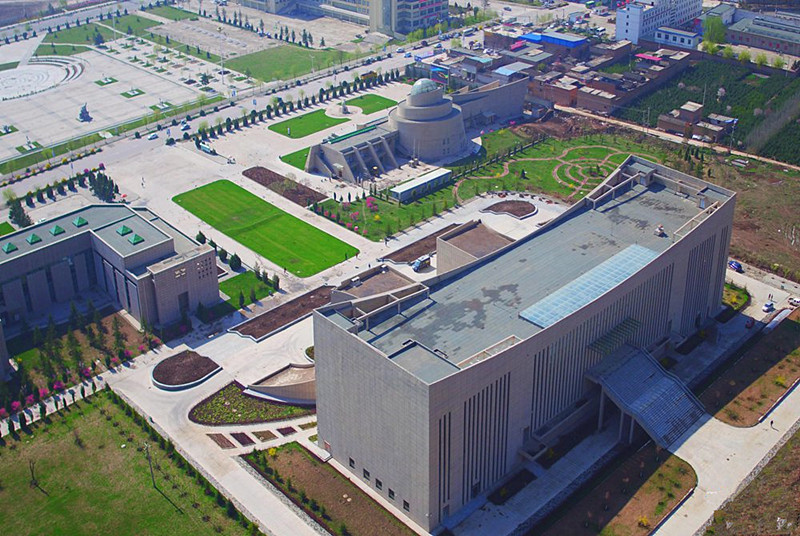
The Linxia UNESCO Global Geopark Museum explains the prefecture’s geological evolution, fossils, dinosaur tracks and natural environment through digital exhibits, AR installations and interactive displays. It became a national 3A attraction in 2024.
Other city attractions include Red Garden (红园), East Mansion (东公馆), Dongjiao Park, Zheqiaowan, local mosques and traditional handicraft workshops.
Hezheng: Fossils, Hua’er and Mountain Recreation
Hezheng is one of the core sections of Linxia UNESCO Global Geopark and is especially important for palaeontology. Its fossil collections document several major mammal faunas from approximately 27 million to two million years ago.
Hezheng Paleozoological Fossil Museum
The museum holds tens of thousands of fossil specimens representing more than 150 genera and species. Highlights include fossils of giant rhinos, shovel-tusked elephants, three-toed horses, woolly rhinoceroses and the locally named Hezhengia.
The enormous Paraceratherium, among the largest terrestrial mammals ever known, is one of the museum’s most impressive prehistoric animals.
Songmingyan
Songmingyan is a national 4A attraction and national forest park south of Hezheng town. Ancient pines, streams and steep mountain slopes provide a cool summer environment.
It is also one of the traditional centres of Hua’er, the northwestern Chinese folk-song tradition included on UNESCO’s Representative List of the Intangible Cultural Heritage of Humanity.
Fataishan and Wanshou Valley
Adjacent Fataishan focuses more strongly on recreation, with winter skiing and seasonal outdoor activities. Wanshou Valley (桦林万兽谷) combines fossil science with dramatic geological landscapes and is another national 4A attraction.
Together with the fossil museum and Songmingyan, these sites form Hezheng’s principal palaeontology and mountain-tourism cluster.
Kangle: Forests, Meadows and Summer Retreats
Kangle County lies beside the Taizishan mountain system and is one of Linxia’s strongest ecological tourism areas. Summer temperatures are noticeably cooler than in many surrounding cities, making the county particularly popular between June and August.
Caochanggou
Caochanggou is a 4A mountain destination at more than 2,300 metres above sea level. Forests, streams, grasslands, flower fields and a growing cluster of rural guesthouses make it suitable for overnight summer stays.
Baihua Forest
Baihua Forest Scenic Area (白桦林景区) contains extensive birch woodland and has developed four-season recreation including summer forest walks and winter snow activities. It was upgraded to national 4A status in 2024.
Zhuzigou
Zhuzigou Scenic Area (竹子沟景区) offers alpine grassland, horse riding and family recreation along the Taizishan tourism corridor. It became a national 4A attraction in 2026.
Lianhuashan
Lianhuashan National Forest Park (莲花山国家森林公园) is both a natural mountain destination and an important traditional Hua’er gathering place. Its summit reaches about 3,578 metres, and some climbing sections are steep.
Other Kangle attractions include Yanzhi Lake, Yaoshui Gorge, Haidian Gorge, Mashan Gorge, Hekou and rural camping areas.
Jishishan: Bao’an Culture and Mountain Gorges
Dunxia Scenic Area
Dunxia Scenic Area lies near Dahejia at the Gansu–Qinghai border. Its deep gorge combines streams, waterfalls, mountains and forest vegetation; in winter, frozen waterfalls turn the valley into an ice landscape.
The surrounding area is also one of the principal settlements of the Bao’an people, one of China’s smaller ethnic groups. Local food, village culture and the famous Bao’an waist-knife forging tradition add an important cultural dimension to a Dunxia visit. The scenic area is national 4A.
Other scenic areas include Huangcaoping, Shihai, Gaixinping, Dahejia and landscapes along the Taizishan Scenic Highway.
Guanghe: Qijia Culture
Qijia Culture Museum
Guanghe is where Qijia Culture received its archaeological name. Dating roughly from 4,300 to 3,500 years ago, Qijia Culture represents an important stage in the transition toward the Bronze Age in northwestern China.
The Qijia Culture Museum is currently China’s only specialist museum devoted exclusively to this archaeological culture. Its displays include pottery, jade, bronze objects and evidence of early agriculture and cultural exchange across northwestern China.
Other attractions include Qijiaping archaeological landscapes, Lazigou Scenic Area, Hualingou, countryside landscapes around Sanjiaji and traditional food and market culture.
Dongxiang: Yellow River and Dongxiang Culture
Dongxiang Autonomous County offers rugged loess landscapes, the Yellow River and distinctive Dongxiang ethnic culture.
Shengshi Binhu Tourism Area (盛世滨湖旅游区) is the county’s principal 4A destination and combines waterfront scenery with leisure facilities. Bulenggou Scenic Area (布楞沟景区) presents village history, Dongxiang culture and the transformation of rural life and is rated 3A.
Other attractions include Shilaquan Grand Canyon, Tangwangchuan, Dongxiang folk villages and viewing areas along the Yellow River.
Linxia County and the Taizishan Scenic Highway
Linxia County is increasingly associated with the Taizishan Scenic Highway, a 286-kilometre tourism corridor linking Kangle, Hezheng, Linxia County and Jishishan. The road connects mountain meadows, forests, ethnic villages, camping areas and numerous A-rated attractions and has become one of the region’s most attractive self-driving experiences.
Major stops include Yunshang Hezhou, Hezhouyuan, Guantangou, Longshoushan, Erziwa Liang, Muyun Camp and Taizishanfeng Visitor Centre. Yunshang Hezhou and Hezhouyuan are national 3A attractions.
Major Tourist Attractions Across Linxia
| Area |
English Name |
Chinese Name |
Main Features / Rating |
| Linxia City |
Bafang Shisanxiang |
八坊十三巷 |
4A; ethnic architecture, old lanes and local culture |
| Linxia City |
Linxia Prefecture Museum |
临夏州博物馆(彩陶馆) |
3A; Majiayao painted pottery and regional archaeology |
| Linxia City |
Linxia UNESCO Global Geopark Museum |
临夏世界地质公园博物馆 |
3A; geology, fossils and interactive science |
| Linxia City |
Red Garden |
红园 |
3A; classical garden and local culture |
| Linxia City |
East Mansion |
东公馆 |
3A; historic residence and Linxia brick carving |
| Linxia City |
Zheqiaowan Scenic Area |
折桥湾景区 |
3A; food, rural tourism and leisure |
| Yongjing County |
Bingling Temple World Heritage Tourist Area |
炳灵寺世界文化遗产旅游区 |
5A; UNESCO grottoes, Bingling Lake and Danxia |
| Yongjing County |
Bingling Temple Grottoes |
炳灵寺石窟 |
UNESCO World Heritage component |
| Yongjing County |
Bingling Lake |
炳灵湖 |
Reservoir cruises and Yellow River scenery |
| Yongjing County |
Bingling Danxia / Stone Forest |
炳灵丹霞·炳灵石林 |
Danxia cliffs and geological landscapes |
| Yongjing County |
Yellow River–Tao River Confluence |
黄洮交汇 |
Distinctive meeting of differently coloured waters |
| Yongjing County |
Liujiaxia Dinosaur National Geopark |
刘家峡恐龙国家地质公园 |
4A; dinosaur footprints |
| Yongjing County |
Liujiaxia International Paragliding Base |
刘家峡国际滑翔营地 |
4A; paragliding and reservoir views |
| Yongjing County |
Taiji Island |
太极岛 |
Wetland, birds and lakeside recreation |
| Yongjing County |
Liujiaxia Dam |
刘家峡大坝 |
Hydropower and industrial heritage |
| Hezheng County |
Hezheng Paleozoological Fossil Museum |
和政古动物化石博物馆 |
4A; world-class mammal fossils |
| Hezheng County |
Songmingyan Scenic Area |
松鸣岩景区 |
4A; forest park and Hua’er culture |
| Hezheng County |
Fataishan Scenic Area |
法台山景区 |
4A; skiing and outdoor recreation |
| Hezheng County |
Wanshou Valley |
桦林万兽谷景区 |
4A; fossils and geological landscapes |
| Hezheng County |
Ninghe Ancient Town |
宁河古城 |
3A; local history and cultural tourism |
| Hezheng County |
Songming Study Town |
松鸣研学小镇 |
3A; educational and family tourism |
| Kangle County |
Caochanggou Scenic Area |
草长沟景区 |
4A; alpine meadows, forest and homestays |
| Kangle County |
Baihua Forest Scenic Area |
白桦林景区 |
4A; birch forest and seasonal recreation |
| Kangle County |
Zhuzigou Scenic Area |
竹子沟景区 |
4A; grassland and outdoor activities |
| Kangle County |
Yanzhi Lake Scenic Area |
胭脂湖景区 |
4A; lake park and urban leisure |
| Kangle County |
Lianhuashan National Forest Park |
莲花山国家森林公园 |
Mountain scenery and Hua’er culture |
| Kangle County |
Yaoshui Gorge |
药水峡 |
Forest gorge and mountain landscape |
| Kangle County |
Haidian Gorge |
海甸峡 |
Canyon scenery and outdoor recreation |
| Guanghe County |
Qijia Culture Museum |
齐家文化博物馆 |
3A; China’s only Qijia Culture specialist museum |
| Guanghe County |
Qijiaping Site |
齐家坪遗址 |
Archaeological site that gave Qijia Culture its name |
| Guanghe County |
Lazigou Scenic Area |
腊子沟景区 |
3A; rural and ecological tourism |
| Guanghe County |
Hualingou |
桦林沟 |
Mountain and countryside scenery |
| Dongxiang Autonomous County |
Shengshi Binhu Tourism Area |
盛世滨湖旅游区 |
4A; Yellow River waterfront recreation |
| Dongxiang County |
Bulenggou Scenic Area |
布楞沟景区 |
3A; Dongxiang culture and village history |
| Dongxiang County |
Shilaquan Grand Canyon |
石拉泉大峡谷 |
Canyon landscape |
| Dongxiang County |
Tangwangchuan |
唐汪川 |
Rural landscape and seasonal blossom scenery |
| Linxia County |
Yunshang Hezhou Scenic Area |
云上河州景区 |
3A; grasslands, Taizishan views and camping |
| Linxia County |
Hezhouyuan Scenic Area |
河州苑景区 |
3A; local architecture, food and folk culture |
| Linxia County |
Guantangou |
关滩沟 |
Forest valley and mountain recreation |
| Linxia County |
Longshoushan Scenic Area |
龙首山景区 |
Mountain temples, springs and forest scenery |
| Linxia County |
Erziwa Liang |
耳子屲梁 |
Alpine meadow and Taizishan panorama |
| Jishishan County |
Dunxia Scenic Area |
大墩峡景区 |
4A; gorge, waterfalls, ice scenery and Bao’an culture |
| Jishishan County |
Huangcaoping |
黄草坪 |
Alpine grassland and summer scenery |
| Jishishan County |
Jishishan Stone Sea |
积石山石海 |
Geological landscape |
| Jishishan County |
Dahejia |
大河家 |
Yellow River town and Bao’an cultural gateway |
| Multi-County |
Linxia UNESCO Global Geopark |
临夏世界地质公园 |
UNESCO; fossils, Danxia, dinosaur tracks and Yellow River geology |
| Multi-County |
Taizishan Scenic Highway |
沿太子山旅游大通道 |
286-km mountain tourism and self-driving corridor |