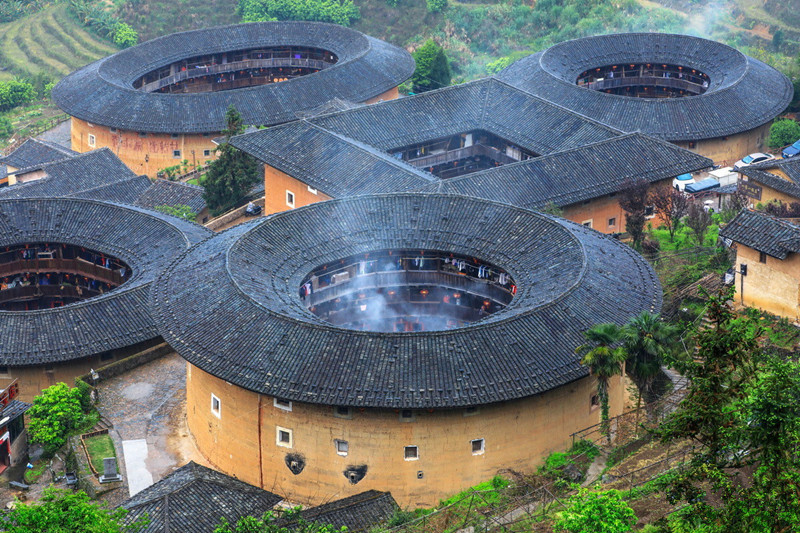
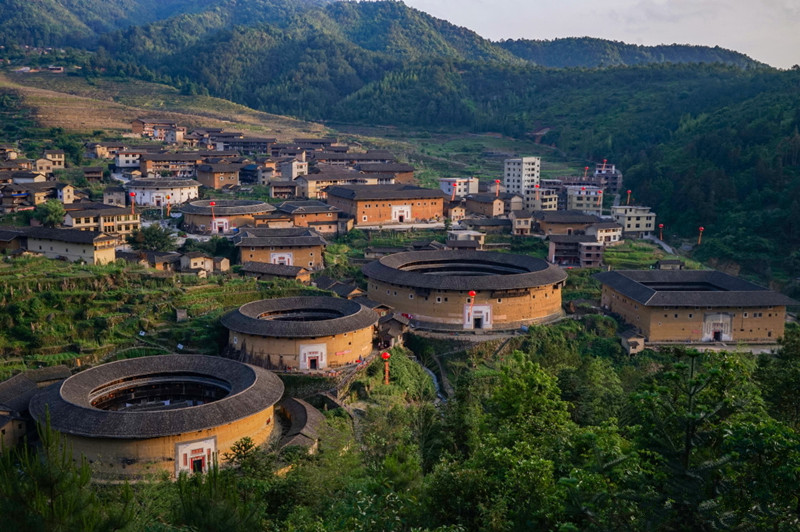
Xiamen (厦门) is often introduced as a seaside garden city, but its cultural identity reaches far beyond beaches and island scenery. The city developed at the meeting point of southern Fujian traditions, maritime trade, overseas Chinese connections, coastal defence, religious exchange and modern international culture. Its heritage ranges from the old county culture of Tong’an (同安) and the military history associated with Zheng Chenggong (郑成功) to the arcaded streets of the old port, the overseas Chinese architecture of Jimei School Village (集美学村) and the cosmopolitan villas of Gulangyu Island (鼓浪屿).
The wider Tong’an area traces its administrative history to the Western Jin period in 282, while the fortified maritime settlement known as Xiamen took shape during the late fourteenth century. In subsequent centuries, the port became closely connected with coastal defence, migration, overseas trade and cultural exchanges across Southeast Asia. Today, Xiamen’s six districts preserve different parts of this historical landscape rather than sharing one uniform cultural character.
Historical Development of Xiamen
The earliest cultural foundations of modern Xiamen are most clearly preserved in Tong’an District, which historically administered a much larger territory extending across parts of present-day Xiamen and nearby coastal areas. Ancient temples, Confucian traditions, clan settlements, stone houses and rural customs in Tong’an and Xiang’an reflect this older inland cultural layer.
The rise of the island city was closely connected with maritime defence and commerce. During the Ming and Qing periods, Xiamen became an important coastal military and trading center. The name Siming (思明) continues to recall the historical influence of Zheng Chenggong, while remains associated with the old fortified city, coastal batteries, temples and shipping communities preserve the city’s maritime memory.
From the nineteenth century onward, Xiamen became an important point of contact between China and the outside world. After Xiamen opened as a commercial port, Kulangsu, or Gulangyu, developed as an international settlement in 1903. Southern Fujian buildings, Western classical architecture, veranda-style residences and the locally developed “Amoy Deco” style created an exceptional urban landscape. UNESCO inscribed Kulangsu: A Historic International Settlement on the World Heritage List in 2017.
Cultural Characteristics of Xiamen’s Six Districts
Each district represents a different chapter of Xiamen’s history. The island districts concentrate the old port, international architecture and urban folk arts, while the mainland districts preserve ancient county culture, traditional villages, temples, clan settlements and agricultural customs.
| District |
Main Cultural Identity |
Representative Heritage and Traditions |
| Siming District (思明区) |
Old port, maritime defence, international exchange and modern urban culture |
Gulangyu, Zhongshan Road, Shapowei, Xiamen city-wall remains, Hulishan Fortress, South Putuo Temple, old churches, Nanyin and traditional opera |
| Huli District (湖里区) |
Modern special economic zone history combined with Minnan and She culture |
Birthplace of the Xiamen Special Economic Zone, former industrial heritage, Zhongzhai She Community, lacquer-thread sculpture and Wangchuan traditions |
| Jimei District (集美区) |
Overseas Chinese patriotism, education and Jiageng-style architecture |
Jimei School Village, former residences and memorials connected with Tan Kah Kee, Chengnei traditional village and Minnan nursery rhymes |
| Haicang District (海沧区) |
Maritime faith, traditional medicine, port villages and cross-strait folk customs |
Qingjiao Ciji Palace, Baosheng Dadi traditions, Yuanqian community, Haicang Centipede Pavilion and traditional incense making |
| Tong’an District (同安区) |
Ancient county culture, Confucian heritage and highland villages |
Tong’an Confucian Temple, old county streets, Brahma Temple, Su Song heritage, Lianhua folk songs and Baijiaoci Village |
| Xiang’an District (翔安区) |
Ancient ferry trade, coastal defence, rural rituals and red-brick villages |
Maxiang Old Town, Liuwudian ancient ferry, Dadeng historic sites, Paixiong Dance, Gaojia Opera, Yuntou and Jinbing traditional villages |
Xiamen’s current heritage protection system includes historic cultural districts, designated historical areas, traditional villages, protected buildings, archaeological remains and intangible cultural practices. The district-based distribution explains why a comprehensive culture tour normally requires travel beyond Xiamen Island.
Xiamen Intangible Cultural Heritage
Xiamen’s living culture is expressed through music, theatre, oral traditions, religious ceremonies, decorative arts, traditional architecture, food production and community festivals. According to the latest public figure located for this guide, Xiamen had 111 representative intangible cultural heritage projects at municipal level or above as of May 2026, including 15 national-level projects. Two traditions associated with Xiamen—Nanyin and the Wangchuan Ceremony—are included on UNESCO’s Representative List of the Intangible Cultural Heritage of Humanity.
Representative Intangible Heritage of Xiamen
| Intangible Heritage |
Chinese Name |
Main Area or Cultural Context |
Cultural Experience |
| Nanyin Music |
南音 |
Xiamen and the wider Minnan region |
Elegant vocal and instrumental music played with dongxiao, pipa and traditional percussion |
| Wangchuan Ceremony |
送王船 |
Coastal communities around Xiamen Bay, including Zhongzhai and Haicang |
Processions, ritual shipbuilding and ceremonies expressing respect for the sea |
| Gaojia Opera |
高甲戏 |
Xiamen, Tong’an and Xiang’an |
Energetic Minnan opera combining dramatic singing, movement and humorous roles |
| Gezai Opera |
歌仔戏 |
Xiamen and the wider Fujian–Taiwan cultural region |
Lyrical opera traditionally performed in the Minnan language |
| Dazui Gu |
答嘴鼓 |
Urban communities of Xiamen |
Rapid improvised dialogue, wordplay and humorous storytelling |
| Minnan Nursery Rhymes |
闽南童谣 |
Particularly associated with Jimei and local schools |
Oral literature describing childhood, family life and traditional society |
| Xiamen Lacquer-Thread Sculpture |
厦门漆线雕技艺 |
Xiamen urban craft traditions |
Fine lacquer threads shaped into raised decorative patterns |
| Xiamen Bead Embroidery |
厦门珠绣 |
Xiamen and Gulangyu craft studios |
Glass beads and sequins embroidered into luminous relief-like designs |
| Mid-Autumn Bo Bing |
厦门中秋博饼 |
Communities throughout Xiamen |
A festive dice game connected with family gatherings and local identity |
| Baosheng Dadi Belief and Customs |
保生大帝信俗 |
Haicang, especially around Qingjiao |
Temple rituals and traditional medical and community beliefs |
| Haicang Centipede Pavilion |
海沧蜈蚣阁 |
Haicang coastal villages |
A long raised ceremonial procession featuring costumed performers |
| Traditional Fujian Incense Making |
福建香制作技艺 |
Haicang and other Minnan communities |
Handmade incense, medicinal aromatics and traditional ritual culture |
| Paixiong Dance |
拍胸舞 |
Xiang’an and surrounding Minnan communities |
Rhythmic male dance featuring striking movements across the chest and limbs |
| Lianhua Folk Songs |
莲花褒歌 |
Mountain villages of Tong’an |
Improvised antiphonal singing once associated with agricultural labour |
| Cut-Porcelain Decoration |
剪瓷雕 |
Huli and other Minnan communities |
Ceramic fragments assembled into colourful temple-roof figures and ornaments |
The national-level traditions most frequently presented to visitors include Nanyin, Gaojia Opera, Gezai Opera, Dazui Gu, lacquer-thread sculpture and bead embroidery. The city also supports smaller community traditions that may only appear during temple fairs, lunar-calendar festivals or special cultural programs.
Historic Cultural Districts and Historical Areas
Three areas form the best-known historic urban cores of Xiamen: Gulangyu Historic Cultural District, Zhongshan Road Historic Cultural District and Jimei School Village Historic Cultural District. Together they represent international exchange, old-port commercial culture and overseas Chinese education.
In June 2025, Xiamen officially announced its first group of 11 designated historical areas. These areas broaden the protected cultural landscape beyond famous tourist attractions and include old fishing communities, educational institutions, industrial sites, ferry settlements and rural villages.
| Historical Area |
District |
Historical and Cultural Value |
| Shapowei (沙坡尾) |
Siming |
Former fishing harbour, typhoon shelter and maritime neighbourhood |
| Xiamen University Area (厦门大学) |
Siming |
Early university architecture and modern educational history |
| Yundang Lake Area (筼筜湖区) |
Siming |
Transformation of an historic harbour and the development of modern Xiamen |
| Birthplace of the Xiamen Special Economic Zone (厦门经济特区发源地) |
Huli |
Early buildings and industrial memory associated with economic reform |
| Cangjiang Old Street and Historic Houses (沧江古街古厝) |
Haicang |
Traditional port-town streets, red-brick residences and commercial heritage |
| Xiamen Power Plant (厦门电厂) |
Siming |
Industrial architecture and the history of urban electrification |
| Sanxiu–Houlu (三秀—后炉) |
Tong’an |
Traditional streets, residences and the old urban fabric of Tong’an |
| Former Silver City Brewery (原银城啤酒厂) |
Tong’an |
Modern industrial heritage connected with the development of the old county |
| Maxiang Old Town (马巷古镇) |
Xiang’an |
Market-town architecture, temples and historic commercial streets |
| Liuwudian Ancient Ferry Old Street (刘五店古渡老街) |
Xiang’an |
Coastal transportation, ferry trade and maritime settlement history |
| Matang Village (马塘村) |
Xiang’an |
Rural settlement patterns, red-brick houses and local community history |
Other important cultural monuments include the remains of the old Xiamen fortifications, Hulishan Fortress, Tong’an Confucian Temple, Qingjiao Ciji Palace, historic churches on Gulangyu, Tan Kah Kee memorial architecture in Jimei and wartime remains on Dadeng Island.
Traditional Villages of Xiamen
Xiamen has five officially recognized provincial traditional villages. They preserve red-brick houses, stone residences, clan halls, temples, ancient trees, agricultural landscapes and community rituals that have largely disappeared from the urbanized island.
| Traditional Village |
District |
Cultural Highlights |
| Yuanqian Community, Qingjiao Village (青礁村院前社) |
Haicang |
Minnan red-brick houses, clan culture, incense traditions and proximity to Qingjiao Ciji Palace |
| Chengnei Village, Houxi (后溪镇城内村) |
Jimei |
Historic Xiacheng settlement, City God Temple traditions and cross-strait religious connections |
| Yuntou Village, Xinxu (新圩镇云头村) |
Xiang’an |
More than six centuries of settlement history and a substantial group of Minnan houses |
| Jinbing Village, Xinxu (新圩镇金柄村) |
Xiang’an |
Ancient trees, red-brick residences, historic paths and traditions including Gaojia Opera and Paixiong Dance |
| Baijiaoci Village, Lianhua (莲花镇白交祠村) |
Tong’an |
High-altitude stone houses, clan temples, Lianhua folk songs and mountain agricultural culture |
Chengnei Village is especially significant for cultural exchanges across the Taiwan Strait because its historic City God Temple is connected with related temples in Taiwan. Jinbing Village is known for its long settlement history and concentrated intangible traditions, while Baijiaoci presents a contrasting highland landscape of stone houses, tea fields, mountain beliefs and folk songs.
She Ethnic Culture in Zhongzhai
Zhongzhai She Community (钟宅畲族社区) in Huli District is the only recognized ethnic-minority community on Xiamen Island. The settlement has a history of more than 600 years and formally restored its She ethnic identification in 1988 before becoming an urban community in 2003.
Although Zhongzhai has undergone extensive urban renewal, local cultural elements continue to be incorporated into its rebuilt neighbourhoods. Designs inspired by the traditional phoenix costume, together with black glutinous rice, Nanyin performances, temple architecture and Wangchuan customs, help maintain the community’s cultural memory. The protected and reconstructed cultural landscape includes temples, ancestral buildings and historic residences, while the Wangchuan ceremony remains one of its most visible public traditions.
Zhongzhai should not be treated as a staged ethnic theme park. It is a living urban community, and its cultural activities are normally connected with temple schedules, community events and the lunar calendar. Visitors should avoid entering ancestral halls or religious spaces without permission and should ask before photographing ceremonies or residents.
Xiamen History and Culture Tour Planning
Maritime History and Old Xiamen Culture
A classic cultural exploration can begin around the remains of Xiamen City, continue through the arcaded buildings of Zhongshan Road, visit the traditional food markets around Bashi, and then walk toward Shapowei. This progression reveals the relationship between military defence, port commerce, fishing communities and modern creative culture.
The following day can be devoted to Gulangyu, focusing on historic residences, consulates, churches, gardens and museums rather than simply visiting scenic viewpoints. The most meaningful experience comes from observing how Southern Fujian building traditions were combined with Western, Southeast Asian and overseas Chinese influences.
Overseas Chinese and Educational Heritage
A cultural tour of Jimei School Village explores the legacy of Tan Kah Kee and the role of overseas Chinese communities in modern education. Jiageng-style buildings combine Chinese roofs with Western structural and decorative elements, creating one of Xiamen’s most distinctive architectural landscapes.
The tour can be extended to Chengnei Village, where red-brick houses, an old City God Temple and cross-strait religious connections offer a more intimate contrast with Jimei’s monumental educational architecture.
Ancient County and Traditional Village Culture
Travelers interested in older Minnan traditions should spend a day in Tong’an. The historic center, Confucian temple, old streets and nearby religious sites reveal the cultural world that existed long before the modern port city developed.
The route can continue into the mountains to Baijiaoci Village, where stone houses, ancestral customs and folk songs survive in a highland environment. A separate rural tour can combine Yuntou and Jinbing in Xiang’an with Maxiang Old Town or Liuwudian Ancient Ferry.
Folk Religion and Intangible Heritage
A faith-and-folklore tour can connect Qingjiao Ciji Palace, Yuanqian Community and an incense-making experience in Haicang. This area is particularly suitable for understanding Baosheng Dadi beliefs, temple medicine, village processions and the close relationship between Fujian and Taiwan folk culture.
Performances of Nanyin, Gaojia Opera, Gezai Opera and Dazui Gu are not staged daily at every location. Travelers interested in living heritage should check cultural centers, theatres, museums and official festival calendars before arrival.
Practical Advice for Cultural Travelers
Historic houses, temples and traditional villages remain part of local community life. Visitors should dress and behave respectfully, avoid touching religious objects and request permission before entering private residences or photographing worshippers.
Gulangyu ferry tickets, major museums and university-related sites may require advance booking. Opening arrangements can change, while many museums and cultural venues close on Mondays. Festival dates such as Wangchuan ceremonies, temple fairs and folk-song gatherings may follow the lunar calendar and are not necessarily held every year.
Traditional villages are spread across Haicang, Jimei, Tong’an and Xiang’an. Private transportation or a vehicle with a local guide is generally more efficient than attempting to combine several villages by public transport in one day. Rural temples and historic houses may not have regular English interpretation, making advance cultural explanation particularly valuable.
History and Culture Tour with Yaso Trip
A Xiamen History and Culture Tour with Yaso Trip can combine the internationally recognized architecture of Gulangyu with less-visited cultural areas such as Tong’an Old Town, Qingjiao, Chengnei Village, Zhongzhai She Community and the traditional villages of Xiang’an. The strongest program does not simply move between famous monuments; it connects maritime history, overseas Chinese education, Minnan performing arts, community beliefs and traditional village life into one coherent cultural journey.