Sanming (三明) is one of Fujian’s richest inland cultural regions. Beneath the image of a modern forest and industrial city lies a cultural landscape extending from Palaeolithic human settlement and Song-dynasty Neo-Confucianism to Hakka migration, Central Soviet history, She ethnic traditions, ancient fortresses, traditional villages and living folk theatre.
Sanming commonly presents its cultural identity through four origins and one ancestral homeland: the origin of early Fujian civilisation, the source of the Min School of Neo-Confucianism, the homeland of influential Fujian teachers, the headwaters of the Min River and an important ancestral homeland of the Hakka people. These traditions are distributed across the city’s eleven county-level divisions rather than concentrated in one historic centre, making Sanming especially suitable for multi-day cultural tours and educational travel.
As of 2026, Sanming had seven national-level, 78 provincial-level and 302 municipal-level intangible cultural heritage projects. It also had 76 Chinese Traditional Villages, another 83 villages under provincial protection and 1,601 officially recognised historic buildings. The 14 villages mentioned in the sixth national batch were new additions to the existing list, not Sanming’s total number of Chinese Traditional Villages.
Historical and Cultural Foundations of Sanming
Wanshouyan and the Origins of Early Fujian Civilisation
The Wanshouyan Site (万寿岩遗址) in Sanyuan District is the most important archaeological starting point for understanding Sanming. Archaeological discoveries pushed the known history of human activity in Fujian back to approximately 200,000 years ago. The caves also preserve an artificial stone-paved surface and drainage features dating to roughly 40,000 years ago, sometimes described as one of China’s earliest known examples of an intentionally arranged interior living surface.
Wanshouyan is also an important case in Chinese heritage conservation. The site was discovered in an area previously used for limestone extraction, but mining was halted and the archaeological remains were preserved. It later became a National Archaeological Site Park, with a museum, research facilities and educational programmes interpreting prehistoric tools, animal fossils, cave environments and the relationship between archaeological conservation and industrial development.
Zhu Xi, Yang Shi and the Min School of Neo-Confucianism
Sanming occupies a central place in the history of Minxue, or the Min School of Neo-Confucianism (闽学). The region is associated with several leading scholars, including Zhu Xi (朱熹), born in Youxi; Yang Shi (杨时), associated with Jiangle; and Luo Congyan (罗从彦), whose intellectual legacy is connected with the Shaxian area.
In Youxi County, Zhu Xi’s birthplace, Nanxi Academy, the Half-Acre Square Pond and the wider Zhu Xi Cultural Park present his childhood, scholarship, family teachings and later influence on Chinese education. Sanming has developed research publications, commemorative ceremonies, student programmes and the “Zhu Xi Road” study-tour concept around this heritage. Jiangle complements the experience through Yang Shi memorial culture and the tradition of academies and teachers associated with the development of the Min School.
Hakka Ancestral Culture
Shibi Village (石壁村) in Ninghua County is widely recognised as an important ancestral homeland of Hakka communities. Historical migration routes brought families from northern and central China into the mountains of western Fujian, from where later generations moved toward Guangdong, Jiangxi, Taiwan and Southeast Asia.
The Shibi Hakka Ancestral Worship Custom (石壁客家祭祖习俗) is a national-level intangible cultural heritage project. The annual world Hakka ancestral ceremony combines clan genealogy, ritual worship, traditional music and cultural exchange, attracting Hakka descendants from China and overseas.
In June 2025, the Hakka Culture of Western Fujian Ecological Protection Area completed national evaluation and became an official national-level cultural ecological protection area. Within Sanming, it covers Ninghua, Qingliu and Mingxi counties, supporting the integrated protection of dialects, villages, rituals, theatre, crafts, food and community life rather than protecting individual objects in isolation.
Central Soviet and Long March Heritage
All of present-day Sanming formed part of the former Central Soviet region. Ninghua was one of the principal departure areas associated with the Central Red Army’s Long March, while Qingliu, Jianning, Taining, Mingxi and other counties preserve former headquarters, hospitals, banks, military sites, slogans and revolutionary village landscapes.
Important cultural locations include the Fenghuangshan Central Red Army Long March Departure Exhibition Area in Ninghua, the Central Soviet Anti-Encirclement Campaign Memorial Park in Jianning, the former residence associated with Mao Zedong at Linshe in Qingliu and former military-medical sites in the Ninghua area. The Sanming section of the Long March National Cultural Park has strengthened the conservation and interpretation of these connected sites.
She Ethnic Culture
The most concentrated She cultural area is Qingshui She Ethnic Township (青水畲族乡) in Yong’an. Its living traditions include ethnic songs, embroidery, paper-cutting, black glutinous-rice food customs, ancestral beliefs and celebrations around the third day of the third lunar month.
The municipal intangible heritage inventory now includes Qingshui She Third-Month-Third Festival, Qingshui She embroidery and Qingshui She paper-cutting. Other She communities include Houping She Village (后坪畲族村) in Youxi, which entered the sixth batch of Chinese Traditional Villages.
She heritage should be distinguished from Yong’an’s broader local traditions. Daqiang Opera, although strongly associated with the Yong’an region, is a regional theatrical form rather than exclusively a She ethnic performance.
National Intangible Cultural Heritage of Sanming
Sanming’s seven national-level projects cover theatre, dance, ritual, papermaking and food. In 2024, Datian Board Lantern Dragon also became part of the UNESCO-listed “Spring Festival—social practices of the Chinese people in celebration of the traditional new year.”
| National ICH Project |
Main Area |
Cultural Significance |
| Daqiang Opera (大腔戏) |
Yong’an City |
An ancient local theatrical form distinguished by its vocal style, percussion and ritual performance context |
| Meilin Opera (梅林戏) |
Taining County |
A traditional opera preserving local dialect, music, costumes and rural performance customs |
| Zaju Zuochang Ritual Opera (杂剧作场戏) |
Datian County and southern Yong’an |
A ceremonial theatrical tradition performed by clan members during ancestral and seasonal observances |
| Dragon Dance—Datian Board Lantern Dragon (龙舞·大田板灯龙) |
Datian County |
Hundreds of illuminated wooden sections are joined into an exceptionally long dragon during Lunar New Year celebrations |
| Shibi Hakka Ancestral Worship Custom (石壁客家祭祖习俗) |
Ninghua County |
A major Hakka genealogical and ancestral ceremony connecting communities in China and overseas |
| Traditional Bamboo Papermaking (竹纸制作技艺) |
Jiangle County |
The Xishan papermaking tradition involves a complex sequence of bamboo selection, soaking, pulping, sheet formation and drying |
| Shaxian Snack-Making Techniques (沙县小吃制作技艺) |
Shaxian District |
A diverse culinary system formed through migration and the blending of northern, central and southern Chinese food traditions |
The city’s lower-level heritage inventory is much larger. Following the eighth municipal list announced in January 2026, important additions included Zhu Xi stories, Jiangle lantern dancing, Ninghua Hakka paper-cutting, Qingliu Hakka boxing, Qingshui She embroidery, Youxi covered-bridge construction, Datian ritual customs and numerous local food and craft traditions.
Cultural Heritage by District, City and County
| Area |
Core Cultural Identity |
Representative Heritage and Experiences |
| Sanyuan District (三元区) |
Prehistoric civilisation and modern industrial memory |
Wanshouyan Site, archaeological museum and field education; traditional settlements around Yanqian; former Soviet sites; Sanming’s post-1958 steel-industry heritage and industrial-memory exhibitions. |
| Shaxian District (沙县区) |
Food culture and Min School heritage |
Shaxian snack-making, local food workshops, shoulder-pole theatre, Xipitai music and traditions associated with Neo-Confucian scholar Luo Congyan. Shaxian cuisine is most meaningful when studied through markets, family workshops and local ingredients rather than only restaurant tasting. |
| Yong’an City (永安市) |
Fortified settlements, theatre and She culture |
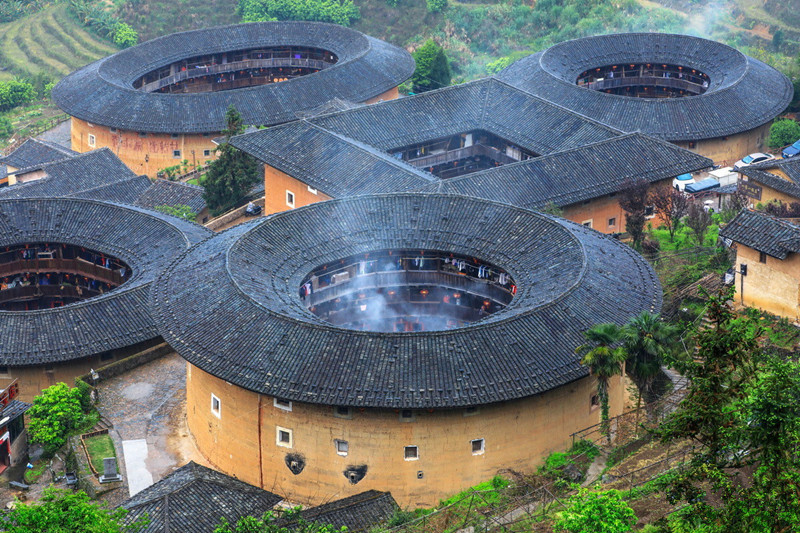
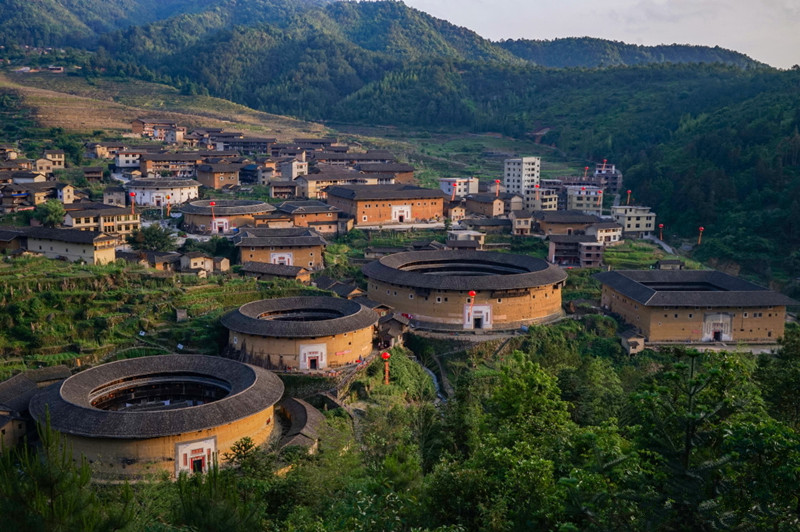
Daqiang Opera, Qingshui She customs, embroidery and paper-cutting; Anzhen Fort, Jishan and other historic settlements; traditional defensive architecture and clan culture. |
| Mingxi County (明溪县) |
Hakka communities and revolutionary memory |
Hakka clan settlements, traditional ironwork and fan-making, Shaxi Mazu belief, revolutionary memorial culture and rural traditions within the national Hakka cultural ecological protection area. |
| Qingliu County (清流县) |
Hakka villages and Red Army history |
Laifang ancient settlement, Hakka martial arts, traditional silverwork, triangle opera, bench-dragon customs and the Linshe revolutionary heritage area. |
| Ninghua County (宁化县) |
Hakka ancestral homeland and Long March culture |
Shibi Hakka Ancestral Land, ancestral-worship ceremonies, genealogy, Hakka paper-cutting, traditional food and the Fenghuangshan Long March departure heritage. |
| Datian County (大田县) |
Lantern festivals, ritual theatre and mountain forts |
Datian Board Lantern Dragon, Zaju Zuochang Opera, Nuo-lion traditions, local clan rituals, fortified earthen residences and high-mountain tea culture. |
| Youxi County (尤溪县) |
Zhu Xi heritage and mountain villages |
Zhu Xi Cultural Park, Nanxi Academy, ceremonial traditions, covered-bridge construction, black pottery and historic villages such as Guifeng and Houping She Village. |
| Jiangle County (将乐县) |
Yang Shi heritage and handmade bamboo paper |
Yang Shi memorial culture, academy traditions, Xishan bamboo papermaking, traditional tea production and Longqishan lantern dancing. |
| Taining County (泰宁县) |
Ming architecture, opera and Red heritage |
Shangshu Residence complex, ancient-city streets, Meilin Opera, historic family residences, Red Army inscriptions and former revolutionary institutions. Taining is also a provincial historical and cultural city. |
| Jianning County (建宁县) |
Central Soviet history and agricultural culture |
Central Soviet Anti-Encirclement Campaign Memorial Park, Red Army headquarters and rear-base villages, Min River headwater culture, lotus cultivation and traditional seed-production landscapes. |
Chinese Traditional Villages in Sanming
Sanming had 76 nationally listed Chinese Traditional Villages by 2026. Together with 83 additional provincially protected villages, the city maintained a system of 159 protected traditional settlements. These communities preserve clan halls, fortified houses, wooden dwellings, covered bridges, stone lanes, old wells, agricultural landscapes, ancestral rituals and regional dialects.
The following 14 villages entered the sixth batch of the national list. They should not be mistaken for Sanming’s complete national traditional-village inventory.
| Area |
Sixth-Batch Chinese Traditional Villages |
| Sanyuan District (三元区) |
Dingtai Village, Zhongcun Township (中村乡顶太村) |
| Yong’an City (永安市) |
Jifeng Village, Gongchuan Town (贡川镇集凤村); Tuanjie Village, Xiaotao Town (小陶镇团结村); Shangjishan Village, Yanxi Subdistrict (燕西街道上吉山村) |
| Qingliu County (清流县) |
Laiwu Village, Laifang Town (赖坊镇赖武村); Dongkeng Village, Yupeng Township (余朋乡东坑村) |
| Jianning County (建宁县) |
Bijia Village, Yijia Township (伊家乡笔架村) |
| Taining County (泰宁县) |
Chongji Village, Shangqing Township (上青乡崇磜村); Likeng Village, Dalong Township (大龙乡里坑村); Jixi Village, Shancheng Town (杉城镇磜溪村) |
| Jiangle County (将乐县) |
Guaxi Village, Yufang Township (余坊乡瓜溪村) |
| Youxi County (尤溪县) |
Houping She Village, Xibin Town (西滨镇后坪畲族村); Meixian Village, Meixian Town (梅仙镇梅仙村); Shuizhen Village, Yangzhong Town (洋中镇水圳村) |
For cultural travellers, a traditional village should not be selected solely for the age of its buildings. The strongest experiences combine preserved architecture with an active ancestral hall, craft workshop, local festival, family restaurant, farming activity or resident-led interpretation.
Recommended Sanming History and Culture Tours
| Tour Theme |
Suggested Cultural Route |
Recommended Duration |
| Prehistoric and Industrial Heritage |
Sanming City → Wanshouyan National Archaeological Site Park → Yanqian traditional communities → Sanming 1958 Industrial Memory and steel-industry heritage |
1–2 days |
| Min School and Great Scholars |
Youxi Zhu Xi Cultural Park and Nanxi Academy → Shaxian Minxue heritage → Jiangle Yang Shi cultural sites and traditional papermaking |
3 days |
| Hakka Ancestral Journey |
Ninghua Shibi → Hakka ancestral ceremony and genealogy experience → Qingliu Laifang → Mingxi Hakka communities and craft workshops |
3–4 days |
| Central Soviet and Long March Heritage |
Ninghua Fenghuangshan → Qingliu Linshe → Jianning Anti-Encirclement Campaign Memorial Park → Taining revolutionary streets and former institutions |
3–4 days |
| She Culture and Traditional Villages |
Yong’an Qingshui She Ethnic Township → She embroidery or paper-cutting class → Yong’an fortified villages → Youxi Houping She Village |
2–3 days |
| Opera, Lanterns and Folk Rituals |
Taining Meilin Opera → Datian Board Lantern Dragon and ritual theatre communities → Yong’an Daqiang Opera |
3 days, best around confirmed festival dates |
| Ancient Architecture and Village Life |
Taining Ancient City → Yong’an Anzhen Fort and Jishan → Youxi Guifeng → selected national traditional villages |
4–5 days |