China Travel Agency, China Tours 2026/2027 | Yaso Trip
Theme Tours
View All China Theme Tours by Interest
Travel Guide
  • Travel Guide
  • Travel Tips
  • Tour Planning
  • Ethnic Culture
  • China Climate
  • Golf Courses
  • Yangtze Cruise
  • Travel Articles
  • Putian Culture

    Putian (莆田), historically known as Xinghua (兴化), is one of Fujian Province’s most culturally distinctive cities. Often described as a “Coastal Home of Confucian Learning” and a “Renowned Land of Scholarship,” Putian combines a long tradition of imperial education with maritime beliefs, Buddhist heritage, Puxian Opera, classical craftsmanship and traditional village life.

    Putian was officially designated a National Historical and Cultural City in 2023. Its administrative history extends for more than 1,400 years, while the development of its historic urban center can be traced back more than 1,100 years. The city’s cultural identity rests on two complementary foundations: the scholarly traditions of Xinghua Prefecture and the maritime culture associated with Mazu, whose belief system originated on Meizhou Island and later spread through coastal China, Taiwan, Southeast Asia and overseas Chinese communities.

    Historical Development of Putian

    Putian’s cultural landscape developed between mountains, fertile plains and the sea. Irrigation projects transformed coastal wetlands into productive farmland, academies and temples supported a strong tradition of education, and ports connected the region with wider maritime networks.

    The construction of Mulan Weir (木兰陂) in 1083 was particularly important. The irrigation system helped control floods, resist seawater intrusion and support the agricultural development of the Xinghua Plain. It remains both a nationally protected cultural site and an internationally recognized heritage irrigation structure. Putian subsequently became famous for its scholars and imperial examination achievements, producing large numbers of jinshi degree holders, senior officials and literary figures.

    The city’s maritime culture developed alongside this scholarly tradition. Fishing communities and merchants depended heavily on the sea, encouraging the growth of beliefs centered on protection, safe voyages and community solidarity. Mazu culture became the most influential expression of this maritime worldview, but Putian also preserves Buddhist, Daoist, ancestral and local folk-belief traditions.

    Cultural Identity and Core Traditions

    Mazu Culture and Maritime Belief

    Mazu belief and customs (妈祖信俗) originated around Meizhou Island and commemorate Lin Mo, who became revered as a protector of sailors and coastal communities. Ceremonies include temple worship, processions, music, dance, storytelling, offerings and pilgrimages. In 2009, Mazu belief and customs were inscribed on UNESCO’s Representative List of the Intangible Cultural Heritage of Humanity.

    The Meizhou Mazu Ancestral Temple (湄洲妈祖祖庙) is the spiritual center of this cultural network. Other important sites include Xianlianggang Tianhou Ancestral Shrine (贤良港天后祖祠) on the northern shore and historic Tianhou temples in Putian’s coastal communities.

    Mazu culture is not limited to temple architecture. It remains active through pilgrimages, ritual ceremonies, cross-Strait exchanges, ancestral connections and community festivals. Major activities are especially concentrated around Mazu’s traditional birthday on the twenty-third day of the third lunar month and her ascension commemoration on the ninth day of the ninth lunar month.

    Xinghua Scholarship and Imperial Examination Culture

    Putian’s reputation as a center of learning was established through academies, Confucian schools, clan education and the imperial examination system. The historic city preserves structures and place names associated with former scholars, officials and influential families.

    The Xinghua Prefecture Historical and Cultural District (兴化府历史文化街区) retains elements of the traditional city plan and contains old lanes, temples, ancestral halls, former residences and craft workshops. It was recognized as a national-level tourism and leisure block in 2025 and has become the principal area for interpreting Putian’s urban history and living cultural heritage.

    Puxian Language, Opera and Music

    The local Puxian language (莆仙话) is a distinctive Min-language variety with vocabulary and pronunciation reflecting centuries of regional development. It remains widely used in traditional drama, storytelling, religious ceremonies and everyday family life.

    Puxian Opera (莆仙戏) is one of China’s oldest surviving regional operatic traditions. Its performance system preserves elements associated with Song- and Yuan-period drama, including distinctive gestures, percussion, vocal styles and traditional scripts. Puxian Shiyin Bayue, Shifan music and other instrumental traditions accompany temple ceremonies, weddings, festivals and community performances.

    Traditional Craftsmanship

    Putian and Xianyou are internationally known for woodcarving, classical furniture and related decorative arts. Putian woodcarving is characterized by complex relief work, religious sculpture and architectural decoration, while Xianyou classical furniture, often called Xianzuo (仙作), combines traditional hardwood construction with refined carving and joinery.

    Other important crafts include Liuqing bamboo carving, Cuo gold-and-silver inlay, stone carving, mural painting, traditional wooden construction, ceramic firing and the production of carving tools and bronze locks. These traditions remain connected with workshops and family businesses rather than existing only as museum displays.

    History and Culture by District and County

    Area Main Cultural Identity Representative Heritage
    Licheng District (荔城区) Historic Xinghua urban culture, Puxian Opera, woodcarving and scholarly traditions Xinghua Prefecture Historical and Cultural District, Sanqing Hall of Yuanmiao Temple, Guqiao Tower, Houhuang Village and traditional craft workshops
    Chengxiang District (城厢区) Buddhist culture, irrigation heritage and imperial examination traditions Mulan Weir, Guanghua Temple, Shakyamuni Pagoda, historic residences and former educational sites
    Hanjiang District (涵江区) Historic commerce, river culture, Hui community heritage and folk beliefs Bao’en Temple Pagoda, Shuangfu Village, Hanjiang old commercial neighborhoods, Wugong belief and traditional food-making skills
    Xiuyu District (秀屿区) Maritime belief, coastal defense, fishing culture and stone craftsmanship Pinghai Tianhou Temple, Pinghai Village, coastal temples, historic seawalls and stone-carving traditions
    Meizhou Island and Northern Shore Birthplace and international center of Mazu culture Meizhou Mazu Ancestral Temple, Xianlianggang Tianhou Ancestral Shrine, pilgrimage ceremonies and cross-Strait cultural exchanges
    Xianyou County (仙游县) Classical furniture, wood and bamboo carving, Confucian culture and mountain villages Xianyou Confucian Temple, Longhua Twin Pagodas, Wuchen Pagoda, Jichuan Village, Youyang traditional villages and Fengting festival customs

    Putian Intangible Cultural Heritage

    Recent cultural reports record one UNESCO-listed intangible heritage element, ten national-level representative projects and more than sixty provincial-level projects in Putian. The city has also established municipal and county-level lists covering opera, music, dance, craftsmanship, food, medicine, oral traditions and folk beliefs.

    UNESCO and National-Level Intangible Cultural Heritage

    Level English Name Chinese Name Category and Cultural Importance
    UNESCO Mazu Belief and Customs 妈祖信俗 Maritime belief, pilgrimage, rituals and community customs originating on Meizhou Island
    National Puxian Opera 莆仙戏 Ancient regional opera preserving distinctive performance and musical traditions
    National Mazu Festival 妈祖祭典 Ritual ceremonies commemorating Mazu and praying for peace and safe voyages
    National Putian Jiuli Lantern Dance 莆田九鲤灯舞 Folk lantern dance based on nine symbolic carp
    National Shifan Music: Huangshi Huiyang Shiyin 十番音乐(黄石惠洋十音) Traditional instrumental ensemble performed during festivals and community ceremonies
    National Fengting Lantern Festival Parade Custom 枫亭元宵游灯习俗 Large Lantern Festival procession in Xianyou’s Fengting area
    National Putian Woodcarving 莆田木雕 Religious sculpture, architectural decoration and ornamental carving
    National Puxian Shiyin Bayue 莆仙十音八乐 Puxian instrumental music used in ceremonies, opera and community celebrations
    National Cuo Gold-and-Silver Inlay 错金银 Decorative metal-inlay craftsmanship
    National Putian Liuqing Bamboo Carving 莆田留青竹刻 Fine bamboo carving using variations in the bamboo surface and inner layer
    National Xianyou Classical Furniture Making 仙游古典家具制作技艺 Traditional hardwood furniture construction, carving and joinery

    The national list is drawn from the official intangible-cultural-heritage database and Putian’s published heritage records. Four of the ten projects—Puxian Shiyin Bayue, Cuo gold-and-silver inlay, Liuqing bamboo carving and Xianyou classical furniture making—were added through the fourth national representative list.

    Recent Municipal-Level Heritage Additions

    Putian’s ninth group of municipal-level representative projects, announced in 2024, expanded the protection system beyond the best-known opera, religious and craft traditions.

    Category Representative New or Expanded Projects
    Folk Literature Stories of Hanjiang’s Shuixin River and the Three Filial Sons of the Guo Clan in Baitang
    Traditional Storytelling Puxian-language storytelling
    Traditional Crafts Xianyou rope weaving, traditional bronze-lock making and carving-tool forging
    Traditional Medicine Zhuo family bone-setting therapy
    Folk Belief Wugong belief customs in Hanjiang
    Traditional Arts Putian mural painting and Putian stone carving
    Food Heritage Local preparation methods for Puxian spring rolls, Wuxiang pork dishes, Yuanzhuang water-chestnut pastries, Dongyang cakes and other regional foods
    Architecture and Ceramics Xianyou timber construction and caisson ceilings, Zhuangbian kiln traditions and Huating ceramic firing

    These additions demonstrate that Putian’s living heritage is found not only in major festivals and temples but also in food workshops, medical traditions, village stories, construction methods and family craft lineages.

    Traditional Villages of Putian

    Putian’s official historical-city heritage profile recorded seven Chinese Traditional Villages, in addition to provincial traditional villages, historic villages and hundreds of protected historic buildings. These settlements preserve ancestral halls, red-brick houses, stone lanes, temples, ancient trees, irrigation landscapes and distinctive community customs.

    Chinese Traditional Villages

    County or District English Name Chinese Name Cultural Character
    Xianyou County Jichuan Village, Shicang Township 石苍乡济川村 Chinese Historical and Cultural Village with mountain architecture, ancestral culture and historic lanes
    Licheng District Houhuang Village, Xitianwei Town 西天尾镇后黄村 Overseas Chinese heritage, traditional residences and landscaped village environment
    Xiuyu District Pinghai Village, Pinghai Town 平海镇平海村 Coastal-defense history, Tianhou belief, fishing culture and traditional settlement patterns
    Hanjiang District Shuangfu Village, Baitang Town 白塘镇双福村 Hui community heritage, ancient lychee trees and traditional village landscape
    Xianyou County Xingshan Village, Youyang Town 游洋镇兴山村 Mountain village with traditional houses and rural cultural landscapes
    Xianyou County Longshan Village, Youyang Town 游洋镇龙山村 Historic residences, ancestral halls and forested mountain setting
    Xianyou County Tianma Village, Youyang Town 游洋镇天马村 Traditional mountain settlement with stone lanes, old houses and agricultural scenery

    Representative provincial traditional villages include Dongda Village in Jiangkou, Meiyang Village in Qiulu, Dongyang Village in Licheng, Zhaoche and Wuqi villages in Changtai, and Liuyuan Village in Xianyou. These villages are generally quieter than the better-known cultural districts and are best explored with private transportation and advance local arrangements.

    Historic Sites and Protected Cultural Heritage

    When Putian received National Historical and Cultural City status, its official heritage profile recorded 604 protected cultural-relic units, including 12 Major Historical and Cultural Sites Protected at the National Level, as well as hundreds of historic and traditional-style buildings.

    Major Historical and Cultural Sites Protected at the National Level

    English Name Chinese Name Main Cultural Significance
    Mulan Weir 木兰陂 Song-dynasty irrigation system that supported the development of the Xinghua Plain
    Shakyamuni Pagoda of Guanghua Temple 释迦文佛塔 Monumental Song-period stone pagoda associated with Guanghua Temple
    Sanqing Hall of Yuanmiao Temple 元妙观三清殿 One of Fujian’s most important surviving early wooden structures
    Tianzhong Wanshou Pagoda 天中万寿塔 Historic coastal pagoda associated with maritime navigation and belief
    Zhenhai Seawall 镇海堤 Ancient coastal engineering and flood-control structure
    Wuchen Pagoda 无尘塔 Historic stone pagoda in Xianyou
    Meizhou Mazu Ancestral Temple 湄洲妈祖祖庙 Spiritual center and place of origin of global Mazu culture
    Ninghai Bridge 宁海桥 Historic stone bridge connecting communities around the Mulan River system
    Longhua Twin Pagodas 龙华双塔 Pair of historic stone pagodas in Xianyou
    Pinghai Tianhou Temple 平海天后宫 Important coastal Mazu temple and maritime cultural site
    Xianyou Confucian Temple 仙游文庙 Historic institution representing Confucian education and local scholarship
    Bao’en Temple Pagoda 报恩寺塔 Historic pagoda in Hanjiang added to the national protected list in 2019

    The first eleven sites appeared in Putian’s earlier national heritage inventory, while Bao’en Temple Pagoda became the city’s twelfth national-level protected site in 2019.

    Putian’s protected heritage continues to expand. Provincial additions announced in 2026 included the Tang-period Santai Gongyao Tombs (三台拱曜) in Licheng and several sites in Xianyou, including Dengying Hall, the Dexing Zhang Residence, Jinxi Temple and the Former Site of the Shangong Communist Party Branch.

    Minority Cultures in Putian

    Putian’s population is predominantly Han Chinese, but minority communities contribute distinctive cultural traditions to the city’s heritage landscape.

    Hui Culture in Shuangfu Village

    Shuangfu Village (双福村) in Baitang Town is known for its Hui community, historic village setting and ancient lychee trees. Hui cultural elements can be seen in local architecture, community customs and food traditions. The village’s religious and ethnic identity developed within the wider cultural environment of the Xinghua Plain, illustrating long-term interaction between minority and local Puxian traditions.

    She Cultural Traditions

    She cultural traditions are represented in Weiyang Community (渭阳社区) in Xitianwei Town. Community activities may include ethnic costume displays, bamboo-pole dancing, traditional songs and cultural performances. Public presentations are usually linked to festival programs or organized cultural events rather than daily visitor schedules.

    Minority culture should be approached as living community heritage. Visitors should avoid treating residential areas as staged attractions and should request permission before photographing residents, religious spaces or private ceremonies.

    ENQUIRY
    Have a question before booking? Message us to learn more.
    Click to change
    Fujian Tulou
    Popular
    ★★★★★

    Fujian Tulou

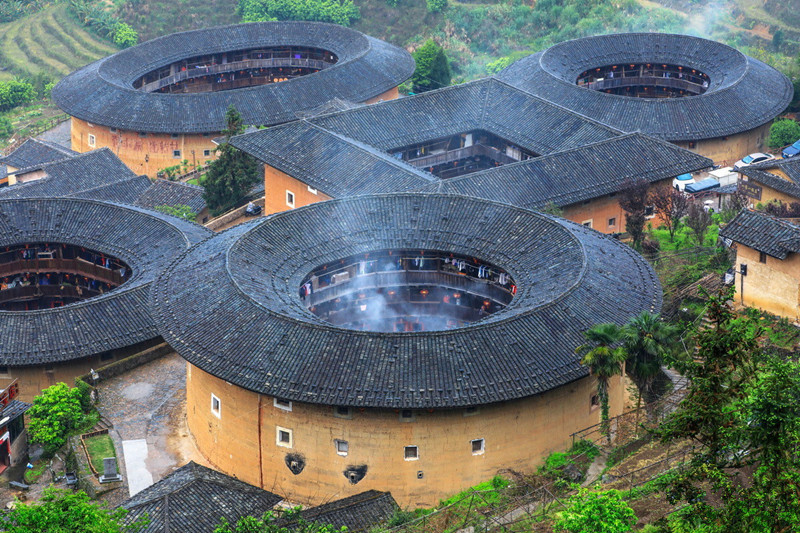
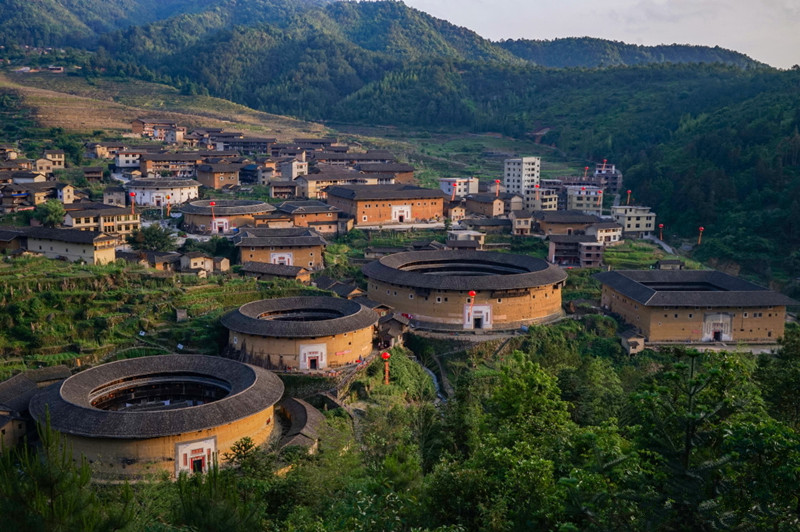
    Fujian Tulou (福建土楼) are among the most unique traditional architectural wonders in China and a symbol of Hakka Culture (客家文化). Located mainly in Nanjing County (南靖县), Yongding County (永定县), and surrounding areas of western Fujian, these large earthen buildings were designed as communal residences for Hakka families. Built with thick rammed-earth walls, tulou combine living spaces, defensive functions, and traditional Chinese family values. Recognized as a UNESCO World Heritage Site, Fujian Tulou attracts visitors with its unique circular designs, ancient history, and rural cultural atmosphere. Why Visit Fujian Tulou? Tianluokeng Tulou Cluster – The “Four Dishes and One Soup”: Tianluokeng Tulou Cluster (田螺坑土楼群) in Nanjing County is one of the most famous tulou landscapes in Fujian. The five buildings are arranged in a unique formation consisting of one square tulou surrounded by four round tulous, creating the nickname “Four Dishes and One Soup.” Viewed from the nearby hills, the symmetrical layout demonstrates the architectural wisdom and aesthetic sense of Hakka communities. Chuxi Tulou Cluster – Picturesque Hakka Village Landscape: Chuxi Tulou Cluster (初溪土楼群) is located in Yongding County and is...
  • China Travel Agency, China Tours 2026/2027 | Yaso TripFujian
  • Sanming

    Sanming

    Sanming (三明市) is a prefecture-level city in western Fujian Province (福建省), located between the Wuyi Mountains (武夷山脉) and Daiyun Mountains (戴云山脉). Known for its vast forests, dramatic Danxia landscapes, karst caves, rivers, and ecological environment, Sanming is one of Fujian’s best destinations for nature exploration and outdoor travel. With more than 80% of its land covered by mountains, the city offers beautiful scenery, traditional villages, and peaceful countryside experiences. Why Visit Sanming? Taining Global Geopark – Danxia Landscape and Ancient Culture: Taining Global Geopark (泰宁世界地质公园) is Sanming’s most famous natural attraction and a UNESCO Global Geopark. The area is known for spectacular Danxia landforms, cliffs, valleys, caves, and clear lakes. Dajin Lake (大金湖) is the highlight, featuring dramatic red rock formations, peaceful waters, and boat tours through stunning canyon scenery. Yuhua Cave – Underground Karst Wonder: Yuhua Cave (玉华洞) in Jiangle County is one of Fujian’s most famous limestone caves. Formed over millions of years, the cave features impressive stalactites, stalagmites, stone pillars, and underground landscapes. The colorful lighting and unique geological formations make it a fascinating destination for visitors...
  • China Travel Agency, China Tours 2026/2027 | Yaso TripFujian
  • Zhangzhou
    ★★★★

    Zhangzhou

    Zhangzhou (漳州市) is a historic prefecture-level city in southern Fujian Province (福建省), located along the Jiulong River (九龙江) near the Taiwan Strait (台湾海峡). With a history of more than 1,300 years, Zhangzhou is known for its traditional southern Fujian culture, ancient villages, unique coastal landscapes, tea traditions, and overseas Chinese heritage. Located close to Xiamen (厦门), it is an excellent destination for travelers seeking authentic Fujian culture beyond the major cities. Why Visit Zhangzhou? Nanjing Tulou – UNESCO World Heritage Architecture: Nanjing Tulou (南靖土楼) is Zhangzhou’s most famous attraction and a UNESCO World Heritage Site. These unique circular and square earthen buildings were traditionally built by Hakka communities for protection and communal living. Famous sites include Tianluokeng Tulou Cluster (田螺坑土楼群), known as the “Four Dishes and One Soup,” and Yuchang Building (裕昌楼), one of the oldest tulou structures. Visiting these villages offers insight into traditional architecture, family culture, and rural life in southern Fujian. Yunshuiyao Ancient Village – Traditional Countryside Charm: Yunshuiyao Ancient Village (云水谣古镇) is a picturesque historic village featuring ancient banyan trees, stone paths, streams, and traditional houses....
  • China Travel Agency, China Tours 2026/2027 | Yaso TripFujian
  • Ningde

    Ningde

    Ningde (宁德市) is a prefecture-level city on the northeastern coast of Fujian Province (福建省), also known as Mindong Culture Region (闽东地区). Located between Fuzhou (福州) to the south, Wenzhou (温州) in Zhejiang Province to the north, and Nanping (南平) to the west, Ningde is famous for its pristine natural environment, coastal landscapes, mountain scenery, and distinctive eastern Fujian traditions. With rich ecological resources and diverse cultural heritage, Ningde is an excellent destination for travelers seeking nature, outdoor activities, and authentic local experiences. Why Visit Ningde? Taimu Mountain – Coastal Mountain Wonderland: Taimu Mountain (太姥山) is Ningde’s most famous natural attraction and a UNESCO Global Geopark. Known as the “Fairy Mountain on the Sea,” it features spectacular granite peaks, caves, cliffs, forests, and sea views. The unique combination of mountains and coastline creates a dramatic landscape ideal for hiking, photography, and exploring natural wonders. Xiapu Mudflats – China’s Most Beautiful Coastal Photography Destination: Xiapu Mudflats (霞浦滩涂) are among the most famous coastal landscapes in China. The changing tides, fishing boats, bamboo poles, nets, and golden sunlight create beautiful scenery that attracts...
  • China Travel Agency, China Tours 2026/2027 | Yaso TripFujian
  • Longyan

    Longyan

    Longyan (龙岩市) is a historic prefecture-level city in southwestern Fujian Province (福建省), located in the upper reaches of the Jiulong River (九龙江) and Ting River (汀江). Surrounded by mountains and forests, Longyan is an important cultural center of Hakka Culture (客家文化) and is famous for its traditional villages, Fujian Tulou, red revolutionary heritage, and beautiful natural landscapes. With its unique blend of Hakka traditions, Minnan culture, and mountain scenery, Longyan offers travelers an authentic experience of inland Fujian. Why Visit Longyan? Yongding Tulou – Hakka Architectural Heritage: Yongding Tulou (永定土楼) is Longyan’s most famous attraction and a UNESCO World Heritage Site. These large circular and square earthen buildings were created by Hakka communities as communal residences combining living spaces and defensive functions. Famous tulou include Chengqi Lou (承启楼), known as the “King of Tulou,” and Chuxi Tulou Cluster (初溪土楼群), where visitors can experience traditional Hakka architecture and village life. Hakka Culture and Traditional Villages: Longyan is one of the most important centers of Hakka Culture (客家文化) in China. Traditional villages preserve Hakka customs, ancestral halls, folk songs, dialects, festivals, and...
  • China Travel Agency, China Tours 2026/2027 | Yaso TripFujian
  • Nanping

    Nanping

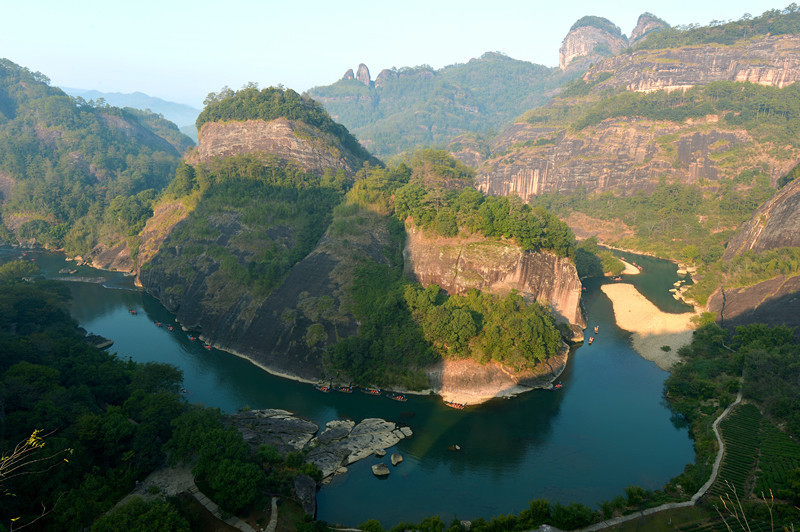
    Nanping (南平市) is a prefecture-level city in northwestern Fujian Province (福建省), located in the upper reaches of the Min River (闽江) and surrounded by mountains and forests. As an important gateway to northern Fujian, Nanping is known for the magnificent Wuyi Mountains (武夷山), rich tea culture, ancient historical sites, and beautiful ecological landscapes. The city combines natural scenery, traditional culture, and rural charm, making it an ideal destination for travelers seeking a quieter side of Fujian. Why Visit Nanping? Wuyi Mountain – UNESCO Natural and Cultural Heritage: Wuyi Mountain (武夷山) is Nanping’s most famous attraction and one of China’s most celebrated natural landscapes. Listed as a UNESCO World Heritage Site, it features spectacular red cliffs, clear rivers, forests, caves, and ancient cultural sites. Visitors can enjoy hiking through scenic trails, taking a bamboo raft along the Nine-Bend River (九曲溪), exploring historic temples, and experiencing the birthplace of Wuyi Rock Tea (武夷岩茶). Tea Culture and Mountain Villages: Nanping is one of China’s most important tea-producing regions, especially famous for Wuyi Rock Tea (武夷岩茶). Traditional tea gardens are scattered throughout the mountain...
  • China Travel Agency, China Tours 2026/2027 | Yaso TripFujian
  • Putian

    Putian

    Putian is a prefecture-level city on the eastern coast of Fujian Province (福建省), located between Fuzhou (福州) to the north and Quanzhou (泉州) to the south, facing the Taiwan Strait (台湾海峡). Known as an important cultural city in coastal Fujian, Putian combines ancient temples, religious traditions, coastal landscapes, traditional arts, and local cuisine. With its long history and strong connection to Mazu Culture (妈祖文化), Putian offers visitors a unique experience of southern Fujian heritage. Why Visit Putian? Meizhou Island – Birthplace of Mazu Culture: Meizhou Island (湄洲岛) is Putian’s most famous attraction and the birthplace of Mazu (妈祖), the sea goddess worshiped by millions of people across China and overseas Chinese communities. The island is home to Mazu Temple (妈祖庙), one of the most important Mazu pilgrimage sites in the world. Visitors can explore temples, beaches, coastal scenery, and experience the deep spiritual traditions surrounding Mazu worship. Mazu Culture and Maritime Heritage: Putian is recognized as the center of global Mazu Culture (妈祖文化), which reflects the maritime traditions of southern Fujian. Mazu festivals, temple ceremonies, and cultural activities attract visitors...
  • China Travel Agency, China Tours 2026/2027 | Yaso TripFujian
  • Xiamen

    Xiamen

    Xiamen is a beautiful coastal city in southeastern Fujian Province (福建省), located along the Taiwan Strait (台湾海峡). Formerly known internationally as Amoy, Xiamen is one of China’s most popular seaside destinations, famous for its relaxed island atmosphere, colonial architecture, coastal scenery, Minnan culture, and vibrant urban life. With its combination of beaches, historic neighborhoods, islands, temples, and delicious seafood, Xiamen offers a perfect balance of natural beauty and cultural experiences. Why Visit Xiamen? Gulangyu Island – UNESCO World Heritage Island: Gulangyu Island (鼓浪屿) is Xiamen’s most iconic attraction and a UNESCO World Heritage Site. Known as the “Island of Music,” it features quiet streets, historic villas, gardens, old churches, and a unique blend of Chinese and Western architectural styles. Visitors can walk through tree-lined paths, explore cultural buildings, enjoy seaside views, and experience the island’s artistic atmosphere. Xiamen Island – Coastal Scenery and Leisure Lifestyle: The main island of Xiamen is famous for its beautiful coastline, parks, and relaxed lifestyle. Hulishan Fortress (胡里山炮台), Bailuzhou Park (白鹭洲公园), and the scenic waterfront areas offer opportunities for sightseeing, photography, cycling, and enjoying the...
  • China Travel Agency, China Tours 2026/2027 | Yaso TripFujian
  • Fuzhou
    ★★★★

    Fuzhou

    Fuzhou (福州市) is the capital of Fujian Province (福建省) and one of the most important historical and cultural cities in southeastern China. Located along the Min River (闽江) near the coast, Fuzhou has a history of more than 2,000 years and is the cultural center of Mindong Culture (闽东文化). With its traditional architecture, ancient streets, tea culture, hot springs, temples, and modern urban development, Fuzhou offers an excellent introduction to the heritage of Fujian. Why Visit Fuzhou? Three Lanes and Seven Alleys – Historic Cultural District: Three Lanes and Seven Alleys (三坊七巷) is Fuzhou’s most famous historic area and one of the best-preserved ancient neighborhoods in China. The area features traditional white-walled houses, ancestral residences, old streets, and cultural museums, reflecting the lifestyle of scholars, officials, and merchants during the Ming and Qing dynasties. Drum Mountain – Buddhist and Natural Landscape: Drum Mountain (鼓山) is one of Fuzhou’s most popular scenic areas, known for its forests, mountain trails, and historic temples. The famous Yongquan Temple (涌泉寺), surrounded by cliffs and ancient trees, is an important Buddhist site offering peaceful surroundings...
  • China Travel Agency, China Tours 2026/2027 | Yaso TripFujian