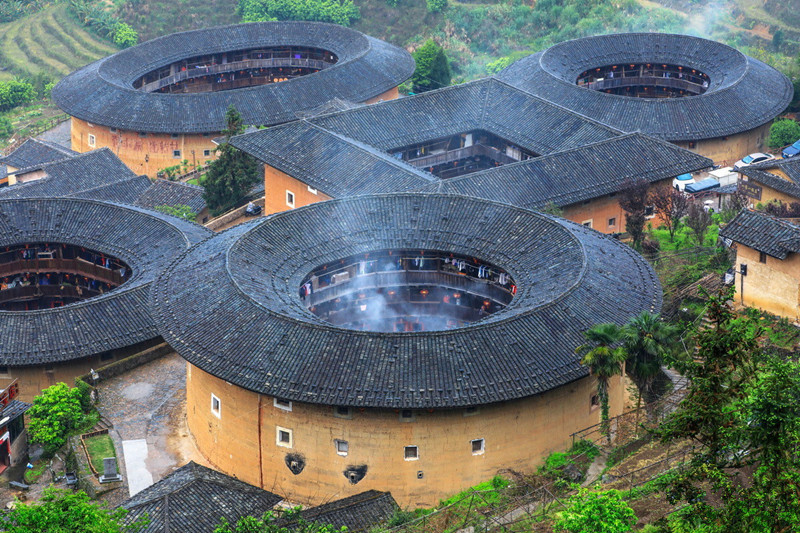
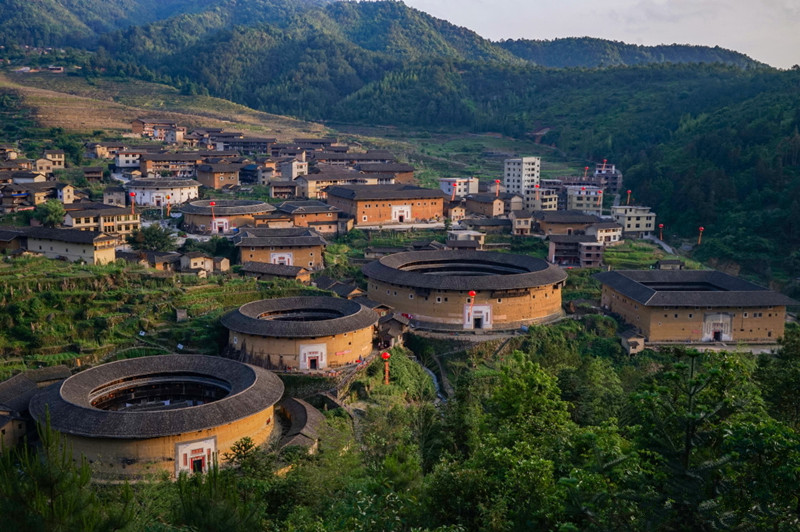
Ningde (宁德), historically associated with the wider Mindong or Eastern Fujian region (闽东), possesses one of Fujian Province’s richest combinations of ethnic culture, traditional villages, wooden covered bridges, tea heritage, maritime craftsmanship and coastal folk traditions. Mountains divide the inland communities into small cultural regions, while rivers and bays connect them with the sea, creating a cultural landscape in which She villages, tea settlements, fishing communities and old market towns retain highly distinctive identities.
In February 2026, the Fujian Provincial Government officially designated Ningde as a Provincial Historical and Cultural City. The city is also working toward national historical-city status through the conservation of its old urban districts, traditional villages, wooden structures and historic transportation routes. Current official heritage reporting records four UNESCO-recognized intangible-cultural-heritage elements, 23 national-level representative projects, 84 provincial-level projects, five provincial historical and cultural blocks, 53 provincial-level or higher historic towns and villages, and 276 traditional villages.
Historical and Cultural Background
The cultural history of Ningde is closely connected with the former Funing region (福宁). The name Ningde appeared as a county name during the Five Dynasties period, while the wider coastal area later developed under Funing Prefecture. Historic administrative, trading and religious centers were distributed between present-day Jiaocheng, Xiapu, Fu’an and Fuding rather than concentrated in one city.
Ningde’s geography strongly influenced its culture. Inland mountain valleys preserved wooden architecture, local opera, clan traditions and She settlements, while the coast supported fishing, shipbuilding, salt production, sea trade and marine beliefs. Tea routes connected Fu’an, Fuding and the mountainous interior with ports and overseas markets. This interaction produced the four major cultural themes that define Ningde today:
| Cultural Theme |
Main Areas |
Cultural Significance |
| She Ethnic Culture |
Xiapu, Fu’an, Jiaocheng, Fuding and Zherong |
Songs, language, dress, silverwork, marriage customs, medicine and festivals |
| Wooden Covered-Bridge Culture |
Shouning, Pingnan, Zhouning and Jiaocheng |
Beam-weaving construction, community spaces and mountain transportation |
| Tea Culture |
Fuding, Fu’an, Shouning and Zherong |
White tea, Tanyang Gongfu black tea, tea ceremonies and historic trade |
| Maritime and Coastal Culture |
Jiaocheng, Xiapu, Fuding and Fu’an |
Traditional shipbuilding, fishing villages, sea worship and coastal defense |
| Traditional Village Culture |
All counties and cities |
Clan halls, old houses, temples, stone lanes and agricultural landscapes |
| Revolutionary Heritage |
Fu’an, Shouning, Jiaocheng and Xiapu |
Former revolutionary bases, memorial sites and rural historical education |
History and Culture by District, City and County
| Area |
Principal Cultural Identity |
Representative Cultural Resources |
| Jiaocheng District (蕉城区) |
Historic Ningde city, Huotong culture, She traditions and maritime craftsmanship |
Pengcheng and Chenghuangmiao historical blocks, Huotong Ancient Town, Huotong Line Lion, Huang Ju irrigation heritage, Zhiti Temple and Houdun She Village |
| Xiapu County (霞浦县) |
Former Funing center, She culture, fishing communities and coastal defense |
Banyueli She Village, Dajing Castle, Funing historic-city heritage, She novel songs, She wedding customs and coastal village traditions |
| Fu’an City (福安市) |
She heartland, tea culture, ancient education and revolutionary history |
Tanyang tea culture, Lian Village, Muyang Ancient Town, Baizhuyang revolutionary heritage and the She townships of Banzhong, Muyun and Kangcuo |
| Fuding City (福鼎市) |
White tea, maritime culture, mountain belief and traditional residences |
Fuding white-tea traditions, Taimu cultural legends, Cuijiao Ancient Residence, Ziguo Temple and Shacheng coastal customs |
| Gutian County (古田县) |
Linshui Lady belief, lake-region culture and rural scholarship |
Linshui Palace Ancestral Temple, Chen Jinggu traditions, historic villages, clan halls and tea-agricultural settlements |
| Pingnan County (屏南县) |
Wooden covered bridges, traditional drama and village regeneration |
Wooden arch bridges, Longtan and Siping villages, Jitou Ancient Village, Shuangxi Ancient Town, Pingjiang Opera and rod-puppet theatre |
| Shouning County (寿宁县) |
Covered-bridge heritage, mountain settlements and Beilu Opera |
Historic wooden covered bridges, Xipu Village, Xiadang Village, Beilu Opera and mountain tea traditions |
| Zhouning County (周宁县) |
Mountain folk culture, carp-stream customs and historic villages |
Puyuan Carp Stream, Chenqiao Village, traditional ancestral halls, folk ceremonies and She communities |
| Zherong County (柘荣县) |
Paper cutting, She culture, traditional medicine and craft villages |
Zherong paper cutting, Xuelingwei Village, bamboo-nail drums, She silverwork and traditional medicinal culture |
Intangible Cultural Heritage of Ningde
Ningde has developed an extensive protection system covering traditional music, drama, dance, handicrafts, food, medicine, folk literature and community rituals. In 2025, the city reported four UNESCO-associated elements, 23 national-level representative projects and 84 provincial-level projects. In 2026, another five provincial projects and 51 municipal projects were added to the protection system.
UNESCO-Recognized Intangible Cultural Heritage
| English Name |
Chinese Name |
Ningde Connection |
UNESCO Status |
| Traditional Design and Practices for Building Chinese Wooden Arch Bridges |
中国木拱桥传统营造技艺 |
Preserved particularly in Shouning and Pingnan, where covered bridges remain community landmarks |
Transferred to the Representative List in 2024 |
| Watertight-Bulkhead Technology of Chinese Junks |
中国水密隔舱福船制造技艺 |
Associated with the traditional wooden shipbuilding communities of coastal Ningde |
Urgent Safeguarding List since 2010 |
| Chinese Paper-Cutting |
中国剪纸(柘荣剪纸) |
Zherong preserves a locally distinctive paper-cutting tradition used in festivals, decoration and folk belief |
Representative List since 2009 |
| Traditional Tea-Processing Techniques and Associated Social Practices in China |
中国传统制茶技艺及其相关习俗 |
Ningde is represented through traditions including Fuding white tea and Tanyang Gongfu black tea |
Representative List since 2022 |
Chinese wooden arch bridges use interlocking timber, beam-weaving and mortise-and-tenon construction rather than large quantities of metal fasteners. The bridges also function as meeting spaces, places of worship and shelters for village ceremonies. UNESCO transferred the tradition from the Urgent Safeguarding List to the Representative List in 2024 after improvements in community participation, teaching and conservation.
The watertight-bulkhead technique divides a wooden vessel into sealed compartments. Damage to one section therefore does not necessarily flood the entire ship. Traditional construction combines timber selection, plank jointing, caulking and launching rituals, reflecting both technical knowledge and the spiritual culture of maritime communities.
Chinese tea culture was added to UNESCO’s Representative List in 2022. Within Ningde, tea is connected not only with processing but also with hospitality, marriage, ancestral ceremonies, village identity and historic trading networks.
Major National and Regional Heritage Traditions
| Heritage Project |
Chinese Name |
Main Area |
Cultural Features |
| Huotong Line Lion |
霍童线狮 |
Jiaocheng |
A suspended lion manipulated with ropes, accompanied by percussion and festival performance |
| She Folk Songs |
畲族民歌 |
Jiaocheng, Fu’an and other She communities |
Antiphonal singing, historical narratives, courtship songs and ceremonial music |
| She Novel Songs |
畲族小说歌 |
Xiapu |
Long narrative songs that preserve history, ethics and community memory |
| She Wedding Customs |
畲族婚俗 |
Xiapu and Fu’an |
Singing exchanges, ceremonial dress, ancestor worship and community banquets |
| She Silverware Forging |
畲族银器锻制技艺 |
Fu’an and surrounding areas |
Silver headdresses, hair ornaments, jewellery and symbolic phoenix designs |
| Zherong Paper Cutting |
柘荣剪纸 |
Zherong |
Bold folk designs used for festivals, windows, clothing patterns and ritual decoration |
| Fuding White-Tea Production |
福鼎白茶制作技艺 |
Fuding |
Withering, drying, storage and social customs related to white tea |
| Tanyang Gongfu Tea Production |
坦洋工夫茶制作技艺 |
Fu’an |
Traditional black-tea processing developed around Tanyang Village |
| Wooden Arch-Bridge Construction |
木拱桥传统营造技艺 |
Shouning and Pingnan |
Beam-weaving, structural knowledge and village bridge rituals |
| Beilu Opera |
寿宁北路戏 |
Shouning |
A rare regional opera preserving traditional melodies, costumes and performance conventions |
| Pingjiang Opera |
屏南平讲戏 |
Pingnan |
Local theatre performed in the Mindong dialect tradition |
| Rod-Puppet Theatre |
屏南杖头木偶戏 |
Pingnan |
Large puppets controlled by rods and accompanied by local music |
| Shacheng Iron-Branch Performance |
沙埕铁枝 |
Fuding |
Children perform on decorated elevated metal structures during festive processions |
| Linshui Lady Belief |
陈靖姑信俗 |
Gutian |
Ritual traditions centered on Chen Jinggu, protector of women, children and childbirth |
| Traditional Junk Construction |
水密隔舱福船制造技艺 |
Coastal Ningde |
Wooden vessel construction and maritime launching rituals |
Huotong Line Lion was included in China’s first national intangible-cultural-heritage list in 2006 and remains one of Ningde’s most recognizable performing traditions. Modern interpretation at Huotong combines live performance with exhibitions and digital presentation.
New Provincial Heritage Projects Added in 2026
Five traditions from Ningde entered Fujian’s eighth provincial representative list in 2026. They illustrate how everyday food, drums, family ethics and ethnic festivals are now receiving stronger formal protection.
| English Name |
Chinese Name |
Area |
Category |
| Muyang Thread-Noodle Making |
福安穆阳线面制作技艺 |
Fu’an |
Traditional food craft |
| Bamboo-Nail Drum Making |
竹钉鼓制作技艺 |
Zherong |
Traditional craftsmanship |
| Nanyang Lantern-Festival Blessing Custom |
南阳元宵福 |
Shouning |
Folk custom |
| Filial-Piety Ritual Customs |
行孝礼仪习俗 |
Fuding |
Social custom and ritual |
| She February Second Kinship Festival |
畲族二月二会亲节 |
Fu’an |
Ethnic festival |
Traditional Villages and Historic Settlements
Ningde has the largest concentration of protected traditional villages among Fujian’s prefecture-level cities. The official 2026 heritage summary records 276 traditional villages across the broader conservation system. The lower figure of 155 found in some local introductions appears to refer to the narrower national Chinese Traditional Villages program rather than the full citywide inventory.
Listing every protected settlement would make a general cultural guide excessively long. The following table therefore identifies the villages and historic settlements most relevant to cultural tourism.
| Area |
English Name |
Chinese Name |
Principal Cultural Value |
| Jiaocheng |
Huotong Ancient Town |
霍童古镇 |
Traditional streets, line-lion culture, temples and river heritage |
| Jiaocheng |
Houdun She Village |
猴盾村 |
She songs, dance, food, medicine and community cultural displays |
| Xiapu |
Banyueli Village |
半月里村 |
One of eastern Fujian’s best-preserved She historic villages |
| Xiapu |
Chagang Village |
茶岗村 |
Mountain settlement, traditional houses and She cultural landscape |
| Xiapu |
Shangcun Village |
上村村 |
Traditional rural architecture and mountain community life |
| Fu’an |
Lian Village |
廉村 |
Historic scholarly village, old streets, ancestral halls and bridges |
| Fu’an |
Tanyang Village |
坦洋村 |
Birthplace of Tanyang Gongfu tea and historic tea-trade culture |
| Fu’an |
Muyang Ancient Town |
穆阳古镇 |
Traditional commercial streets, thread noodles and regional food culture |
| Fuding |
Chixi Village |
赤溪村 |
She community culture and an important rural-development story |
| Fuding |
Cuijiao Village |
翠郊村 |
Large Qing-period residence and traditional clan architecture |
| Gutian |
Luanlong Village |
峦龙村 |
Traditional rural settlement combined with tea and agricultural experiences |
| Pingnan |
Longtan Village |
龙潭村 |
Traditional houses revitalized through art, theatre and creative residency |
| Pingnan |
Siping Village |
四坪村 |
Historic architecture, rural art and village-regeneration programs |
| Pingnan |
Jitou Village |
漈头村 |
Clan architecture, farming culture and traditional village layout |
| Pingnan |
Jixia Village |
漈下村 |
Historic residences, ancestral halls and local defensive architecture |
| Pingnan |
Beiqian Village |
北墘村 |
Traditional rice-wine culture and mountain village life |
| Pingnan |
Shuangxi Ancient Town |
双溪古镇 |
Old streets, Confucian heritage and access to surrounding villages |
| Shouning |
Xipu Village |
西浦村 |
Ancient bridges, stone lanes, scholarly traditions and waterside architecture |
| Shouning |
Xiadang Village |
下党村 |
Mountain settlement, covered-bridge culture and contemporary rural history |
| Zhouning |
Puyuan Village |
浦源村 |
Carp-stream culture, ancestral customs and traditional waterside settlement |
| Zhouning |
Chenqiao Village |
陈峭村 |
Dramatic mountain setting and traditional stone-and-timber houses |
| Zherong |
Xuelingwei Village |
靴岭尾村 |
Paper-cutting workshops, folk-art decoration and cultural study programs |
Banyueli Village (半月里村) is especially valuable for understanding She culture. Its Qing-period residences, Lei ancestral hall, traditional implements and village museum preserve more than architectural history: they document language, songs, farming, family organization, clothing and marriage traditions.
Pingnan’s Longtan and Siping villages represent a different conservation model. Historic houses have been adapted for artist studios, theatre, cafés, cultural residencies and small guesthouses, bringing new residents and activities into settlements that had experienced population decline.
Historic Districts and Cultural Monuments
Jiaocheng Historic City
The historic center of Jiaocheng preserves two officially recognized provincial historical and cultural blocks: Pengcheng Historical and Cultural Block (鹏程历史文化街区) and Chenghuangmiao Historical and Cultural Block (城隍庙历史文化街区). They retain old street alignments, temples, traditional residences and the historical memory of Ningde’s county town. Pengcheng was recognized in 2017 and Chenghuangmiao in 2020.
The City God Temple is associated with the civic and religious history of the old town. Southern Song poet Lu You recorded the restoration of the temple, linking Ningde’s local heritage with one of China’s best-known literary figures.
Huotong Cultural Landscape
Huotong Ancient Town (霍童古镇) combines Daoist traditions, folk performance, historic irrigation and mountain-river scenery. The town is particularly associated with the Huotong Line Lion and the water-control works attributed to Huang Ju, which helped transform the surrounding agricultural landscape.
The nearby Huotong Stream poetry rocks, commonly called the “Poetry Beach,” preserve inscriptions left by generations of scholars and local writers. Visits are affected by water level and weather, so inscriptions are not equally visible throughout the year.
Wooden Covered Bridges
The covered bridges of Shouning, Pingnan and neighbouring mountain counties are both architectural monuments and living social spaces. Villagers historically crossed them, held ceremonies beneath their roofs and used them as meeting places protected from rain.
The loss of Pingnan’s nationally protected Wan’an Bridge (万安桥) in a 2022 fire demonstrated the vulnerability of timber heritage. Ningde has since expanded fire-protection work for wooden cultural monuments and reports completing preventive projects at 73 provincial-level or higher wooden-structure heritage sites.
Tea and Maritime Heritage
The tea villages of Fu’an and Fuding preserve processing workshops, tea houses, old trade stories and rituals of hospitality. Tanyang Gongfu became an internationally traded black tea, while Fuding white tea developed into the best-known expression of Ningde’s contemporary tea culture.
Along the coast, old fishing settlements, shipbuilding knowledge and boat-launching ceremonies express Ningde’s maritime heritage. The reconstructed traditional vessel Funing (福宁号) has been used to demonstrate watertight-bulkhead shipbuilding and renew cultural connections with the Maritime Silk Road.
She Ethnic Culture
Ningde is China’s largest concentrated She-populated region. Official ethnic-affairs reporting records approximately 205,200 She residents, representing about one quarter of China’s total She population. The city has introduced the country’s first local regulation devoted specifically to She cultural protection, created dedicated cultural funding and developed demonstration areas for integrated cultural conservation.
She people traditionally refer to themselves as Shanha, meaning people of the mountains. Their culture is expressed through songs, oral genealogies, phoenix symbolism, embroidered clothing, silver ornaments, martial arts, medicine, food and ceremonies.
Principal She Cultural Experiences
Banyueli Village in Xiapu: The strongest destination for historic architecture, clan heritage, She wedding customs, narrative songs and museum collections.
Houdun Village in Jiaocheng: A community-based cultural village where visitors may encounter She songs, dance, medicinal traditions and foods such as black glutinous rice.
Banzhong, Muyun and Kangcuo in Fu’an: Three She ethnic townships with different combinations of ethnic villages, fruit agriculture, tea, medicine, martial arts and festival culture.
Chixi Village in Fuding: A She village linking ethnic culture with rural-development history and mountain tourism.
Public performances are not guaranteed every day. Marriage demonstrations, song exchanges and craft workshops are usually connected with festivals, group reservations or organized cultural programs rather than routine independent visits.
Cultural Tour Planning in Ningde
Classic Historic City and Huotong Culture
Jiaocheng Historic Center – Pengcheng Historical Block – Chenghuangmiao Historical Block – Huotong Ancient Town – Huotong Line Lion – Huang Ju Irrigation Heritage
This journey introduces Ningde’s urban development, religious life, folk performance and river-valley culture. One full day is required, although two days provide a more relaxed visit.
She Heritage Journey
Banyueli Village – Houdun Village – Fu’an She Townships – Tanyang Village
This is the most complete cultural route for international visitors interested in ethnic dress, music, village architecture, tea and community life. Because these sites lie in different districts and counties, three days and private transport are recommended.
Wooden Bridge and Creative Village Journey
Pingnan – Shuangxi Ancient Town – Jitou Village – Longtan Village – Siping Village – Shouning – Xipu Village – Xiadang Village
This route combines wooden bridge craftsmanship with traditional villages and contemporary rural regeneration. It is best planned over three or four days because mountain roads are winding and travel times can be longer than the map suggests.
Tea and Maritime Culture Journey
Fu’an Tanyang Village – Muyang Ancient Town – Fuding Tea Country – Coastal Fuding or Xiapu
This journey explains how mountain agriculture was connected with coastal trade. Tea-factory visits, hand-processing demonstrations and formal tastings should be booked in advance.