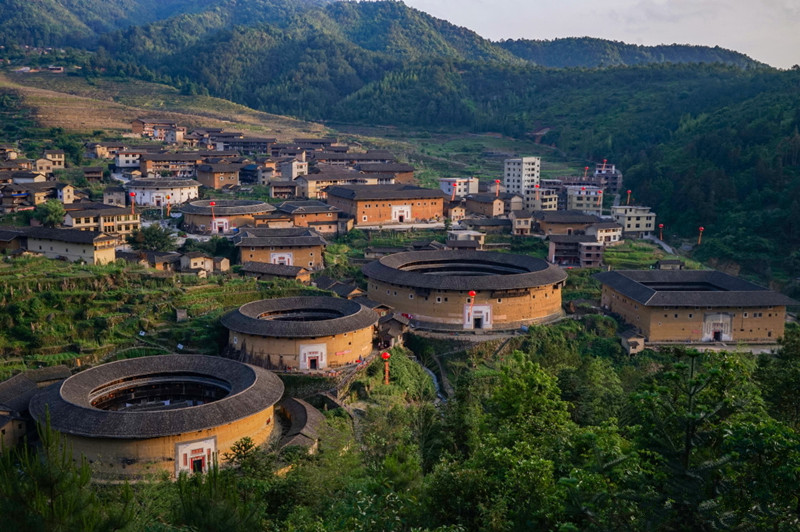
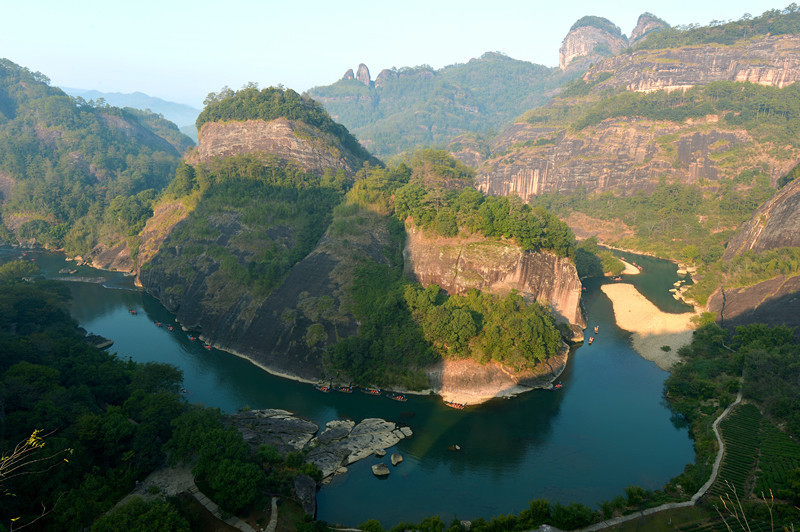
Longyan (龙岩), commonly known as Minxi or Western Fujian (闽西), lies at the junction of Fujian, Jiangxi and Guangdong provinces. Mountain basins, river valleys and forested uplands dominate the region, while the Ting River links many of its historic Hakka settlements. Longyan is widely recognized as a major Hakka cultural region, an important former revolutionary base and one of Fujian’s leading destinations for earthen buildings, ancient towns, red heritage, Danxia landscapes and ecological tourism.
Longyan currently administers two municipal districts—Xinluo and Yongding; four counties—Changting, Shanghang, Wuping and Liancheng; and the county-level city of Zhangping, giving it seven county-level administrative divisions. The municipal government is located in Xinluo District. In 2025, Longyan recorded a regional GDP of CNY 357.855 billion, reflecting its combined role as an industrial, agricultural, ecological and cultural-tourism centre in western Fujian.
Current Township-Level Administrative Structure
According to the official Fujian administrative division directory effective on 30 June 2026, Longyan contains 132 township-level administrative divisions. Counting the official entries gives:
| Administrative Type |
Number |
| Subdistricts |
14 |
| Towns |
94 |
| Ordinary townships |
22 |
| She ethnic townships |
2 |
| Total |
132 |
The two ethnic townships are Lufeng She Ethnic Township (庐丰畲族乡) and Guanzhuang She Ethnic Township (官庄畲族乡), both in Shanghang County.
This structure differs from some older summaries listing 89 towns and 29 townships. Those figures no longer correspond with the official township-by-township directory. Another recent change occurred in April 2026, when Xixi Township (西溪乡) in Yongding District was abolished and its territory incorporated into Fengcheng Subdistrict (凤城街道). The adjustment reduced Longyan’s total number of township-level divisions by one without creating a new subdistrict.
Administrative Geography and Tourism Development
Longyan’s tourism geography can be understood through four principal themes. Yongding and Changting form the core Hakka architectural and historic-town zone; Shanghang and parts of Xinluo concentrate revolutionary history; Liancheng, Wuping and northern Xinluo offer Danxia, karst and forest landscapes; and Zhangping combines tea-growing mountains with seasonal flower tourism.
Longyan now has three nationally rated 5A attractions: Fujian Tulou–Yongding Scenic Area, Gutian Tourism Area and Guanzhai Mountain Scenic Area. Guanzhai Mountain received national 5A recognition in December 2024, becoming the city’s third attraction to reach the highest national scenic-area rating.
| County-Level Area |
Principal Tourism Identity |
Representative Resources |
| Xinluo District (新罗区) |
Urban Longyan, revolutionary history and karst landscapes |
Longkong Cave, Central Soviet Area History Museum, Central Soviet Financial Street, Tian’gong Mountain and Zijin Mountain |
| Yongding District (永定区) |
World Heritage tulou and Hakka communal culture |
Hongkeng, Gaobei and Chuxi tulou clusters, Zhencheng Building, Chengqi Building, Nanxi Tulou Valley and Hakka villages |
| Changting County (长汀县) |
Historic Tingzhou, Hakka heritage and Long March history |
Tingzhou Ancient City, ancient city walls, Diantou Street, Changting Red Sites and traditional Hakka architecture |
| Shanghang County (上杭县) |
Revolutionary heritage, Ting River culture and She villages |
Gutian Meeting Site, Caixi Investigation Site, Meihuashan, Ting River Greenway and She ethnic communities |
| Wuping County (武平县) |
Forest ecology, wetlands and rural Hakka culture |
Liangyeshan, Qianlu Lake, Shiyan Scenic Area, Wuping Cultural Expo Park and traditional villages |
| Liancheng County (连城县) |
Danxia mountains, Hakka villages and traditional printing |
Guanzhai Mountain, Shimen Lake, Jiulong Lake, Peitian Ancient Village and Sibao woodblock printing |
| Zhangping City (漳平市) |
Tea plantations, cherry blossoms and mountain recreation |
Yongfu Cherry Blossom Tea Gardens, Jiupeng Stream, Tiantai Mountain and traditional tea-producing communities |
Xinluo District: Urban Longyan and Karst Heritage
Xinluo District (新罗区) is Longyan’s administrative, transport and commercial centre. Its principal natural attraction is Longkong Cave (龙硿洞), a large karst cave system containing underground halls, stalactites and limestone formations. The district’s cultural attractions include the Central Soviet Area–Western Fujian History Museum, revolutionary sites around Dongxiao and the Central Soviet Financial Street cultural area.
Xinluo also provides access to Tian’gong Mountain, forest recreation around Jiangshan and rural attractions in Yanshi, Xiaochi and Wan’an. Because the main railway station and most urban hotels are located here, Xinluo functions as a practical gateway for multi-county Longyan tours.
Yongding District: World Heritage Fujian Tulou
Yongding District (永定区) contains Longyan’s most internationally recognized heritage landscape. The UNESCO World Heritage property of Fujian Tulou comprises 46 representative earthen buildings constructed between the fifteenth and twentieth centuries in southwestern Fujian. These large circular or square residences accommodated extended families and combined communal living, defence and adaptation to the mountainous environment.
The principal Yongding visitor zones are the Hongkeng Tulou Cluster, centred on Zhencheng Building; the Gaobei Tulou Cluster, where Chengqi Building is commonly called the “King of Tulou”; and the more rural Chuxi Tulou Cluster. Nanxi Tulou Valley, Hukeng Historic Town, Xiayang and traditional Hakka villages broaden the district’s heritage beyond the best-known monumental buildings.
Changting County: Tingzhou Ancient City and Hakka Heritage
Changting County (长汀县) preserves the historic urban centre of Tingzhou, long regarded as one of the most important Hakka cities in western Fujian. The ancient city walls, Ting River waterfront, Diantou Street, traditional residences, ancestral halls and local crafts create one of Longyan’s strongest historic-town landscapes.
Changting also played an important role in the former Central Soviet Area and the early stages of the Long March. Its red heritage includes the former site of the Fujian Soviet Government, former residences and memorial buildings, the Changting Red Sites Scenic Area and cultural resources connected with the departure of Central Red Army forces. Current tourism planning combines the old city, Hakka architecture, red heritage, traditional villages and the Long March National Cultural Park.
Shanghang County: Gutian and Revolutionary History
Shanghang County (上杭县) is centred on the Gutian Meeting Site, one of China’s major revolutionary-history destinations. The wider Gutian Tourism Area includes the meeting site, museum facilities, former residences, village landscapes and educational programs connected with the history of the Red Army.
The county also contains the Caixi Township Investigation Site, Ting River landscapes and the forest ecology of Meihuashan. Lufeng and Guanzhuang are Longyan’s only two She ethnic townships, adding ethnic settlements, festivals, traditional food and community customs to Shanghang’s cultural resources. The Ting River Greenway has also emerged as an important slow-travel and recreational landscape.
Wuping County: Forests, Wetlands and Ecological Tourism
Wuping County (武平县) lies near the Fujian–Guangdong–Jiangxi border and is characterized by extensive forest coverage and rural mountain scenery. Liangyeshan (梁野山) protects subtropical forest ecosystems and supports hiking, nature education and ecological research.
Other representative attractions include Qianlu Lake (千鹭湖), where wetlands and birdlife form the main landscape; Shiyan Scenic Area (狮岩景区); Wuping Cultural Expo Park; and historic or ethnic villages in the surrounding countryside. Wuping is particularly suitable for self-driving, birdwatching and slower ecological holidays.
Liancheng County: Guanzhai Mountain and Hakka Villages
Liancheng County (连城县) is dominated by the Danxia landscape of Guanzhai Mountain (冠豸山), now a national 5A scenic area. The wider attraction incorporates mountains, cliffs, lakes, caves, temples, historic academies and cliff inscriptions. Guanzhai Mountain is often combined with Shimen Lake and Jiulong Lake to experience the contrast between red-rock peaks and calm water scenery.
Liancheng’s cultural heritage includes Peitian Ancient Village (培田古村落), known for its large group of Ming- and Qing-period Hakka residences, and Sibao (四堡), an important historical centre of woodblock printing. Traditional villages, hot springs, Hakka food and folk customs make Liancheng suitable for combining natural sightseeing with architectural and cultural exploration.
Zhangping City: Cherry Blossoms and Tea Landscapes
Zhangping (漳平市) forms Longyan’s eastern mountain-and-tea region. Its best-known destination is the Yongfu Cherry Blossom Tea Garden (永福樱花茶园), where cherry trees grow among extensive highland tea plantations. The landscape is most popular during the seasonal flowering period, although exact bloom dates vary with winter temperatures and spring weather.
Beyond Yongfu, Zhangping offers tea culture, forest scenery, Jiupeng Stream, Tiantai Mountain and traditional settlements around Shuangyang, Xinqiao and Nanyang. The combination of cherry blossoms and cultivated tea hills has become one of Longyan’s principal rural-tourism images.
Complete Township-Level Administrative Divisions of Longyan
The following table follows the Fujian Provincial Department of Civil Affairs directory effective on 30 June 2026. Xixi Township is therefore no longer listed separately under Yongding District. Functional zones, industrial parks, scenic-area committees and farms are not counted as statutory township-level divisions.
| County-Level Division |
Subdistricts |
Towns |
Townships, Including Ethnic Townships |
| Xinluo District (新罗区) — 20 units |
10: Dongcheng Subdistrict (东城街道), Nancheng Subdistrict (南城街道), Xicheng Subdistrict (西城街道), Zhongcheng Subdistrict (中城街道), Xibei Subdistrict (西陂街道), Caoxi Subdistrict (曹溪街道), Dongxiao Subdistrict (东肖街道), Longmen Subdistrict (龙门街道), Tieshan Subdistrict (铁山街道), Beicheng Subdistrict (北城街道) |
10: Hongfang Town (红坊镇), Shizhong Town (适中镇), Yanshi Town (雁石镇), Baisha Town (白沙镇), Wan’an Town (万安镇), Dachi Town (大池镇), Xiaochi Town (小池镇), Jiangshan Town (江山镇), Suban Town (苏坂镇), Yanshan Town (岩山镇) |
— |
| Yongding District (永定区) — 23 units |
1: Fengcheng Subdistrict (凤城街道) |
17: Kanshi Town (坎市镇), Xiayang Town (下洋镇), Hulei Town (湖雷镇), Gaobei Town (高陂镇), Fushi Town (抚市镇), Hukeng Town (湖坑镇), Peifeng Town (培丰镇), Longtan Town (龙潭镇), Fengshi Town (峰市镇), Chengjiao Town (城郊镇), Xianshi Town (仙师镇), Hugang Town (虎岗镇), Tangbao Town (堂堡镇), Qiling Town (岐岭镇), Gaotou Town (高头镇), Hongshan Town (洪山镇), Jinsha Town (金砂镇) |
5: Hushan Township (湖山乡), Guzhu Township (古竹乡), Hexi Township (合溪乡), Daxi Township (大溪乡), Chendong Township (陈东乡) |
| Changting County (长汀县) — 18 units |
— |
13: Tingzhou Town (汀州镇), Datong Town (大同镇), Gucheng Town (古城镇), Xinqiao Town (新桥镇), Guanqian Town (馆前镇), Tongfang Town (童坊镇), Hetian Town (河田镇), Nanshan Town (南山镇), Zhuotian Town (濯田镇), Sidu Town (四都镇), Tufang Town (涂坊镇), Cewu Town (策武镇), Sanzhou Town (三洲镇) |
5: Tiechang Township (铁长乡), Anjie Township (庵杰乡), Xuancheng Township (宣成乡), Hongshan Township (红山乡), Yanggu Township (羊牯乡) |
| Shanghang County (上杭县) — 21 units |
— |
17: Linjiang Town (临江镇), Lincheng Town (临城镇), Zhongdu Town (中都镇), Lanxi Town (蓝溪镇), Rentian Town (稔田镇), Baisha Town (白砂镇), Gutian Town (古田镇), Caixi Town (才溪镇), Nanyang Town (南阳镇), Jiaoyang Town (蛟洋镇), Jiuxian Town (旧县镇), Xikou Town (溪口镇), Huyang Town (湖洋镇), Taiba Town (太拔镇), Tongxian Town (通贤镇), Xiadu Town (下都镇), Chadi Town (茶地镇) |
4: Lufeng She Ethnic Township (庐丰畲族乡), Panjing Township (泮境乡), Guanzhuang She Ethnic Township (官庄畲族乡), Shanhu Township (珊瑚乡) |
| Wuping County (武平县) — 17 units |
1: Pingchuan Subdistrict (平川街道) |
14: Zhongshan Town (中山镇), Yanqian Town (岩前镇), Shifang Town (十方镇), Zhongbao Town (中堡镇), Taoxi Town (桃溪镇), Chengxiang Town (城厢镇), Dongliu Town (东留镇), Wudong Town (武东镇), Yongping Town (永平镇), Wan’an Town (万安镇), Xiangdong Town (象洞镇), Xiangdian Town (湘店镇), Dahe Town (大禾镇), Zhongchi Town (中赤镇) |
2: Minzhu Township (民主乡), Xiaba Township (下坝乡) |
| Liancheng County (连城县) — 17 units |
— |
12: Lianfeng Town (莲峰镇), Beituan Town (北团镇), Gutian Town (姑田镇), Pengkou Town (朋口镇), Juxi Town (莒溪镇), Xinquan Town (新泉镇), Miaoqian Town (庙前镇), Wenheng Town (文亨镇), Sibao Town (四堡镇), Linfang Town (林坊镇), Gechuan Town (隔川镇), Xuanhe Town (宣和镇) |
5: Jiele Township (揭乐乡), Tangqian Township (塘前乡), Luofang Township (罗坊乡), Quxi Township (曲溪乡), Laiyuan Township (赖源乡) |
| Zhangping City (漳平市) — 16 units |
2: Jingcheng Subdistrict (菁城街道), Guilin Subdistrict (桂林街道) |
11: Xinqiao Town (新桥镇), Shuangyang Town (双洋镇), Yongfu Town (永福镇), Xinan Town (溪南镇), Heping Town (和平镇), Gongqiao Town (拱桥镇), Xianghu Town (象湖镇), Chishui Town (赤水镇), Xiyuan Town (西园镇), Nanyang Town (南洋镇), Luzhi Town (芦芝镇) |
3: Guantian Township (官田乡), Wuci Township (吾祠乡), Lingdi Township (灵地乡) |
| Longyan Total |
14 subdistricts |
94 towns |
24 townships, including 2 She ethnic townships |
Understanding Longyan’s Administrative and Tourism Geography
Longyan’s county-level destinations are widely distributed, and the best-known attractions do not form one compact sightseeing area. Xinluo is the main transport and accommodation hub, Yongding lies to the south around the tulou valleys, Shanghang and Changting extend westward along the principal Hakka and revolutionary-history corridor, while Liancheng lies to the north and Zhangping to the east.
For tourism planning, Longyan can be divided into four practical travel zones: Xinluo–Yongding for urban services and tulou heritage; Shanghang–Changting for Gutian, red history and Tingzhou culture; Liancheng–Wuping for Danxia scenery, ancient villages and forest ecology; and Zhangping for tea gardens and seasonal cherry blossoms. Covering all seven county-level areas requires a multi-day road itinerary rather than a short city tour.