China Travel Agency, China Tours 2026/2027 | Yaso Trip
Theme Tours
View All China Theme Tours by Interest
Travel Guide
  • Travel Guide
  • Travel Tips
  • Tour Planning
  • Ethnic Culture
  • China Climate
  • Golf Courses
  • Yangtze Cruise
  • Travel Articles
  • Fuzhou Administrative Divisions

    Fuzhou (福州), abbreviated as Rong (榕), is the capital of Fujian Province and lies along the lower reaches of the Min River on China’s southeastern coast. The municipality extends from the historic urban districts around the Min River to mountain counties, hot-spring valleys, fishing ports, coastal peninsulas and the islands of Pingtan. Its tourism resources combine Mindū culture, traditional architecture, maritime history, overseas Chinese heritage, hot springs, forest ecology and coastal scenery.

    Under China’s current administrative coding system, Fuzhou comprises six municipal districts—Gulou, Taijiang, Cangshan, Jin’an, Mawei and Changle; the county-level city of Fuqing; and six counties—Minhou, Lianjiang, Luoyuan, Minqing, Yongtai and Pingtan. The municipal government is located in Gulou District, and the total listed administrative area is approximately 11,968.53 square kilometres.

    Current Township-Level Administrative Structure

    The previously cited total of approximately 189 township-level units is not consistent with the latest official directory. According to the Fujian Provincial Department of Civil Affairs list effective on 30 June 2026, the 13 county-level divisions formally listed under Fuzhou contain:

    Administrative Type Number
    Subdistricts 45
    Towns 97
    Ordinary townships 37
    Ethnic townships 2
    Total township-level divisions 181

    The two ethnic townships are Xiaocang She Ethnic Township (小沧畲族乡) in Lianjiang County and Huokou She Ethnic Township (霍口畲族乡) in Luoyuan County. Mazu Township (马祖乡) remains included in the official administrative coding list under Lianjiang County, although it is not administered by Fuzhou municipal authorities in practice.

    The figures can also be expressed according to practical municipal administration. Excluding Pingtan County’s seven township-level units and Mazu Township, Fuzhou’s directly administered area contains 44 subdistricts, 94 towns and 35 townships. Pingtan retains county-level coding under Fuzhou but has operated under the provincially administered Pingtan Comprehensive Experimental Zone through a combined administrative-area and experimental-zone management system since 2009.

    Administrative Geography and Tourism Development

    Fuzhou’s administrative geography produces several distinct tourism zones. Gulou, Taijiang and Cangshan form the historic urban core; Jin’an, Minhou, Minqing and Yongtai concentrate mountains, forests, hot springs and traditional villages; Mawei, Changle, Fuqing, Lianjiang and Luoyuan form the principal maritime and coastal corridor; while Pingtan has developed as a separate island destination.

    Fuzhou’s official tourism strategy focuses on four major themes: Mindū historical culture, hot-spring wellness, ecological recreation and riverside or coastal holidays. Major cultural products include Three Lanes and Seven Alleys, Shangxiahang, Yantai Mountain, Mawei Shipbuilding Administration heritage, the Tanshishan archaeological site and Shoushan stone culture.

    Gulou District: Historic Fuzhou and Mindū Culture

    Gulou District (鼓楼区) is Fuzhou’s political, cultural and historical centre. Its most important attraction is Three Lanes and Seven Alleys (三坊七巷), a nationally rated 5A tourism area preserving lanes, courtyards, ancestral residences and buildings connected with prominent figures in modern Chinese history.

    Other major cultural sites include West Lake Park, Lin Zexu Memorial Hall, Wushan Mountain, Yushan Mountain, Zhenhai Tower, the Confucian Temple and the Zhuzi Lane area. Gulou is also closely associated with Fuzhou’s urban hot-spring culture, making it possible to combine historical walking tours with traditional bathing and wellness experiences.

    Taijiang District: Old Commercial Port and Min River Nightlife

    Taijiang District (台江区) developed around the commercial waterways and docks of the lower Min River. Its best-known heritage area is Shangxiahang Historic and Cultural District (上下杭历史文化街区), where merchant residences, guild halls, warehouses and religious buildings recall Fuzhou’s role as a regional trading port.

    The district also includes the Heart of the Min River (闽江之心) waterfront, Youth Association Square and night-viewing areas around the river bridges. Taijiang is particularly suitable for exploring old commercial culture, riverside architecture, traditional food and evening city life.

    Cangshan District: Yantai Mountain and International Architecture

    Cangshan District (仓山区) lies south of the Min River and preserves one of Fuzhou’s most distinctive groups of modern international architecture. Yantai Mountain Historic District (烟台山历史风貌区) contains former consulates, churches, schools, hospitals, residences and commercial buildings created during Fuzhou’s development as an international treaty port.

    Representative landmarks include the Pan-Shipu Catholic Church, Shicuo Church and historic compounds along the hillsides overlooking the river. Cangshan also contains Luozhou Ancient Town, traditional residences, university campuses and the southern Min River waterfront.

    Jin’an District: Gushan, Guling and Forest Recreation

    Jin’an District (晋安区) extends from central urban neighbourhoods into forested mountains north and east of the city. Gushan Mountain (鼓山) is its most famous attraction, combining hiking trails, Yongquan Temple, cliff inscriptions and views over the Min River estuary.

    The higher Guling (鼓岭) area developed historically as a summer retreat and remains popular for villas, mountain walks and cooler summer weather. Jin’an also contains Fuzhou National Forest Park, Shoushan stone-producing areas, Guihu hot springs and rural landscapes around Huanxi, Shoushan and Rixi. The district was among the Fujian county-level areas officially recognized for strong cultural-tourism performance in 2025.

    Mawei District: China’s Modern Naval and Shipbuilding Heritage

    Mawei District (马尾区) occupies a strategic position near the mouth of the Min River. It is regarded as the birthplace of China’s modern naval education and shipbuilding industry. The China Shipbuilding Administration Culture Scenic Area (中国船政文化景区) includes museum exhibitions, historic docks, former educational facilities and sites connected with the Fujian Fleet.

    Luoxing Pagoda, Mawei Port, the former shipyard area and Mawei’s riverside parks illustrate the district’s maritime and industrial history. Langqi Island adds agricultural landscapes, wetlands and estuary scenery to the district’s cultural attractions.

    Changle District: Coastal Landscapes and Maritime Traditions

    Changle District (长乐区) forms the eastern coastal gateway of Fuzhou and contains Fuzhou Changle International Airport, modern coastal development zones, fishing communities and extensive beaches. Coastal attractions are distributed around Zhanggang, Jiangtian, Hunan, Wenling, Meihua and Songxia.

    Meihua Ancient Town preserves coastal-defence memories and traditional fishing culture, while the beaches and wetlands around the district support seaside recreation, birdwatching and family travel. Recent municipal tourism programs have positioned Changle as a destination for beach activities, coastal leisure and parent–child experiences.

    Fuqing City: Overseas Chinese Culture and Mountain–Sea Landscapes

    Fuqing (福清市) is one of Fujian’s major hometowns of overseas Chinese. Its cultural landscape reflects migration, clan traditions, religious beliefs and modern connections with communities throughout Southeast Asia and other parts of the world.

    The city’s leading mountain attraction is Shizhu Mountain (石竹山), known for temples, rock formations and traditions associated with dream seeking. Other resources include Dongzhang Reservoir, Damu Mountain grassland, Yidu mountain valleys, historic coastal communities and the peninsulas around Gaoshan, Sanshan and Donghan. Fuqing’s recent tourism positioning combines mountain scenery, coastal recreation, hot springs and overseas Chinese heritage.

    Minhou County: Archaeology, Ancient Culture and Forest Mountains

    Minhou County (闽侯县) surrounds much of western and southern metropolitan Fuzhou. The Tanshishan Cultural Site (昙石山文化遗址) preserves important evidence of prehistoric life in the lower Min River region, while Minyue Water Town (闽越水镇) presents a modern interpretation of traditional Mindū architecture and river culture.

    Natural destinations include Qishan Mountain, Wuhu Mountain, Shibachongxi and the mountain countryside of Dahu, Tingping and Yangli. Minhou also contains Fuzhou’s university town, making it an important centre for education, archaeology and study-tour programs.

    Lianjiang County: Fishing Villages, Hot Springs and Coastal Cliffs

    Lianjiang County (连江县) stretches from the Min River estuary to the Huangqi Peninsula and contains fishing ports, islands, coastal cliffs and hot-spring resorts. Gui’an is one of the Fuzhou region’s principal hot-spring and leisure areas, while the eastern coastline offers a contrasting maritime landscape.

    Representative coastal destinations include Dinghai Ancient City, Huangqi Peninsula, Beijiao Village, Pingtaiwei geological landscapes and the fishing communities around Xiaocheng, Tailu and Ankai. Seafood, aquaculture, fishing-port culture and island views form the county’s strongest tourism identity.

    Luoyuan County: She Culture and Luoyuan Bay

    Luoyuan County (罗源县) is centred on Luoyuan Bay and combines coastal wetlands, fishing settlements, mountain villages and She ethnic culture. Huokou She Ethnic Township is the county’s principal ethnic-cultural area, where village customs, traditional songs, food and festivals can be incorporated into cultural tours.

    Other tourism resources include Luoyuan Bay, Bili’s coastal landscapes, Niuao Beach and marine-themed family attractions. Current coastal-tourism development emphasizes the combination of She heritage, wetland ecology and relaxed seaside travel.

    Minqing County: Ancient Residences, Ceramics and Hot Springs

    Minqing County (闽清县) lies along the upper Min River west of central Fuzhou. Its cultural landscape is known for large clan residences, traditional villages, agricultural valleys and a long history of ceramic production.

    Honglin Historic Residence (宏琳厝) is one of the county’s best-known traditional residential compounds. Bandong, Tazhuang and other rural areas preserve ancestral halls, old houses and local festival customs, while hot-spring and countryside resorts support short wellness holidays from Fuzhou. Minqing can be combined with Yongtai for a broader rural architecture and hot-spring itinerary.

    Yongtai County: Mountain Resorts, Zhuangzhai and Hot Springs

    Yongtai County (永泰县) is one of Fuzhou’s principal mountain-tourism destinations. Qingyun Mountain, Yunding Scenic Area, Tianmen Mountain and numerous valleys and waterfalls provide hiking, rafting, forest recreation and summer retreats.

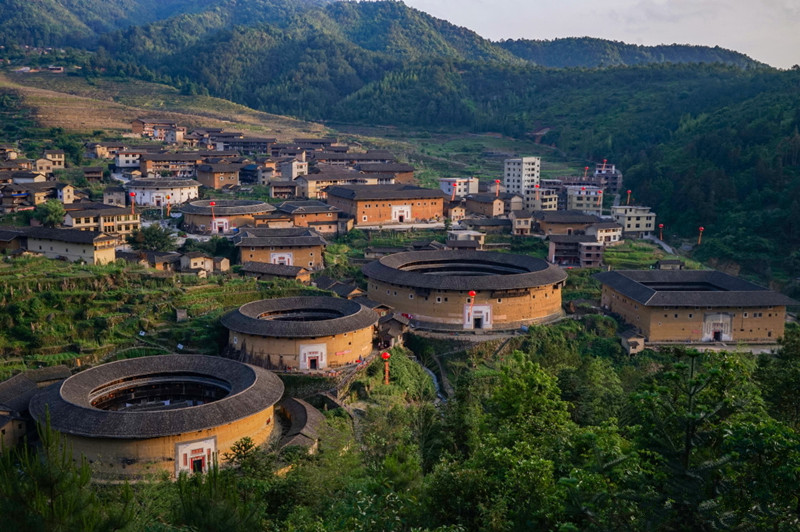
    The county is also known for Yongtai Zhuangzhai, large fortified rural residences constructed by local clans. Songkou Ancient Town preserves old streets, temples, residences and river-port memories, while the county’s hot springs add a wellness element to its ecological and cultural resources.

    Pingtan County: Island Scenery and Coastal Geology

    Pingtan County (平潭县) consists of Haitan Island and numerous surrounding islands. Although it remains listed as a Fuzhou county in the national administrative coding structure, it is administered through the provincially managed Pingtan Comprehensive Experimental Zone.

    Major attractions include Xianren Well, Tannan Bay, Beigang Village, Houyan Island, Junshan Mountain and the coastal roads around Haitan Island. Pingtan is known for granite sea-eroded landscapes, beaches, fishing villages, wind turbines and seasonal bioluminescent “blue tears.” Weather and marine conditions strongly influence island travel, so Pingtan is normally planned as a separate two- or three-day destination rather than a short extension of central Fuzhou.

    Complete Township-Level Administrative Divisions of Fuzhou

    The following table lists all statutory subdistricts, towns and townships recorded in the official Fujian administrative directory as of 30 June 2026. Mazu Township and Pingtan’s units are included because they remain present in the formal administrative coding structure; their practical management status is explained separately below.

    County-Level Division Subdistricts Towns Townships, Including Ethnic Townships
    Gulou District (鼓楼区) — 10 units 9: Gudong Subdistrict (鼓东街道), Guxi Subdistrict (鼓西街道), Wenquan Subdistrict (温泉街道), Dongjie Subdistrict (东街街道), Nanjie Subdistrict (南街街道), Antai Subdistrict (安泰街道), Huada Subdistrict (华大街道), Shuibu Subdistrict (水部街道), Wufeng Subdistrict (五凤街道) 1: Hongshan Town (洪山镇) —
    Taijiang District (台江区) — 10 units 10: Yingzhou Subdistrict (瀛洲街道), Houzhou Subdistrict (后洲街道), Yizhou Subdistrict (义洲街道), Xingang Subdistrict (新港街道), Shanghai Subdistrict (上海街道), Cangxia Subdistrict (苍霞街道), Chating Subdistrict (茶亭街道), Yangzhong Subdistrict (洋中街道), Aofeng Subdistrict (鳌峰街道), Ninghua Subdistrict (宁化街道) — —
    Cangshan District (仓山区) — 13 units 8: Cangqian Subdistrict (仓前街道), Dongsheng Subdistrict (东升街道), Duihu Subdistrict (对湖街道), Linjiang Subdistrict (临江街道), Sanxiajie Subdistrict (三叉街街道), Shangdu Subdistrict (上渡街道), Xiadu Subdistrict (下渡街道), Jinshan Subdistrict (金山街道) 5: Cangshan Town (仓山镇), Chengmen Town (城门镇), Gaishan Town (盖山镇), Jianxin Town (建新镇), Luozhou Town (螺洲镇) —
    Jin’an District (晋安区) — 9 units 3: Chayuan Subdistrict (茶园街道), Wangzhuang Subdistrict (王庄街道), Xiangyuan Subdistrict (象园街道) 4: Gushan Town (鼓山镇), Xindian Town (新店镇), Yuefeng Town (岳峰镇), Huanxi Town (宦溪镇) 2: Shoushan Township (寿山乡), Rixi Township (日溪乡)
    Mawei District (马尾区) — 4 units 1: Luoxing Subdistrict (罗星街道) 3: Mawei Town (马尾镇), Tingjiang Town (亭江镇), Langqi Town (琅岐镇) —
    Changle District (长乐区) — 18 units 5: Yingqian Subdistrict (营前街道), Zhanggang Subdistrict (漳港街道), Hangcheng Subdistrict (航城街道), Wuhang Subdistrict (吴航街道), Wenwusha Subdistrict (文武砂街道) 11: Shouzhan Town (首占镇), Yutian Town (玉田镇), Songxia Town (松下镇), Jiangtian Town (江田镇), Guhuai Town (古槐镇), Heshang Town (鹤上镇), Hunan Town (湖南镇), Jinfeng Town (金峰镇), Wenling Town (文岭镇), Meihua Town (梅花镇), Tantou Town (潭头镇) 2: Luolian Township (罗联乡), Houyu Township (猴屿乡)
    Fuqing City (福清市) — 24 units 7: Yuping Subdistrict (玉屏街道), Yinxi Subdistrict (音西街道), Honglu Subdistrict (宏路街道), Yangxia Subdistrict (阳下街道), Longshan Subdistrict (龙山街道), Longjiang Subdistrict (龙江街道), Shizhu Subdistrict (石竹街道) 17: Haikou Town (海口镇), Chengtou Town (城头镇), Nanling Town (南岭镇), Longtian Town (龙田镇), Jiangjing Town (江镜镇), Gangtou Town (港头镇), Gaoshan Town (高山镇), Shapu Town (沙埔镇), Sanshan Town (三山镇), Donghan Town (东瀚镇), Yuxi Town (渔溪镇), Shangjing Town (上迳镇), Xincuo Town (新厝镇), Jiangyin Town (江阴镇), Dongzhang Town (东张镇), Jingyang Town (镜洋镇), Yidu Town (一都镇) —
    Minhou County (闽侯县) — 15 units 1: Ganzhe Subdistrict (甘蔗街道) 8: Baisha Town (白沙镇), Nanyu Town (南屿镇), Shanggan Town (尚干镇), Xiangqian Town (祥谦镇), Qingkou Town (青口镇), Nantong Town (南通镇), Shangjie Town (上街镇), Jingxi Town (荆溪镇) 6: Zhuqi Township (竹岐乡), Hongwei Township (鸿尾乡), Yangli Township (洋里乡), Dahu Township (大湖乡), Tingping Township (廷坪乡), Xiaoruo Township (小箬乡)
    Lianjiang County (连江县) — 23 units — 19: Fengcheng Town (凤城镇), Aojiang Town (敖江镇), Dongdai Town (东岱镇), Guantou Town (琯头镇), Xiaoao Town (晓澳镇), Donghu Town (东湖镇), Danyang Town (丹阳镇), Changlong Town (长龙镇), Toubao Town (透堡镇), Mabi Town (马鼻镇), Guanban Town (官坂镇), Xiaocheng Town (筱埕镇), Huangqi Town (黄岐镇), Tailu Town (苔菉镇), Pukou Town (浦口镇), Kengyuan Town (坑园镇), Pandu Town (潘渡镇), Jiangnan Town (江南镇), Xiagong Town (下宫镇) 4: Liaoyan Township (蓼沿乡), Ankai Township (安凯乡), Xiaocang She Ethnic Township (小沧畲族乡), Mazu Township (马祖乡)
    Luoyuan County (罗源县) — 11 units — 6: Fengshan Town (凤山镇), Songshan Town (松山镇), Qibu Town (起步镇), Zhongfang Town (中房镇), Feizhu Town (飞竹镇), Jianjiang Town (鉴江镇) 5: Baita Township (白塔乡), Hongyang Township (洪洋乡), Xilan Township (西兰乡), Huokou She Ethnic Township (霍口畲族乡), Bili Township (碧里乡)
    Minqing County (闽清县) — 16 units — 11: Meicheng Town (梅城镇), Meixi Town (梅溪镇), Baizhang Town (白樟镇), Jinsha Town (金沙镇), Baizhong Town (白中镇), Chiyuan Town (池园镇), Bandong Town (坂东镇), Tazhuang Town (塔庄镇), Shenghuang Town (省璜镇), Xiongjiang Town (雄江镇), Dongqiao Town (东桥镇) 5: Yunlong Township (云龙乡), Shanglian Township (上莲乡), Sanxi Township (三溪乡), Julin Township (桔林乡), Xiazhu Township (下祝乡)
    Yongtai County (永泰县) — 21 units — 9: Zhangcheng Town (樟城镇), Songkou Town (嵩口镇), Wutong Town (梧桐镇), Geling Town (葛岭镇), Chengfeng Town (城峰镇), Qingliang Town (清凉镇), Changqing Town (长庆镇), Tong’an Town (同安镇), Dayang Town (大洋镇) 12: Tangqian Township (塘前乡), Fuquan Township (富泉乡), Linglu Township (岭路乡), Chixi Township (赤锡乡), Fukou Township (洑口乡), Gaiyang Township (盖洋乡), Dongyang Township (东洋乡), Xiaba Township (霞拔乡), Pangu Township (盘谷乡), Hongxing Township (红星乡), Baiyun Township (白云乡), Danyun Township (丹云乡)
    Pingtan County (平潭县) — 7 units 1: Haitan Subdistrict (海坛街道) 3: Jinjing Town (金井镇), Junshan Town (君山镇), Suping Town (苏平镇) 3: Yutou Township (屿头乡), Dongxiang Township (东庠乡), Nanhai Township (南海乡)
    Formal Fuzhou Total 45 subdistricts 97 towns 39 townships, including 2 She ethnic townships

    Special Administrative Counting Notes

    Area Formal Administrative Position Practical Management
    Pingtan County (平潭县) Listed under Fuzhou in the national and provincial county-level administrative coding structure Administered through the provincially managed Pingtan Comprehensive Experimental Zone under a combined “administrative area plus experimental zone” system
    Mazu Township (马祖乡) Included as a township-level code under Lianjiang County Not administered by Fuzhou municipal authorities in practice
    Fuzhou directly administered total Excludes Pingtan’s seven units and Mazu Township 44 subdistricts, 94 towns and 35 townships, totalling 173 township-level divisions

    For practical tourism planning, central Fuzhou, Pingtan and the distant coastal counties should be treated as separate travel zones. The old city and Min River districts can be explored using urban public transport, while Yongtai, Minqing, eastern Lianjiang, coastal Fuqing and rural Luoyuan are more efficiently visited by private vehicle. Pingtan normally requires at least one overnight stay because its attractions are spread across a large and windy island landscape.

    ENQUIRY

    Have a question before booking? Message us to learn more.
    Click to change
    Sanming

    Sanming

    Sanming (三明市) is a prefecture-level city in western Fujian Province (福建省), located between the Wuyi Mountains (武夷山脉) and Daiyun Mountains (戴云山脉). Known for its vast forests, dramat...
  • China Travel Agency, China Tours 2026/2027 | Yaso TripFujian
  • Zhangzhou
    ★★★★

    Zhangzhou

    Zhangzhou (漳州市) is a historic prefecture-level city in southern Fujian Province (福建省), located along the Jiulong River (九龙江) near the Taiwan Strait (台湾海峡). With a history of more t...
  • China Travel Agency, China Tours 2026/2027 | Yaso TripFujian
  • Ningde

    Ningde

    Ningde (宁德市) is a prefecture-level city on the northeastern coast of Fujian Province (福建省), also known as Mindong Culture Region (闽东地区). Located between Fuzhou (福州) to the south, W...
  • China Travel Agency, China Tours 2026/2027 | Yaso TripFujian
  • Longyan

    Longyan

    Longyan (龙岩市) is a historic prefecture-level city in southwestern Fujian Province (福建省), located in the upper reaches of the Jiulong River (九龙江) and Ting River (汀江). Surrounded by ...
  • China Travel Agency, China Tours 2026/2027 | Yaso TripFujian
  • Nanping

    Nanping

    Nanping (南平市) is a prefecture-level city in northwestern Fujian Province (福建省), located in the upper reaches of the Min River (闽江) and surrounded by mountains and forests. As an im...
  • China Travel Agency, China Tours 2026/2027 | Yaso TripFujian
  • Putian

    Putian

    Putian is a prefecture-level city on the eastern coast of Fujian Province (福建省), located between Fuzhou (福州) to the north and Quanzhou (泉州) to the south, facing the Taiwan Strait (...
  • China Travel Agency, China Tours 2026/2027 | Yaso TripFujian
  • Xiamen

    Xiamen

    Xiamen is a beautiful coastal city in southeastern Fujian Province (福建省), located along the Taiwan Strait (台湾海峡). Formerly known internationally as Amoy, Xiamen is one of China’s m...
  • China Travel Agency, China Tours 2026/2027 | Yaso TripFujian
  • Quanzhou

    Quanzhou

    Quanzhou is a historic port city on the southeastern coast of Fujian Province (福建省), located along the Jin River (晋江) near the Taiwan Strait (台湾海峡). Once one of the world’s largest...
  • China Travel Agency, China Tours 2026/2027 | Yaso TripFujian
  • Fuzhou
    ★★★★

    Fuzhou

    Fuzhou (福州市) is the capital of Fujian Province (福建省) and one of the most important historical and cultural cities in southeastern China. Located along the Min River (闽江) near the c...
  • China Travel Agency, China Tours 2026/2027 | Yaso TripFujian