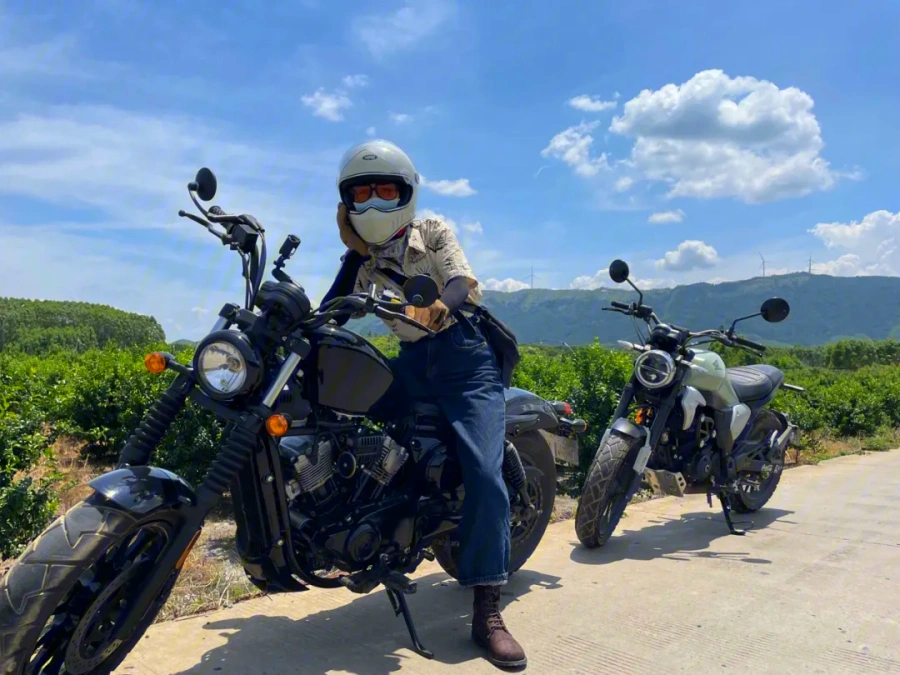
Quick Answer: What Are China's Cross-Border Motorbike Tours?
China's cross-border motorbike tours are multi-country overland rides that transit China between two foreign borders — Nepal, Pakistan, Kyrgyzstan, Laos, Myanmar, or Mongolia. Routes range from a 5-day Karakoram Highway transit between Pakistan and Kyrgyzstan through Xinjiang (新疆), to the 31-day trans-China flagship from Irkeshtam (伊尔克什坦) on the Kyrgyz border to Mohan (磨憨) on the Laotian border — crossing Xinjiang, Tibet (西藏), and Yunnan (云南) in a single continuous journey. Every route requires a licensed Chinese agency to handle the temporary import paperwork, a mandatory guide escort inside China, and border coordination on both sides — a roughly 60 working-day preparation window that no rider can shortcut.
Key Takeaways
✔ China sits at the geographic center of Asia — its land borders with Nepal, Pakistan, Kyrgyzstan, Laos, Myanmar, and Mongolia create route options that connect entire continents by motorcycle.
✔ Foreign-plated motorcycles cannot enter China without a licensed agency handling temporary import paperwork, Chinese temporary licence, temporary plate, and mandatory guide escort — no exceptions, no carnet accepted.
✔ The paperwork lead time is roughly 60 working days; the Military Permit for Kailash-transit routes is the single most common bottleneck.
✔ The classic "Himalaya-to-Mekong" corridor — Nepal to Laos across Tibet and Yunnan in 22 days — is the most-booked cross-border route and the one with the widest climate, altitude, and landscape range.
✔ The Grand Epic — Kyrgyzstan to Laos across Xinjiang, Tibet, and Yunnan in 31 days — is the theme's flagship, but demands roughly 35 clear calendar days and long-distance riding experience.
✔ Since 15 November 2025, Chinese-side compulsory traffic insurance (交强险) is enforced at Xinjiang land ports for all foreign-plated vehicles for the full duration of stay.
✔ Nepal's fully rolled-out e-Visa system launched on 17 August 2026 — the old airport-arrival paper flow no longer applies for most riders entering or exiting via Kathmandu.
Why Ride a Cross-Border Overland Route Through China?
Karakoram Highway (China-Pakistan Friendship Highway)
Crossing the Tibetan plateau on a trans-Asia motorcycle tour
The trans-Asia corridors are the most ambitious motorcycle rides on the planet, and China is the only country that makes them possible. Here is why experienced riders build these journeys around a China crossing:
- Continental scale in a single continuous ride. The 31-day Grand Epic covers roughly 8,000 km (4,970 mi) — from the Kyrgyz steppe, over the Karakoram, through the Taklamakan Desert (塔克拉玛干沙漠), across the Tibetan plateau, down through Yunnan's tea country, and out into Laos. No other country offers that geographic range on one tour.
- Border-to-border routing that connects continents. Central Asia to South Asia. South Asia to Southeast Asia. Southeast Asia to Mongolia. Every combination of two of China's live motorcycle-open borders is a genuine tour, not a theoretical map line.
- The Himalayan corridor exists only through China. Kathmandu (加德满都) to Lhasa (拉萨) via Everest Base Camp (珠峰大本营), or the extended western circuit through Mount Kailash (冈仁波齐), has no alternative overland path. Riders coming from Nepal must transit China to continue north; riders coming from Kyrgyzstan must transit China to reach the Himalaya.
- The paperwork moat creates uncrowded roads. The roughly 60-day permit lead time, the mandatory guide-escort rule, and China's non-acceptance of the ATA Carnet mean the trans-Asia motorcycle traffic is a fraction of what Southeast Asia or Central Asia sees. Riders who complete the paperwork inherit the reward: routes that stay empty.
- Infrastructure denser than reputation suggests. China's paved network extends deep into western Tibet, southern Xinjiang, and along the SE-Asia border. Support-vehicle logistics — fuel jerry cans, spare parts, hotel-only accommodation for foreign passport holders — are handled by the agency, so the ride itself stays clean.
- Local hospitality carries the trip. In every debrief we've run with returning riders, the answer to "what was the most memorable part?" is not the passes or the summits. It is the roadside welcome from ordinary people in Kashgar (喀什), Shigatse (日喀则), Yunnan tea villages, and Inner Mongolian grasslands.
The Six Live Cross-Border Motorbike Corridors
China currently supports six live cross-border motorbike corridors, defined by their two international land ports. Each has its own permit profile, terrain arc, and rider profile. This section covers each at sub-hub depth; dedicated route spokes go deeper on the flagship corridors.
1. Nepal ↔ Laos via Tibet and Yunnan (22 days) — the Himalaya-to-Mekong Classic
Gyirong border crossing Nepal-China
Motorcycle G318 Sichuan-Tibet Highway
At Kyirong (吉隆) the tropical air of the Nepal side thins in twenty minutes of switchbacks, and the Tibetan plateau opens ahead — an unbroken horizon of ochre grass and snow line. Twenty-two days later, the same rider is threading rubber-plantation switchbacks in southern Yunnan (云南) with sweat running under a mesh jacket, listening for the last checkpoint before Mohan (磨憨).
This is the corridor most riders end up choosing when they first ask us "what's the classic cross-China ride?" It is the route with the widest environmental range on the planet — Himalayan pass to Mekong valley in three weeks — and the most forgiving difficulty curve of any long trans-China tour. From Kyirong on the Nepal border, the route climbs to Rongbuk Monastery (绒布寺) and Everest, drops to Shigatse (日喀则), Gyantse (江孜), and Yamdrok Lake (羊卓雍措), holds three days in Lhasa for altitude and city rest, then follows the Sichuan-Tibet Highway east through Linzhi (林芝), Bomi (波密), and Ranwu Lake (然乌湖), turning south at Zuogong (左贡) into Shangri-La (香格里拉), Lijiang (丽江), Dali (大理), and Kunming (昆明) before the final descent through Yuanyang (元阳) rice terraces to the Laos border.
Fact Panel:
- Route: Kyirong border (吉隆口岸) → Everest Base Camp → Lhasa → Sichuan-Tibet Highway → Shangri-La → Kunming → Mohan border (磨憨口岸)
- Length: ~5,500 km (3,418 mi)
- Elevation range: 500 m (1,640 ft) at Mohan to 5,200 m (17,060 ft) at EBC
- Duration: 22 days
- Best Time: May–October (avoid Tibet's rainy July–August for the plateau section if possible)
- Difficulty: Medium-High — long days, altitude, mixed asphalt and sand
- Highlights: Everest north face, Yamdrok Lake, Ranwu Lake, Tiger Leaping Gorge (虎跳峡), Yuanyang rice terraces
- Border character: Gyirong (northbound) is the slowest Chinese-side crossing in the network; Mohan is the fastest.
Both directions of this corridor are run — northbound from Kyirong to Mohan, and southbound from Mohan back through Yunnan and Tibet to Kyirong. In our internal debriefs, the northbound direction returns the highest post-tour review scores in the theme; the climb into altitude at the front of the trip suits how most riders pace themselves. For deep-dive coverage of the Chinese section, see our Tibet motorcycle tours guide for the plateau leg and our Yunnan motorbike tours guide for the Kunming-to-Mohan descent.
Ride the Nepal → Laos Himalaya-to-Mekong crossing
Tour Route:Lhasa-Shangri-La-Lijiang-Dali-Kunming-Jianshui-Yuanyang-Puer City
22 Days
13 Places View Detail
Ride the reverse direction — Laos → Nepal
Tour Route:Jinghong-Yuanyang-Jianshui-Kunming-Dali-Shangri-La-Chamdo-Nyingchi-Lhasa-Shigatse-Mount Everest-Gyirong
22 Days
11 Places View Detail
The Gyirong crossing runs on an alternating one-way schedule (northbound morning, southbound afternoon) since the 2023 flood damage was repaired. Foreign-plated motorcycle customs at Gyirong is the slowest in the network — plan for one to two extra buffer days at the border on either side of the crossing. Missing the daily crossing window means an overnight in the border town.
2. Kyrgyzstan ↔ Nepal via Xinjiang and Tibet (15–20 days) — Silk Road Meets Himalaya
Kashgar Central Asia loop
Kashgar Old Town Silk Road
The Kyrgyz border post at Irkeshtam sits at 2,900 m (9,514 ft), and within three riding hours the desert-mountain edge of southern Xinjiang opens toward Kashgar (喀什). From Kashgar the route runs south along the western edge of the Taklamakan, climbs onto the Tibetan plateau at Mazar, and holds altitude for two weeks before dropping into the Himalayan valleys and out through Kyirong to Kathmandu.
This is the corridor that stitches Central Asia to South Asia. It is also the corridor with the largest single-permit lift on the Chinese side — the Xinjiang leg carries border-region checkpoint delays, and the Tibet leg carries the full permit stack. Most riders who take this corridor are doing it as one leg of a longer Silk Road ride that started in Turkey or Iran and will end in Kathmandu or Delhi. The Xinjiang-to-Gansu section pairs with our dedicated Silk Road motorcycle tours guide for riders who want to add a Silk Road extension either side of the crossing.
Fact Panel:
- Route: Irkeshtam border (伊尔克什坦口岸) → Kashgar → Mazar → western Tibet → Lhasa (loop) → Everest → Gyirong border → Kathmandu
- Length: ~4,200 km (2,610 mi)
- Elevation range: 1,270 m (4,166 ft) at Kashgar to 5,200 m (17,060 ft) at EBC and 5,633 m (18,481 ft) at Semo La pass
- Duration: 15 days (lean version, no Lhasa loop) or 20 days (full corridor with Lhasa)
- Best Time: May–October; the Karakoram side clears fully by June and closes in early November
- Difficulty: High — sustained altitude, long distances between fuel stops, southern-Xinjiang checkpoint time
- Highlights: Kashgar Old Town, western Tibet's Aksai Chin plateau, Ali (阿里) region, Yamdrok Lake, EBC
- Border character: Irkeshtam paperwork can require duplication on the Chinese side — plan an extra half to one day.
Ride the Kyrgyzstan → Nepal Silk Road to Himalaya route (with Lhasa)
Tour Route:Kashgar-Mahmud Kashgari Mazar in Kashgar-Dahongliutan in Hotan County, Xinjiang-Mount Kailash-Lake Manasarovar in Ngari-Shigatse-Gyantse Dzong in Shigatse-Yamdrok Lake in Nagarzê County, Shannan-Lhasa-Shigatse-Rongbuk Monastery in Mount Everest, Tibet
20 Days
5 Places View Detail
The lean 15-day version without the Lhasa loop — for riders on tighter dates
Tour Route:(Kyrgyzstan) - Irkeshtam – Kashgar – Mazar – Hongliutan – Domar – Shiquanhe – Tsada – Kailash – Manasarovar – Saga - Paiku Tso - Old Tingri – Rongbuk / Everest – Old Tingri - Paiku Tso - Kyirong - (Nepal)
Reverse direction — Nepal → Kyrgyzstan with Mount Kailash extension
Tour Route:(Nepal) – Kyirong – Paiku Tso – Rongbuk / Everest – Shegar – Lhatse – Shigatse – Lhatse – Saga – Manasarovar – Kailash – Tsada – Shiquanhe – Domar – Hongliutan – Mazar – Kashgar – Irkeshtam – (Kyrgyzstan)
14 Days
7 Places View Detail
The reverse direction (Nepal → Kyrgyzstan) is where the Mount Kailash extension typically lives, because the western Tibet approach lands the rider at Kailash and Lake Manasarovar (玛旁雍措) mid-tour rather than as a detour. Kailash triggers an additional Military Permit layer — factor another five working days into the paperwork window and expect the permit itself to be the single most unpredictable document in the stack.
3. Kyrgyzstan → Laos across China (31 days) — the Grand Epic
G219 Xinjiang Tibet Highway motorcycle
Motorcycle prayer flags G318 Sichuan-Tibet
Irkeshtam to Mohan. Steppe to jungle. Two continents joined by one continuous ride diagonally across the widest country in Asia. The Grand Epic is the theme's flagship, and it is not for everyone.
The route enters at Irkeshtam, holds Kashgar for a Sunday market rest day, runs south to Yecheng (叶城) and Mazar, climbs the G219 into western Tibet through Domar (多玛尔), Bangong Tso (班公湖), and Shiquanhe (狮泉河), crosses the Aksai Chin plateau, descends past Kailash and Manasarovar, transits Saga (萨嘎), Lhatse (拉孜), and Shigatse to Lhasa, holds two days, then runs the Sichuan-Tibet Highway east and south into Yunnan — Shangri-La, Lijiang, Dali, Kunming, Puer (普洱), Xishuangbanna (西双版纳), and out at Mohan.
This is the only tour we routinely turn riders away from. The hard filter is calendar days — a rider with fewer than 35 clear days on their passport cannot ride this route safely, because the buffer for weather, border, and altitude days is genuinely required. The second filter is long-distance riding stamina; the route averages high-elevation days of 150–250 km, with several days breaking that.
Fact Panel:
- Route: Irkeshtam → Kashgar → Mazar → western Tibet → Kailash → Lhasa → Sichuan-Tibet → Yunnan → Mohan
- Length: ~8,000 km (4,970 mi)
- Elevation range: 500 m (1,640 ft) at Mohan to 5,633 m (18,481 ft) at Semo La
- Duration: 31 days
- Best Time: June–September only (weather windows on both Karakoram and plateau)
- Difficulty: Very High — this is the theme's most demanding route
- Highlights: Karakoram approach, Bangong Tso, Kailash + Manasarovar, EBC (optional side loop), Ranwu, Tiger Leaping Gorge, Yuanyang
- Border character: Irkeshtam entry + Mohan exit — the whole Chinese border permit toolkit deployed
Ride the Grand Epic — Kyrgyzstan to Laos across all of China
Tour Route:Kashgar-Lhasa-Shangri-La-Lijiang-Dali-Yuanyang-Kunming
31 Days
12 Places View Detail
We only run the 31-day Grand Epic for riders with at least 35 clear calendar days available and demonstrable long-distance riding experience (multi-week tours in mountain terrain). Shorter itineraries in the same regions exist — the 22-day Nepal → Laos crossing and the 20-day Kyrgyzstan → Nepal route both hit the same landscapes at a survivable pace.
4. Nepal → Myanmar via Tibet and Yunnan (16 days) — Himalaya to Southeast Asia
Kyirong to Ruili (瑞丽), through the Himalayan approach and out at China's southwestern edge — the corridor that connects the Nepal side to the Southeast Asian mainland via Yunnan's ethnic-minority southwest. The route transits western Tibet, drops into Lhasa, runs the Sichuan-Tibet east to Zuogong, then turns south into Shangri-La and Dali before the final descent to Ruili on the Myanmar border.
Ruili has changed markedly since 2024. The border town itself is fully open — over three million cross-border traveller movements were processed in the first half of 2026 alone, and foreign-passenger online arrival cards are now standard. What has not changed is the Myanmar-side reality: onward independent motorcycle travel into Myanmar remains difficult due to the internal security situation, and most riders on this corridor treat Ruili as either the endpoint of the trip or as a launch pad for a coordinated Myanmar-side handoff to an operator on that side. The Chinese side is where we operate — the paperwork, guide, and support vehicle end at Ruili.
Fact Panel:
- Route: Kyirong → western Tibet → Lhasa → Sichuan-Tibet east → Shangri-La → Dali → Kunming → Ruili border (瑞丽口岸)
- Length: ~4,800 km (2,983 mi)
- Elevation range: 900 m (2,953 ft) at Ruili to 5,200 m (17,060 ft) at EBC (optional)
- Duration: 16 days
- Best Time: October–April (Yunnan side dry season aligns with Tibet's autumn window)
- Difficulty: Medium-High — full permit stack for Tibet, then long descent to tropical Yunnan
- Highlights: EBC (optional loop), Lhasa, Ranwu Lake, Shangri-La, Dali Old Town, Ruili border culture
- Border character: Ruili is a fully operational Chinese-side crossing; onward Myanmar-side plans are the rider's responsibility.
Ride the Nepal → Myanmar Himalaya-to-Southeast-Asia corridor
Tour Route:Shigatse-Lhasa-Shangri-La-Lijiang-Dali-Baoshan-Ruili
16 Days
11 Places View Detail
5. Laos → Mongolia across China (20 days) — South-to-North Traverse
Motorcycle tour at Laos with local villagers
Hailar Inner mongolia autumn foliage grassland
This is the corridor most riders have never heard of and the one our operations team quietly champions. Rather than crossing east-west, the route runs south-to-north — entering at Mohan from Laos, climbing through Yunnan's tea country to Kunming, then following the historical trade routes north through Chengdu (成都), Xi'an (西安), and Datong (大同) before entering the Inner Mongolian grasslands at Hohhot (呼和浩特) and exiting to Mongolia at Erenhot (二连浩特, also spelled Erlian).
The reason the route is under-booked is marketing: the Nepal side gets the search traffic, so the Mongolia side gets overlooked. The reason the route is quietly excellent is the post-Yunnan section — the transition from tropical highlands into Central China's cultural spine, then out into open grassland, produces a different sensory arc from the more famous plateau routes. Riders who have already ridden Tibet often come back for this one specifically because it feels new.
Fact Panel:
- Route: Mohan → Kunming → Chengdu → Xi'an → Datong → Hohhot → Erenhot border (二连浩特口岸)
- Length: ~5,000 km (3,107 mi)
- Elevation range: 500 m (1,640 ft) at Mohan to 2,800 m (9,186 ft) at grasslands
- Duration: 20 days
- Best Time: May–September (Mongolia border and grassland ride windows align)
- Difficulty: Medium — no sustained high altitude, but long distances across central China
- Highlights: Yunnan tea highlands, Emei Shan (峨眉山) area, Xi'an Terracotta Warriors (兵马俑), Datong Yungang Grottoes (云冈石窟), Inner Mongolian grassland
- Border character: Mohan entry (easy) → Erenhot exit (moderate, freight-mixed traffic)
Ride the Laos → Mongolia south-to-north traverse
Tour Route:Jinghong-Yuanyang-Kunming-Zhaotong-Leshan-Chengdu-Guangyuan-Xian-Pingyao-Taiyuan-Datong-Hohhot-Erenhot
20 Days
19 Places View Detail
6. Karakoram Highway Transit — Pakistan ↔ Kyrgyzstan through Xinjiang (5 days)
The Karakoram Highway (喀喇昆仑公路, KKH) transit is the shortest cross-border motorbike option in the inventory and the one most riders use as either a starter cross-border experience or as the entry leg of a longer trans-Asia tour. The route enters at Khunjerab Pass (红其拉甫) from the Pakistan side, drops into southern Xinjiang through Tashkurgan (塔什库尔干), holds a rest day at Kashgar, then exits to Kyrgyzstan at Irkeshtam.
Khunjerab sits at 4,693 m (15,397 ft) — the highest paved international border crossing on the planet. The pass is officially open from May through early November each year, with typical clearance by 1 June after the winter snow, and it operates Monday to Friday only (Beijing time 11:00–20:00 on the Chinese side, and 09:00–17:00 on the Pakistan side). The border can close for a day at short notice due to storm systems or administrative decisions; a one-day buffer either side is standard practice.
Fact Panel:
- Route: Khunjerab Pass → Tashkurgan → Kashgar → Irkeshtam
- Length: ~1,200 km (746 mi)
- Elevation range: 1,270 m (4,166 ft) at Kashgar to 4,693 m (15,397 ft) at Khunjerab
- Duration: 5 days (either direction)
- Best Time: June–October
- Difficulty: Medium — short but altitude-heavy
- Highlights: Khunjerab Pass, Karakul Lake (卡拉库勒湖), Muztagh Ata (慕士塔格峰), Tashkurgan, Kashgar Sunday market
- Border character: Khunjerab is weather-and-schedule constrained (M–F); Irkeshtam is border-formality intensive.
Ride the Karakoram Highway transit — Pakistan to Kyrgyzstan
Tour Route:Taheman Hot Spring in Taxkorgan County, Kashgar-Kashgar
5 Days
1 Places View Detail
Reverse direction — Kyrgyzstan to Pakistan
For the full route deep-dive including Karakul Lake, Muztagh Ata, and the Kashgar Sunday market, see our dedicated Karakoram Highway motorcycle tour guide .
The Karakoram Highway is a five-to-seven-day ride at a survivable pace, not a three-day one. The pass itself sits above 4,600 m (15,092 ft) for hours of riding, altitude acclimatisation days are non-negotiable, and Xinjiang-side checkpoint stops routinely add 30–90 minutes each. Planning the KKH on a compressed schedule is the single most common way riders arrive at Kashgar exhausted and miss the next border window.
Trans-Asia Cross-Border Corridors at a Glance
China Cross-Border Motorbike Corridors — Route, Days, Best Time, Difficulty
Which Cross-Border Corridor Is Right for Which Rider?
Our operations team runs a three-question triage when a rider inquires without a fixed route in mind. It saves the customer from over-booking a route they cannot physically complete, and saves us from the post-tour review that says "should have been talked out of this."
Question 1: How many clear calendar days do you actually have? This is the hard filter — the Grand Epic simply does not fit under 35 days. The 22-day Nepal → Laos crossing needs 24 days on the passport including arrival and departure buffers. The 5-day KKH transit needs 8 days including flights.
Question 2: What is your long-distance and high-altitude ceiling? Some riders want 200 km ($124 mi) days on paved highway with scenery time; others want 80 km (50 mi) days at 5,000 m (16,404 ft) with photography stops. The corridor difficulty column above is honest — the Grand Epic and the full Kyrgyzstan-to-Nepal route both sit above most riders' altitude comfort.
Question 3: Are you here to grind or to travel? The Grand Epic is a grind — a genuinely demanding thirty-one days that leaves little bandwidth for anything but riding and sleeping. The 22-day Nepal → Laos crossing is genuinely a travel experience — three cities have rest days, cultural stops are built into the route, and the difficulty curve is gentler.
Our internal recommendations by rider type:
- Under 15 days but wants epic feel: the 14-day Nepal → Kyrgyzstan reverse with the Kailash extension. Short calendar, but landscape and altitude that punches far above the day count. This is the go-to for riders who cannot get a month off but want the plateau.
- 20–25 days, first cross-China ride: the 22-day Nepal → Laos crossing. The most-booked corridor in the theme, and the one that returns the highest post-tour review scores. Widest environmental range on the safest difficulty curve.
- 30+ days, hardened long-distance rider: the Grand Epic. But only with real long-distance riding history.
- Already ridden Tibet, looking for something new: the Laos → Mongolia south-to-north. The under-marketed route that consistently outperforms rider expectations.
- Central Asia / Silk Road overland already underway: the Kyrgyzstan → Nepal corridor, either lean (15 days, no Lhasa) or full (20 days, with Lhasa loop).
Sample Itinerary — 22-Day Nepal → Laos Cross-China Ride
The Nepal → Laos crossing (Kyirong → Mohan) is the theme's most-booked corridor. This is the sample itinerary in shortened form; the full day-by-day is issued after booking.
22-Day Nepal to Laos Cross-Border Motorbike Itinerary
Day 1
Kyirong Arrival & Border Rest
Cross the Kyirong border from Nepal, meet the Chinese guide, complete customs, rest for altitude at 2,800 m.
Day 2
Kyirong Acclimatisation
Rest day for altitude adaptation. Short walks around the Tibetan border town and monastery visits.
Day 3
Kyirong → Paiku Tso → Rongbuk (Everest)
390 km via sand road to Paiku Tso, then asphalt to Rongbuk Monastery. First Everest view at 5,000 m.
Day 4
Rongbuk → Shigatse
390 km through Shegar and Lhatse to Shigatse, Tibet's second-largest city.
Day 5
Shigatse Rest Day — Tashilunpo Monastery
Rest day. Visit Tashilunpo Monastery, Panchen Lama's seat.
Day 6
Shigatse → Gyantse → Yamdrok Lake → Lhasa
Ride via Gyantse Fortress, cross Karo La pass, descend past sacred Yamdrok Lake into Lhasa.
Day 7-8
Lhasa Rest & Culture
Two rest days. Potala Palace, Jokhang Temple, Barkhor Street.
Day 9
Lhasa → Basum Tso → Linzhi
Ride east on the Sichuan-Tibet Highway to Basum Tso alpine lake, overnight in Linzhi.
Day 10
Linzhi → Lulang Forest → Bomi → Ranwu Lake
Cross the Sejila pass, ride through Lulang primeval forest to Bomi, then Ranwu Lake.
Day 11
Ranwu → Baxoi → Zuogong
Cross the Nujiang 72-bend, over Yela Mountain to Zuogong.
Day 12
Zuogong → Markam → Dechen
Cross into Yunnan, ride through Meili Snow Mountain viewpoints to Dechen.
Day 13
Dechen → Shangri-La
Ride down into Shangri-La, first Yunnan cultural transition.
Day 14
Shangri-La → Tiger Leaping Gorge → Lijiang
Ride through Tiger Leaping Gorge on the Jinsha River, overnight in Lijiang Old Town.
Day 15
Lijiang Rest & Culture
Rest day. Naxi culture, Black Dragon Pool, Old Town.
Day 16
Lijiang → Dali
Short riding day to Dali by Erhai Lake.
Day 17
Dali → Kunming
Ride to Kunming, capital of Yunnan.
Day 18
Kunming → Stone Forest → Jianshui
Ride through the Stone Forest karst area to Jianshui.
Day 19
Jianshui → Yuanyang
Descend to the Hani rice terraces at Yuanyang.
Day 20
Yuanyang → Honghe → Puer
Ride through southern Yunnan tea country to Puer.
Day 21
Puer → Xishuangbanna → Mohan Border Area
Final day of Chinese riding, approach Mohan.
Day 22
Mohan Border Crossing → Laos
Cross the Mohan border into Laos. End of Yaso Trip's Chinese-side coverage.
Book this exact 22-day Himalaya-to-Mekong route
Tour Route:Lhasa-Shangri-La-Lijiang-Dali-Kunming-Jianshui-Yuanyang-Puer City
22 Days
13 Places View Detail
Practical Logistics for Cross-Border Motorbike Tours
The paperwork stack — what is required and how long it takes
Every foreign-plated or foreign-rented motorcycle entering China requires the following documents. These are not optional and cannot be substituted:
- China temporary driving licence and temporary plate — issued by the Chinese vehicle administration; the International Driving Permit (IDP) is not accepted for motorcycles in China.
- Temporary vehicle import approval — handled with the local customs bureau at the entry port; the ATA Carnet de Passage is not accepted in China for motorcycles.
- Tibet Travel Permit + Alien's Travel Permit — required for any route crossing into the Tibet Autonomous Region.
- Military Permit — required for Kailash, western Ali (阿里), and certain restricted border valleys. This is the paperwork bottleneck — approval times are opaque and can extend the 60-day window.
- Chinese compulsory traffic insurance (交强险) — since 15 November 2025, this must cover the full duration of the temporary import period. Ports including Horgos are enforcing this at the entry gate.
- Mandatory guide-escort arrangement — Chinese law requires a licensed guide and support vehicle to accompany foreign motorcycle riders in China; independent riding is not permitted.
Total lead time: roughly 60 working days from the day we lock the itinerary. Shorter windows are possible only by dropping the sensitive segments (Kailash, Ali, own-bike import) and switching to a China-rented bike on a standardised itinerary.
The number of trans-Asia riders who arrive at document collection with a business (M), work (Z), or student (X) visa is startling. The Tibet permit process requires a tourist (L) visa. Applying for the Tibet Travel Permit against the wrong visa class either delays approval or forces a full re-application from a third country. Always start with a fresh tourist visa. Verify passport photos are colour, sharp, and show all four corners of the passport page — scan quality is a real cause of stack rejections.
The Chinese-side borders in reality — what to expect at each crossing
Border reality is where competitor overviews thin out. Every port in the network has its own quirks; this is what our operations team briefs riders on before departure.
- Gyirong (Kyirong / 吉隆) — Nepal border. Slowest Chinese-side motorcycle customs in the network. Runs an alternating one-way schedule since the 2023 flood damage was repaired. Plan one-to-two extra buffer days. Chinese-side documentation may need to be duplicated even if the Nepal side cleared it. New-rider stress level: high, but managed by the guide.
- Irkeshtam (伊尔克什坦) — Kyrgyzstan border. Detail-heavy inspection. Foreign-plate motorcycle customs typically 2–3 hours plus queue time. Extra half-to-one buffer day recommended. New-rider stress level: medium-high — this is where "walked through by the guide" pays for itself.
- Khunjerab (红其拉甫) — Pakistan border. Monday–Friday only. Chinese-side hours 11:00–20:00 Beijing time. Full-clearance opens by 1 June; last reliable crossings by mid-October. Snow closures possible at any time in shoulder season. New-rider stress level: high — altitude, weather, and schedule pressure combined.
- Mohan (磨憨) — Laos border. Fastest port in the network. High-speed rail terminus at Mohan; motorcycle customs typically 30–60 minutes; separated passenger and cargo lanes. New-rider stress level: low. This is the softest cross-border introduction.
- Erenhot (二连浩特, Erlian) — Mongolia border. Freight-heavy port with less standardised motorcycle-lane practice than Mohan. Add a half-day buffer. Mongolian-side vehicle insurance requirements have tightened in recent seasons — the guide arranges this in advance.
- Ruili (瑞丽) — Myanmar border. Fully open on the Chinese side; onward Myanmar-side plans are the rider's responsibility. Chinese-side clearance is fast. Foreign-passenger arrival cards are online. New-rider stress level: low for the Chinese exit; the Myanmar side is a separate calculation.
Deeper coverage of each border — hours, cargo lane vs passenger lane, insurance requirements on the far side, seasonal quirks — lives in our dedicated Border Crossings for Motorcyclists Entering China guide.
Best time to ride each corridor
Best Riding Windows by Corridor
Tips & Cautions — Field Realities on Cross-Border Rides
- Add buffer days at every border. The map shows a border as a line; the paperwork treats it as a small country of its own. Gyirong, Irkeshtam, and Khunjerab all deserve an extra day at minimum. Compressed border days are the single most common cause of a missed onward flight.
- Do not ride under compressed lead times. A trans-Asia route booked with less than 60 working days of preparation drops critical segments. Kailash, the full Ali region, and own-bike import all require the full window. Riders with 30-day lead times can still be booked on a standardised, Tibet-lite itinerary using a China-rented bike, but the flexible customisation dies at short notice.
- Chinese-side compulsory insurance is now enforced at entry. Since 15 November 2025, land ports including Horgos have required foreign-plated vehicles to carry Chinese compulsory traffic insurance (交强险) for the full temporary import period. The guide arranges this before entry — do not arrive expecting to buy it inside China.
- The IDP does not work for motorcycles in China. The International Driving Permit is accepted for cars in some regions, but for motorcycles a Chinese temporary licence is required and the guide arranges it during the pre-arrival paperwork stack. Riders who arrive assuming their IDP will suffice are simply not permitted to ride.
- Verify the Nepal e-Visa flow, not the old airport-arrival flow. Nepal fully rolled out its e-Visa system on 17 August 2026. The barcode receipt is valid for 15 days from generation, so do not apply too early — apply 3–5 days before your border crossing date. Land-port procedures at Kyirong from the Nepal side are separate from airport arrivals — brief carefully.
- Xinjiang checkpoint time compounds. Southern-Xinjiang checkpoints on the Kashgar-to-Mazar leg run "physical inspection plus digital cross-check," and each stop routinely adds 30–90 minutes. Across a Xinjiang day with three or four checkpoints, that is genuinely 2–4 hours of paperwork time — not a rounding error.
- Cash matters in the remote west. Alipay and WeChat Pay cover 95% of transactions in China, but fuel stations on the western Tibet plateau and remote Xinjiang stretches occasionally require paper currency. Carry a small yuan reserve.
- Trust the corridor recommendation, not the map inspiration. The most common source of a mismatched booking is a rider looking at a route line on a map and under-estimating what 5,600 m (18,373 ft) actually feels like on a bike. Every corridor in this guide has different physical and paperwork demands.
Why Ride Trans-Asia With Yaso Trip
- We operate every live cross-border corridor. Every port, every direction, every permit stack — Kyirong, Irkeshtam, Khunjerab, Mohan, Erenhot, Ruili. This is not aspirational content; these are routes our operations team runs.
- The paperwork is our full-time job. Sixty working days of licence, plate, customs, Tibet permits, Military Permit, Chinese compulsory insurance, and route-specific border arrangements. The rider provides the passport photos and the deposit; we do the rest.
- We do not oversell on time. The Grand Epic and the Kailash-loaded routes have honest minimum calendar-day filters that we will not bend. Our team will steer riders to a shorter corridor before booking a route that does not physically fit their dates.
- The support vehicle handles the parts of trans-Asia riding that break other operators. Fuel jerry cans for the plateau, spare parts for foreign-plated bikes, a professional support driver on every day of the tour, and hotel-only accommodation booked in advance for foreign-passport-eligible venues.
- We speak your rider's language and your Chinese customs officer's language. Bilingual guides on every trip. This is the difference between a 3-hour border and a 90-minute one.
Ready to Ride a Trans-Asia Route Across China?
Cross-border motorbike routes across China are the most rewarding overland motorcycle rides on the planet — and the most operationally complex. The paperwork window, the border realities, and the corridor difficulty gradients all reward preparation and punish improvisation. Tell us your calendar, your border preferences, and your riding history, and our team will map the corridor that fits.