China Travel Agency, China Tours 2026/2027 | Yaso Trip
Theme Tours
View All China Theme Tours by Interest
Travel Guide
  • Travel Guide
  • Travel Tips
  • Tour Planning
  • Ethnic Culture
  • China Climate
  • Golf Courses
  • Yangtze Cruise
  • Travel Articles
  • Yuanjiacun Village in Xianyang

    AAAA
    ★★★
    Yuanjiacun Village in Xianyang袁家村
    (陕西省咸阳市)
    Annual average around 13°C; varies by season
    029-35767888

    Yuanjia Village, Xianyang: A Living Taste of Guanzhong Beyond the City Walls
    Not far from Xi'an Xianyang International Airport lies a small village with just 62 local households.

    It has no spectacular mountains, famous monuments or extraordinary natural wonders. Yet this seemingly ordinary village attracts more than 9.5 million visitors a year and has generated tourism revenues exceeding RMB 1.2 billion.

    This is Yuanjia Village (袁家村).

    Once an impoverished village struggling with population decline, Yuanjia Village has transformed itself into one of China's best-known rural tourism destinations and has been recognized among China's Top 10 Most Beautiful Villages.

    There are no entrance gates and no admission fee. Instead, the entire village has become an open-air showcase of Guanzhong folk culture, where traditional food, handicrafts, local architecture and everyday rural life come together.

    From a Declining Village to a Rural Tourism Landmark

    More than a decade ago, Yuanjia Village was an ordinary rural community with limited resources and a growing problem of young people leaving for the cities.

    In 2007, village Party secretary Guo Zhanwu and local residents began developing a new tourism model centered on Guanzhong folk culture.

    Rather than building a conventional theme park, they created what became known as a “Guanzhong Impression Experience Village.”

    Today, walking through Yuanjia Village feels less like entering a tourist attraction and more like stepping into a living rural community.

    You walk along bluestone paths used by local residents, smell smoke rising from traditional kitchens and hear the sounds of workshops operating throughout the village.

    There is little of the polished, artificial feeling associated with conventional tourist attractions.

    Instead, there is a strong sense of everyday life.

    Traditional workshops demonstrate old-fashioned methods of pressing cooking oil and making wine, while craftsmen create traditional wood-carved gourds and hand-painted New Year pictures right in front of visitors.

    The village also has around 138 boutique guesthouses, each with its own character, creating a fascinating combination of traditional culture and contemporary rural hospitality.

    A Food Street Where You Can Taste the Best of Guanzhong

    For food lovers, Yuanjia Village is practically a paradise of Chinese carbohydrates and hearty local flavors.

    One of the village's defining features is its emphasis on open kitchens and freshly prepared food. Visitors can watch many dishes being made before their eyes rather than simply ordering something prepared hours earlier.

    Biangbiang Noodles

    The undisputed star is biangbiang noodles (biangbiang面).

    The noodles are freshly pulled, exceptionally wide and chewy, then finished with hot chili oil and seasonings.

    The aroma of freshly poured chili oil can travel well beyond the noodle shop, making it almost impossible to walk through the food street without becoming hungry.

    Donkey Hoof Noodles

    Donkey Hoof Noodles (驴蹄子面) get their unusual name from their thick, irregular shape.

    The noodles are noticeably thicker than ordinary noodles—almost as thick as a coin—and are served with a tangy, spicy flavor that is particularly popular with locals.

    You may hear people describe them as “dai hen” (歹得很), a local expression meaning something is exceptionally delicious.

    Liquan Baked Noodles

    Liquan Baked Noodles (礼泉烙面) are another traditional specialty.

    Sometimes described as an early form of “instant noodles,” thin pieces of noodle cake are covered with a rich red broth and allowed to absorb the flavorful soup.

    The result is simple, hearty and intensely satisfying.

    Lamb Blood Soup

    For something more distinctive, try lamb blood soup (粉汤羊血).

    The tender lamb blood is served in a rich, spicy broth. After finishing a bowl, you may find yourself slightly sweating—a particularly comforting experience on a cool day.

    Snacks Worth Seeking Out

    Food is not limited to the main noodle dishes.

    Houde Mahua (厚德麻花) is famous for its freshly fried twisted dough sticks. The outside is crisp, the inside remains tender, and the snacks are served piping hot.

    Cao Dalu Tofu Pudding (曹大路豆腐脑) is another long-running local favorite. Ask for extra chili and you will have unlocked one of the classic flavors of the region.

    And don't forget dessert.

    Zeng Gao

    Zeng Gao (甑糕) is a traditional Guanzhong sweet made from glutinous rice, red dates and red beans. It is somewhat similar to a Chinese-style sticky rice dessert, with a rich sweetness and soft, chewy texture.

    Yuanjia Village Yogurt

    After a meal filled with chili and savory snacks, Yuanjia Village Yogurt is the perfect way to cool down.

    The traditionally fermented yogurt has a thick, rich texture and is particularly refreshing when served chilled.

    It is so popular that it has become almost synonymous with a visit to the village.

    Shadow Puppetry, Qin Opera and Traditional Crafts

    At Yuanjia Village, your eyes are almost as busy as your stomach.

    The village is home to Xianbanqiang Shadow Puppetry (弦板腔皮影戏), a form of traditional Chinese shadow theater recognized as a national-level intangible cultural heritage.

    At the village theater, experienced performers manipulate leather puppets behind a simple illuminated screen, using their hands, voices and musical accompaniment to bring centuries-old stories to life.

    For a slower experience, stop at Tongjigong Teahouse (童济功茶楼) and order a pot of Fucha (茯茶), a traditional fermented tea associated with northwestern China.

    Sit by the window, listen to the powerful yet distinctive sound of Qin Opera (秦腔), and watch people passing along the bluestone street outside.

    For a moment, the pace of the modern world seems to disappear.

    Experience Traditional Workshops

    Visitors can also explore traditional workshops throughout the village.

    At the Old Oil Mill, you can watch an old wooden press pounding rhythmically as it extracts oil.

    At the Vinegar Workshop, sample traditional aged vinegar straight from the fermentation jars and discover a complex flavor that begins sour but finishes with a subtle sweetness from the grain.

    During the Chinese New Year, Yuanjia Village becomes even more lively, with traditional Shehuo folk performances, dragon and lion dances, and Qin Opera performances filling the village with the atmosphere of a traditional festival.

    Yuanjia Village Travel Tips

    Best Time to Visit

    Yuanjia Village is enjoyable throughout the year, but spring and autumn offer particularly attractive experiences.

    March–May: Thousands of apricot trees come into bloom, while the vinegar workshops begin their traditional production season. The combination of flowers and the aroma of fermenting vinegar gives the village a distinctive spring atmosphere.

    September–November: The harvest season brings another kind of energy. Strings of local Qin peppers hang outside workshops, while evening bonfire events at Kangzhuang Square create a lively atmosphere.

    For a more relaxed experience, visit on a weekday. Weekend crowds can be significantly heavier.

    Opening Information

    • Village: Open throughout the day
    • Entrance: Free
    • Food Street: Approximately 7:30–20:00
    • Some entertainment and experiential activities, such as high-altitude rafting, require separate tickets.

    How Long Should You Stay?

    Allow half a day to a full day.

    If you want to properly explore the food street, traditional workshops, cultural performances and village lanes, 5–6 hours is a comfortable amount of time.

    How to Get There

    By Car

    Driving is the most convenient option.

    From Xi'an, take the Fuyin Expressway and exit at Liquan. The journey takes approximately 1 hour, depending on traffic.

    Simply search for Yuanjia Village in your navigation app.

    By High-Speed Train + Taxi

    Take a high-speed train from Xi'an North Railway Station to Liquan South Railway Station.

    The train journey takes approximately 19 minutes, followed by a taxi ride of around 30 minutes to the village.

    By Bus

    Direct buses operate from Xi'an Chengbei Bus Station to Yuanjia Village.

    The fare is approximately RMB 22, and the journey takes about 1 hour.

    Photography Tips

    Yuanjia Village is ideal for photography if you enjoy traditional architecture and everyday scenes.

    • Village entrance archway: A classic introduction to the village's Guanzhong character.
    • Bluestone old street: Capture traditional buildings, shopfronts and people going about their day.
    • Old wooden oil press: A great subject for documenting traditional craftsmanship.
    • Strings of red peppers: One of the most recognizable visual elements of Guanzhong rural life.

    Neutral-colored clothing or modern Chinese-style outfits work particularly well against the earthy tones of the village.

    What to Buy from Yuanjia Village

    If you want to bring something home, Yuanjia Village yogurt is one of the most popular choices.

    The yogurt is reportedly so popular that sales can reach around 100,000 bottles a day during busy periods.

    Other popular souvenirs include:

    • Local chili peppers and chili products
    • Mahua twisted dough snacks
    • Traditional rapeseed oil
    • Local specialty foods made in the village's traditional workshops

    Explore More Around Yuanjia Village

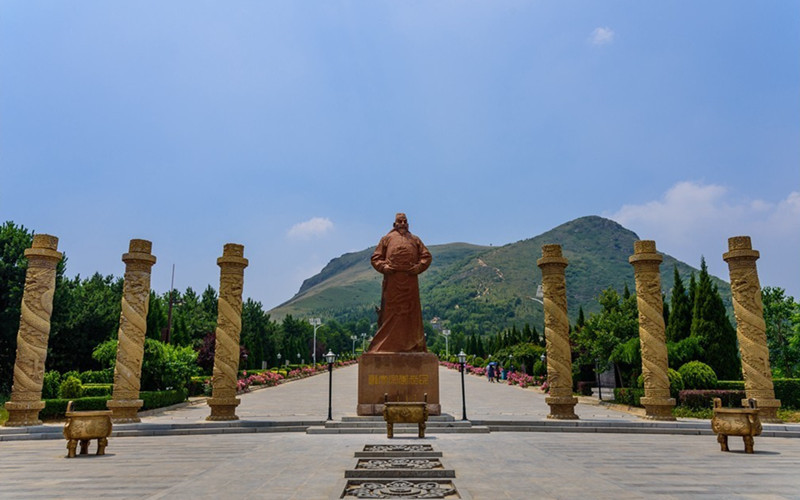
    Yuanjia Village sits at the foot of Jiuzong Mountain (九嵕山) and is not far from the Zhaoling Mausoleum of Emperor Taizong of Tang (唐太宗昭陵).

    After exploring the village, you can continue to Zhaoling to experience another side of the Tang Dynasty and its imperial history.

    If you have more time, consider adding Zhengguoqu Scenic Area (郑国渠风景区) to your itinerary. The ancient irrigation system and surrounding landscapes offer an interesting contrast to the food and folk culture of Yuanjia Village.

    Together, these attractions can turn a simple village food trip into a deeper journey through Guanzhong history, traditional culture and everyday life.

    Yuanjia Village: A Taste of the Real Guanzhong

    From the struggling village once known locally as “Langgan Village” to one of China's most successful rural tourism destinations, Yuanjia Village has spent nearly two decades turning ordinary village life into an extraordinary travel experience.

    It does not charge an entrance fee.

    Instead, it offers visitors something much harder to manufacture: freshly made food, traditional crafts, local performances and the atmosphere of a community that still feels alive.

    You can watch an old wooden oil press work, listen to the powerful voice of Qin Opera, drink a cup of Fucha, or simply wander through the old lanes with a bowl of biangbiang noodles in your hands.

    That is the real charm of Yuanjia Village.

    It is not a museum preserving the Guanzhong past behind glass.

    It is Guanzhong culture still being lived, cooked, performed and shared every day.

    If you want to experience a side of Xi'an beyond the city walls, come to Yuanjia Village.

    Here, the streets are still used by villagers, the food is prepared in front of you, and sometimes all it takes is one bowl of noodles and one cup of tea to understand the warm, straightforward character of Guanzhong.

  • Zoom in and view
  • ENQUIRY

    Have a question before booking? Message us to learn more.
    Click to change

    Share Your Trip Experience

    Help future travelers by reviewing your journey with Yaso Trip.