China Travel Agency, China Tours 2026/2027 | Yaso Trip
Theme Tours
View All China Theme Tours by Interest
Travel Guide
  • Travel Guide
  • Travel Tips
  • Tour Planning
  • Ethnic Culture
  • China Climate
  • Golf Courses
  • Yangtze Cruise
  • Travel Articles
  • Yingde Tea World in Qingyuan City, Guangdong

    AAAAA
    ★★★
  • Tour Sell Point England's Queen served Oriental Golden Beauty from Yingde, birthplace of Chinese black tea.
  • Yingde Tea Garden in Qingyuan City, Guangdong (3)
    Yingde Tea Garden in Qingyuan City, Guangdong (5)
    Yingde Tea Garden in Qingyuan City, Guangdong (122)
    Yingde Tea Garden in Qingyuan City, Guangdong (11)
    Yingde Tea Garden in Qingyuan City, Guangdong (10)

    Yingde Tea Garden (广东清远市英德茶园) is located in Yingde, Qingyuan City, Guangdong Province, China. It is renowned as the birthplace of Chinese black tea and is a significant center for tea cultivation and tourism in southern China.ese black tea production.

    Overview of the Tea Region

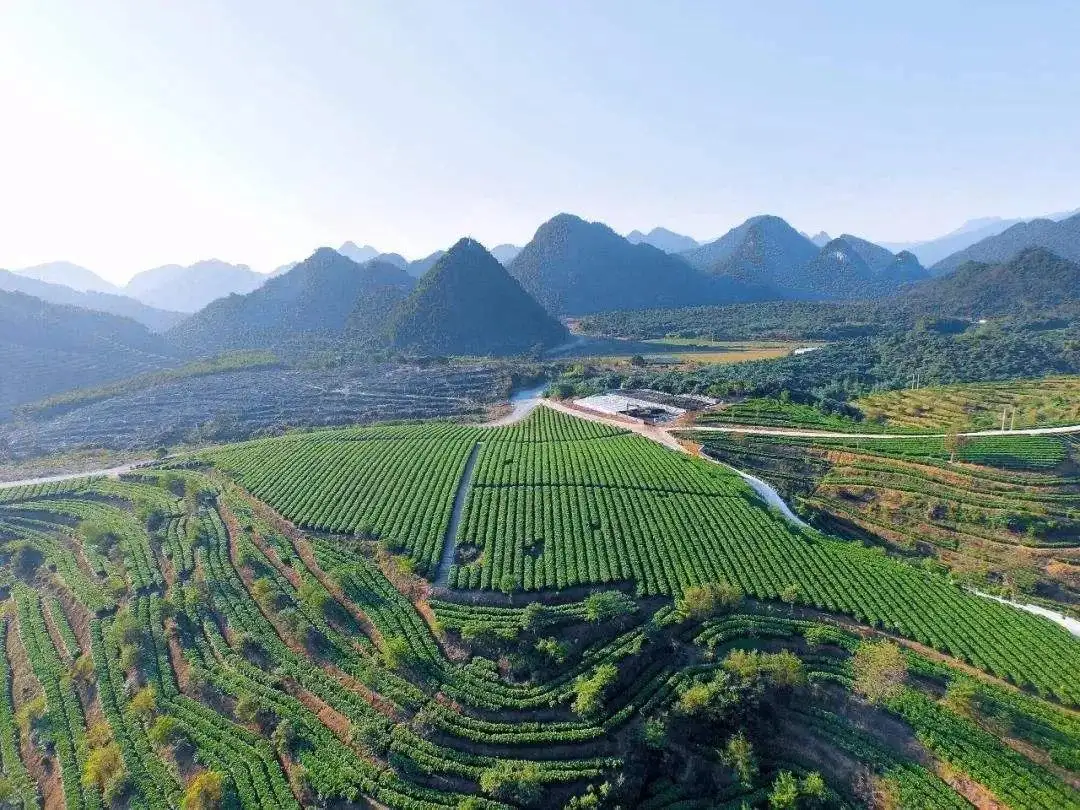
    Situated in Makou, in the western suburbs of Yingde City, the Yingde Tea Plant Demonstration Farm spans over a thousand acres. Funded by the Ministry of Agriculture and designated by the Guangdong Provincial Agricultural Department, it is a high-fragrance tea tree nursery base. The farm boasts lush green hills, fresh and humid air, and scenic views with clouds and mist. It has been developed into a tourist tea garden where visitors can enjoy the experience of hand-making tea. Yingde black tea is globally recognized for its heat-clearing and skin-nourishing properties, with the “Yinghong No. 9” variety even served by the Queen of England to her guests.Yingde Tea Garden in Qingyuan City, Guangdong (122)

    Concept of the Tea Region

    The term "Yingde Tea Region" broadly refers to all entities within Yingde City involved in tea production, education, research, and trade. This includes state-owned, collective, and individual tea-related activities. The Yingde Tea Region encompasses one provincial tea research institute (Guangdong Academy of Agricultural Sciences Tea Research Institute), five state-owned tea farms (Yinghong Overseas Chinese Tea Farm, Yingde Overseas Chinese Tea Farm, Huangbo Overseas Chinese Tea Farm, Hongxing Tea Farm, and Guangzhou Military Region Horse Farm Tea Factory), three local state-owned tea farms (Yingde Tea Plant Demonstration Farm, Shakou Farm, and City Tea and Fruit Farm), 26 town-run tea farms, 115 district-run tea farms, and over 1,100 key tea households.

    Characteristics of the Tea Region

    Yingde Tea World, nestled along the beautiful Beijiang River and surrounded by picturesque mountains akin to Guilin, features vast, lush tea gardens that appear as a green ocean from afar. Here, visitors can engage in tea planting, picking, frying, tasting, and appreciating, immersing themselves in the simple life of ancient tea farmers while escaping the hustle and bustle of urban life. Barefoot walks through the "Resource Library Maze," leisurely strolls in the "Green Corridor," climbing the "Tea Viewing Pavilion," and relaxing in the "Tea Tasting Gallery" allow visitors to enjoy famous teas from around the world. The "Tea Culture Exhibition Hall" showcases the profound Chinese tea culture, making it a must-visit. Developed by the Guangdong Academy of Agricultural Sciences Tea Research Institute, Yingde Tea World is a new tea eco-tourism attraction offering sightseeing, leisure, and educational experiences.Yingde Tea Garden in Qingyuan City, Guangdong (4)

    Environment of the Tea Region

    The Yingde Tea Region is located at the northern edge of the Tropic of Cancer, transitioning from a South Asian tropical climate to a Central Asian tropical climate. Due to the South Asian monsoon climate, the region is warm and rainy, without severe cold or extreme heat. The average annual temperature is 20.7°C, with July being the hottest month (average temperature 28.8°C, extreme high of 38.9°C) and January the coldest (average temperature 10.7°C, extreme low of -3.6°C). The annual accumulated temperature ≥10°C is 7576°C, with an average annual rainfall of 1876.8mm, 162 rainy days, an evaporation rate of 1619.8mm, an average humidity of 79%, 43.3 frost days, 9 frost days, and 316.7 frost-free days annually.

    The soil conditions are also favorable. The red and yellow soils on the gentle slopes and terraces between the hills and mountains are deep and fertile, with good natural soil fertility, organic matter, and nitrogen content. Most soils are acidic with a pH between 4.5 and 5.5, making them ideal for tea tree growth.Yingde Tea Garden in Qingyuan City, Guangdong (3)

    Tea Culture

    Yingde has a long history of tea cultivation, with tea culture dating back over 1,200 years to the Tang Dynasty. According to the Tang Dynasty’s Lu Yu in "The Classic of Tea" (764 AD), "tea grows in Fuzhou, Quanzhou, Shaozhou, and Xiangzhou in Lingnan, and its taste is excellent." Shaozhou's tea cultivation included Yingde and Qujiang. According to the "100 Years of World Tea Industry" edited by Cheng Qikun and Zhuang Xuelan from the Chinese Tea Research Institute, "by the Tang and Five Dynasties, counties such as Qujiang, Renhua, and Yingde in Shaozhou were already producing tea." Before the Ming Dynasty, Yingde was one of the 11 tea-producing counties in Guangdong Province; during the Ming Dynasty, it was one of 70; and after the Opium War, one of 84. Thus, Yingde has a long history of tea cultivation and production.

    The flourishing tea production in Yingde has promoted the formation of tea-drinking culture. Historical records indicate that during the Tang Dynasty, Yingde (then Zhenyang County) had a "Tea Brewing Platform" in the Nanshan Scenic Area. The Song Dynasty inscription on Nanshan's "Zhongle Pavilion" cliff reads, "amidst the cliffs are the relics of Tang people: Hui Valley, Lingshan, Feixia Ridge, Xiyang Island, Tea Brewing Platform, and Hancui Pavilion." In the Southern Song Dynasty, Yingzhou County magistrate Wang Ren praised the "Tea Brewing Platform" with poems such as "climbing a thousand stone steps with a cane, pausing at mid-mountain; fetching spiritual spring water to brew fine tea, quenching thirst and relieving fatigue" and "brewing tea in the courtyard for conversation and laughter, bright garden shades." These show that tea drinking was very popular in Yingde during the Tang Dynasty. Due to the rise of tea cultivation, high-quality tea was often listed as a tribute to the court. During the Ming Dynasty, Yingde's tribute tea was a court offering. According to the "Revised Yingde County Chronicles" by Chen Zhiquan during the Kangxi period of the Qing Dynasty, "seventy jin and seven liang of leaf tea, fourteen jin and five liang of bud tea were tributed to the court." The "Yingde County Chronicles" from the Daoguang period of the Qing Dynasty records various high-quality teas produced in Yingde's hills and mountains, indicating widespread tea cultivation during the Qing Dynasty.Yingde Tea Garden in Qingyuan City, Guangdong (6)

    Despite periods of decline due to wars and export restrictions, Yingde remains a historic tea region with a strong tea-drinking culture. Both urban and rural residents have a deep-rooted tea-drinking tradition, contributing to a rich cultural phenomenon. The local "Lei Tea Porridge" culinary culture, unique to the region, parallels the Lei Tea culture of Hunan, Jiangxi, and Fujian provinces.

    Geographic Location

    Yingde City is located in the southern part of the northern Guangdong mountains, in the midstream of the Beijiang River. Its geographical coordinates are between 23°50′32″ to 24°23′7″ north latitude and 112°45′16″ to 113°55′7″ east longitude. It borders Wengyuan and Xinfeng counties to the east, Fogang County to the south, Yangshan County to the west, and Ruyuan and Qujiang counties to the north. The city spans 182.5 kilometers from east to west and 112.5 kilometers from north to south, covering a total area of 5,659.6 square kilometers, making it the largest county-level city in Guangdong.Yingde Tea Garden in Qingyuan City, Guangdong (7)

    Topography

    Yingde City is located at the southern edge of the Five Ridges Mountain Range, within the Nanling Mountains' hilly terrain. The terrain is high in the north and low in the south, divided into four types: mountainous areas (above 1000 meters), low mountainous areas (500-1000 meters), hilly areas (around 500 meters), and terraces and plains. Tea cultivation is mostly found in hilly and terrace areas. Historically known as Yingzhou, the name derives from Ying Mountain's abundant Ying stones. The region features karst topography with numerous peaks and caves, flowing water, stone forests, and varied stone formations, creating a picturesque landscape that attracts tourists. Qing Dynasty poet Cha Shenxing praised Yingde's beauty, comparing it to a delightful landscape surpassing Shaozhou.

    Path to Revival

    Reflecting on 40 years of tea cultivation in Yingde reveals the hardships and achievements of the journey, showcasing the dedication and significant contributions made. This period also accumulated rich experience and valuable practices leading to success, generating positive social effects. Since the 1960s, visitors from across the country have come to Yingde to learn about tea production, processing, education, research, and trade. Numerous foreign experts, scholars, and tea industry professionals from Western Europe, North America, Oceania, the Middle East, and Hong Kong and Macau have visited for inspections, visits, and trade discussions. This highlights the prosperity and influence of the Yingde Tea Region, encouraging further development.Yingde Tea Garden in Qingyuan City, Guangdong (1)

    Yingde Black Tea

    First created in 1959, Yingde black tea was successfully developed using fresh leaves from the Yunnan large-leaf variety. By 1964, the production process was standardized and certified by four central ministries (Agriculture, Commerce, Foreign Trade, and Machinery). This established the internationally renowned "Golden Sail" brand of Yingde black tea. In the early 1990s, the "Golden Tips Tea" was developed, praised as the "Oriental Golden Beauty," attracting global attention.

    Yingde black tea's superior quality is attributed to its favorable natural environment and the use of suitable Yunnan large-leaf varieties, combined with Phoenix Shuixian and newly promoted high-fragrance, high-quality large-leaf black tea varieties. This has led to the widespread adoption of quality tea varieties in plantations, laying a solid foundation for the high aroma and rich flavor of "Yinghong" tea. The characteristics of Yingde black tea include tightly rolled particles, oily luster, fine and uniform appearance, prominent golden tips, pure and strong aroma with floral notes, rich and sweet taste, bright red liquor, and soft, red infusion leaves. Especially notable is its red and bright tea color when mixed with milk, with a strong and refreshing taste, making it a standout among other black teas like Dianhong and Qimen.Yingde Tea Garden in Qingyuan City, Guangdong (5)

    Yingde black tea contains rich compounds, including 4.12% caffeine, 1.28% amino acids, 21% tea polyphenols, 0.8-1.2% theaflavins, 8-12% thearubigins, and 38.16% water-soluble extracts, reaching international high-quality black tea standards. The variety of Yingde black tea products and their distinguished characteristics are categorized into several grades:

    • Leaf Tea (FOP): Tight, straight strips, uniform, glossy black color, plump golden tips, no stems, bright red liquor, high and fresh aroma, rich and sweet taste, tender and bright infusion leaves.
    • Broken Tea No. 1 (FBOP): Tight, heavy particles, prominent golden tips, oily luster, bright red liquor, high and lasting aroma with floral notes, fresh and rich taste, tender and bright infusion leaves.
    • Broken Tea No. 2-5 (BOP): Tight, uniform particles, oily luster, no golden tips, bright red liquor, fresh and strong aroma, rich and refreshing taste, bright and tender infusion leaves.
    • Broken Tea No. 6 (BP): Finer stems, blackish-brown color, bright red liquor, pure aroma, mellow taste, bright infusion leaves.
    • Fannings (F): Curled leaves, uniform size, glossy color, bright red liquor, fresh aroma, mellow and thick taste, bright and tender infusion leaves.
    • Dust (D): Heavy, sand-like texture, glossy color, no powder or sand, rich red liquor, pure aroma, thick taste, bright and tender infusion leaves.
    • Golden Tips Tea: Round and tight strips, full of golden tips, golden yellow and bright color, bright red liquor, rich and lasting aroma with tip fragrance or floral notes, rich and sweet taste, intact and tender red infusion leaves, filling a gap in high-end large-leaf black tea products in China.
    At a Glance
    AddressShow on map
    Chinese Name 英德茶乡世界
    Internal Shuttle No
    ENQUIRY
    Have a question before booking? Message us to learn more.
    Click to change
    Michael Huang Vincent Zhao Justin Wang Gary Elliot Emma Liu Andrew Wang
    Questions about this attraction? Real travel advisors, usually reply within 12 hour.
    What Makes It Special
    TEA-HERITAGE

    Yingde Black Tea Heritage

    Yingde black tea was developed in the 1950s and became a noted Guangdong export, earning the nickname 'Oriental Golden Beauty' for its sweet, malty character. The tea world celebrates this modern local industry and its craft.

    TEA-EXPERIENCE

    Tea Garden Picking and Tasting

    Visitors can walk among terraced tea bushes, pick fresh leaves in season, watch withering, rolling and drying, then taste brewed Yingde black tea. Such hands-on tea tourism is the core draw of Yingde's tea countryside.

    KARST-LANDSCAPE

    Karst Peaks and Green Tea Fields

    Yingde lies in a limestone karst belt of Guangdong, where steep green hills and cave-rich terrain surround its tea fields. The contrast between rock peaks and neat tea rows shapes the scenic area's landscape.

    BEST-SEASON

    Best Time: Spring Tea Harvest

    Spring, especially March to May, is the prime tea-picking season in Yingde, when fresh buds are processed into fragrant spring tea. Mild weather also makes walking the tea hills pleasant before Guangdong's humid summer.

    CULTURE

    Lingnan Tea Culture Setting

    The tea world sits in Qingyuan's Lingnan cultural region, where tea drinking is woven into Cantonese daily life and hospitality. Teahouses and exhibits link Yingde's tea economy with regional food and social customs.

    RATING

    AAAAA-Rated Tea Tourism Area

    Yingde Tea World is promoted as a national AAAAA scenic area, pairing tea gardens with visitor facilities in Qingyuan. The rating signals high standards for transport, interpretation, safety and visitor services.

    Walking trails

    The tea gardens and tea-culture display areas are explored on foot; public listings do not describe an internal shuttle bus.

    Scenic tea-garden roads

    Access between visitor areas follows the tea-garden roads and paths; no cable car or boat service is listed in public sources.

    Tips: Wear comfortable walking shoes because the tea gardens are mainly explored on foot. Confirm current ticket details and any on-site cart service at the visitor center before entering.
    View on Map
    Yingxi Peak Forest Corridor in Qingyuan

    Yingxi Peak Forest Corridor in Qingyuan

    Yingxi Peak Forest Corridor
  • AAA
  • Guangdong,Qingyuan Yingde, Qingyuan, Guangdong, China
  • Huangteng Gorge in Qingyuan

    Huangteng Gorge in Qingyuan

    黄腾峡
  • AAAA
  • Guangdong,Qingyuan 广东省清远市
  • Gulongxia Gorge Scenic Spot in Qingyuan
    Popular
    Must Go

    Gulongxia Gorge Scenic Spot in Qingyuan

    Gulongxia Gorge Scenic Spot
  • 5 ★
  • •
  • AAA
  • Guangdong,Qingyuan Qingyuan, Guangdong, China
  • Guangdong Nanling National Nature Reserve in Shaoguan

    Guangdong Nanling National Nature Reserve in Shaoguan

    南岭国家级自然保护区
  • AAA
  • Guangdong,Shaoguan 广东省韶关市
  • Sex Culture Museum of Danxia Mountain in Shaoguan

    Sex Culture Museum of Danxia Mountain in Shaoguan

    丹霞山性文化博物馆
  • AAAAA
  • Guangdong,Shaoguan 广东省韶关市
  • Danxia Mountain in Shaoguan City

    Danxia Mountain in Shaoguan City

    丹霞山
  • AAAAA
  • Guangdong,Shaoguan 广东省韶关市
  • Nangang Millennium Yao Village in Qingyuan

    Nangang Millennium Yao Village in Qingyuan

    南岗千年瑶寨
  • AAA
  • Guangdong,Qingyuan Liannan Yao Autonomous County, Qingyuan City, Guangdong Province, China
  • Yingxi Peak Forest Corridor in Qingyuan
    Yingxi Peak Forest Corridor in Qingyuan
    LevelAAA
    Huangteng Gorge in Qingyuan
    Huangteng Gorge in Qingyuan
    LevelAAAA
    Mantangwei Hakka Walled Village in Shaoguan
    Mantangwei Hakka Walled Village in Shaoguan
    LevelAAAAA
    Gulongxia Grand Canyon Glass Bridge in Qingyuan
    Gulongxia Grand Canyon Glass Bridge in Qingyuan
    LevelAAAA
    Gulongxia Gorge Scenic Spot in Qingyuan
    Gulongxia Gorge Scenic Spot in Qingyuan
    LevelAAA
    Guangdong Nanling National Nature Reserve in Shaoguan
    Guangdong Nanling National Nature Reserve in Shaoguan
    LevelAAA
    Sex Culture Museum of Danxia Mountain in Shaoguan
    Sex Culture Museum of Danxia Mountain in Shaoguan
    LevelAAAAA
    Danxia Mountain in Shaoguan City
    Danxia Mountain in Shaoguan City
    LevelAAAAA
    Shitang Ancient Village in Renhua County, Shaoguan
    Shitang Ancient Village in Renhua County, Shaoguan
    LevelAAA
    Nangang Millennium Yao Village in Qingyuan
    Nangang Millennium Yao Village in Qingyuan
    LevelAAA
    Baiyun Mountain in Guangzhou
    Baiyun Mountain in Guangzhou
    LevelAAAAA
    Nanhai Guanyin Temple in Foshan
    Nanhai Guanyin Temple in Foshan
    LevelAAAAA
    Yuexiu Park in Guangzhou
    Yuexiu Park in Guangzhou
    LevelAAAA
    Temple of the Six Banyan Trees (Liurong Temple) in Guangzhou
    Temple of the Six Banyan Trees (Liurong Temple) in Guangzhou
    LevelAAAAA
    Chen Clan Ancestral Hall in Guangzhou
    Chen Clan Ancestral Hall in Guangzhou
    LevelAAAA
    Canton Tower in Guangzhou
    Canton Tower in Guangzhou
    LevelAAAA
    Sacred Heart Cathedral in Guangzhou
    Sacred Heart Cathedral in Guangzhou
    LevelAAAAA
    Underground River in Lianzhou County, Qingyuan City
    Underground River in Lianzhou County, Qingyuan City
    LevelAAAAA
    Shangxiajiu Pedestrian Street in Guangzhou
    Shangxiajiu Pedestrian Street in Guangzhou
    Xiguan Antique City in Guangzhou
    Xiguan Antique City in Guangzhou
    LevelAAAAA
    Shamian Island in Guangzhou
    Shamian Island in Guangzhou
    LevelAAAAA
    Yangcun Ancient Town/Taiping Ancient Town (Hakka) in in Longnan City, Ganzhou
    Yangcun Ancient Town/Taiping Ancient Town (Hakka) in in Longnan City, Ganzhou
    LevelAAAA
    Zhuji Ancient Lane (Hakka) in Nanxiong, Shaoguan
    Zhuji Ancient Lane (Hakka) in Nanxiong, Shaoguan
    LevelAAAA
    Cheung Chau Island in Hong Kong
    Cheung Chau Island in Hong Kong
    Pearl River Night Cruise Tour in Guangzhou
    Pearl River Night Cruise Tour in Guangzhou
    LevelAAAAA
    Yanbu Viollon Church in Foshan
    Yanbu Viollon Church in Foshan
    LevelAAAAA
    Guangdong Museum of Traditional Chinese Medicine
    Guangdong Museum of Traditional Chinese Medicine
    LevelAAAA
    Guishan Grand Canyon Rafting in Heyuan
    Guishan Grand Canyon Rafting in Heyuan
    LevelAAAAA
    Lingnan Impression Garden in Guangzhou
    Lingnan Impression Garden in Guangzhou
    LevelAAAA
    Xinfengjiang Reservoir or Wanlü Lake in Heyuan City
    Xinfengjiang Reservoir or Wanlü Lake in Heyuan City
    LevelAAAA
    Qiandeng Lake in Foshan
    Qiandeng Lake in Foshan
    LevelAAAAA
    Pingzhou Jade Article Street Scenic Area in Foshan
    Pingzhou Jade Article Street Scenic Area in Foshan
    LevelAAAA
    Liang Yuan Garden in Foshan
    Liang Yuan Garden in Foshan
    LevelAAAAA
    Guangdong Cantonese Opera Museum in Foshan
    Guangdong Cantonese Opera Museum in Foshan
    LevelAAAAA
    Donghuali in Foshan
    Donghuali in Foshan
    LevelAAAAA
    Foshan Confucian Temple
    Foshan Confucian Temple
    LevelAAAA
    Keyuan Garden in Dongguan
    Keyuan Garden in Dongguan
    LevelAAAA
    Chimelong Safari Park in Guangzhou
    Chimelong Safari Park in Guangzhou
    LevelAAAAA
    Tangwei Ming and Qing Dynasties Ancient Village in Dongguan
    Tangwei Ming and Qing Dynasties Ancient Village in Dongguan
    LevelAAAA
    Shiwan Art Ceramics Factory in Foshan
    Shiwan Art Ceramics Factory in Foshan
    LevelAAAAA
    First High-Altitude Fountain in Asia in Heyuan
    First High-Altitude Fountain in Asia in Heyuan
    LevelAAAAA
    Heyuan City Museum (Heyuan Dinosaur Museum)
    Heyuan City Museum (Heyuan Dinosaur Museum)
    LevelAAAA
    Dongyuan Hakka Folk Customs Museum in Heyuan
    Dongyuan Hakka Folk Customs Museum in Heyuan
    LevelAAAAA
    Bijiang Golden House in Foshan
    Bijiang Golden House in Foshan
    LevelAAAA
    Biyu Cave in Foshan
    Biyu Cave in Foshan
    LevelAAAAA
    World Hakka Folk-Culture City (Shikewei Scenic Area) in Longnan, Ganzhou
    World Hakka Folk-Culture City (Shikewei Scenic Area) in Longnan, Ganzhou
    LevelAAA
    Wong Fei Hung Lion Dance Martial Arts Museum in Foshan
    Wong Fei Hung Lion Dance Martial Arts Museum in Foshan
    LevelAAAAA
    Xiqiao Wong Tai Sin Temple Scenic Area in Foshan
    Xiqiao Wong Tai Sin Temple Scenic Area in Foshan
    LevelAAAAA

    Traveler Reviews

    0.0 based on 1 review
    Filter:
    1. KG KALYANAM GOPALAN ★★★★★

      Very Good established,

      If you need any machinery or consulting services, please contact Me +919486802560
      i HVE 35 YEAR EXPERIENCE IN INDIA AND AFRICA

      Sep 29, 2025

    Share Your Trip Experience

    Help future travelers by reviewing your journey with Yaso Trip.