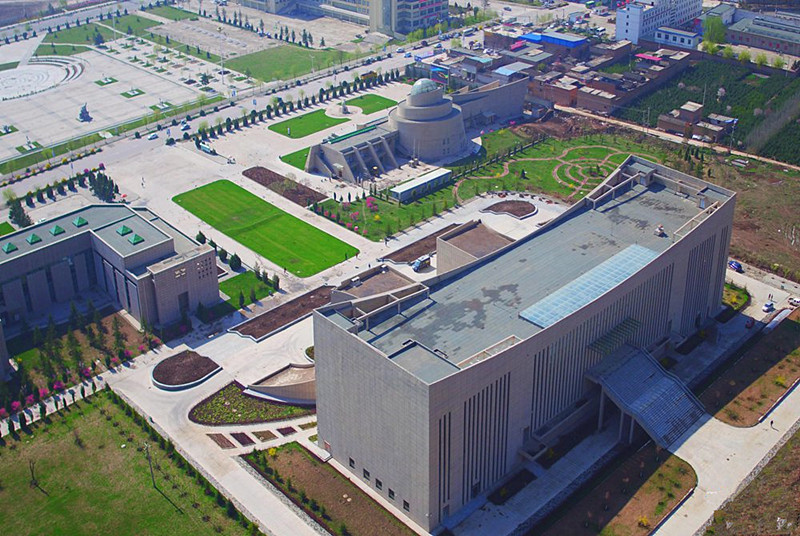
🏯 Overview of Bingling Temple Grottoes (炳灵寺石窟)
Bingling Temple Grottoes (炳灵寺石窟) are located on the cliffs of Xiaojishi Mountain (小积石山), Wangtai Town, Yongjing County, Linxia Hui Autonomous Prefecture, Gansu Province (甘肃省临夏回族自治州永靖县王台镇小积石山). The grottoes are situated on the north bank of the Yellow River and the west shore of Liujiaxia Reservoir (刘家峡水库), surrounded by spectacular Danxia cliff landscapes.
Recognized as a UNESCO World Cultural Heritage Site and a National 5A-level Scenic Area, Bingling Temple is one of the most important Buddhist grotto complexes in China. The name “Bingling (炳灵)” comes from the Tibetan language and means “One Hundred Thousand Buddhas” (十万佛).
The grottoes were first carved during the Jianhong Period of the Western Qin Dynasty (西秦建弘元年, 420 AD). They contain the earliest existing Chinese grotto inscription with a clearly recorded date, making them extremely valuable for studying the early development of Chinese Buddhist art.
Today, Bingling Temple preserves 216 caves and niches, more than 800 stone and clay sculptures, and nearly 1,000 square meters of murals. The artworks span multiple historical periods, including the Western Qin, Northern Wei, Sui, Tang, Yuan, and Ming dynasties. Together with the Mogao Caves (莫高窟) and Maijishan Grottoes (麦积山石窟), Bingling Temple is considered one of the three major grotto complexes in Gansu Province.
Unlike many grotto sites located only in desert or mountain environments, Bingling Temple combines Buddhist art with the natural scenery of the Yellow River canyon and Danxia landscape, creating a unique cultural and natural travel experience.
The scenic area is divided into three sections: Lower Temple (下寺, the main visitor area), Upper Temple (上寺), and Donggou Valley (洞沟).
Important: Lower Temple is the regular sightseeing area. Upper Temple and Donggou Valley are farther away with more complicated routes, and ordinary visitors usually do not visit these areas.
The regular grotto ticket is 50 RMB. Students and seniors aged 60–69 can purchase half-price tickets for 25 RMB, while visitors over 70 years old and children under 1.2 meters can enter free of charge with valid documents. Special grotto tickets are charged separately and are not included in the entrance ticket.
During the peak season from April to October, opening hours are 08:30–18:00. The last admission is at 17:00, and special grotto tickets stop being sold at 17:30. During the off-season from November to March, opening hours are 09:00–17:00, with the last admission at 16:00.
Special grotto tickets include:
- Grottoes 169 and 172 combined ticket: 300 RMB (the most valuable special grotto area, limited visitors, purchased on-site with a dedicated guide).
- Grottoes 126 and 128 require separate tickets.
- Special grottoes may rotate for maintenance, so visitors should confirm the current opening status before traveling.
🌿 Best Times to Visit Bingling Temple Grottoes
Seasonal Recommendations
May to October is the best visiting period. During this time, Liujiaxia Reservoir features clear blue water, the Danxia cliffs display bright colors, and the summer climate is relatively comfortable compared with many other areas in northwest China.
November to March of the following year is the quiet winter season. Visitor numbers are lower, but temperatures are cold and some special grottoes may be temporarily closed. It is not the ideal period for ordinary tourists.
Best Visiting Time
The best time for photography is usually 15:00–17:00 in the afternoon, when warm sunlight illuminates the cliffs and the giant Buddha while the Yellow River scenery appears together in the background.
A regular visit to the common grotto area takes about 2–3 hours. Visitors including special grotto tours should reserve approximately 3–4 hours.
🚗 How to Get to Bingling Temple Grottoes
There are two main travel methods: boat transportation (highly recommended for scenery) and self-driving by road.
🚤 By Boat from Liujiaxia Dam Wharf (Recommended)
Taking a boat is the most scenic way to reach Bingling Temple. The route starts from Liujiaxia Dam Wharf (刘家峡大坝码头) and travels along the Yellow River canyon.
A speedboat round trip costs approximately 130 RMB, with a one-way journey of about 50–60 minutes. A regular sightseeing boat costs around 80 RMB, with a one-way journey of about 2 hours.
During the journey, visitors pass the spectacular Yellow River and Tao River Confluence (黄洮交汇), where the clear Tao River and yellow-colored Yellow River meet, as well as Danxia rock formations and the beautiful scenery of the Yellow River Three Gorges area.
Speedboat departures are limited during the busy season, so arriving early is recommended. Visitors prone to seasickness should prepare motion sickness medicine in advance.
🚗 By Self-Driving
Navigate to Bingling Temple Grottoes (炳灵寺石窟). The site is about 35 kilometers southwest of Yongjing County, and the drive from Lanzhou takes approximately 2.5 hours.
The final 20 kilometers include winding mountain roads. Ordinary cars can reach the scenic area, but drivers should be cautious during rainy weather. The scenic parking area charges approximately 10 RMB.
🚌 By Public Transportation
There is no direct tourist bus service. Visitors usually travel by chartered vehicle or private transfer from Lanzhou or Yongjing County.
Recommended Travel Combination
Bingling Temple can be combined with Liujiaxia Dam (刘家峡大坝), Yellow River and Tao River Confluence (黄洮交汇), and Taiji Lake (太极湖) to create a one-day cultural and natural sightseeing route from Lanzhou to Yongjing.
⭐ Core Attractions and Highlights
🗿 Cave 171 — The Giant Buddha Cave (大佛窟, Must-See Regular Cave)
Cave 171 is the most iconic attraction in the regular sightseeing area. Inside the cave stands a 27-meter-high Tang Dynasty Maitreya Buddha statue carved directly into the mountain cliff.
The giant Buddha faces the Yellow River, with the red sandstone cliffs behind and the emerald waters of Liujiaxia Reservoir below. The combination of ancient Buddhist sculpture, towering cliffs, and the great river creates one of the most impressive views at Bingling Temple.
🪷 Cave 169 — The Special Grotto with the Jianhong Inscription (建弘元年题记窟)
Cave 169 is considered the most precious grotto at Bingling Temple. It contains the earliest clearly dated grotto inscription in China, recording the year 420 AD, and preserves original Western Qin Dynasty clay sculptures and murals.
The sculptures feature strong and simple artistic styles, representing important surviving examples of Buddhist art from the Sixteen Kingdoms period. This cave is a key physical source for research into the early development of Buddhist art in China.
Photography and video recording are strictly prohibited inside the special grotto. Visitors must store backpacks and follow the guide’s instructions during the visit.
🪨 Cliffside Walkway Grottoes
A wooden walkway built along the red Danxia cliffs connects dozens of grottoes. Visitors can observe artistic styles from different periods, including the elegant “Northern Wei slender style” (秀骨清像) and the fuller Tang Dynasty sculptures.
Walking along the cliffside path, visitors can overlook the high canyon and calm lake scenery of Liujiaxia, with Danxia peaks and the Yellow River stretching below.
🏛️ Grotto Museum
The modern exhibition hall at the visitor center displays unearthed sculpture fragments, mural reproductions, and detailed explanations of the history of grotto construction.
It is recommended to visit the museum before entering the caves, as it helps visitors better understand the historical background, Silk Road connections, and Buddhist cultural development of Bingling Temple.
🪷 Special Grottoes 126 and 128 (Rotating Opening)
Grottoes 126 and 128 contain exquisite Northern Wei sculptures and preserved mural remains. The artistic details are delicate and highly valued by grotto enthusiasts.
Since these special grottoes operate on a rotating opening schedule, visitors should confirm availability before purchasing tickets.
🌄 Yellow River Riverside Viewing Platform
The riverside viewing platform provides one of the classic viewpoints for photographing the entire Bingling Temple cliff area. The combination of blue reservoir water, red Danxia cliffs, and ancient grotto architecture creates a spectacular landscape scene.
🏨 Accommodation and Local Food
Most visitors choose to stay overnight in Yongjing County or Lanzhou. There are only a few simple local guesthouses and farm restaurants near the scenic area, so advance booking is recommended during the peak season.
Local specialties include Yellow River Carp (黄河鲤鱼), Hand-Pulled Lamb (手抓羊肉), and Yongjing Jiangshui Noodles (永靖浆水面).
There are very few shops inside the scenic area, so visitors should bring enough drinking water and snacks in advance.
Recommended guide services:
- Audio guide: about 20 RMB
- Private guide service for groups of fewer than 10 people: about 100 RMB
Without a guide, it can be difficult for visitors to fully understand the history and artistic value of the grottoes.
⚠️ Travel Tips and Safety Information
Bingling Temple is a protected cultural heritage site. In the regular grotto area, photography is allowed but flash photography is prohibited. In special grottoes, photography and video recording are strictly forbidden, and touching sculptures or murals is prohibited. Backpacks and selfie sticks can be stored free of charge at the ticket office.
The cliffside walkways include steep and sometimes slippery steps. Wear comfortable anti-slip shoes. Temperatures inside the caves are lower than outside, so bringing a light jacket is recommended.
Special grottoes operate with limited capacity and rotating opening schedules. Not all special caves are guaranteed to be open, so visitors should not travel only for a specific grotto without checking in advance.
The reservoir area has very strong ultraviolet radiation, so sunscreen and sun protection are necessary. The boat route may experience strong winds and waves, so travelers prone to motion sickness may prefer traveling by road.
Please note that Bingling Temple Grottoes (炳灵寺石窟) in Yongjing is a National 5A scenic area and should not be confused with other temples or religious sites in Linxia.
During holidays, speedboat tickets and departures can become crowded, so arriving early is recommended. Drivers should take care on the winding mountain roads and pay attention to road safety.